
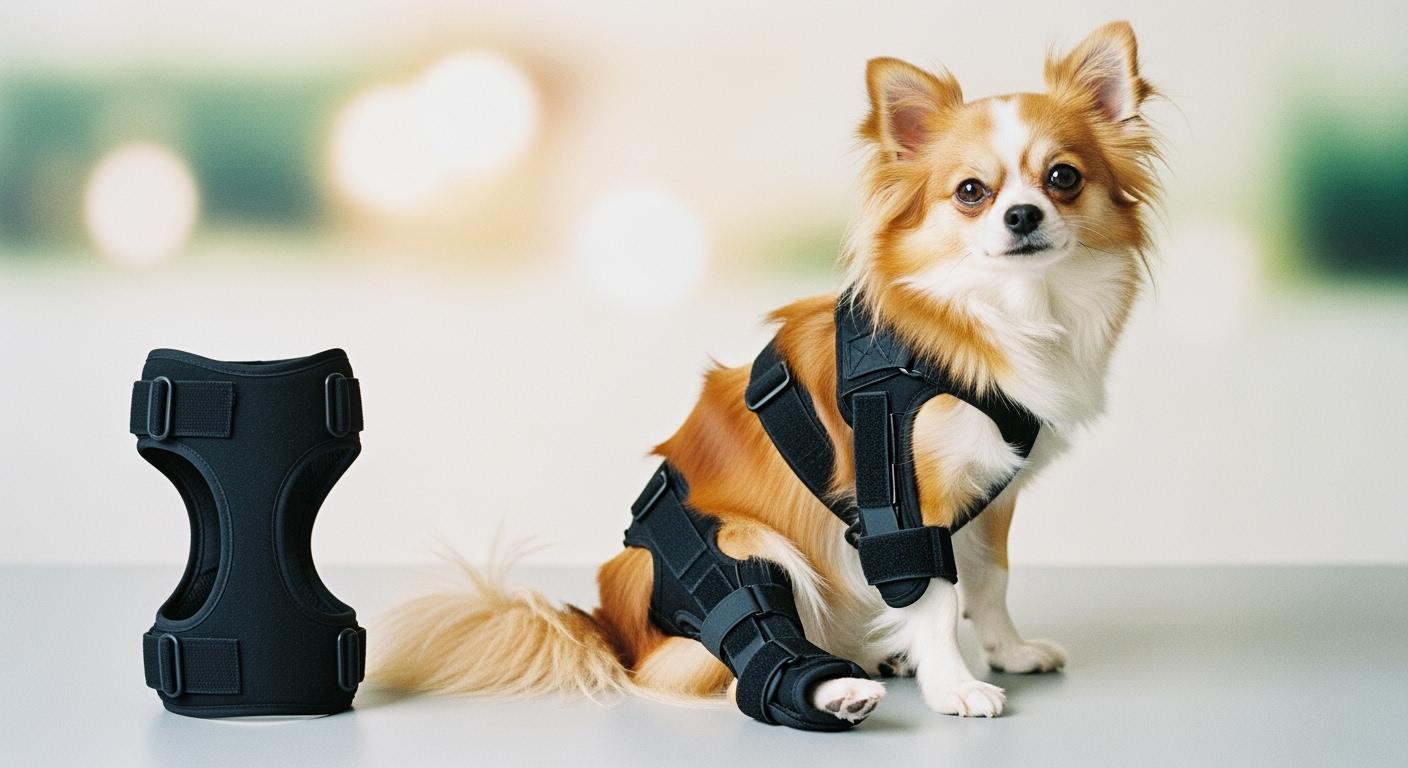
A brace for dog luxating patella small dogs should be judged by three practical questions: does it fit securely, does it support the knee without slipping, and does it stay comfortable during daily movement. Small dogs often have lighter frames, quicker steps, and more noticeable fit problems when a brace is too loose, too bulky, or not aligned well with the knee. If you want a broader overview of when a luxating patella brace helps and when veterinary review matters, start with this luxating patella knee brace guide.
| Small-Dog Factor | Why It Matters for a Patella Brace |
|---|---|
| Lighter body frame | A bulky brace can feel more noticeable and reduce daily tolerance. |
| Smaller thigh and knee area | Accurate measurement matters more because even small sizing errors can cause slipping. |
| Quick movement patterns | Fast turns and short steps can reveal fit problems quickly. |
| Sensitive skin and coat differences | Rubbing, heat, and strap pressure may show up sooner than in larger dogs. |
When selecting a brace for dog luxating patella small dogs, proper fit and realistic daily use matter more than broad breed averages. Small dogs often show fit problems quickly because thigh shape changes during movement, top straps can loosen after walking, and some dogs reject braces that feel too heavy or too stiff.
- The brace may shift because the thigh changes shape during walking.
- Top straps may loosen after a short period of activity.
- Some small dogs show discomfort faster when the brace is bulky or poorly aligned.
That is why daily checks, gradual wear, and veterinary guidance matter so much. A brace only helps when it stays aligned and the dog can actually tolerate it through normal daily use.
Das Wichtigste in Kürze
- A luxating patella brace for small dogs should stay aligned with the knee during real movement, not just while the dog is standing still.
- Fit, slippage control, and daily tolerance matter more than simply choosing the smallest size available.
- Short wear sessions, regular skin checks, and gradual adjustment usually work better than forcing long wear too early.
Evaluating Brace for Dog Luxating Patella Small Dogs
When to Consider a Brace
You may wonder when a brace for dog luxating patella small dogs is needed. Small dogs can have trouble You may consider a brace when a small dog with luxating patella needs extra knee support during walking, controlled activity, or recovery planning. A brace is usually most useful when the dog has mild to moderate instability, needs help with daily comfort, or is following a conservative management plan guided by a veterinarian. The brace should support the knee without making movement more awkward or stressful.
Look for these signs when evaluating whether a brace may help:
- the dog skips steps or limps lightly during normal movement
- the kneecap instability affects comfort but not every step of the day
- the dog stays active but needs more controlled support
- the veterinarian wants more external support during rehab or monitoring
For broader condition-based guidance before product comparison, use the Dog Brace Solutions by Condition page.
Key Buyer Expectations
When you check a brace for dog luxating patella small dogs, set clear goals. Small breeds like Pomeranians and When you evaluate a brace for dog luxating patella small dogs, set realistic support goals first. Buyers usually want three things at the same time: better knee stability, reliable daily comfort, and a brace that small dogs can actually tolerate. The best brace is not just the smallest brace. It is the one that stays aligned and helps the dog move more confidently without causing rubbing or resistance.
- Support should feel targeted to the knee rather than bulky across the whole leg.
- The brace should stay in place during walking, sitting, and standing transitions.
- Daily checks should catch discomfort before it becomes a skin or tolerance problem.
Note: Good fit and daily checks matter more than generic breed assumptions. For broader condition support, use the Solutions by Condition page together with this article.
Choosing a patella brace for a small dog means balancing support, comfort, and movement control together rather than optimizing only one of them.
Fit, Sizing, and Movement Control
Measuring and Custom Options
Getting the right measurement is one of the most important parts of choosing a brace for a small dog with luxating patella. Small dogs have less leg area to anchor the brace, so even a small measuring error can lead to slipping or poor alignment. Use a step-by-step process, record the numbers carefully, and confirm the fit during movement instead of trusting size labels alone. For a more detailed workflow, use this dog brace sizing guide.
Use this table to help you measure:
Measurement Step | Location Description | Purpose |
|---|---|---|
Measure Thigh Circumference | Around the upper thigh, about 1 inch above the knee | Finds the top anchor spot for the brace. |
Measure Knee Circumference | Directly over the knee cap | Needed for hinge placement and support. |
Measure Lower Leg Circumference | Just below the knee | Makes sure the brace stays snug and does not slip. |
Measure Leg Length | From the top of the thigh to the ankle or hock joint | Helps pick if a single or double brace is needed. |
Measure Distance Between Legs | From one inner thigh to the other while standing | Makes sure a double dog knee brace will not rub. |
Some small dogs do better with more individualized fit, especially when standard sizing keeps slipping or bunching. But even the best brace still needs correct measurements, regular rechecks, and realistic wear expectations.
Signs of Proper Fit
A good brace for a small dog with luxating patella should feel secure without squeezing. The brace should stay aligned during walking, keep the knee supported, and let the dog move without obvious new awkwardness. Small dogs usually show fit problems quickly, so daily observation matters more than assuming the first fitting is enough.
Look for these signs of proper fit:
- the brace does not slide down or twist after a short walk
- the straps stay secure without pinching
- the dog moves more steadily instead of more stiffly
- the knee area stays aligned during motion
- there is no redness, swelling, or hair loss after use
After each use, check the skin and the brace position. If the fit looks correct at rest but changes after movement, treat that as a fit failure rather than a small comfort issue. For a broader fit-and-comfort framework, compare this section with the canine rehabilitation brace fit and safety guide.
Common Fit Issues
Many fitting mistakes happen because buyers assume a small dog only needs a smaller version of a general knee brace. The most common problems are loose straps, poor knee alignment, a brace that is too long for the leg, or a design that feels too bulky for the dog’s frame.
Common mistakes include:
- skipping careful measurements and guessing the size
- placing the support center too high or too low on the knee
- tightening straps harder instead of fixing alignment
- leaving the brace on too long before the dog adapts to it
- ignoring early rubbing or slippage signs
Checklist for buyers:
- Measure thigh, knee, lower leg, and required brace length.
- Confirm the brace lines up with the knee after movement.
- Check straps and contact points every day.
- Watch for skin problems or reduced movement confidence.
- Ask your vet when fit or support level is unclear.
You can find more tips about fitting a dog ccl brace and custom-molded braces on our product pages. For more help, visit our knee brace selection page or look at solutions for luxating patella and knee instability.
What Small Dogs Need from a Patella Brace
Support Features That Matter Most
It is more useful to compare patella-focused support with generic knee support than to turn this article into a CCL-vs-patella comparison. Small dogs with luxating patella usually need a brace that stays aligned, controls knee movement gently, and does not feel too bulky for daily wear.
| Feature | Why It Matters for Small Dogs |
|---|---|
| Accurate knee alignment | Helps the brace support the patella instead of drifting off target. |
| Low-bulk structure | Improves daily tolerance for smaller frames. |
| Adjustable straps | Helps control slippage without over-tightening. |
| Stable movement control | Supports walking and daily activity without making gait more awkward. |
A patella brace for small dogs should feel more like targeted support than a heavy restraint. If you want a product-level reference after this comparison, review the Luxating Patella Knee Brace page.
Movement and Stability Differences
The main question is not whether the brace looks strong. It is whether the brace makes the dog move more steadily and with less hesitation. A good patella brace should support the knee during walking, standing, and turning without needing extra bulk or excessive strap tension.
Support During Recovery and Daily Use
Introducing the Brace
You want your small dog to feel comfortable with a new brace. Start slow. Let your dog sniff and see the brace You want your small dog to feel comfortable with a new brace, so start slowly. Let the dog sniff and inspect the brace before fitting it. Then use short wear sessions first instead of turning the first day into a full-use day.
- Put the brace on for a few minutes at a time.
- Check alignment and comfort before asking the dog to walk much.
- Watch the dog’s reaction for stress, rubbing, or awkward movement.
- Increase wear time only when the dog tolerates the brace well.
A gradual introduction helps the dog adapt and gives you time to catch fit problems early. Always remove the brace and reassess if you see redness, slipping, or clear discomfort.
Wear Time and Routine
You should plan a simple daily routine for brace use instead of focusing only on total hours. Many small dogs do better with shorter, controlled sessions first. Start with brief wear during active periods, then increase only if the brace stays aligned and the skin stays healthy.
- Put the brace on during supervised activity or short walks.
- Check fit before and after each session.
- Remove the brace during rest or overnight unless your vet says otherwise.
- Build wear time gradually instead of forcing long use too early.
This kind of routine usually makes daily support safer and easier to monitor than a fixed long-hour target.
Monitoring and Adjustments
You need to check your dog’s skin and comfort every day. Look for redness, swelling, hair loss, brace drift, or signs that the dog is moving worse after the brace is fitted. Small dogs often show these problems early, which is useful if you pay attention to them.
Regular monitoring matters because slippage, discomfort, and poor alignment often build slowly. If you notice slipping, limping, or a clear drop in walking confidence, adjust the fit or ask your veterinarian whether the support plan needs to change. Combine the brace with weight control, controlled activity, and other veterinary advice instead of treating the brace as the whole answer.
Note: A brace can support comfort and mobility, but it does not fix the underlying cause of luxating patella by itself. Keep your veterinary team involved in the recovery plan.
When picking a brace for dog luxating patella small dogs, the best results usually come from treating fit, support level, and daily tolerance as one system. A brace should stay aligned, feel manageable for a small dog to wear, and support steadier movement without creating new rubbing or slippage problems.
For next steps, continue to the luxating patella knee brace guide, the dog brace sizing guide, the canine rehabilitation brace fit and safety guide, the Solutions by Condition page, or the Luxating Patella Knee Brace product page depending on whether you still need education, fit guidance, condition matching, or product comparison. Data authenticity note: This article is for educational purposes only. It is designed to help readers evaluate patella bracing for small dogs, not to replace veterinary diagnosis or individualized treatment advice.
Häufig gestellte Fragen
How do you know if the brace fits your small dog correctly?
The brace should stay in place during movement without pinching, slipping, or creating red marks. Your dog should also move more steadily, not more awkwardly.
How long should your small dog wear the brace each day?
Most small dogs do better when wear time starts with short sessions and increases gradually. Remove the brace during rest or overnight unless your veterinarian gives you a different plan.
What should you do if your dog resists wearing the brace?
Let your dog sniff the brace first, use praise or treats, and start with short sessions. If resistance continues, reassess the fit before assuming the dog just needs more time.
Can you use a brace instead of surgery for luxating patella?
A brace can help support the knee and improve comfort, but it does not replace surgery decisions, diagnosis, or veterinary treatment planning.
How do you clean and care for the brace?
Remove dirt and hair after each use, wash the brace with mild soap and water, and let it air dry completely before the next session. Check straps and contact areas often for wear or buildup.
