
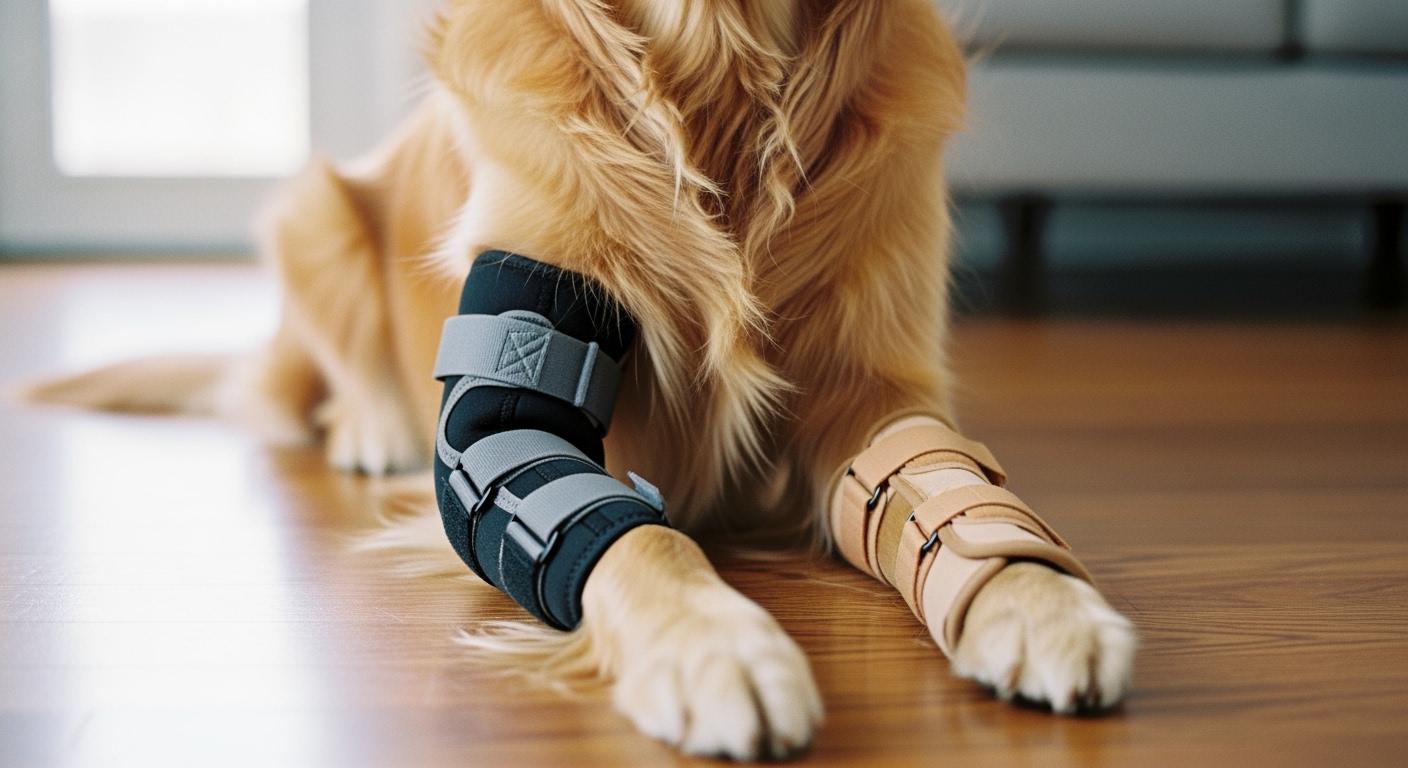
Choosing a dog brace for front leg elbow vs carpal support starts with one practical question: which joint actually needs stabilization. Elbow support and carpal support are not interchangeable because they protect different parts of the front limb, control different movement patterns, and solve different daily-use problems. If you want a broader overview of front leg brace categories before comparing elbow and carpal support directly, start with this front leg brace selection guide.
Das Wichtigste in Kürze
- Elbow braces are usually chosen for upper front-leg conditions such as elbow dysplasia, arthritis, or trauma around the elbow joint.
- Carpal braces are usually chosen for wrist instability, carpal hyperextension, sprains, and weak lower front-leg support.
- The right brace depends on joint location, movement control, fit complexity, and daily wear tolerance—not on appearance alone.
Dog Brace for Front Leg Elbow vs Carpal Support
Quick Comparison Table
It is important to compare elbow and carpal support by function, not just by brace shape. The table below works best when you use it to match the brace to the injured joint, the dog’s movement pattern, and the amount of control needed during daily use.
| Feature | Elbow Support Brace | Carpal Support Brace |
|---|---|---|
| Target joint | Elbow joint and upper front-leg support zone | Carpal joint and lower front-leg support zone |
| Best for | Elbow dysplasia, arthritis, upper-limb trauma, elbow instability | Carpal hyperextension, wrist sprains, weak carpal support |
| Movement control | Helps control elbow motion and upper-limb loading | Helps control wrist extension and lower-limb collapse |
| Fit complexity | Usually higher because the brace covers more of the upper leg | Usually lower because the brace fits the lower front leg |
| Daily wear feel | Bulkier, more coverage, often needs a break-in period | Slimmer, easier to tolerate for routine wear |
Tip: If you are still unsure which front-limb area needs support, compare this article with the front leg brace selection guide before moving into product choice.
Support Location and Joint Target
You should identify the injured joint before comparing brace styles. A dog brace for front leg elbow vs carpal support works on different parts of the front limb, so the choice depends on whether the problem sits at the elbow or lower at the wrist. Elbow braces support the upper front leg and the elbow joint, while carpal braces fit lower and support the wrist, also called the carpus.
The type of condition changes how much support is needed. Elbow braces are more often used for elbow dysplasia, arthritis, or upper front-leg instability. Carpal braces are more often used for carpal hyperextension, sprains, or weakness in the lower front leg. If you want a more specific educational page focused on elbow support, review this dog elbow brace terminology and safe-use guide. If the issue is lower in the limb, compare it with this dog carpal brace guide.
You should also think about fit and daily wear. Elbow braces usually cover more of the upper leg and may feel bulkier at first, while carpal braces are usually lighter and easier to tolerate for routine use. The right choice comes from matching the brace to the joint, the condition, and the dog’s real support needs.
Understanding Dog Leg Braces
Elbow Support Explained
Elbow support braces help the upper front leg by stabilizing the elbow joint, easing strain, and supporting movement in dogs with elbow dysplasia, arthritis, or upper-limb trauma. Because the elbow is higher on the limb and carries significant front-end load, elbow braces usually need broader upper-leg coverage and more careful fitting than lower-leg braces.
Here is a table that lists the main features of elbow support braces:
Feature | Description |
|---|---|
Targeted Elbow Support | Helps reduce pain and instability in the elbow joint. |
Custom Fit for Complex Anatomy | Shaped to fit each dog’s elbow and upper leg. |
Option for Hinged or Static Design | Can be rigid or allow some movement, depending on the dog’s needs. |
Durable, Waterproof Construction | Made from strong, easy-to-clean materials for daily use. |
Mechanical Strapping for Adjustability | Lets you adjust the fit as the dog’s condition changes. |
These braces work best when they reduce unstable elbow motion without making the dog walk in a stiff or awkward way. For broader product comparison, you can review the dog elbow brace category after reading this section.
Carpal Support Explained
Carpal support braces help the wrist portion of the front leg. They are usually chosen for carpal hyperextension, sprains, weak wrists, or lower front-leg instability where the goal is to keep the wrist steadier during walking and standing. Because the brace sits lower on the limb, it is usually simpler to fit and easier for dogs to tolerate during daily use.
Carpal braces are made from different materials for comfort and support. Look at the table below to see the materials and what they do:
Material Type | Benefits |
|---|---|
Breathable Fabrics | Comfort and flexibility |
Sturdy Plastics | Durability and stability |
Padding Variations | Extra comfort and support |
Fastening Systems | Easy to use and secure fit |
The brace should fit the leg closely to work well.
A good carpal brace keeps the joint steady and helps it heal.
Soft sleeves can help with mild arthritis or small sprains. They warm the joint and make it less stiff.
Carpal braces are most useful when the problem is clearly in the wrist and the dog needs lower-leg support rather than upper-leg stabilization. For current product options, review the dog carpal brace category.
Front Leg Braces for Dogs: Use Cases
Elbow Brace Conditions
Many front-leg problems around the elbow need broader upper-limb support than a wrist brace can provide. Elbow braces are usually considered for elbow dysplasia, arthritis, upper-limb instability, or recovery situations where the elbow joint needs more direct control during daily movement.
You would usually consider an elbow brace for these situations:
- Elbow dysplasia or chronic elbow arthritis
- Upper front-leg trauma near the elbow joint
- Instability or weakness that affects elbow loading
- Recovery plans where the elbow needs targeted support
Elbow braces are not a replacement for diagnosis, but they can be useful when the problem clearly sits at the elbow and when the dog can benefit from more upper-limb stabilization than a lower-leg brace can provide.
Note: Use an elbow brace when the support target is the elbow joint itself, not simply because the dog is limping on the front leg.
Carpal Brace Conditions
Carpal braces help the lower part of the front leg and are usually chosen when the wrist needs direct support. These braces are best matched to carpal hyperextension, wrist sprains, and lower front-leg weakness where the dog still benefits from movement but needs more controlled wrist positioning.
Common reasons to choose a carpal brace include:
- Carpal hyperextension injuries
- Sprains or strains in the wrist joint
- Weakness or instability in the lower front leg
A carpal brace is often easier for daily use because it is lighter and lower on the limb, but it only works when the support need is actually at the wrist rather than higher at the elbow.
Practical Comparison Factors
Movement Control
Movement control is one of the clearest differences between elbow and carpal support. Elbow braces are meant to help control motion higher in the limb, while carpal braces focus on wrist positioning and lower-leg stability. The right brace is the one that controls the injured joint without over-controlling the rest of the limb.
Fit Complexity
A good fit matters because elbow and carpal braces behave differently in daily use. Elbow braces usually need more careful measuring because they cover more of the upper leg and move across a larger range during walking. Carpal braces are usually easier to fit because they sit lower on the limb and have a simpler support path. For a broader comfort and fit reference, compare this section with the canine rehabilitation brace fit and safety guide.
| Fit Factor | Warum das wichtig ist |
|---|---|
| Accurate measurements | Help the brace stay aligned without rubbing or slipping. |
| Brace location | Upper-leg braces usually need more careful placement than lower-leg braces. |
| Material and structure | Change comfort, support feel, and daily wear tolerance. |
| Break-in period | Helps the dog adapt gradually and reduces early skin problems. |
Daily Wear Tolerance
Your dog should wear the brace as much as needed. Elbow braces can feel big because they cover more leg. Some dogs need time to get used to them. Carpal braces are lighter and easier for daily use. Watch your dog for rubbing or sore spots. A good fit and right support help your dog wear the brace longer.
Tip: Start with short sessions and increase only when the brace stays aligned and the skin stays clear. Daily wear tolerance matters more than forcing longer hours too early.
Use-Case Suitability
Pick the brace that matches the injured joint instead of starting from the product shape. Elbow braces are better when the problem sits at the elbow and needs upper-limb stabilization. Carpal braces are better when the problem is clearly lower in the limb and the wrist needs controlled support.
Choosing the right brace means comparing joint location, movement control, fit, and daily wear needs together. If you still need a broader decision framework before choosing, use the Dog Brace Solutions by Condition page alongside this article.
Pros and Cons of Dog Leg Braces
Elbow Brace Pros & Cons
Elbow braces are useful when the dog needs support higher on the front limb and the elbow joint itself is the problem. They usually offer more upper-leg coverage and more targeted elbow control than a wrist brace.
Pros:
- Support the elbow joint directly instead of the lower front leg
- Useful for elbow dysplasia, arthritis, and upper-limb instability
- Can improve comfort by reducing unstable elbow motion
Cons:
- Usually bulkier and more complex to fit than carpal braces
- Often need a longer break-in period for daily wear
- Can rub more easily if placement is not checked often
Note: Elbow braces are most useful when the support need is clearly at the elbow joint, not simply anywhere on the front leg.
Carpal Brace Pros & Cons
Carpal braces are more useful when the dog needs targeted wrist support and lower front-leg stability. They are usually simpler than elbow braces and often easier for routine daily wear.
Pros:
- Support the wrist directly for carpal hyperextension or sprains
- Usually lighter and easier to tolerate than upper-leg braces
- Often easier to fit and recheck during daily use
Cons:
- Do not solve elbow problems higher on the limb
- Less useful when instability is above the carpus
- Still need regular skin and alignment checks during wear
If you are ready to compare current wrist-support options, review the dog carpal brace category.
Choosing the Right Brace
Step-by-Step Decision Guide
You want to choose the best brace for your dog’s front leg, and the safest way is to work from the joint outward rather than from the product inward. Follow these steps:
- Identify whether the problem is at the elbow or at the carpus.
- Match the brace to the injured joint instead of choosing by appearance or price first.
- Measure the leg carefully so the brace can stay aligned without rubbing.
- Check how much movement control the dog actually needs in daily use.
- Decide whether the dog is more likely to tolerate upper-leg or lower-leg coverage.
- Ask a veterinary professional for help if the injury site or support level is unclear.
Tip: A brace only helps when it matches the joint, the condition, and the dog’s daily movement pattern at the same time.
Common Comparison Mistakes
Many comparison mistakes happen because buyers start with the product instead of the joint. The most common errors are choosing by appearance, overlooking fit complexity, and assuming a front-leg limp automatically means elbow support.
- Do not confuse elbow support with wrist support just because both are front-leg braces.
- Do not choose by price or shape before confirming which joint is affected.
- Do not ignore daily wear tolerance, especially with bulkier elbow braces.
- Do not assume the first brace choice stays correct if the dog’s condition changes.
When to Seek Broader Guidance
You should seek broader guidance when the injury site is unclear, the brace causes discomfort, or the dog may need more than local elbow or wrist support. In those cases, use the Dog Brace Solutions by Condition page first, then return to elbow or carpal product comparison only after the support goal is clearer.
Note: Proper fitting and accurate joint targeting do more for brace success than comparing product features in isolation.
You get better results when you match the brace to the correct front-leg joint instead of treating elbow and carpal support as interchangeable. Elbow braces are usually better for upper front-leg instability and elbow conditions, while carpal braces are usually better for wrist instability and lower front-leg support. For next steps, continue to the front leg brace selection guide, the dog elbow brace category, the dog carpal brace category, or the Solutions by Condition page depending on whether you still need education, product comparison, or broader condition matching. Data authenticity note: This article is for educational purposes only. It is designed to help readers compare elbow and carpal support for front-leg bracing, not to replace veterinary diagnosis or individualized treatment advice.
Häufig gestellte Fragen
What is the main difference between an elbow brace and a carpal brace?
An elbow brace supports the upper front leg at the elbow joint, while a carpal brace supports the lower front leg at the wrist. They target different joints and solve different support problems.
How do I know which joint needs support?
Check where the pain, weakness, or instability actually sits. If the problem is higher at the elbow, compare elbow braces first. If the wrist sags, twists, or lacks lower-leg support, compare carpal braces first.
Can my dog wear these braces all day?
Most dogs should start with short wear sessions first. Increase time only when the brace stays aligned and the skin stays clear. Daily wear tolerance matters more than forcing longer use too early.
Do I need a custom brace for every dog?
No. Many dogs can use ready-made braces if the measurements and support goal are clear. Custom braces are more useful when the injury is complex or the leg shape makes standard fit unreliable.
Where can I find more guidance on brace selection?
Use the front leg brace selection guide for joint-matching help, then compare elbow or carpal categories only after you are sure which front-leg joint needs support.
