
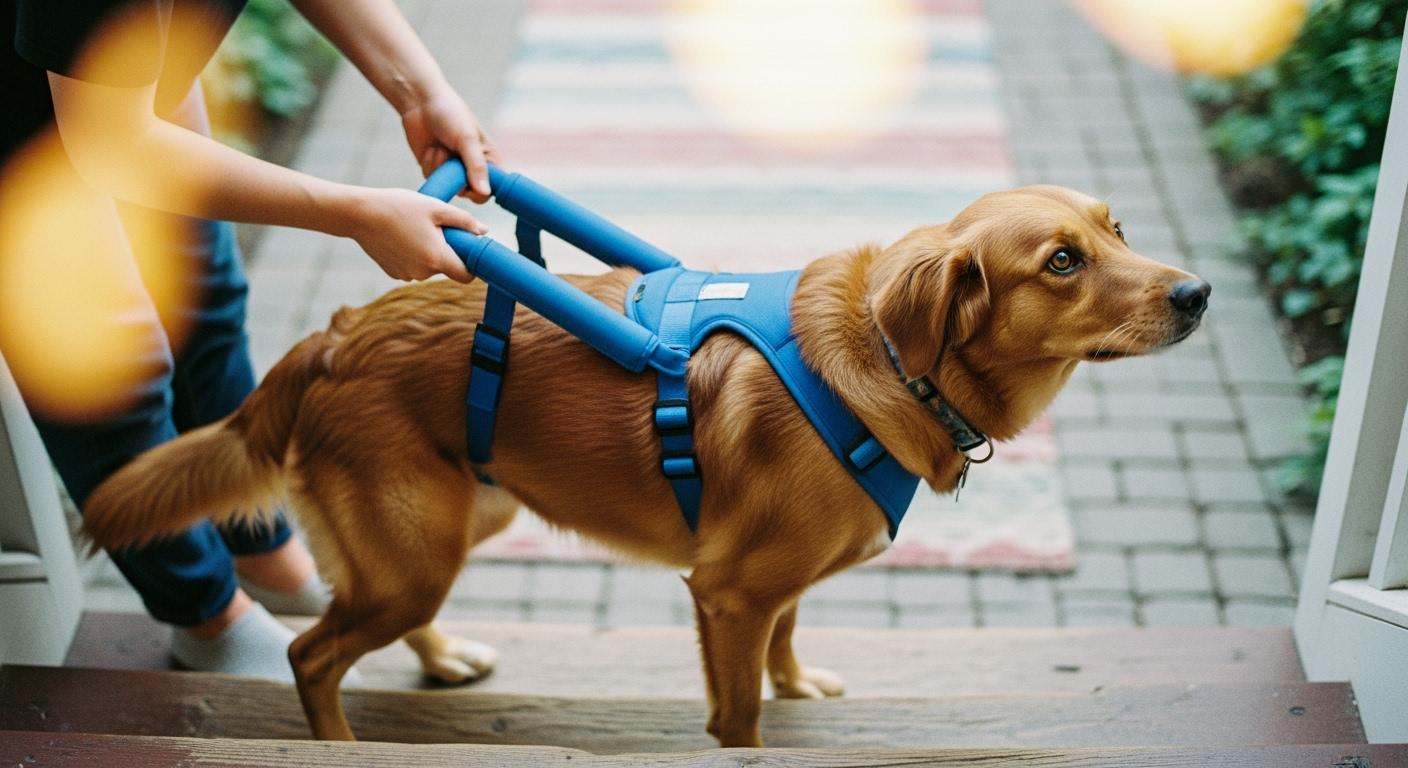
Dog lift harness should be judged by one practical question: does your dog only need rear-end lifting, or does the whole body need support during stairs, bathroom breaks, short walks, and transfers. Rear-lift harnesses usually work better when the front legs still carry weight well. Full-body harnesses usually work better when balance, front-end support, or broader lifting control also matter. If you want a broader mobility framework before choosing a harness type, start with the GaitGuard guides hub.
Das Wichtigste in Kürze
- Rear-lift harnesses usually fit better when the front legs still work well and the main issue is hind-leg weakness.
- Full-body harnesses usually fit better when your dog needs broader balance control, front-and-rear support, or safer transfers.
- The best dog lift harness still depends on accurate fit, load distribution, and whether your dog can tolerate daily assisted movement comfortably.
What Is a Dog Lift Harness and When to Use It
A dog lift harness is a mobility-assist tool that lets you share part of your dog’s body weight during standing, walking, stairs, bathroom trips, and short transfers. It is most useful when your dog still wants to move but cannot handle the full load alone. A lift harness is not the same as a brace. It helps with assisted movement, not direct joint stabilization. For hind-leg cases, compare this page with the dog lift harness solution page for hind-leg weakness.
Tip: A lift harness helps with assisted movement. It should not be treated as a replacement for diagnosis, activity control, or joint-specific bracing when the real problem needs another support path.
Daily Support Scenarios: Stairs, Walks, Bathroom Breaks
You may need a dog lift harness in several daily situations, but the support type should match the task:
- stairs: rear-lift can work when the front legs are steady, while full-body support is safer when balance is poor
- bathroom breaks: rear-lift is often enough when the main problem is hind-leg weakness
- car transfers: full-body support usually gives better lifting control for bigger or less stable dogs
- short walks: the harness should steady movement without turning every walk into a full suspension event
- standing from rest: the harness should help your dog rise without twisting the body awkwardly
These scenarios show why the better question is not “Do I need a lift harness?” but “Which lift harness type fits the task best?” For condition-specific planning, compare this page with the IVDD dog lift harness guide.
Signs Your Dog Needs a Lifting Harness
You should look for signs that your dog needs assisted lifting instead of just more encouragement to keep moving:
- hesitation on stairs
- difficulty standing up from the floor
- hind legs buckling or dragging during short trips outside
- repeated loss of balance during bathroom breaks
- fatigue or instability that appears before the walk is actually long
- post-surgical or senior-dog mobility loss that makes transfers harder
If you notice these signs, a lift harness may help with safer daily mobility. For senior-dog use cases, compare this page with the senior dog mobility support harness guide.
Types of Dog Lift Harnesses for Mobility Support
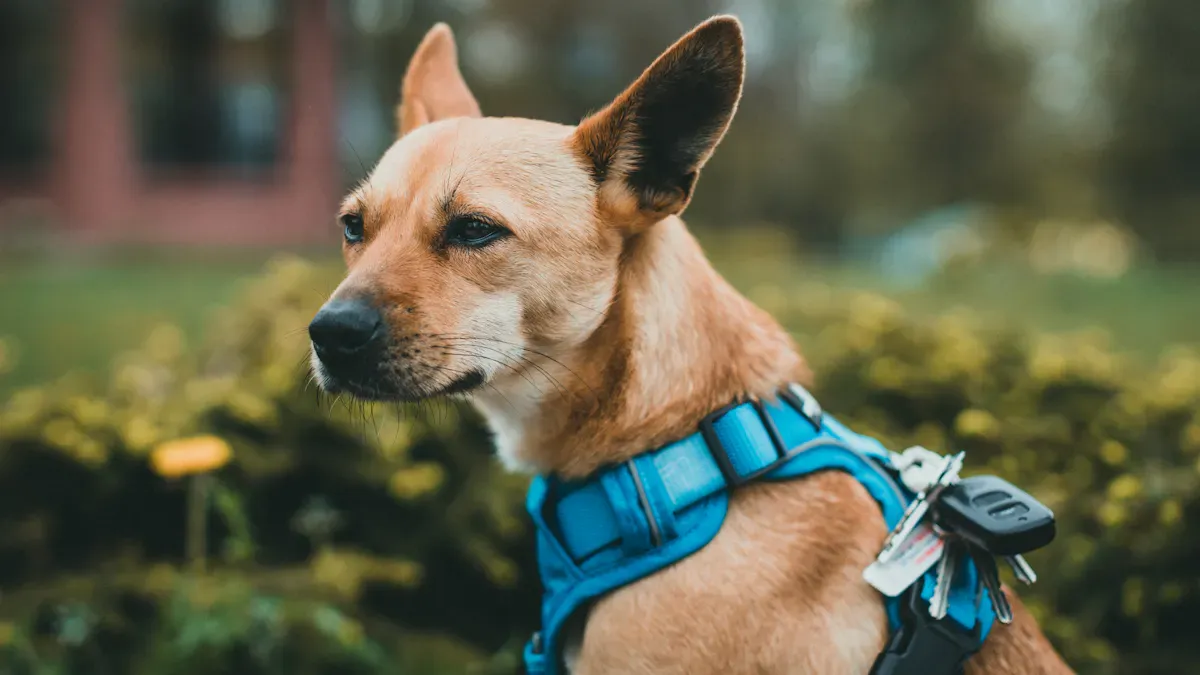
Choosing the right support harness for your dog starts with understanding the main types available. Each harness type offers different levels of lifting and support. You want to match the harness to your dog’s specific mobility issues and daily needs.
Rear-Lift Harnesses for Hind-Leg Weakness
Rear-lift harnesses work best when the front legs still manage weight fairly well and the main problem is behind the ribcage. You use rear-lift support to help your dog stand, steady the hindquarters, and manage short tasks like stairs, bathroom breaks, and brief walks when the back legs cannot carry enough load confidently.
These harnesses are usually the better fit for dogs with hind-leg weakness, post-surgical rear-end recovery, or senior-dog mobility decline that is mostly rear-focused. They are often simpler than full-body harnesses and easier for quick daily support. For broader hind-leg planning, compare this section with the hind-leg weakness solution page.
Tip: If your dog has ongoing hind-leg weakness, you can find more advice in our solution page for hind-leg weakness.
Full-Body Dog-Lifting Harnesses for Overall Support
Full-body lifting harnesses support both the front and rear of the dog. They make more sense when your dog does not have a rear-only problem and needs broader balance control during transfers, standing, or walking assistance.
Dogs with more global weakness, poor balance, front-and-rear instability, or heavier transfer needs often benefit more from this style. A full-body harness usually gives you better control when helping your dog on stairs, into the car, or through harder daily transitions.
- support points at both the chest and rear
- better balance during assisted walking
- more stable control for larger or less steady dogs
- a better path when your dog’s needs may change over time
Full-body harnesses work best for dogs with weakness in both the front and back legs, or for dogs who need total body support. You can use them for daily walks, bathroom trips, or helping your dog move around the house.
Choosing the Right Lifting Harness for Your Dog
You should choose a dog lift harness by asking where support is truly needed and what daily task is hardest right now. Use this comparison instead of treating all lifting harnesses as interchangeable:
| Harness Type | Usually Best For | Main Strength | Main Limitation |
|---|---|---|---|
| Rear-Lift Harness | Hind-leg weakness with stable front-leg function | Fast daily support for stairs, bathroom breaks, and short walks | Not enough when front-end balance also needs help |
| Full-Body Harness | Front-and-rear weakness, poor balance, harder transfers | Better control and weight distribution | More setup and broader coverage than some dogs need |
The better harness is the one that matches both the support zone and the task. For product comparison after this section, review the full-body lift harness and the broader products hub.
When choosing between rear-lift and full-body harnesses, consider these factors:
Level and location of support needed (rear legs only or full body)
Your dog’s mobility condition (weak back legs, front leg weakness, or both)
Adaptability of the harness as your dog’s needs change
Comfort and fit for daily use
Durability and ease of use
You may see other lifting products, but this page works best when it stays focused on the two main decision paths most owners compare first: rear-lift versus full-body support.
Note: If your dog has changing mobility needs or a progressive condition, a full-body harness may offer the best long-term support. For more tips on daily mobility, visit our daily mobility support page.
A dog lift harness can make a big difference in your dog’s quality of life. You help your dog stay active, safe, and comfortable by choosing the right support harness for their needs.
How to Assess Fit and Comfort in Dog Lifting Harnesses
Measuring Your Dog for Proper Fit
Your dog lift harness should fit just right because poor fit changes both comfort and lifting safety. Start by measuring the areas that actually carry load in the harness design.
- Measure the chest girth at the widest point behind the front legs.
- Measure the support zone around the belly or rear support area, depending on the harness style.
- Measure body length between the front and rear support zones if the harness uses both.
- Check clearance around the armpits and groin so the harness does not rub during movement.
- Compare every number to the exact size chart before choosing a size.
The harness should stay secure without blocking shoulder movement, digging into the abdomen, or forcing the dog into an unnatural walking pattern. If the harness is too loose, support becomes unstable. If it is too tight, pressure and rubbing show up quickly.
Tip: Check measurements twice, then confirm the fit under movement after the harness is on. A lift harness that looks fine at rest can still fail once the dog starts walking or climbing.
Comfort Features: Padding, Weight, Adjustability
Comfort matters because a dog lift harness has to do more than “fit.” It has to distribute load safely, stay wearable during repeated use, and make assisted movement easier instead of more awkward.
- Padding: soft contact zones reduce rubbing at the chest, belly, and support points
- Adjustability: lets you fine-tune load distribution instead of forcing one tight setting
- Weight: lighter construction helps reduce daily fatigue for both dog and handler
- Handle position: better handle height improves control and reduces awkward lifting angles
- Easy-on/Easy-off design: improves routine use and lowers resistance from the dog
| Feature | Warum das wichtig ist |
|---|---|
| Padding | Helps reduce pressure and rubbing during assisted lifting. |
| Adjustability | Helps the harness stay secure without over-tightening. |
| Load distribution | Keeps support from concentrating too much on one area. |
| Handle placement | Improves control during stairs, transfers, and short walks. |
| Lightweight build | Makes daily use easier for both the dog and the handler. |
These comfort features help your dog stay active and safe. They also make lifting easier for you every day. You can use a support harness for walks, stairs, bathroom trips, or therapy. Dogs with weak back legs, arthritis, or paralysis need these features.
Common Mistakes to Avoid When Buying
You want to avoid mistakes that make the harness harder to use or less safe than it should be. The most common buying errors are:
- choosing rear-lift support when the dog really needs full-body balance help
- choosing full-body support when the dog only needs simpler rear assistance
- buying by size label instead of measuring the actual support zones
- ignoring padding and load distribution
- using a harness that blocks natural movement or rubs under load
- choosing a design that is too hard to put on during daily routines
Note: A support harness that fits well helps your dog live better. It lets you lift, balance, and support your dog every day.
You can avoid these mistakes by checking fit, comfort, and design before you buy. A good dog lift harness helps your dog and makes lifting easier for you.
Using a Lifting Harness for Your Dog Safely
Tips for Stairs, Walks, and Bathroom Breaks
You want your dog to feel safe and comfortable when using a dog lift harness, so daily use should follow a few simple rules. Start by checking fit before every session. Straps should feel secure without digging in. When lifting, use the harness to guide and assist, not to yank or fully suspend the dog unless the harness is designed for that level of support and the situation truly requires it.
For stairs, keep the pace slow and controlled. For walks, use short sessions and stop before fatigue changes gait. For bathroom breaks, support enough weight to steady the dog without over-lifting. For car transfers, make sure the dog is balanced before the full movement begins. Remove the harness when the dog rests for longer periods and recheck the skin after daily use.
| Safety Rule | Warum das wichtig ist |
|---|---|
| Check harness fit before each use | Prevents pressure points and unstable lifting. |
| Lift smoothly, not abruptly | Reduces twisting and sudden strain. |
| Keep stairs and walks short at first | Prevents fatigue-driven movement errors. |
| Inspect the skin after use | Helps catch rubbing before it becomes a tolerance problem. |
For stair-specific caution signs, compare this section with the dog stairs after surgery guide.
Helping Your Dog Adjust to a Harness
You can help your dog get used to a lift harness with short, calm sessions and positive reinforcement. Let the dog inspect the harness first, then practice putting it on without immediately asking for a full lift or a long walk. Reward calm behavior and stop early if the dog becomes tense or resistant.
During the first few sessions, focus on three things: the dog accepts the harness, the fit stays stable, and assisted movement feels controlled instead of confusing. Build from standing help to short transfers, then to stairs or walks only after the dog looks comfortable.
- use treats and praise during fitting
- start with short wear and short assisted movement
- avoid rushing straight into a hard task like stairs
- stop and reassess if the dog shows stress or discomfort
You can make daily life easier for your dog by choosing the right dog lift harness and then tracking whether it actually works in daily use. Use this simple handling log:
| Date | Task | Harness Type | Dog Response | Skin / Pressure Check | Next Step |
|---|---|---|---|---|---|
| Example | stairs / bathroom / walk | rear-lift / full-body | steady / hesitant / worse | clear / rubbing / pressure | hold / adjust / change task |
Use this checklist before committing to one harness style:
- Decide whether the dog needs rear-only help or broader full-body support.
- Measure the actual support zones instead of estimating size.
- Test fit and movement during a short controlled session.
- Check for rubbing, fatigue, or loss of balance after use.
For broader mobility planning, continue to the GaitGuard guides hub and the products hub.
Choosing the right dog lift harness becomes easier when you stop treating every mobility problem as the same. Rear-lift harnesses usually fit better when the front legs still work well and the real weakness is in the back end. Full-body harnesses usually fit better when your dog needs more balance control, broader support, or safer transfers. Data authenticity note: This article is for educational purposes only. It is designed to help readers compare dog lift harness support paths, not to replace veterinary diagnosis or individualized treatment advice.
Häufig gestellte Fragen
What are common dog-lifting harness uses?
You can use a dog lift harness for stairs, bathroom breaks, short walks, standing assistance, and selected transfers. It is most useful when your dog still wants to move but needs safer weight-sharing during daily tasks.
Can a dog lift harness help with hind leg paralysis?
Yes, a dog lift harness can help with hind-leg paralysis or major hind-end weakness, but the harness type matters. Rear-lift support may be enough in some cases, while other dogs need broader full-body control.
When should you choose a front and back harness?
Choose a front-and-back or full-body harness when your dog has weakness at both ends, poor balance, or harder transfer needs that rear-only support cannot manage safely.
Are combination harnesses good for degenerative myelopathy?
Yes, broader support harnesses can be helpful for degenerative myelopathy because support needs often change over time. A more adaptable harness usually works better than a very narrow support path when balance and rear-leg control keep changing.
How does a dog lift harness support rehabilitation therapy?
A dog lift harness can support rehabilitation by improving balance, helping with safe assisted walking, and reducing uncontrolled strain during daily tasks. It works best when the harness type matches the dog’s real support needs and the task is kept controlled.
