
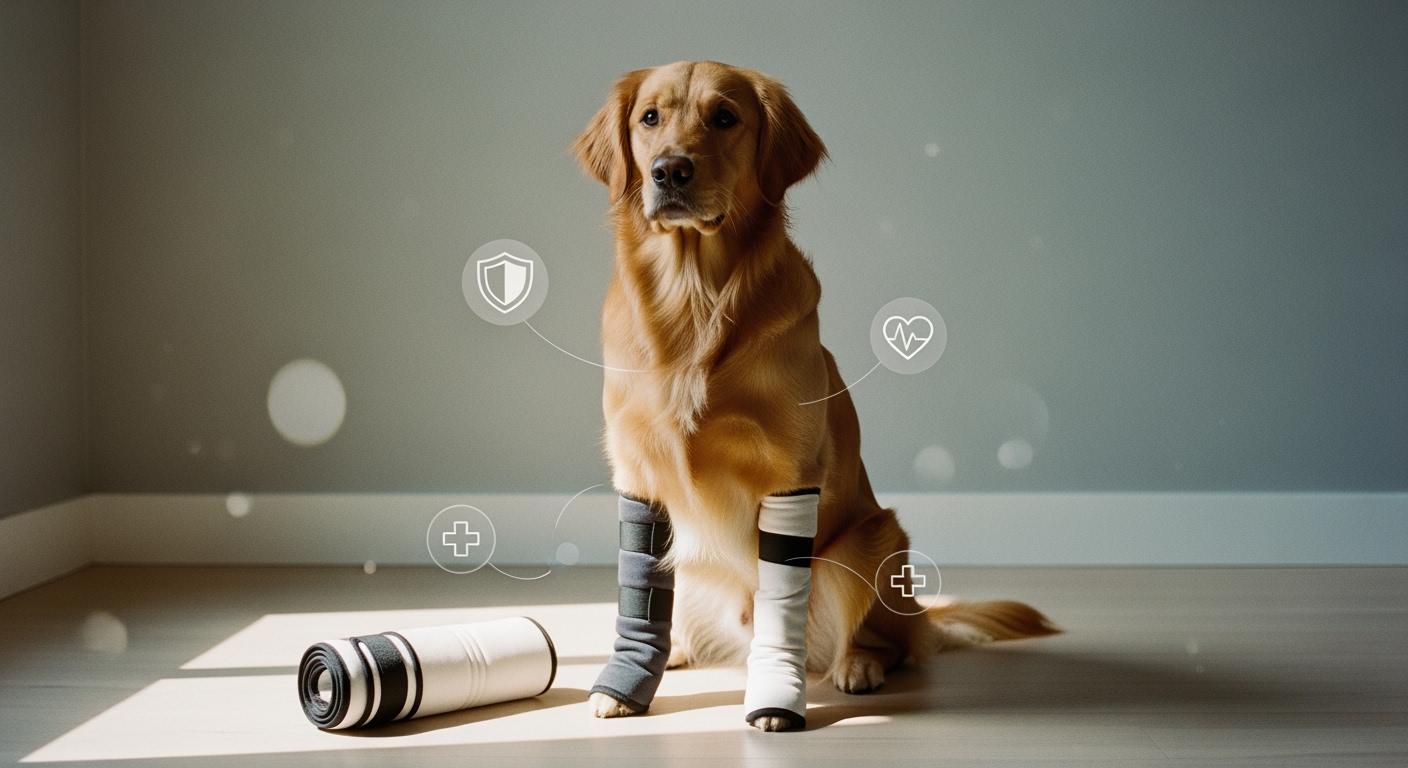
A dog sleeve should be chosen by one practical question: does your dog need coverage and anti-lick protection, or does the case actually need a more structured brace. Dog sleeves are usually best for wound coverage, bandage protection, light daily comfort, and helping reduce licking or scratching. They are not the same as full joint-support braces. If you want a broader fit-and-coverage framework before comparing sleeve types, start with the dog leg sleeve guide and compare it with the dog braces collection when stronger support may be needed.
Das Wichtigste in Kürze
- Dog sleeves are usually best for wound coverage, anti-lick protection, and soft daily comfort rather than strong joint stabilization.
- Front leg, hind leg, and recovery sleeves solve different protection problems, so sleeve choice should follow body location first.
- If the main need is real joint control or instability management, a brace may be a better fit than a sleeve.
What Is a Dog Sleeve?
Definition and Uses
A dog sleeve is a soft protective cover that goes over part of your dog’s leg or body. You use it mainly for wound coverage, anti-lick protection, bandage protection, light compression, and daily comfort during recovery. A sleeve is usually less bulky than a cone and easier for many dogs to tolerate, but it should not be confused with a structured brace that is meant to control a joint more directly.
Note: A dog sleeve can improve protection and daily comfort, but it does not replace diagnosis or structured veterinary treatment when the problem is deeper than the skin or bandage area.
Types: Front Leg, Hind Leg, Recovery
The word “dog sleeve” means different kinds of protective gear. Each type helps with a different problem, depending on where your dog needs help.
| Type | Main Use | Usually Best For |
|---|---|---|
| Front Leg Sleeve | Protects the forelimb and helps cover wounds or bandages | Front-leg licking, elbow-area coverage, forelimb skin protection |
| Hind Leg Sleeve | Protects the rear limb and helps cover healing areas | Back-leg wound coverage, anti-lick protection, soft post-procedure coverage |
| Recovery Sleeve or Suit | Covers a larger area of the body for recovery management | Post-surgical protection, multi-area coverage, cone alternative in selected cases |
| Single-Limb Protective Sleeve | Targets one leg with lighter, more focused coverage | Localized wound or bandage protection without full-body coverage |
You might pick a front leg sleeve if your dog has a forelimb wound, bandage, or anti-lick problem. A hind leg sleeve is usually better when the protection need is isolated to the rear limb. Recovery sleeves or suits make more sense when your dog needs broader post-surgical coverage or a softer alternative to more restrictive recovery tools.
Dog sleeves give special protection and comfort. They are usually easier for your dog than cones and let your dog walk, rest, and play more easily. You should check the sleeve often to make sure it fits and stays clean, so your dog stays safe and happy.
Identifying the Right Sleeve Type
Choosing the right dog sleeve starts with one decision: what exactly needs coverage. You want to match the sleeve to the body location, the anti-lick risk, the kind of wound or bandage protection needed, and how much daily movement your dog still needs to tolerate comfortably.
When to Use a Front Leg Sleeve
You should use a front leg sleeve if your dog has a wound, bandage, or skin problem on the forelimb and the main goal is coverage rather than structural joint control. This type of dog sleeve works well for:
- protecting wounds from dirt and licking
- covering bandages or light forelimb dressings
- helping manage skin conditions, hotspots, or anti-lick needs
- giving softer post-procedure coverage during daily movement
Front leg sleeves can also help with elbow-area coverage and pressure-point protection. If your dog has a true elbow or carpal stability problem rather than a coverage problem, compare sleeves with the dog braces collection. For licking and wound-management options, review the dog anti-lick collection.
When to Use a Hind Leg Sleeve
A hind leg sleeve is best for dogs that need soft protection on the back leg rather than true knee stabilization. Common reasons include covering a healing area, protecting a bandage, reducing licking, or adding light daily comfort after a procedure. If the real problem is CCL-related knee instability, a sleeve is usually too soft to act as the main support path. In those cases, compare the sleeve decision with the dog knee brace category instead of treating a hind leg sleeve as the same thing.
When to Use a Recovery Sleeve
A recovery sleeve covers a larger area and makes the most sense when your dog needs broader post-surgical or post-injury protection. You might choose this kind of sleeve if the goal is to reduce licking, protect more than one healing area, or use a softer alternative to more restrictive recovery tools in selected cases.
Here is a quick look at the benefits of a recovery sleeve:
| Feature | Recovery Sleeve Value |
|---|---|
| Broader protection | Shields larger healing areas on the body or limbs. |
| Anti-lick management | Helps reduce licking and scratching across a wider recovery zone. |
| Mobility-friendly design | Usually allows easier daily movement than bulkier recovery tools. |
| Routine practicality | Makes wound checks and daily recovery management easier to repeat. |
If your dog needs full-body coverage or has multiple wounds, a recovery sleeve can help. For more ideas on recovery and wound protection, visit our recovery solutions page.
Remember, always check with your vet before choosing a dog sleeve. The right sleeve can support healing, but it does not replace professional care.
Dog Sleeve: Key Features to Consider
Once you know your dog really needs a sleeve rather than a brace, the next job is to compare fit, material, protection level, and daily wear tolerance.
Fit and Sizing Tips
You want your dog’s sleeve to fit just right. A sleeve that is too loose can twist or slide, while one that is too tight can create rubbing, heat, or pressure marks. Always measure the area that actually needs coverage, including both length and circumference where the sleeve must anchor. Look for sleeves with enough adjustability to stay in place without over-tightening. Avoid guessing size from breed alone, because poor fit is one of the fastest ways to turn a protective sleeve into a daily irritation problem.
Material and Comfort
The best sleeves use a blend of natural and synthetic materials. This mix gives strength and durability but still feels soft on your dog’s skin. Lightweight and breathable fabrics help keep your dog cool and comfortable. Some sleeves use ergonomic designs to match your dog’s shape. This helps your dog move freely and reduces stress. You want a sleeve that does not wear down your dog’s fur or cause irritation. Soft, stretchy materials also make it easier for your dog to walk, rest, and play.
Protection Level
A good dog sleeve should cover the wound or protection zone without blocking normal movement. The sleeve should keep the area cleaner, reduce licking access, and improve daily comfort, but it should not be expected to perform like a structured joint brace. Always check that the sleeve protects the right spot and does not limit natural movement more than the recovery need requires.
Ease of Use and Cleaning
You want a sleeve that is easy to use and clean. Look for these features:
| Feature | Warum das wichtig ist |
|---|---|
| Soft, breathable fabric | Improves daily comfort and helps reduce moisture buildup. |
| Adjustable fasteners | Help keep the sleeve stable without forcing one tight setting. |
| Machine-washable design | Makes regular cleaning easier and more realistic. |
| Simple on-off routine | Improves consistency for daily wound checks and skin monitoring. |
| Correct sizing and coverage length | Help the sleeve protect the right area without twisting or sliding. |
Tip: Always follow the care instructions for your sleeve. Clean it often to keep your dog’s skin healthy.
Remember, a dog sleeve supports healing but does not replace your vet’s advice. Check the fit often and watch for signs of discomfort. If you are unsure, ask your vet for help.
Using and Monitoring Your Dog Sleeve
How to Put On and Adjust
Start by applying the sleeve during a short calm session instead of during busy activity. Slide the limb through gently, smooth the fabric so it does not bunch, and secure the sleeve so it stays aligned without squeezing. After application, walk your dog a few steps and recheck whether the sleeve twists, shifts, or creeps downward.
Tip: If you need more options or want to compare different styles, visit our dog sleeve product page or browse the sleeve category for more choices.
Checking Comfort and Fit
You need to check your dog’s comfort every day. Watch for signs that the sleeve does not fit well or causes irritation:
- red marks, pressure spots, or rubbing
- fabric sliding, twisting, or bunching during movement
- the sleeve drifting away from the intended protection area
- your dog trying to remove the sleeve or acting less comfortable in it
A proper fit means the sleeve stays anchored on the target area without changing your dog’s movement too much. If you see these signs, adjust the sleeve or change size before the next full wear session.
Mistakes to Avoid
Do not ignore your dog’s reaction to the sleeve. Common sleeve mistakes include using the wrong sleeve type for the problem, leaving a damp or dirty sleeve on too long, and treating the sleeve as a substitute for actual support when the dog really needs a brace.
- Watch how your dog moves with the sleeve on.
- Check whether the sleeve still protects the right area after activity.
- Change size, style, or support path if the current sleeve is not working.
You should also monitor healing, fit, and cleanliness with a simple daily log:
| Date | Wear Time | Skin Check | Sleeve Position After Use | Next Step |
|---|---|---|---|---|
| Example | 45 min | clear / red / rubbing | stable / twisted / slipped | hold / increase / adjust |
Check the fit and comfort often. If you feel unsure, ask your vet for advice. For more recovery and anti-lick support, explore our related articles and product categories.
Picking the right dog sleeve helps your dog heal better when the sleeve type matches the real protection need. The best sleeve decision usually comes down to four things:
- identify whether the need is front leg, hind leg, or broader recovery coverage
- confirm that the goal is protection and anti-lick management rather than true joint control
- measure carefully so the sleeve stays in place without rubbing
- monitor skin, cleanliness, and sleeve position during daily use
For next steps, continue to the dog leg sleeve guide, the dog recovery sleeve solution page, the dog anti-lick collection, or the dog braces collection depending on whether you still need sleeve guidance, recovery planning, anti-lick options, or stronger support comparison. Data authenticity note: This article is for educational purposes only. It is designed to help readers compare dog sleeve options for protection and recovery support, not to replace veterinary diagnosis or individualized treatment advice.
Häufig gestellte Fragen
How do I know which dog sleeve my dog needs?
Look at where your dog needs coverage first. Front leg sleeves help the forelimb, hind leg sleeves cover the rear limb, and recovery sleeves protect larger areas or help reduce licking across a broader recovery zone.
Can my dog wear a sleeve all day?
Yes, many dogs can wear a sleeve during the day, but you still need regular skin checks, cleaning breaks, and fit checks after activity. Remove the sleeve when it becomes damp, dirty, or irritating.
How do I measure my dog for a sleeve?
Use a soft tape measure and measure the exact area that needs coverage, including both length and circumference where the sleeve must stay anchored. Then compare those numbers to the specific size chart for that sleeve style.
Will a dog sleeve stop my dog from licking wounds?
Yes, a dog sleeve can help reduce licking by covering the area, but you should still watch your dog closely. If licking continues or the sleeve keeps shifting, the recovery plan may need to change.
How do I clean a dog sleeve?
Many sleeves are machine-washable, but you should always follow the care instructions for the exact product. Clean the sleeve often enough to keep dirt, moisture, and skin irritation from building up during daily wear.
