
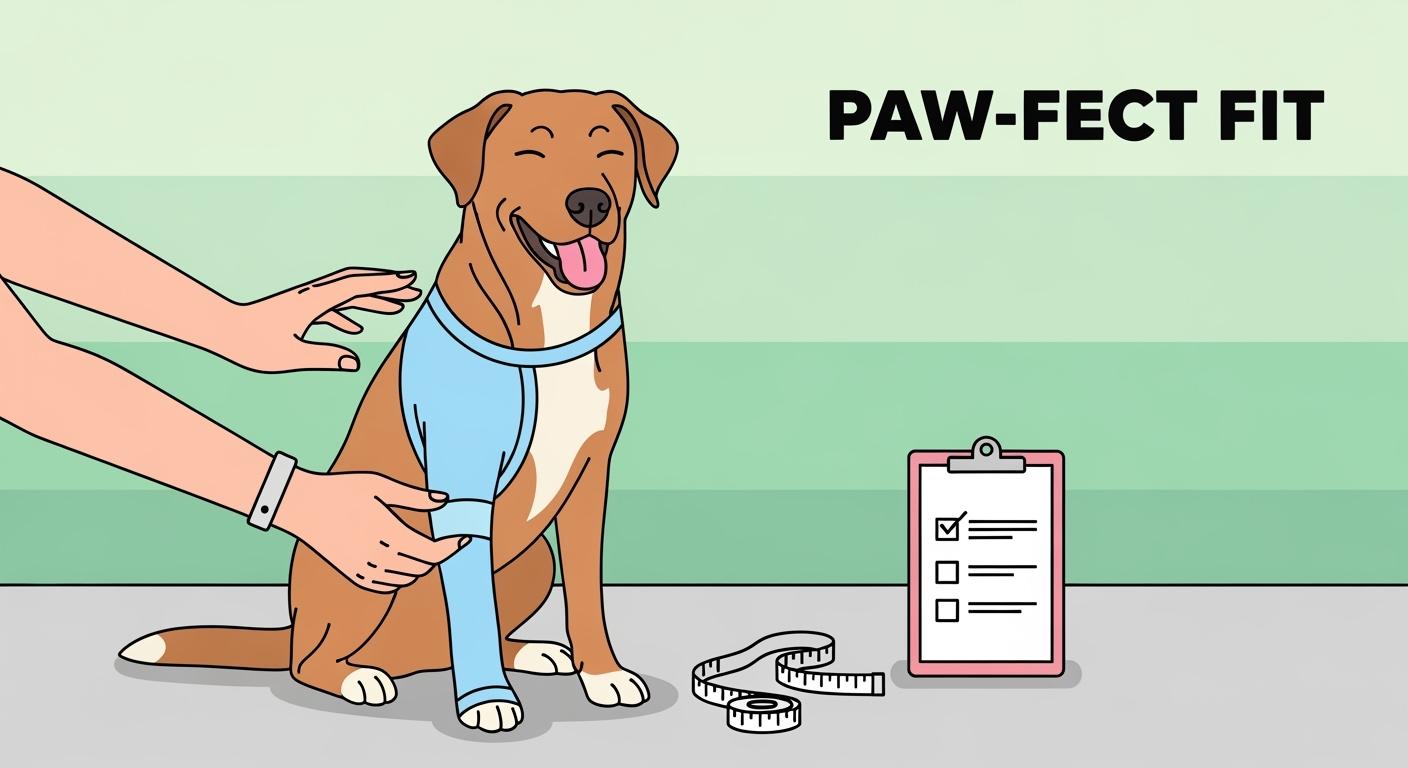
A Dog Sleeve for Front Leg can reduce licking only when it covers the exact target area, stays in place during normal movement, and does not create new rubbing. The real fit check is not whether the sleeve looks snug in your hand. It is whether your dog can walk, sit, lie down, and rest without reaching the wound or developing skin irritation.
Use the checks below before you rely on a sleeve for daily wear, outdoor breaks, or post-injury protection. They help owners choose the right coverage zone and help support teams reduce avoidable returns caused by wrong sizing, wrong expectations, or wrong product category.
Key takeaways before you fit the sleeve
A front-leg sleeve is mainly a coverage product. It can shield skin or a bandage, but it does not stabilize a weak joint.
The sleeve must cover the area your dog can reach. If your dog can lick around an edge, the coverage zone is wrong or the fit needs adjustment.
The first supervised session should focus on movement, reach, skin response, and stress signals rather than wear time alone.
Stop use and contact your veterinarian if you see swelling, heat, discharge, bleeding, worsening limping, repeated chewing, or clear pain signs.
Why a front-leg dog sleeve fails after purchase
Most sleeve problems start before the dog wears it. A customer may expect support from a soft sleeve, choose a size from leg length only, or miss the fact that the dog licks from an angle the sleeve does not block. The same expectation gap appears with other recovery products, so it helps to separate coverage from support before sizing. The principles behind brace fit comfort and safety also apply here: fit matters only when it works during real movement.
Used for support instead of coverage
A Dog Sleeve for Front Leg provides soft coverage, not structural support. It may protect skin, reduce direct licking, or help keep a light dressing cleaner, but it cannot stabilize the carpus, elbow, or shoulder. If the main concern is limping, wobbling, collapse, or joint instability, a sleeve is the wrong starting point. Support decisions belong in a brace or veterinary assessment path, not in a soft coverage sleeve.
Wrong coverage zone
The sleeve has to cover the actual lick target. A lower-leg sleeve will not protect an elbow sore if the elbow remains exposed, and a broad upper-leg sleeve may twist if the problem is closer to the wrist. When support teams handle return requests, the first useful question is not “What size did you buy?” It is “Where is the dog licking, and can the dog still reach that spot while wearing the sleeve?”
Licking around the edges
Some dogs stop licking the center of the covered area but shift to the sleeve edge. That usually means the sleeve is too short, too loose, poorly centered, or not the right product for the location. A sleeve can block access to a reachable skin area, but it cannot solve chewing driven by pain, anxiety, infection, or a wound that needs veterinary care.
Tip: When a sleeve fails, check three things in order: the wound location, the dog’s reach around the edges, and whether the buyer expected joint support rather than skin coverage.
Map the coverage need before choosing a size
Choosing the right front-leg coverage area prevents many fit problems. Match the sleeve to the body part first, then confirm size, adjustability, and movement tolerance. If the location is unclear or symptoms are changing, ask your veterinarian before relying on any recovery garment.
Front-leg area | Common need | Sleeve can help when | What to watch |
|---|---|---|---|
Lower front leg | Licking, minor skin irritation, bandage shielding | The sleeve covers the target without sliding toward the paw | Bunching, paw interference, swelling below the sleeve, edge chewing |
Elbow area | Elbow licking, pressure-area protection, light padding needs | The sleeve stays centered while the dog lies down and rises | Restriction when bending the leg, rubbing at the elbow point, twisting |
Upper front leg | Broad skin coverage or a wound above the elbow | The fabric follows the leg without pulling across the shoulder | Rotation, shoulder restriction, loose fabric that the dog can grab |
Wrist or carpal area | Light coverage near the wrist | The need is skin protection, not joint support | Sliding, pressure lines, mistaken use for instability |
Paw-side licking | Chewing or licking close to the paw | The sleeve can block access without covering the paw incorrectly | Dogs often reach this area easily, so another barrier may be safer |
Lower front leg
A lower-leg sleeve should sit flat without sliding toward the paw or bunching above the target area. Check the skin above and below the sleeve after short wear sessions. If the paw looks swollen, the sleeve leaves deep pressure marks, or the dog changes gait, remove it and reassess the size and product choice.
Elbow area
The elbow is harder to cover because the dog bends the joint, lies on it, and rises with pressure through that point. A sleeve can help keep the area covered, but it cannot remove the underlying pressure or treat an open sore. Watch the dog getting up from the floor; the sleeve should stay centered and should not make the dog avoid using the leg.
Upper leg and shoulder
Upper-leg coverage needs soft, flexible material that does not pull across the shoulder. Breathable fabric may help comfort, but comfort still depends on fit, skin response, and whether the dog accepts the garment. If the sleeve rotates after a few steps, size and strap placement matter more than simply tightening it.
Paw and wrist cases
Paw-side and wrist-area problems need extra caution. A sleeve may shield a small area, but it should not be used as a substitute for a brace when the problem is instability. For broader recovery planning, condition-based support needs should guide whether coverage, support, wound care, or veterinary reassessment comes first.
Decision rule: Choose a sleeve when the problem is reachable skin coverage. Choose another option when the problem is joint instability, worsening wound signs, or licking the sleeve cannot block.
Fit checks that reduce licking and returns
The sleeve should pass four checks before daily use: coverage, movement, reach, and skin response. These checks are more useful than judging tightness by sight alone. They also give customer support teams concrete questions to ask before recommending a size exchange or a different product category.
1. Confirm coverage before fastening
Place the sleeve so the center of the protected area covers the wound, hot spot, pressure point, or bandage edge. The sleeve should not leave the target exposed when the dog stands normally. If the target falls between two sleeve zones, do not assume a tighter fit will fix it; choose a different coverage style or ask your veterinarian what protection is appropriate.
2. Check movement before extending wear time
Watch your dog walk, sit, lie down, turn, and rise. The sleeve should stay centered without twisting, sagging, or pulling the shoulder forward. If your dog shortens the stride, freezes, paws at the sleeve, or refuses to move, remove it and check whether the fabric is rubbing, too tight, or positioned over a joint crease.
3. Test whether your dog can still reach the area
A sleeve that looks correct may still fail if the dog can lick around an edge. Supervise a quiet session and watch what your dog tries to reach. If the dog can still contact the wound or chew the edge closest to the wound, incision licking reach checks are a better way to decide whether the sleeve is enough or whether a cone, recovery suit, or other barrier is needed.
4. Inspect skin after the first short session
Start with a short indoor session while your dog is calm. After removal, check the covered skin, the sleeve edges, and any strap contact points. Mild temporary flattening of fur is expected, but redness that persists, swelling, heat, discharge, bleeding, or new limping is not a normal fit issue to ignore.
Fit check | Pass signal | Fail signal | Next step |
|---|---|---|---|
Coverage | Target area stays covered in standing and resting positions | Wound, bandage edge, or lick target becomes exposed | Reposition, resize, or choose a different coverage product |
Movement | Dog walks, sits, lies down, and rises without obvious restriction | Twisting, bunching, stride change, refusal, or pawing | Remove and reassess fit before trying again |
Reach control | Dog cannot lick the target or chew the closest edge | Dog reaches around the sleeve or focuses on one edge | Add supervision and consider a different barrier |
Skin response | Skin looks calm after removal | Redness, swelling, heat, hair loss, odor, or discharge | Stop use and contact your veterinarian if signs persist or worsen |
First-wear routine for the next 24 to 72 hours
Do not put the sleeve on and assume normal activity can resume. Build tolerance with supervised sessions, then check whether the sleeve still works after walks, rest, and outdoor breaks. Keep the sleeve clean and dry because a wet or dirty sleeve can irritate skin and make licking worse.
Clean and dry the area as directed by your veterinarian before fitting the sleeve.
Fit the sleeve over the target area without stretching it across a joint crease or leaving gaps.
Watch quiet indoor movement first, then short flat walking if the dog accepts the sleeve.
Remove the sleeve and inspect skin, fur, wound edges, and strap contact points.
Repeat checks after outdoor use, after the sleeve gets damp, and before bedtime.
Signal level | What you see | Decision direction |
|---|---|---|
Green | Sleeve stays centered, skin looks calm, dog ignores the sleeve | Continue supervised use and routine checks |
Yellow | Mild sliding, brief edge licking, loose fabric, or short-term discomfort | Adjust fit, shorten wear time, and recheck size before continuing |
Red | Swelling, heat, discharge, odor, bleeding, repeated chewing, worsening limping, or clear pain signs | Stop use and contact your veterinarian |
Escalation rule: Treat new swelling, heat, discharge, bleeding, worsening gait, or repeated attempts to chew through the sleeve as a stop signal, not as a sizing problem to keep testing.
When a dog sleeve is not the right front-leg option
A sleeve is useful only when coverage is the main job. If the dog needs joint control, wound treatment, or a barrier the sleeve cannot provide, changing the sleeve size may only delay the right next step. The difference between front-leg and hind-leg recovery products also matters because front and hind leg sleeve choices depend on different reach patterns and movement demands.
Option | Best use case | Main limitation | Decision direction |
|---|---|---|---|
Dog sleeve | Targeted skin coverage and licking reduction | Does not stabilize weak joints or treat wounds | Use when the target area can be fully covered and monitored |
Brace | Support for a joint when a veterinarian or fitting plan supports that path | Not designed mainly for surface licking or wound shielding | Consider when instability, arthritis, or support needs are the main concern |
Bandage | Veterinary-directed wound coverage or dressing support | Can slip, trap moisture, or become too tight if not managed correctly | Use under veterinary direction when wound care is the priority |
Cone | Broad licking prevention when the dog can reach around fabric | May reduce comfort, visibility, eating ease, or rest quality | Use when direct access control matters more than local comfort |
Recovery suit | Broader body coverage after surgery or for larger protected areas | May not protect a specific front-leg location well | Use when the protected area extends beyond one small front-leg zone |
Joint instability or support needs
Do not use a soft sleeve as a brace. Canine brace types and uses belong to a different decision category because braces are designed around support goals, fit control, and movement limits. A sleeve can cover skin, but it cannot correct instability or replace diagnosis.
Wound worsening or discharge
Stop using the sleeve if the wound looks worse, smells unusual, bleeds, becomes warmer, or has discharge. Those signs need veterinary guidance. Do not cover a worsening wound simply to stop licking, because hiding the area can make it harder to notice changes.
Persistent chewing or removal
If your dog repeatedly chews, removes, or fights the sleeve, reassess the reason before trying tighter straps. The dog may be reacting to poor fit, discomfort, pain, anxiety, moisture, or continued access to the wound. A tighter sleeve can create more rubbing and may make the problem worse.
Häufig gestellte Fragen
How do I choose the right size Dog Sleeve for the front leg?
Start with the product size chart, but do not stop there. Confirm the sleeve covers the exact target area, stays centered during movement, and leaves the skin calm after removal.
Can my dog wear the sleeve outside?
Short outdoor use may be reasonable if the sleeve stays clean, dry, and centered. Remove it after outdoor breaks to check for moisture, dirt, slipping, rubbing, or new attempts to lick around the edges.
How often should I check the sleeve and my dog’s skin?
Check during the first supervised session, after outdoor use, before bedtime, and at least twice daily during the first 24 to 72 hours. Increase checks if the dog is active, the sleeve gets damp, or the skin was already irritated.
What should I do if my dog keeps chewing the sleeve?
Remove the sleeve and inspect the fit, skin, wound area, and edges. If your dog can still reach the target or chewing continues after a fit adjustment, use supervision and ask your veterinarian whether another barrier is safer.
When should I stop using the sleeve and call my veterinarian?
Stop use if you see swelling, heat, discharge, odor, bleeding, worsening limping, repeated chewing, or clear pain signs. Also call your veterinarian if the wound changes or you are unsure whether the sleeve is safe for the injury.
Quick reference: A Dog Sleeve for Front Leg is a coverage tool. It is most useful when it blocks the actual lick target, stays in place during movement, and keeps the skin calm. It is the wrong tool when the main need is joint support, wound treatment, or veterinary reassessment.
