
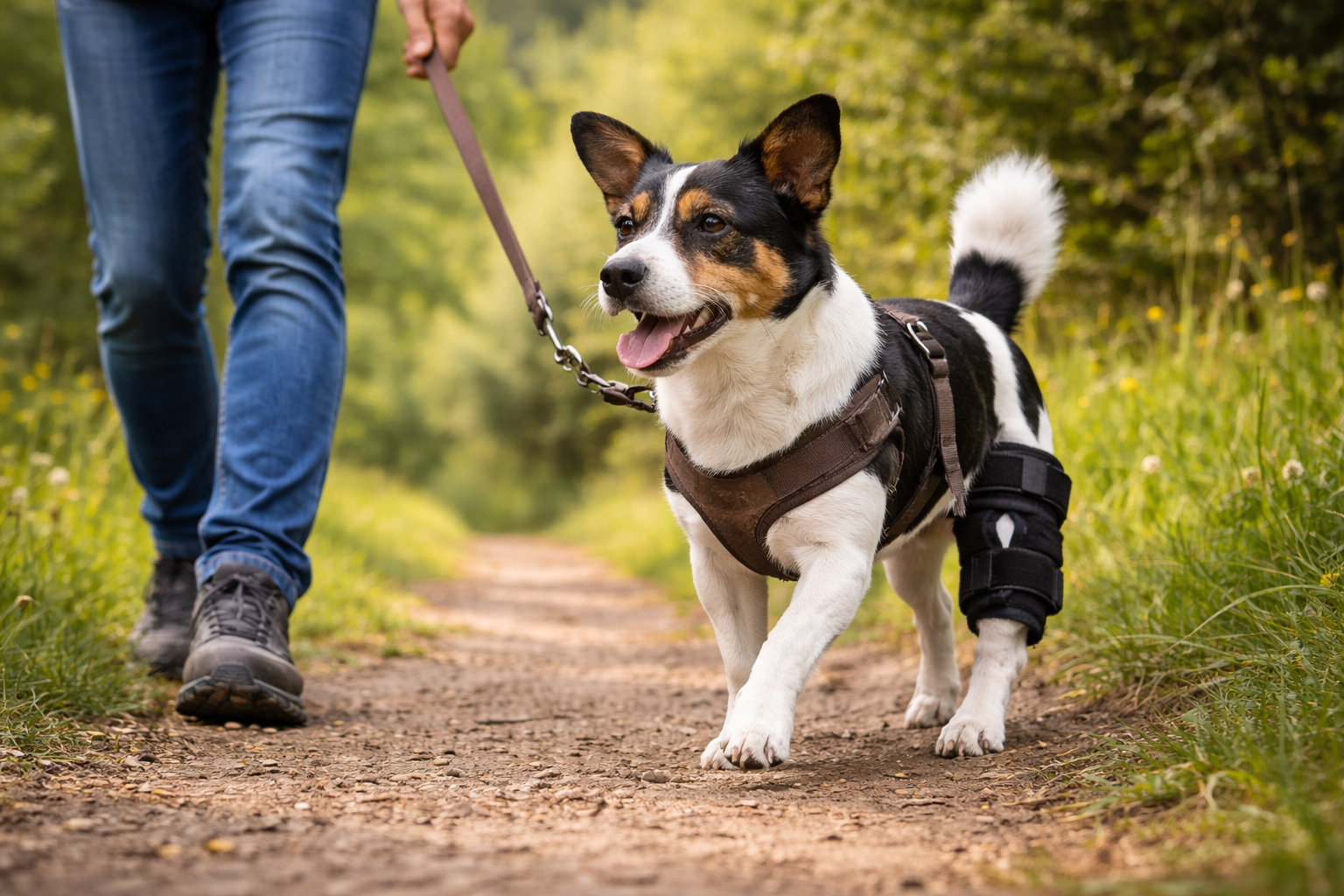
A knee brace dog luxating patella for daily walking should be judged by one practical question: does it help the dog walk more steadily without creating new rubbing, slipping, or movement resistance. For many dogs with mild to moderate patellar luxation, daily walking support is less about “locking the knee” and more about improving alignment, comfort, and confidence through controlled activity. If you want a broader overview of when bracing helps and when veterinary re-evaluation matters, start with this luxating patella knee brace guide.
Quick check: a daily-walking brace should stay aligned during walking, sitting, and turning. If the brace slips, rubs, or makes movement look more awkward, the fit or support level still needs work.
The main goals for daily walking are simple: keep the knee steadier, reduce repeated strain during each step, and make short walks easier to tolerate. You still need realistic expectations, because a brace can support walking comfort and knee control but does not correct advanced bone changes or replace veterinary planning. For broader condition-specific support choices, compare this article with the dog patella luxation brace solution page.
Das Wichtigste in Kürze
- A knee brace can help daily walking when it improves stability without causing slipping or skin irritation.
- Short, controlled walks are usually better than long sessions when the dog is still getting used to the brace.
- Fit, surface choice, and daily monitoring matter just as much as the brace itself.
Walking Support Goals for Knee Brace Dog Luxating Patella
Mobility and Pain Management
Daily walks can be difficult for dogs with luxating patella because each step repeats the same instability. A knee brace can help when it keeps the joint steadier, reduces stress from abnormal tracking, and lets the dog walk with less hesitation. For dogs already showing skipping steps, reduced confidence, or discomfort on routine walks, compare the walking goals in this article with the broader patella luxation brace solution page.
Walking support is most useful when the brace reduces wobble and lets the dog move more predictably, not when it simply adds bulk around the knee.
A good brace should help the dog load the leg more evenly, walk with fewer interruptions, and feel more comfortable during short daily outings. It should not force a stiff gait or make the dog fight the brace on every step.
Controlled Activity Benefits
Dogs with luxating patella usually do better with controlled activity than with long, uncontrolled exercise. A brace helps most when you use it during short walks, predictable routes, and steady leash pacing rather than fast turns, rough play, or slippery ground.
The goal of controlled activity is not to make the dog walk farther right away. It is to make walking safer and more repeatable. A brace can support that process, especially when it is paired with shorter sessions, better traction, and close monitoring after each walk.
Alignment and Stability
Alignment and stability matter because a luxating patella knee does not just hurt. It also changes how the dog places weight and how confidently the dog walks. A well-fitted brace should support the knee so the dog can move in a straighter, more controlled pattern during daily walking.
That does not mean every brace fixes every luxation problem. It means the brace should reduce unstable movement enough to make routine walking feel calmer and more repeatable. If the dog still skips, hops, or drifts heavily to the opposite side, you need to reassess the fit or the treatment plan.
Use a comparison table here only if it stays specific to walking support and does not drift into generic knee-brace evidence.
| Walking Goal | What the Brace Should Do |
|---|---|
| Joint stability | Keep the knee steadier through normal step cycles. |
| Pain reduction | Reduce strain from repeated abnormal tracking during short walks. |
| Confidence | Help the dog move with less hesitation on normal daily routes. |
| Daily tolerance | Stay comfortable enough for routine walking without slipping or rubbing. |
For daily walking, the best brace is the one that supports the dog’s routine consistently, not the one that only feels secure for a few minutes indoors.
Evaluating Dog Knee Braces for Daily Walking
Picking the right brace for daily walking means checking three things together: fit, movement control, and walking tolerance. A brace that feels comfortable but slips during walking is not ready. A brace that stays in place but changes the dog’s gait too much also needs adjustment.
Brace Fit and Comfort
Fit and comfort are what determine whether a luxating patella brace can work for daily walking. The brace should stay secure around the leg without pinching, rolling, or sliding after a short session. A good fit should improve confidence and control, not make the dog shorten stride or resist the walk.
Dogs may limp, walk differently, or hurt when moving. These signs show your dog might need a canine knee brace.
A good fit can make your dog’s life better. You might see your dog walk with more confidence and use the leg more.
Braces that do not fit can cause skin problems or slip off. This makes the brace not work well and can cause new problems. Always check the fit and ask your vet if you need help.
Tip: Check the brace after every walk for slipping, rubbing, edge pressure, or hot spots. If the brace does not stay comfortable through a short walk, do not extend the session.
Checklist for Brace Fit and Comfort:
- Measure the leg before ordering instead of guessing by breed or weight.
- Check that the brace stays aligned during a short walk.
- Look for red spots, heat, or hair loss after removal.
- Reassess the fit if the dog resists the brace or moves more awkwardly.
If you want a more detailed framework for checking fit, skin safety, and daily brace comfort, use this canine rehabilitation brace fit and safety guide.
Movement Control and Wear Tolerance
A good knee brace does more than sit on the leg. It should help control knee motion enough to make walking feel steadier and more predictable. That means the brace should stay aligned during walking, turning, and standing without shifting the support away from the knee.
The brace controls the knee’s movement, which helps keep it steady.
Gentle pressure helps your dog feel where the leg is.
The brace lines up the femur and tibia, which helps stop new injuries.
Wear tolerance matters just as much as control. Start with short sessions and build only if the dog tolerates the brace well. Many dogs do best wearing the brace during active walking periods only, then removing it for rest and downtime. That approach helps support daily walking without turning the brace into an all-day skin risk.
| Stage | Walk Duration | Goal |
|---|---|---|
| First days | 10–15 minutes | Check fit, comfort, and walk tolerance |
| After early tolerance | 15–20 minutes | Build confidence without fatigue |
| Stable daily use | 20–30 minutes or split sessions | Support routine walks without overloading the knee |
Note: Watch your dog closely the first week. If you see any pain, stop and check the brace.
If you want a more detailed brace-behavior reference for traction, slipping, and safe use during movement, compare this article with the dog knee brace fit, traction, and safe use guide.
Types of Dog Knee Braces
There are different types of braces you can pick from. Each type works best for certain needs. Think about your dog’s problem, how active they are, and which leg needs help.
Type of Brace | Best For |
|---|---|
Single Knee Braces | One injured leg, stabilizes without affecting the healthy limb. |
Double Dog Knee Braces | Both knees unstable or compensating healthy leg after CCL tears. |
Hinged Knee Braces | Heavier dogs, athletic dogs, and advanced knee problems, allowing longer wear times safely. |
Flexible braces are soft and let your dog move more naturally. These are good for mild luxating patella or early help. Rigid braces are hard and give strong support. These are better for bad cases or when your dog needs strict movement control. Hinged braces mix both, giving support and some movement for active dogs.
About 45% of dogs with partial CCL tears walk almost normal again in six months with a good knee brace.
Most dogs should wear a brace only when active. Make wear time longer slowly and always check for comfort.
If you want to move from this walking guide into product and condition pages, continue to the patella luxation knee support solution page and then compare the Luxating Patella Knee Brace product page for a brace designed around walking support and patellar luxation.
Always talk to your vet before picking a brace. A vet can help you get the best results for your dog.
Practical Walking Tips and Common Mistakes
Leash Pace and Surface Choice
You should keep the pace slow and even during daily walks. Fast starts, sharp turns, slippery surfaces, and uneven ground all make a luxating knee work harder. Short leash guidance, flatter walking routes, and better traction usually matter as much as the brace itself. Grass, rubberized paths, and even sidewalks are usually easier than hills, loose gravel, or rough outdoor terrain.
Tip: If the dog starts skipping steps, slowing down, or turning awkwardly, shorten the session instead of trying to “walk through” the problem.
Session Length and Monitoring
Start with short walks when the dog first uses the brace. Ten to fifteen minutes is usually enough to judge fit, comfort, and walking behavior without adding too much fatigue. Watch closely for skipping, licking at the brace, stopping early, or a clear shift away from the braced leg. If those signs appear, end the session and reassess before making the next walk longer.
- Check the brace before and after each walk for slip, twist, or edge pressure.
- Keep a simple record of walk length and how the dog moved.
- Increase duration only when the dog finishes the session comfortably.
Mistakes in Brace Use During Walks
Many walking problems come from the same few mistakes: using the brace too long too early, walking on poor surfaces, ignoring small slip issues, or assuming the dog will “get used to it” even when gait quality is worse. A brace should make walking more controlled, not more difficult.
- Do not leave the brace on all day if the dog only needs it for active walking.
- Do not ignore rubbing, twisting, or strap migration after a session.
- Do not force longer walks when the dog is already showing fatigue or hesitation.
- Do not use poor walking surfaces as a “test” of whether the brace works.
Note: Ask your veterinarian for guidance if you see swelling, repeated slipping, worsening gait, or a clear drop in walking confidence.
By following these tips, you help your dog walk safely and get the most from their knee brace. Careful monitoring and good walking habits support better outcomes for dogs with luxating patella.
Limitations and When to Seek Guidance
When a Brace May Not Be Enough
You should know that a knee brace can support daily walking without correcting the underlying bone changes of severe patellar luxation. It is usually most useful in mild to moderate cases, in conservative management, or as one part of a bigger mobility plan. If the dog has advanced luxation, repeated dislocation, or worsening function, this luxating patella brace guide is a better next step before assuming more walking time or a stronger brace will solve the problem.
A knee brace helps with mild to moderate luxating patella.
It does not repair bone changes or advanced joint damage.
Bracing works best as part of a bigger care plan.
If your dog has Grade 4 luxating patella, severe bone deformities, or advanced joint misalignment, a brace may not be enough. In these cases, surgery is often the best option. Braces help manage symptoms, but they do not solve the main problem when the joint is very unstable.
Note: Always watch for signs that your dog’s condition is getting worse, such as more limping, pain, or trouble walking.
Consulting a Veterinarian or Rehab Specialist
You should talk to a veterinarian or rehab specialist before starting or changing brace use when the dog shows pain, repeated limping, step-skipping, swelling, or lower activity tolerance. A professional can help decide whether the brace is appropriate for daily walking, whether the walking plan needs to change, or whether surgery or another type of support should be discussed.
- Ask for guidance if the dog has frequent dislocations or worsening walk tolerance.
- Use a brace as part of a conservative plan, not as a replacement for diagnosis.
- Recheck the plan if the dog’s walking pattern gets worse instead of better.
You should use a knee brace as part of a full care plan. Always check with your vet if you see new symptoms or if your dog’s walking gets worse. This helps you give the best support for luxating patella and keeps your dog safe during daily walks.
A knee brace can help daily walking when it supports the knee consistently, fits well, and is used with realistic walk planning. The best results usually come from short, controlled walks, steady surface choice, and repeated fit checks instead of longer or more ambitious outings too early.
- Choose a brace that stays aligned during real walking, not just while the dog is standing.
- Start with short sessions and increase only when comfort and gait stay stable.
- Use better walking surfaces and pacing to make the brace more effective.
- Reassess the plan if the dog shows more limping, less confidence, or repeated slipping.
For next steps, continue to the luxating patella knee brace guide, the patella luxation solution page, or the Luxating Patella Knee Brace product page depending on whether you need education, condition matching, or product review. Data authenticity note: This article is for educational purposes only. It is designed to help readers evaluate knee brace use for luxating patella during daily walking, not to replace veterinary diagnosis or individualized treatment advice.
Häufig gestellte Fragen
How does a knee brace help dogs with luxating patella during daily walks?
A knee brace can help by adding support, improving stability, and reducing repeated strain during walking. The main benefit is steadier daily movement, not a permanent correction of severe luxation.
Can you use a knee brace for all grades of luxating patella?
Knee braces are usually most useful for mild to moderate luxating patella, conservative management, or walking support during a broader care plan. Severe cases may need surgery or a different treatment path.
How do you know if the brace fits your dog correctly?
The brace should stay aligned without slipping, rubbing, or leaving red marks after a short walk. Your dog should also move more steadily, not more stiffly.
Should your dog wear the brace all day?
Use the brace during walks or active periods only, then remove it for rest and downtime. That helps reduce skin risk and keeps the walking routine easier to monitor.
What signs show you need to consult a veterinarian?
Contact your veterinarian if your dog shows more limping, swelling, repeated skipping, pain, or reduced walking confidence after brace use. Those signs usually mean the plan needs to change.
