
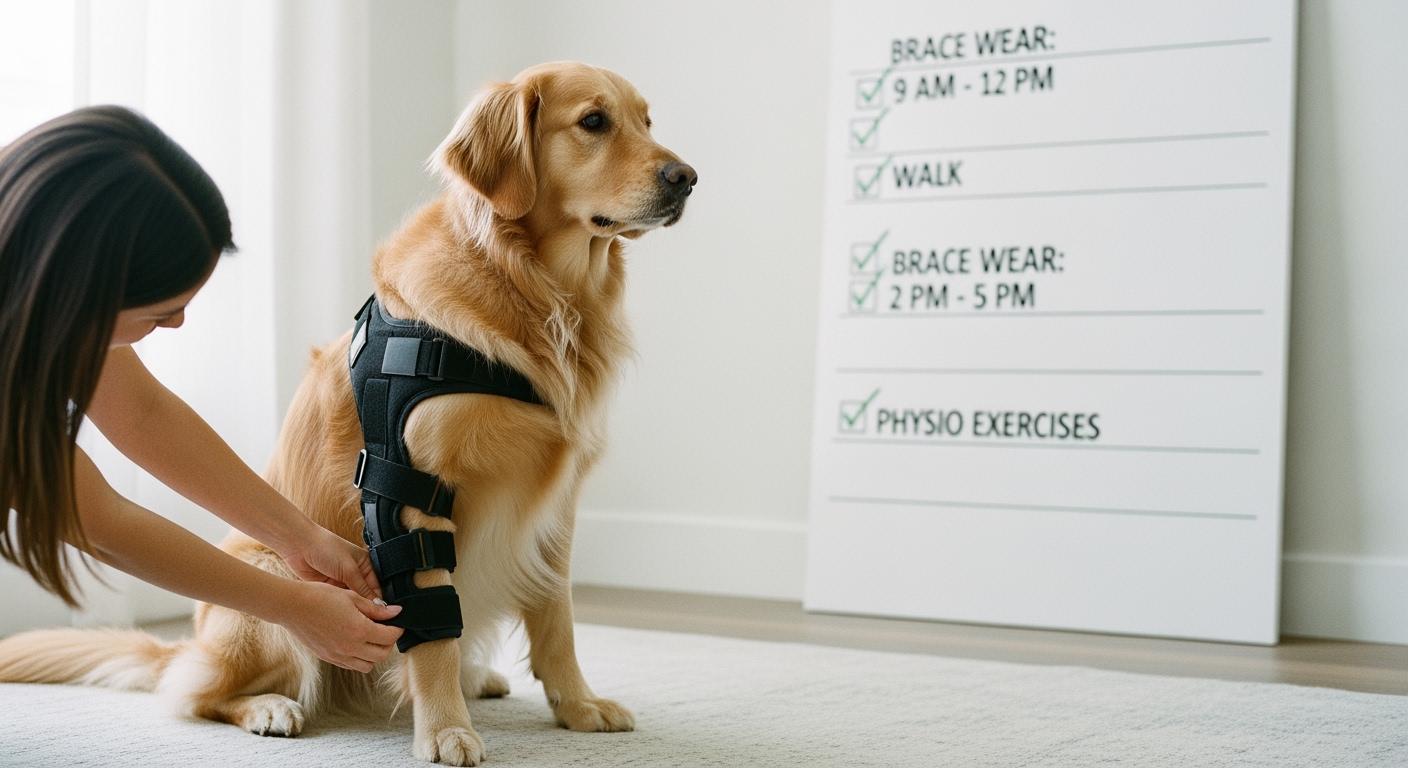
An orthopedic dog brace for torn ACL works best when wear time follows a structured schedule instead of jumping straight into all-day use. The goal is to let the dog adjust gradually, protect the skin, and build a routine that matches active periods such as short walks, rehab sessions, and supervised daily movement. If you need a broader overview of ACL brace selection, fit, and daily-use expectations before following a wear plan, start with this dog knee brace for ACL injury guide.
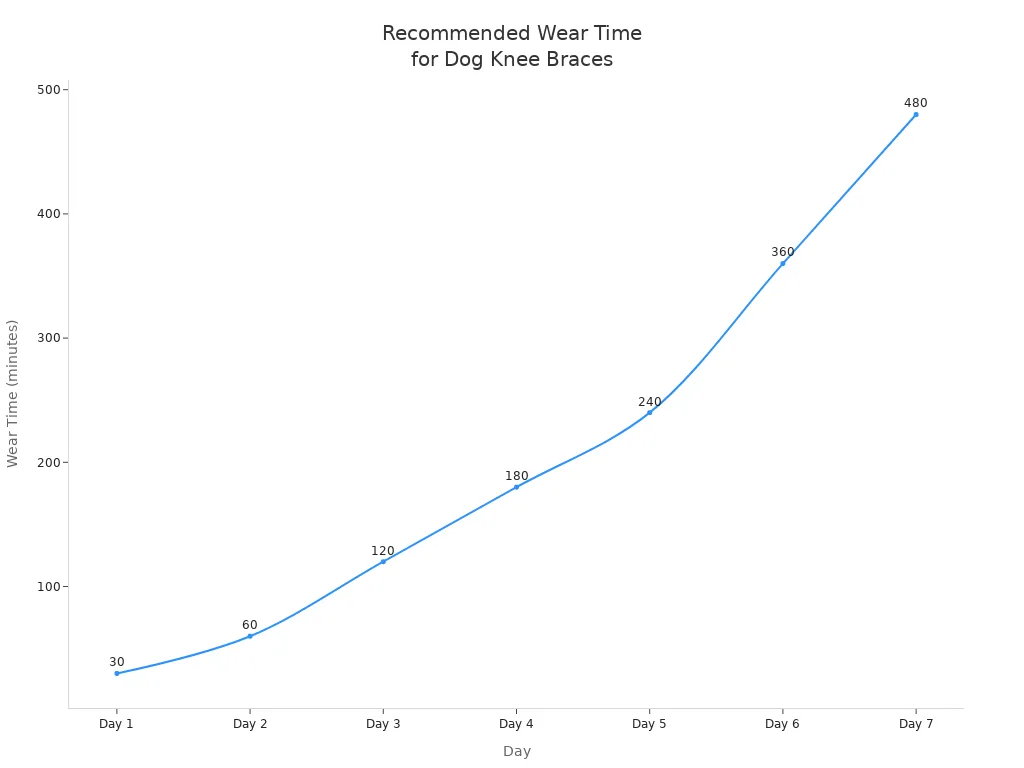
- Day 1: 30 to 60 minutes during one short active session
- Day 2: 1 to 2 hours total, divided across active periods
- Day 3: 2 to 3 hours total if skin and comfort remain normal
- Day 4: 3 to 4 hours total during walks or rehab work
- Day 5: 4 to 6 hours total during supervised activity
- Day 6: 6 to 8 hours total if the brace stays comfortable and stable
- Day 7 and after: use during most active periods, then remove for rest, crate time, and overnight recovery
Gradual adjustment and daily skin checks are what make a wear schedule practical. A brace should be introduced slowly enough to catch rubbing, pressure marks, or poor fit before the dog starts wearing it through longer activity blocks. If you need more detail on sizing, written measurements, and fit-check logic before following a daily schedule, use this brace sizing and fit-check guide.
Das Wichtigste in Kürze
- Start with short wear sessions and increase only if the skin stays healthy and the brace remains stable.
- Use the brace during active periods such as walking, rehab work, and supervised movement, not during overnight rest or crate time.
- Check fit, skin, and gait every day because wear schedule problems usually show up as rubbing, slipping, or movement changes before they show up as severe discomfort.
Orthopedic Dog Brace for Torn ACL Wear Schedule: Core Principles
Why Wear Time Matters
You need a structured wear schedule because the brace only helps when the dog can tolerate it and when the fit remains stable during movement. A gradual break-in period makes it easier to monitor comfort, protect the skin, and decide whether the brace is truly supporting the knee instead of only looking secure at rest. For a more detailed discussion of traction, safe use, and day-to-day fitting, compare this article with the dog knee brace for CCL tear fit and traction guide.
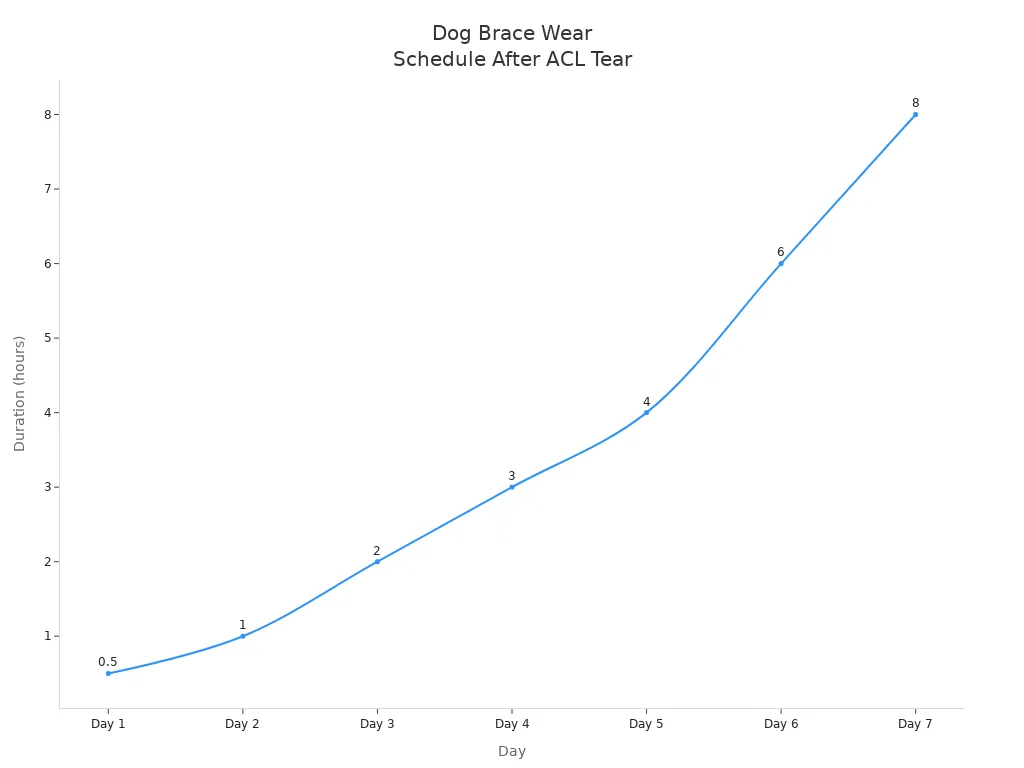
Day | Duration of Wear | Frequency |
|---|---|---|
1 | 30 mins | 2-3 times a day |
2 | 1 hour | 2-3 times a day |
3 | 2 hours | 2-3 times a day |
4 | 3 hours | 2-3 times a day |
5 | 4 hours | 2 times a day |
6 | 6 hours | 1 time a day |
7 | 8 hours | 1 time a day |
Gradual Introduction and Adjustment
You should introduce the brace slowly and treat the first week as an adjustment period, not a full-use period. Start with short sessions, recheck strap tension after movement, and expect to make small fit changes as coat compression, swelling, and activity level affect how the brace sits. Most problems with daily wear happen when owners increase time too quickly or assume the first fitting will hold all day without rechecking.
Tip: Recheck strap position after each short session during the first week. Small early adjustments usually prevent bigger fit problems later in the wear schedule.
Monitoring Skin and Comfort
You must check the dog’s skin every time the brace comes off. Look for redness, fur breakage, warm spots, swelling, or areas where the brace edge has started rubbing. Skin checks are not optional in a torn ACL wear schedule because they tell you whether the brace is ready for longer use or whether the fit still needs work.
Note: A wear schedule supports recovery, but it does not replace diagnosis or treatment planning. If you need a broader next step after skin checks and fit review, continue to Solutions by Condition before changing the support plan.
Building a Safe Dog Knee Brace Routine
Initial Break-In Period (First 7–10 Days)
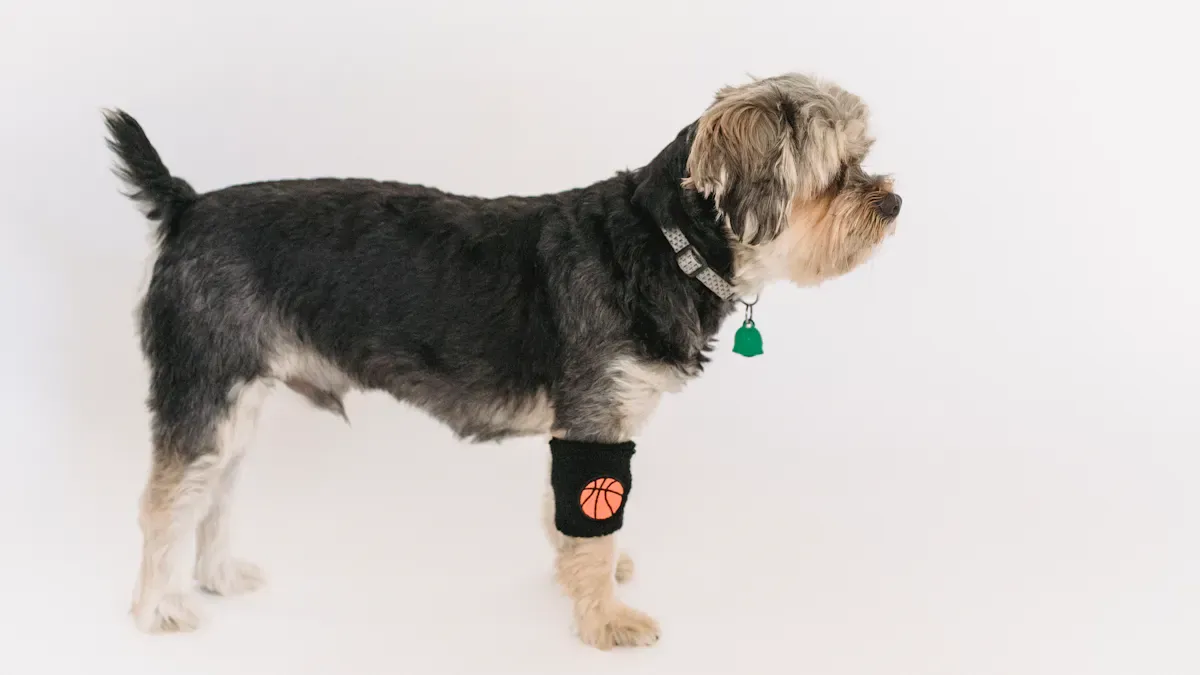
Start with short wear periods so the dog can adapt to the brace before you ask it to work through longer walks or rehab sessions. In the first 7 to 10 days, use the brace for controlled active periods only, then remove it for rest, crate time, and overnight recovery. This approach gives you enough time to monitor skin, movement, and fit without pushing the dog into a full-day schedule too early.
Tip: Use the first week to confirm fit and comfort, not just to increase hours. If the brace slips or rubs, fix the fit before extending wear time.
Increasing Wear Time Safely
After the first week, increase wear time only if the skin remains healthy, the brace stays aligned, and the dog still moves comfortably. Most dogs build toward wearing the brace during the active part of the day rather than every hour they are awake. The goal is not maximum wear time. The goal is stable, useful wear time during the periods when knee support actually helps.
A normal daily plan might look like this:
Day | Total Wear Time | Activity Focus |
|---|---|---|
1 | 1 hour | Short walk |
2 | 2 hours | Walk + light play |
3 | 3 hours | Walk + therapy |
4 | 4 hours | Walk + play + rehab |
5 | 5 hours | Multiple activities |
6 | 6 hours | Full activity blocks |
7+ | 6–12 hours | All active periods |
Note: Never increase the schedule just because the calendar says to. Only increase when skin, fit, and movement quality all stay acceptable.
When to Wear and Remove the Brace
Put the brace on during active periods such as leash walks, rehab work, or controlled play, and take it off during crate time, overnight rest, and any unsupervised recovery period. This keeps the brace working during the hours when support is useful without turning it into a skin-risk problem during long passive wear. If you still need help deciding when a brace should be used versus when the dog may need a different support path, compare this page with dog leg brace ACL tear partial tear vs full tear.
Wear the dog knee brace:
On walks
During play with supervision
During therapy or rehab
Remove the dog knee brace:
At night
When crated or resting alone
If you see any skin problems
Using the dog knee brace with exercise, joint supplements, and therapies like hydrotherapy or laser therapy can help your dog heal. Always listen to your vet for the best care plan.
Quick Checklist: Safe Dog Knee Brace Routine
- Start with short, supervised wear sessions during active periods only.
- Increase time gradually only when skin, fit, and gait stay normal.
- Remove the brace for overnight rest, crate time, and unsupervised downtime.
- Check the skin and brace position after every session.
- Re-measure or re-adjust if slipping or rubbing appears.
- Use veterinary guidance when the schedule stops working or the dog’s condition changes.
Practical example: In the first week, you might use the brace for one short morning walk and one short afternoon rehab session, then increase only after the skin stays clear and the brace remains stable.
A repeatable routine helps the dog adjust to the brace and makes problems easier to catch early. For fit details, sizing checks, and product-level comparison, move next to the brace sizing guide, then review the dog knee brace category when you are ready to compare brace options.
Daily Routine Planning and Rehabilitation Support
Activity vs. Rest Periods
You must balance activity and rest because the brace supports movement, not constant wear. In early recovery, short active blocks are usually safer than one long block. As tolerance improves, many dogs move toward wearing the brace through most active parts of the day, but the brace should still come off during rest, crate time, and overnight downtime.
Here are some practical routine-planning strategies for dogs with knee injuries:
Use knee support for dogs on short, gentle leashed walks.
Schedule therapy sessions with a professional.
Manage your dog’s weight to help the joint and ease dog knee pain.
Add home changes like non-slip floors or ramps to stop re-injury.
Integrating the Brace into Rehabilitation
You can help the dog recover by using the brace as part of a larger rehab routine instead of treating it as the whole plan. Weight-shifting, slow sit-to-stand work, short controlled walks, and vet-approved rehab exercises are usually easier to manage when the brace is fitted well and worn during the right activity windows. For a broader comparison of current ACL brace options before building a longer-term plan, review 2025 best dog knee braces for torn ACL recovery and support.
Common activities for brace use include:
Supervised walks
Light play sessions
Therapy exercises
Support for older dogs with arthritis or mild instability
If you want more details about brace fit or therapy, visit our knee brace selection guide or look at our ACL recovery solutions.
Common Mistakes and Limitations
Many owners make the same three mistakes with a torn ACL wear schedule: increasing too fast, assuming longer wear is always better, and ignoring small fit problems until they become skin problems. Braces can support recovery, but they do not repair ligament damage by themselves and they do not replace diagnosis, rehab planning, or activity control.
Use the schedule as a practical guide, not as a substitute for veterinary decision-making. If you still need a broader recovery framework after reading this page, continue to Solutions by Condition before changing brace type, wear time, or daily activity level.
Note: A brace schedule works best when it is paired with fit checks, skin monitoring, and a recovery plan that matches the dog’s actual diagnosis.
Factors Affecting Dog Brace Wear Schedule
Fit and Brace Type
You need the right brace type and the right fit because wear schedule decisions depend on both. A brace that slips, gaps, or pinches will never be ready for longer daily use, no matter how carefully you increase hours. That is why fit should be rechecked before each active session, especially during the first weeks of use. If you want a product-level example with adjustable support features for daily ACL recovery, review this adjustable dog rear leg brace.
For more details on fit, traction, and daily-use behavior, compare this page with the dog knee brace for CCL tear fit and traction guide.
Activity Level and Supervision
Your dog’s activity level changes how fast the schedule can increase. Higher-energy dogs may seem ready for more time before the skin or fit is truly ready, while older or lower-stamina dogs may need slower progress and shorter activity blocks. Supervision matters with both groups because the first sign of a bad schedule is often a movement change, not a dramatic complaint from the dog.
For more about recovery planning and support categories, use Solutions by Condition together with this wear schedule.
When to Seek Professional Guidance
You should ask for professional guidance if the dog shows pain, swelling, skin sores, worsening gait, or repeated slipping despite careful adjustment. Those signs usually mean the fit, support level, or recovery plan needs to change. A veterinarian or rehab professional can help decide whether the dog should stay on the current wear schedule, step back to a shorter schedule, or move to a different brace option.
For more information on current brace options after you finish the scheduling and fit review, visit the dog knee brace category.
You make an orthopedic dog brace wear schedule safer by starting short, increasing only when the skin and fit stay normal, and matching brace hours to the dog’s active periods instead of trying to maximize wear time. Use this quick review checklist before increasing any schedule:
- Skin check: no redness, pressure marks, swelling, or fur breakage after each session
- Fit check: no slipping, twisting, or gapping during walking and turning
- Use check: the brace is worn during walks, rehab, and supervised activity, not during overnight rest or crate time
For next steps, compare this page with the CCL fit and traction guide, the brace sizing guide, and the dog knee brace category if you are ready to review actual brace options. Data authenticity note: This article is for educational purposes only. It is designed to help readers plan a safer torn ACL brace wear schedule, not to replace veterinary diagnosis or individualized rehabilitation planning.
Häufig gestellte Fragen
How long should my dog wear an orthopedic dog brace for a torn ACL each day?
Start with 30 to 60 minutes during a short active session, then increase only when the skin and fit remain normal. Many dogs gradually build toward wearing the brace during most active parts of the day, not during all rest hours.
Can my dog sleep with the brace on?
No. Remove the brace at night and during crate time unless your veterinarian gives you a specific reason to do otherwise. Nighttime wear adds skin risk without helping normal active support.
What signs mean I should stop using the brace?
Stop using the brace and reassess the fit if you see redness, swelling, sores, slipping, or a clear change in how your dog walks. Those signs usually mean the schedule is moving faster than the dog’s fit or skin tolerance can handle.
How do I know if the brace fits correctly?
The brace should stay aligned during walking, turning, and standing without rubbing, slipping, or creating pressure marks. A fit that only looks correct while the dog is still is not enough.
When should I consult a veterinarian about the wear schedule?
Contact your veterinarian if the dog shows pain, limping, repeated slipping, swelling, or no progress with the current schedule. A brace can support recovery, but it cannot replace a full rehab plan when the condition is changing.
