
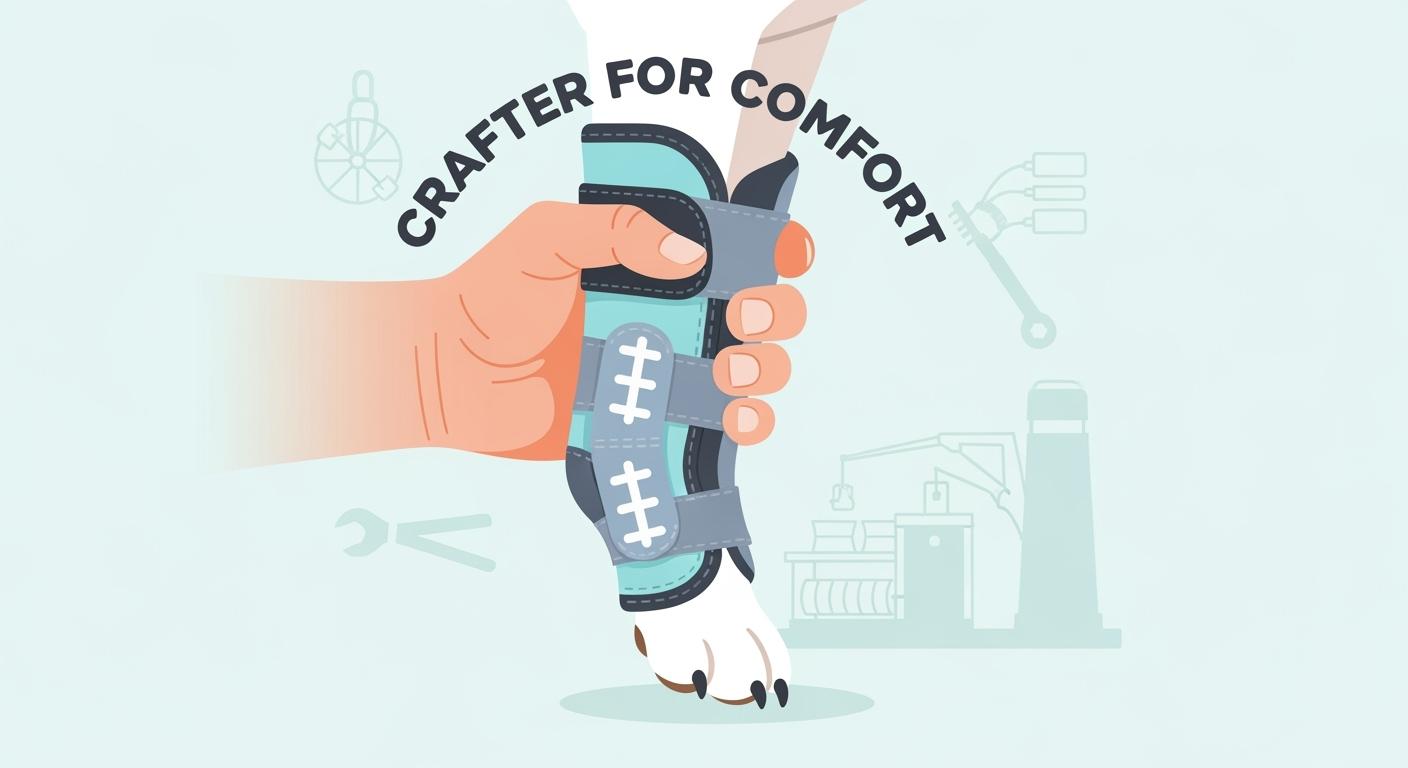
Bar-tack stitching for dog gear helps set a high benchmark for industrial-grade durability. You rely on this technique to reinforce critical stress points in braces and harnesses and to protect your pet’s health. With proper reinforcement, seam rupture and gear failure become much less likely, giving you greater peace of mind. GaitGuard designs every product with bar-tack reinforcement in key zones to support safety and long-term reliability.
Key Takeaways
Bar-tack stitching reinforces critical stress points in dog braces, preventing seam failure and ensuring durability.
Inspect gear for proper bar-tack stitching; if you see daylight through stitch holes, the stitching is inadequate.
Choosing gear with bar-tack stitching reduces replacement costs and enhances your pet’s safety and comfort during recovery.
Bar-Tack Stitching for Dog Gear
What Is Bar-Tack Stitching?
Bar-tack stitching for dog gear uses a high-density thread matrix to reinforce the base fabric at critical stress points. You will often see this technique as a tight zigzag row of stitches, typically measuring about 1/16” to 1/8” wide and 1/2” to 3/4” long. Manufacturers apply bar-tack stitching where webbing meets fabric or buckles, so the seam can withstand repeated force. In some industrial applications, stitch density can reach around 40 stitches per inch, creating a compact barrier against seam failure.
Quality Check Tip: Pull the strap hard. If you see daylight through the stitch holes, the bar – tack stitching for dog gear is not done properly.
Bar tack stitches reinforce areas subject to stress or wear.
Common applications include pocket openings, buttonholes, belt loops, and outdoor gear.
Bar tacks consist of closely placed zigzag stitches for maximum strength.
Industrial Standards in Pet Gear
You demand industrial standards when selecting dog protective gear. GaitGuard uses bar – tack stitching for dog gear to meet these expectations. This method prevents seam rupture and ensures the gear supports pets during recovery, training, or daily activity. The high-density thread matrix distributes load evenly, reducing the risk of failure even for large or active dogs. GaitGuard’s commitment to quality means every product passes rigorous inspection for stitch density and placement.
Manufacturing Glossary: Bar-Tack Stitching
Bar tack: A group of closely sewn stitches, moving back and forth in a zigzag pattern, used to tack a belt loop or similar item in place. Manufacturers repeat this process several times to create a short run of satin stitching.
This is not a basting stitch.
Bar tacks provide essential reinforcement in high-stress zones.
Reinforcing Stress Points and Durability
Critical Zones in Dog Braces
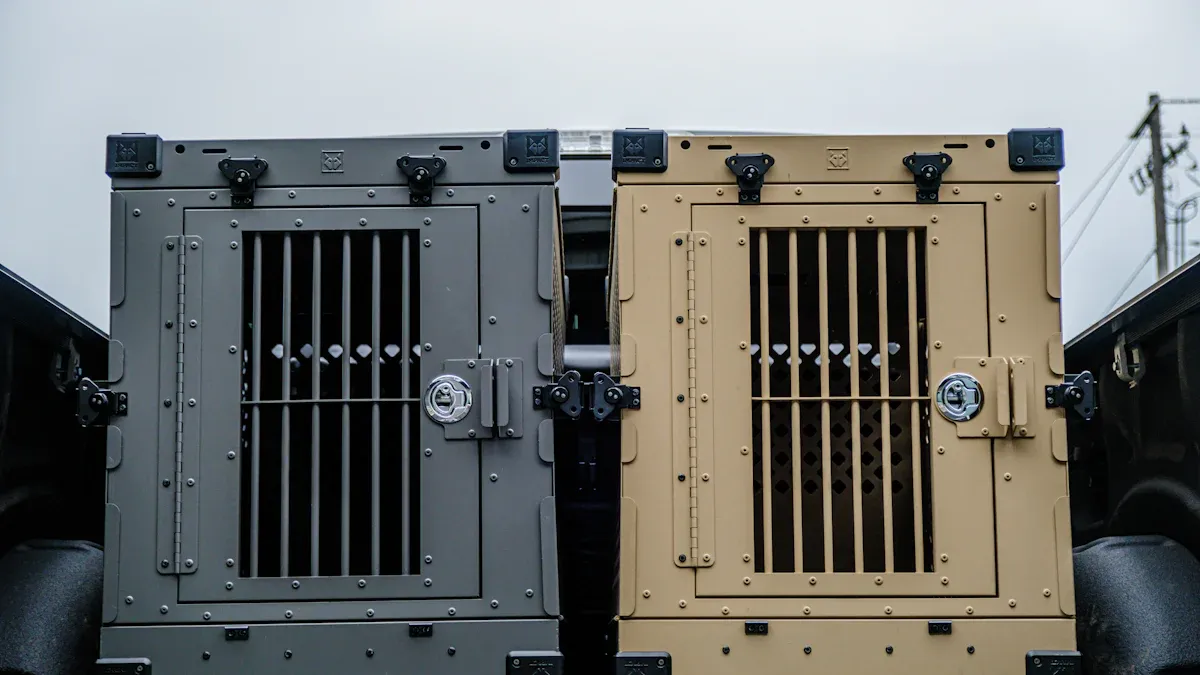
You rely on dog braces to stabilize joints and support recovery. The most vulnerable areas in these devices include D-ring attachments, strap roots, hinges, and connection points where webbing meets fabric. GaitGuard applies bar-tack stitching at these zones to maximize durability and prevent failure during daily use.
Tip: Always inspect the brace at these critical zones. Reinforced stitching ensures the gear maintains its shape and function, even under repeated stress.
A well-designed brace targets these areas for reinforcement. For example, a dog knee brace stabilizes the stifle joint and helps reduce pain, especially when surgery is not an option. When bar-tack stitching secures strap roots and hardware, the brace is less likely to deform or fail under load, so it can maintain its intended function over time.
Biomechanical studies in animal and cadaver models have shown that adding reinforcement structures can increase ultimate load and stiffness in ligament repair constructs. While these experiments are not performed on fabric dog braces, they illustrate the same engineering principle: properly reinforced connections are better able to resist gapping and excessive motion under stress.
Study Focus | Key Findings |
|---|---|
Rabbit ACL Reconstruction | Internal brace reinforcement increased ultimate load and stiffness. |
Porcine ACL Repair | Internal brace limited gap formation and reduced peak load under stress. |
Human Cadaveric Study | Suture tape augmentation improved seam strength and stabilization potential. |
The Physics of Failure: Shear Force and Tensile Load
Dog braces experience significant mechanical forces during use. Shear force acts parallel to the seam, attempting to slide layers apart. Tensile load pulls directly on the seam, testing its ability to resist stretching and tearing. Without proper reinforcement, these forces can cause seam failure, compromising the brace’s integrity and your pet’s safety.
Bar-tack stitching counters these forces by concentrating thread density at stress points. You benefit from durable seams that resist debonding and tearing. In medical device engineering, similar reinforcement concepts are used to improve the reliability of connections and interfaces. In dog braces, bar-tack stitching applies the same idea at the textile level, helping the gear withstand both shear and tensile stresses so it can stay functional throughout the recovery process.
Preventing Seam Rupture for Long-Term Durability
You want your dog’s protective gear to last through active play, rehabilitation, and daily movement. Bar-tack stitching distributes load across the seam, preventing rupture and extending the lifespan of the brace. This technique is especially important for large or energetic pets, where forces on the gear are higher.
Bar-tack stitching provides concentrated reinforcement at the ends of straps and attachment points.
Z-zig stitching offers flexibility for joints but less rigidity.
Box X stitching distributes load in multiple directions, reducing stress concentration.
Stitching Method | Strength (lbf) | Characteristics |
|---|---|---|
Bar Tack | 3,500-4,500 | Rigid, ideal for end reinforcement |
Z-zig | 3,000-4,000 | Flexible, suitable for movement |
Box X | Superior | Multi-directional load distribution |
Bar-tack stitching stands out for its ability to prevent end failures and maintain seam strength under repeated load. You notice fewer seam ruptures and enjoy greater durability in GaitGuard gear, even with frequent use.
Thread Quality and Load-Bearing Strength
Thread selection plays a critical role in seam strength and overall durability. GaitGuard uses high-performance threads such as bonded nylon and polyester upholstery to create durable seams that withstand heavy loads.
Thread Type | Strength | Ideal Use Case |
|---|---|---|
Bonded Nylon | High | Heavy-duty bags, sports gear |
Polyester Upholstery | High | Industrial covers, outdoor items |
Wooly Nylon (Serger) | Low | Soft interior seams, braces |
For example, Tex 70 bonded polyester thread allows a seam to withstand up to 18kg of tensile load before failure. You benefit from braces that maintain seam strength and durability, even under demanding conditions. High-quality thread ensures that bar-tack stitching delivers reliable performance, protecting your pet and reducing the need for frequent replacements.
Note: Durable seams and proper thread selection are essential for maintaining the integrity of dog braces. Always choose gear that prioritizes seam strength and industrial-grade materials.
You can trust GaitGuard’s commitment to durability and engineering excellence. Every stitch, every thread, and every reinforced zone work together to deliver long-term protection and support for your pet.
Benefits for Your Pet and Owner
Safety and Comfort for Pets
You want your pet to experience maximum safety and comfort during recovery. Bar-tack stitching delivers robust durability by reinforcing high-stress zones in orthopedic braces and harnesses. This precision stitching method helps prevent seam failure, which protects your pet from unexpected gear breakdowns. By maintaining the brace’s shape and fit, reinforced seams can also reduce irritation and pressure points.
Bar-tack stitching increases durability in critical areas.
It improves safety for pets by preventing seam rupture.
Precision stitching ensures consistent comfort throughout use.
Many veterinarians note that well-designed braces with reliable reinforcement can improve quality of life for pets who are not surgical candidates.
“Dog knee braces are not a magic cure, but they are a meaningful part of a conservative care plan. Not every dog is a surgical candidate.” — Dr. Henry Dalton, Canine Rehab Specialist.
Real-World Advantages for Pet Owners
You benefit from reduced replacement costs and fewer warranty claims when you choose gear with reinforced stitching. Pet owners report that braces with bar-tack stitching keep their pets safe and comfortable, even during active movement.
Mark & Mally found their brace easy to use and durable, helping their dog recover.
Fred & Abby observed improved stability and faster healing for their pet.
Ted & Marley appreciated the comfort and simplicity, which reduced stress on their dog’s leg.
The story of Pasha, a dog who recovered from a ligament rupture using a brace, shows how durability and comfort can help avoid surgery and speed up recovery.
Bar-Tack vs. Box-X Stitch: Which Is Better?
You see two main reinforcement techniques in pet gear: bar-tack and box-x stitch. Bar-tack provides linear reinforcement, ideal for high-stress points like strap ends and D-ring attachments. Box-x stitch covers a broader area, distributing load across multiple directions. GaitGuard uses both methods where appropriate, optimizing durability and safety for each application.
Strengths | Weaknesses | |
|---|---|---|
Bar Tack | High durability, less likely to unravel, compact design, suitable for high-stress areas | Limited aesthetic appeal compared to box-x stitch |
Box-x | Visually appealing, spreads load over a wider area | More vulnerable to unravelling, relies on longer thread paths, susceptible to wear at corners and crossover points |
Stitch Type | Strength Comparison |
|---|---|
Bar Tack Stitch | Strong stitch that reinforces high-stress areas, especially effective when multiple stitches are used. |
Box-X Stitch | Stronger in a one-to-one comparison, but less effective than multiple bar tacks in the same space. |
Conclusion | No definitive recommendation; strength depends on stitch pattern size and quantity used. |
You gain peace of mind knowing that GaitGuard’s precision stitching reduces product returns and warranty claims for retailers, while providing your pet with unmatched comfort and safety.
You recognize bar-tack stitching as one of the most trusted reinforcement methods for dog protective gear. Its dense zigzag pattern helps prevent tear propagation and keeps braces durable in demanding conditions. By choosing GaitGuard, you choose dog gear that is engineered for durability, safety, and consistent performance.
Feature | Description |
|---|---|
Bar Tack | Dense zigzag stitching that keeps gear durable |
Durable stitching protects your pet. Durable design supports long-term use. Durable gear gives you greater confidence every time your dog walks, runs, or plays in a brace.
FAQ
How does bar-tack stitch improve gear durability for my pet?
You rely on bar-tack stitch to reinforce stress points in gear. This precision technique increases durability, preventing seam failure and ensuring consistent performance for your pet during recovery and daily activity.
Why is precision stitching important in heavy-duty pet gear?
Precision stitch methods guarantee quality and performance in gear made from heavy-duty fabrics. You see fewer failures, better durability, and improved comfort for your pet with every use.
Can precision stitch methods affect the performance of pet gear?
You notice that precision stitch techniques enhance gear performance. Quality stitching maintains shape, supports heavy-duty use, and ensures your pet experiences reliable protection and comfort.
Tip: Always inspect gear for precision stitch patterns to confirm quality and durability.
Stitch Type | Performance Impact | Durability | Quality |
|---|---|---|---|
Bar-tack | High | Excellent | Superior |
Precision Zigzag | Moderate | Good | Reliable |
Box-X | High | Excellent | Superior |
