
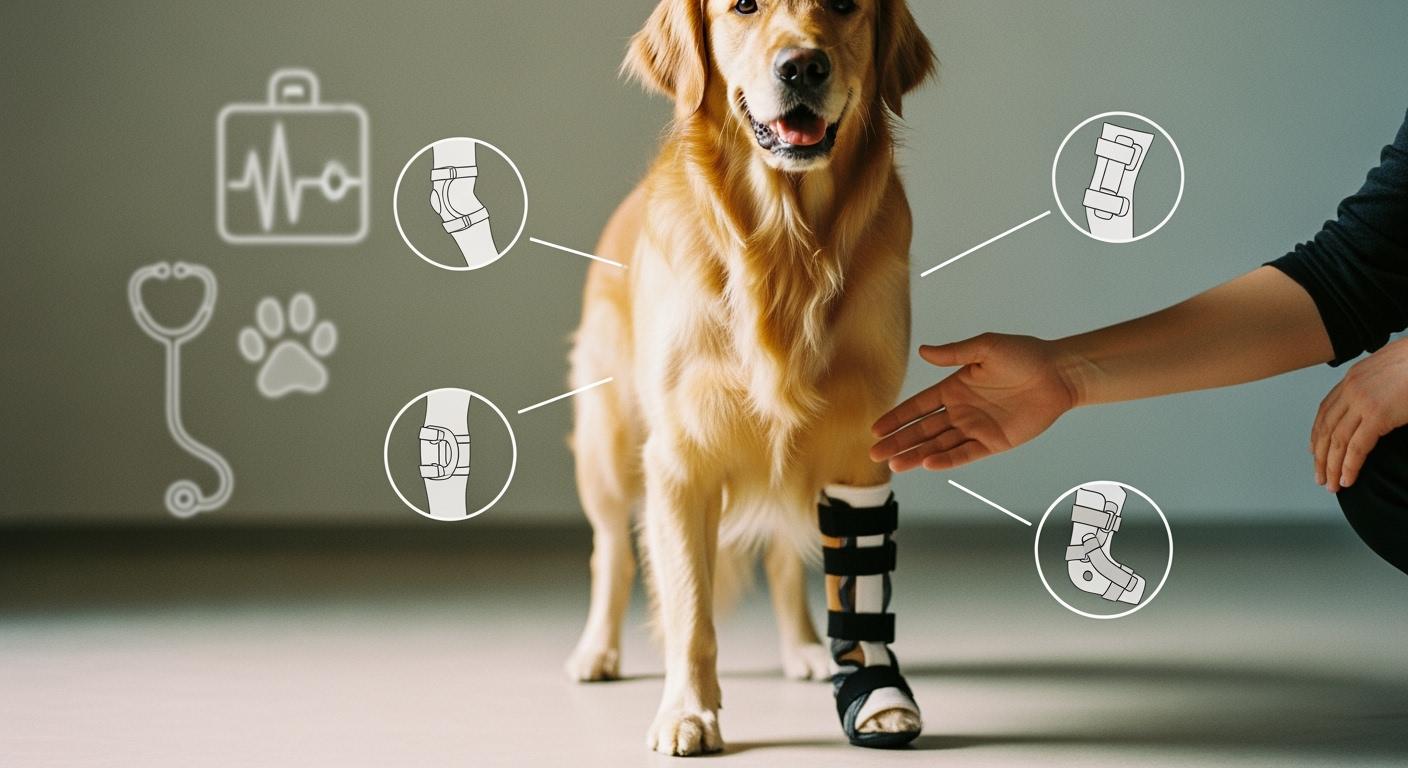
Canine rehabilitation is now a key part of modern veterinary care. More clinics and rehab centers are combining exercises, hands-on therapy, and canine rehab braces to help dogs move more safely and comfortably. For many dogs, a well-chosen brace becomes an important tool in a larger recovery plan.
Canine rehab braces support weak or injured joints, reduce pain, and make it easier for dogs to practice daily activity and rehab exercises. When they are fitted and used correctly, they give both pet owners and professionals more confidence during the healing process.
What Are Canine Rehab Braces?
Definition and purpose
Canine rehab braces are medical-grade supports designed specifically for dogs. They are used during rehabilitation after injury or surgery, or to help manage long-term joint and mobility problems. A brace stabilizes the joint or spine, limits harmful motion, and allows more controlled, safer movement.
In a rehab plan, braces can help to:
Support weak or unstable joints
Protect healing tissues and surgical sites
Reduce pain during standing, walking, and exercise
Improve limb use and confidence in movement
Lower the risk of re-injury during activity
Brands such as GaitGuard use strong, medically tested materials and dog-specific designs to provide targeted support while keeping dogs as comfortable and active as possible.
Rehab braces vs. generic supports
Not all pet braces are the same. Medical-grade canine rehab braces differ from generic pet-store wraps or “one-size-fits-all” sleeves:
Fit – Rehab braces are sized or even custom-made for the dog; generic supports are often one size.
Function – Rehab braces are designed for specific injuries or regions (knee, hock, carpal, spine); generic supports give only general compression.
Comfort – Better fit, padding, and strap design reduce rubbing and pressure sores.
Biomechanics – Properly designed braces guide movement and improve limb use; poor-quality supports may not change gait at all and can even cause problems if they slip or twist.
Choosing a veterinary-grade brace with guidance from a veterinarian or rehab therapist helps ensure the dog receives useful support instead of just a tight bandage.
Common types of dog leg braces used in rehab
Veterinarians and rehab professionals may use different braces depending on the area that needs support:
Elbow braces – Front leg elbow support for conditions such as elbow dysplasia or instability.
Knee (stifle) braces – Hind-limb braces used for cranial cruciate ligament (CCL/ACL) injuries and other knee instability.
Carpal splints – Front “wrist” support for carpal hyperextension and sprains.
Tarsal (hock) splints – Hind “ankle” support for hock injuries and weakness.
Hip braces – Support for dogs with hip dysplasia or hip arthritis.
Spinal braces – Supportive devices for dogs with serious back problems such as IVDD or after spinal surgery.
Only a veterinarian can diagnose the underlying condition and decide which type of brace, if any, is appropriate.
Types and Features of Canine Rehab Braces
Canine rehab braces come in several designs to match different needs.
Stifle (knee) braces
A dog knee brace supports the stifle joint, one of the most commonly injured joints in dogs. Many stifle braces use a hinged design so the clinician can control how much the knee bends as the dog recovers. They are often used to:
Support CCL/ACL injuries
Protect the knee after surgery
Reduce pain, swelling, and instability in chronic knee disease
Custom-fit knee braces can improve comfort and reduce slippage, which is important in active or long-term cases.
Tarsus (hock) and carpal braces
The tarsus (hock) is similar to the human ankle. A hock or dog “ankle” brace can support sprains, hyperextension, or weakness in this joint. Carpal braces support the front-leg wrist.
Typical uses include:
Hock injuries and chronic hock instability
Carpal sprains and carpal hyperextension
Medical-grade products, such as those offered by GaitGuard, use durable materials, adjustable straps, and soft padding to provide stability without excessive rubbing.
Elbow and spinal braces
Elbow braces can help manage elbow dysplasia, arthritic pain, or instability in the front limb.
Spinal braces may be used for dogs with serious spinal conditions or after back surgery, to limit extreme motion and support the core while the dog heals and works through rehab exercises.
Custom vs. standard braces
Rehab braces are available as standard adjustable designs and custom-fit devices:
Standard braces – Ready-made, adjustable; useful for mild to moderate issues, short-term support, or when quick fitting is needed.
Hinged braces – Offer controlled motion, often used for knee injuries.
Custom-fit braces – Made from measurements or casts; provide the most precise fit and are often chosen for complex, long-term, or highly active cases.
A rehab professional can help decide which level of support is appropriate for the dog’s condition and lifestyle.
When to Use Canine Rehab Braces
Canine rehab braces are rarely used alone. They are usually part of a broader plan that may include medication, weight management, exercises, manual therapy, and home modifications.
Post-surgery recovery
After orthopedic or spinal surgery, braces can:
Stabilize the joint or spine
Protect surgical repairs
Allow controlled weight-bearing and gradual return to activity
For example, a dog recovering from knee surgery for a CCL tear may wear a knee brace to limit excessive motion and make early walking safer. In some studies, dogs using stifle braces after surgery showed improved limb use and more stable joint movement compared with dogs without bracing, although surgery techniques and individual cases vary.
Injury and chronic conditions
Braces can also support:
Soft-tissue injuries such as sprains or strains
Chronic joint diseases such as osteoarthritis or hip dysplasia
Joint hyperextension or luxation
General knee or hock instability
In these cases, bracing does not “cure” the underlying disease, but it can reduce pain, improve stability, and allow the dog to stay more active with less discomfort.
Neurologic and mobility support
Some dogs struggle with mobility because of neurologic disease or age-related weakness. Spinal braces or limb supports may:
Help maintain better posture and core stability
Reduce falls and stumbling
Make it easier and safer to practice gait training, balance work, and hydrotherapy
For dogs with serious neurologic disease, braces are always used under close veterinary supervision as part of a careful rehab plan.
When should you consider a brace?
You and your veterinarian may discuss canine rehab braces if your dog:
Is recovering from orthopedic or spinal surgery
Has a diagnosed joint disease such as arthritis, dysplasia, or chronic instability
Has a recent soft-tissue injury that needs extra protection
Shows weakness, knuckling, or difficulty standing and walking
A professional evaluation is essential before starting bracing, to rule out conditions that require immediate surgery or other urgent treatment.
Clinical Benefits for Recovery
Pain relief and joint stability
By stabilizing a weak or damaged joint, a brace can reduce abnormal motion that causes pain. Dogs with CCL injuries, for example, often shift weight away from the injured limb. A well-fitted knee brace helps them bear weight more evenly and walk with more confidence.
Clinical studies suggest that, in selected cases, bracing can:
Improve limb use and joint stability
Reduce visible signs of pain and lameness
Lower overload on the opposite, “healthy” limb
However, results vary, and bracing should never be presented as a guaranteed replacement for surgery.
Promoting healing and mobility
Rehab braces support healing by:
Limiting motion that might stress healing tissues
Helping dogs move safely while they rebuild muscle and coordination
Supporting the spine and core so daily activities are easier
This allows the dog to participate more fully in rehab exercises such as controlled walks, balance work, and water therapy, which are key parts of recovery.
Enhancing quality of life
When pain is reduced and movement feels safer, many dogs are able to:
Walk farther
Play more gently
Participate in family activities again
For owners, seeing this improvement brings relief and motivation to continue rehab. Real-world cases, such as older dogs with arthritis or dogs with CCL injuries managed with braces, often show better comfort and function when bracing is combined with other treatments recommended by the veterinarian.
Fitting and Using Canine Rehab Braces

Professional assessment and sizing
A proper brace starts with a professional exam. The veterinarian or rehab therapist will:
Evaluate how the dog stands, walks, and bears weight
Identify painful or unstable joints
Take careful measurements following the brace manufacturer’s guide
Select the appropriate brace type, size, and support level
The brace is then fitted and adjusted. Most dogs start with short wear times that are gradually increased as they adapt. The clinician will also set guidelines for when to wear the brace (for example, during walks and exercises, but not overnight).
Owner education and care
Owner involvement is critical. Rehab staff should teach you how to:
Put the brace on and take it off safely
Adjust straps for a snug but not overly tight fit
Check skin and fur daily for redness, rubbing, or sores
Clean and dry the brace according to the manufacturer’s instructions
Products from brands like GaitGuard often include adjustable straps, padding, and optional lifting or auxiliary straps to make handling easier for both dog and owner.
Integrating braces into rehab plans
Braces work best when they are fully integrated into the dog’s rehab program. Your vet and rehab team may:
Use the brace during controlled walks, balance exercises, and hydrotherapy
Adjust the brace as the dog gains strength and mobility
Review progress regularly and change the plan as needed
Bracing is just one tool; it should always be combined with the exercises, lifestyle changes, and medications recommended by the veterinary team.
Benefits for Clinics, Rehab Centers, and Pet Stores
Offering canine rehab braces can benefit professional practices as well as dogs.
Improved outcomes and patient safety
Braces help control joint movement and protect healing areas, reducing the risk of re-injury.
Dogs are often more willing to walk and exercise when they feel supported.
Safer movement during rehab can improve long-term mobility outcomes.
Better client satisfaction and compliance
When owners see their dogs standing and walking more comfortably, they are more likely to:
Return for follow-up rehab sessions
Follow home-exercise and bracing instructions
Recommend the clinic to others
Clear education and well-designed braces make the rehab process smoother for both families and staff.
Building a mobility and rehab product line
Clinics, rehab centers, and specialty pet stores can strengthen their services by offering a range of high-quality braces, such as knee, hock, carpal, and spinal supports. Stocking reputable products like GaitGuard braces shows a commitment to safe, medically informed solutions rather than “gimmick” devices.
FAQ: Common Questions About Canine Rehab Braces
1. Can canine rehab braces replace surgery?
In some mild to moderate cases, bracing may be used instead of surgery or to delay surgery, especially when surgery is not possible for medical or financial reasons. Braces can improve comfort and function for many dogs, but they do not replace surgery in all cases. Only your veterinarian can advise whether surgery, bracing, or a combination is best for your dog.
2. How long should a dog wear a rehab brace each day?
Wear time depends on the dog and the condition. Many dogs start with short sessions of 2–4 hours during the day and gradually increase use. Braces are usually removed at night unless the veterinarian specifically recommends otherwise. For knee injuries, some dogs eventually wear a brace 6–12 hours a day during activity. Always follow the schedule set by your vet.
3. Are canine rehab braces safe for senior dogs?
Yes, senior dogs are often good candidates for bracing because it supports weak joints and can reduce pain. As with any device, the fit must be checked carefully, and owners should monitor the skin for redness or pressure sores. Work closely with your veterinarian to adjust the brace and activity level for older dogs.
4. Can dogs play or go outside while wearing a brace?
Most dogs can go for leash walks and do gentle play while wearing a brace. High-impact activities such as running, jumping, or rough play are usually limited, especially early in recovery. Your veterinarian will tell you when it is safe to increase activity.
5. What should owners watch for on the skin and joints?
Check daily for:
Redness or hair loss under straps
Swelling, warm areas, or new wounds
Increased limping or obvious discomfort
Changes in how the dog uses the limb
If you see any of these signs, remove the brace and contact your veterinarian for advice.
6. How long does it usually take to see improvement?
Some dogs appear more comfortable within a few weeks of starting bracing, especially when pain and instability are reduced. More meaningful changes in strength, limb use, and overall mobility often take 8–12 weeks or longer, depending on the condition and the rehab program. Regular check-ups help track progress and adjust the plan.
Conclusion
Canine rehab braces are an important tool in modern veterinary rehabilitation. They stabilize weak joints, protect healing tissues, and make it easier for dogs to move comfortably while they recover from injury or manage chronic disease.
Used within a veterinarian-guided plan that may include exercises, weight control, medication, and home modifications, high-quality braces—such as those from GaitGuard—can help dogs regain safer mobility and enjoy a better quality of life. If you think your dog could benefit from a brace, talk with your veterinarian or rehab professional about the best options for your pet.
