
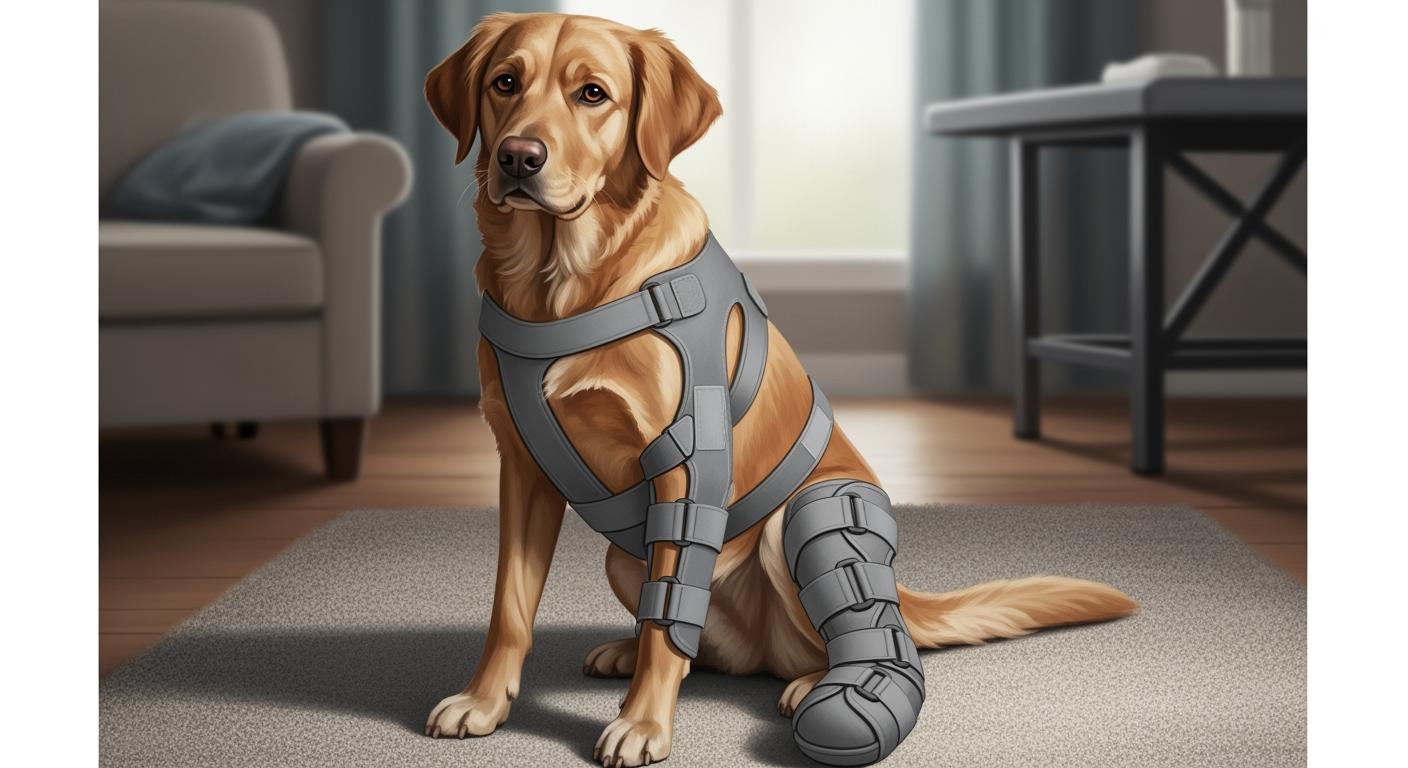
You want your dog to move with ease and comfort, even after an injury or as they age. A dog leg brace offers extra support for weak legs, chronic conditions, or muscle loss. This support tool helps stabilize joints, ease pain, and improve your dog’s mobility. Always use a brace under veterinary guidance, since it cannot cure the underlying problem.
Many owners choose a brace to:
Aid healing after injuries like ligament sprains or arthritis
Prevent further damage during recovery
Enhance their pet’s quality of life
Studies show that braces can improve movement and reduce pain in dogs, especially after knee injuries or surgery.
Key Takeaways
A dog leg brace provides essential support for weak or injured legs, helping your dog move more comfortably.
Always consult your veterinarian before using a brace to ensure it fits your dog’s specific needs and condition.
Braces can aid recovery from injuries, reduce pain, and improve mobility, enhancing your dog’s quality of life.
Choose the right type of brace based on your dog’s injury, whether it’s for the front or rear legs, to ensure effective support.
Monitor your dog regularly while using a brace to check for proper fit and any signs of discomfort or irritation.
What Is a Dog Leg Brace?
Definition and Purpose (front and rear legs)
Your dog’s legs work hard every day. The front legs help with balance and steering, while the rear legs provide power for walking, running, and jumping. Both sets of legs have complex joints, muscles, and ligaments. These structures can weaken over time or become injured from accidents, overuse, or chronic conditions like arthritis.
A dog leg brace is a specialized device that supports your dog’s leg when it feels weak or painful. You use it to help your dog move more comfortably and safely. The brace stabilizes the joint, reduces strain, and can prevent your dog from licking or biting at wounds. You should always use a brace under veterinary guidance, since it does not cure the underlying problem.
Tip: A dog leg brace offers support for healing, but it works best as part of a complete care plan with your veterinarian.
Here is a quick look at how braces differ for front and rear legs:
Type of Brace | Location | Purpose |
|---|---|---|
Front Leg Brace | Elbow, Carpal | Supports and stabilizes front legs, aids healing, prevents licking of wounds. |
Rear Leg Brace | Hip, Knee, Hock | Provides joint support for hind leg injuries, tailored to specific joint needs. |
Braces for the front legs focus on stability and protection, especially for elbows and wrists. Rear leg braces target the hip, knee, and hock, which are prone to ligament injuries and arthritis.
Types of Dog Leg Braces (knee, hock, full-leg)
You can choose from several types of dog leg braces, each designed for specific injuries or weaknesses. The main types include:
Elbow Brace: Helps with elbow instability, elbow dysplasia, or joint disease.
Knee Brace: Supports knee injuries, such as partial cruciate ligament tears or early arthritis.
Carpal Splint: Stabilizes the lower front leg after sprains or strains.
Tarsal (Hock) Brace: Supports the hind leg, especially the hock joint, after injury or surgery.
Hip Brace: Assists dogs with hip dysplasia or arthritis.
Full-Leg Brace: Provides support along the entire limb for severe injuries or post-surgical recovery.
Some braces offer single-joint support, while others cover multiple joints for more stability. You may find hinged knee braces that allow movement but keep the joint stable. Double knee braces help dogs with injuries in both knees or weak joints.
Type of Brace | Description | Ideal For |
|---|---|---|
Single Knee Braces | Support one knee. | Partial CCL tears, early arthritis. |
Double Dog Knee Braces | Support both knees, balance weight. | Bilateral injuries, weak joints. |
Hinged Knee Braces | Allow movement, maintain stability. | Severe injuries, post-surgical recovery. |
Custom braces are available for dogs with unique needs. Some brands offer off-the-shelf options, while others create custom-fit braces based on your dog’s measurements. GaitGuard’s Dog Protective Gear stands out for its medical-grade materials, adjustable design, and targeted support. You can choose anti-licking and rehabilitation features to help your dog heal faster and stay comfortable.
Note: Adjustable braces, like those from GaitGuard, ensure a snug fit for dogs of all sizes and shapes.
How Dog Leg Braces Work to Support the Joint
A dog leg brace works by stabilizing the joint and limiting excessive movement. This support reduces strain on ligaments and muscles, which helps your dog walk with less pain. Braces can also prevent further injury by keeping the leg in a safe position.
Braces stabilize the knee, hock, or elbow joint.
They limit movement that could cause more damage.
You may notice your dog using the injured leg more after wearing a brace.
Many dogs experience pain relief and improved mobility.
Studies show that dogs wearing knee braces often move better and feel more comfortable. Research found a 5.1% increase in limb usage after 90 days of brace use. Over 70% of owners reported that their dogs showed better mobility and comfort. In some cases, braces helped dogs avoid further surgery by improving weight-bearing ability.
GaitGuard’s Dog Protective Gear uses medical-grade materials for durability and safety. The adjustable design provides a custom fit, while anti-licking and rehabilitation features promote healing. You can use the auxiliary lifting strap for extra support during walks or training.
Reminder: A dog leg brace supports recovery and comfort, but you should always consult your veterinarian before using one. The brace is a tool to help your dog heal, not a cure for the underlying condition.
Benefits of Dog Leg Braces
A dog leg brace can make a big difference in your pet’s daily life. You want your dog to walk, run, and play with less pain and more confidence. This support tool offers extra stability, helps protect healing tissues, and improves comfort during recovery. Always remember, a dog leg brace supports your dog’s journey to better mobility, but it does not cure the underlying problem. You should use it with guidance from your veterinarian.
Stabilization and Support During Movement
You may notice your dog struggles to put weight on an injured or weak leg. A dog leg brace helps by stabilizing the joint and supporting your dog during walks, play, and rehabilitation. This stability can prevent further injury and give your dog the confidence to move more freely.
Veterinary studies show clear benefits for stabilization and support:
Dogs using custom stifle braces showed a 5.1% increase in weight-bearing on the affected limb.
Research from the University of Louisville found that braces improved joint biomechanics, especially in dogs with ligament injuries.
A study in the Journal of the American Veterinary Medical Association reported that 85% of owners who tried bracing or surgery would choose the same treatment again, showing high satisfaction.
You give your dog a safer way to move. The brace limits harmful motion, which protects healing tissues and reduces the risk of new injuries. This support is especially important during the early stages of recovery or for dogs with chronic weakness.
Pain Relief and Comfort for Some Dogs
Pain can stop your dog from enjoying daily activities. A dog leg brace can help relieve pain by supporting the joint and reducing strain on injured tissues. Many owners see their dogs become more comfortable and active after using a brace.
You may notice these benefits:
The brace helps reduce pain from ligament injuries, such as CCL tears.
It prevents further damage by limiting excessive movement.
Your dog can walk and play with less discomfort.
The brace encourages natural healing while allowing gentle activity.
Supportive knee braces can make a big difference for dogs with knee injuries. They help your dog regain mobility and enjoy a better quality of life. You may see your dog rest more comfortably and show less limping or stiffness.
Non-Surgical Recovery Aid and Long-Term Management
Not every dog is a good candidate for surgery. Some dogs are too old, have other health problems, or need a less invasive option. A dog leg brace offers a valuable alternative for recovery and long-term management of chronic conditions.
Recent veterinary research supports the use of braces for non-surgical care. Studies show that braces can limit harmful knee motion, sometimes performing as well as surgery in simulated models. Owner satisfaction rates for bracing reach 85%, which means many pet owners see real benefits.
Here is a look at what veterinary schools have found:
Study Source | Findings |
|---|---|
Colorado State Veterinary School | Surgery has a 98% satisfaction rate, bracing 85%, showing value for dogs who cannot have surgery. |
University of Georgia Veterinary School | Braces shift knee motion under weight, though more research is needed on long-term effects. |
University of Louisville | Braces can limit damaging motion as well as surgery in some cases. |
Many veterinarians now recommend braces for dogs who cannot have surgery or need extra support during recovery. Advances in brace design and materials have made this option safer and more effective.
When surgery is not possible, a custom knee brace acts like an exoskeleton for your dog’s leg. It provides external support, limits harmful movement, and gives the body a chance to heal naturally. Over time, scar tissue forms around the joint, adding internal stability.
GaitGuard’s Anti-Licking and Rehabilitation Features
GaitGuard’s Dog Protective Gear offers more than just joint support. You can choose from anti-licking gear, rehabilitation braces, and auxiliary lifting straps. These features help your dog heal faster and stay comfortable.
Product Type | Features | Benefits |
|---|---|---|
Anti-licking Gear | Soft, adjustable, prevents licking or biting wounds | Promotes healing, protects wounds, keeps your dog comfortable |
Rehabilitation Gear | Adjustable, supports joints, enhances stability | Relieves pain, restores movement, aids full recovery |
Lift-aid Strap | Controls movement, adds support and safety | Makes walks and outings safer and easier for you and your dog |
You can use these tools to help your dog recover from surgery, manage chronic weakness, or prevent self-injury. The adjustable design ensures a snug fit for dogs of all sizes. Medical-grade materials provide durability and safety for long-term use.
Note: Always consult your veterinarian before choosing a brace or support tool. A dog leg brace works best as part of a complete care plan, including rest, medication, and rehabilitation.
A dog leg brace gives your pet the support needed for a more active, comfortable life. With the right guidance and high-quality gear, you can help your dog enjoy better mobility and healing.
Conditions Helped by Dog Leg Braces
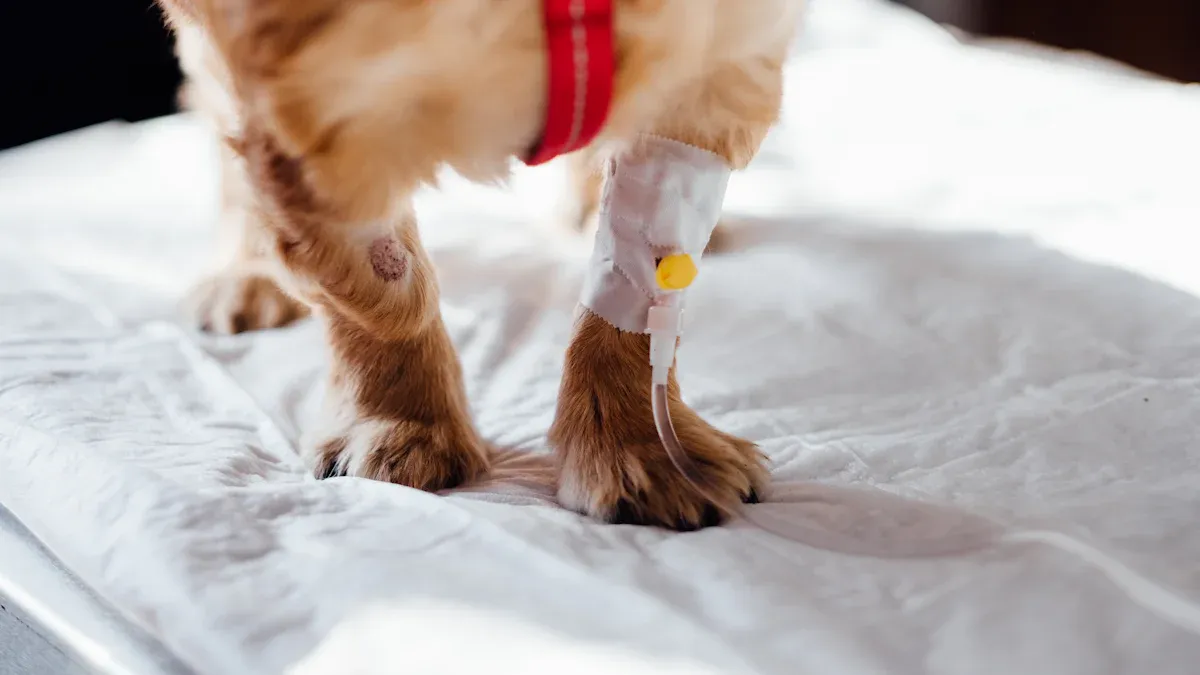
You may notice your dog limping, showing stiffness, or hesitating to jump or climb stairs. These signs often point to leg pain or weakness. A dog leg brace can help support your dog through mild to moderate injuries, chronic instability, or age-related weakness. Always talk to your veterinarian before starting any brace, as it works best as part of a complete care plan.
Sprains, Strains, and Soft-Tissue Injuries
Dogs can injure their muscles or ligaments during play, running, or even simple walks. You might see swelling, tenderness, or a sudden change in how your dog moves. Common soft-tissue injuries that benefit from a brace include:
Iliopsoas muscle strain (hip muscle injury)
Cranial cruciate ligament (CCL) injury (knee ligament)
A dog leg brace helps stabilize the affected area, reduces pain, and allows your dog to move more comfortably during recovery.
Ligament and Joint Injuries (ACL/CCL, hock instability)
Ligament injuries, such as a torn ACL (also called CCL in dogs), often cause limping and trouble bearing weight. Hock instability can make the back leg wobble or collapse. Custom-made plastic braces provide better support than fabric ones, which may stretch and fail to control joint movement. Studies show that dogs with moderate CCL injuries using knee braces improved mobility by 65% within eight weeks. Many veterinarians recommend custom braces for these injuries, and research shows significant improvement in limb function over 12 weeks.
Arthritis and Chronic Weakness in Front or Hind Legs
Older dogs or those with chronic conditions may develop arthritis or general leg weakness. You may notice your dog slowing down, avoiding stairs, or struggling to get up. Dog leg braces offer stability and support, helping decrease pain and inflammation during activity. Orthotics can play a key role in managing joint pain, especially when custom-fitted for your dog’s needs.
Post-Surgery Recovery and Support
After surgery, your dog may need extra help to regain strength and confidence. Braces can improve weight-bearing in the affected limb, with studies showing a 5.1% increase in limb use when wearing an orthotic. Owners often report that their dogs walk, trot, and jump better after using a brace. A dog leg brace supports healing and helps your dog return to normal activities more safely.
Tip: Watch for signs like limping, stiffness, or reluctance to play. If you see these, ask your veterinarian if a dog leg brace could help your pet recover or manage chronic issues.
Choosing and Using a Dog Leg Brace
Fit and Adjustment for Front vs Rear Legs
Getting the right fit is essential for your dog’s comfort and safety. A dog leg brace should match your dog’s injury and body shape. Front and rear legs have different needs. Use this table to compare important factors:
Factor | Front Leg Considerations | Rear Leg Considerations |
|---|---|---|
Type of Injury | Elbow dysplasia, degenerative joint diseases | Hip dysplasia, knee injuries |
Brace Type | Elbow braces, carpal braces | Tarsal braces, hip braces |
Customization | Custom-made for specific conditions | Custom-made for severe injuries |
Fit and Comfort | Must fit snugly to prevent further injury | Must fit snugly to prevent further injury |
Material | Soft or rigid depending on severity | Soft or rigid depending on severity |
Durability | Needs to withstand active movement | Needs to withstand active movement |
When choosing a dog leg brace, look for the correct size and alignment. Padding helps prevent rubbing. Adjustability ensures a snug fit. GaitGuard’s adjustable straps let you tailor the brace to your dog’s needs. The auxiliary lifting strap adds extra support for weak joints and helps with mobility.
Working With Professionals (vet and rehab)
Always work with your veterinarian or a rehab specialist when using a dog leg brace. They will help you select the right brace and teach you how to fit it properly. Custom orthotics use rigid materials for a perfect fit, while lighter wraps work for minor injuries. Your vet can guide you on the best type for your dog’s condition.
Tip: Follow your vet’s instructions for wear time, cleaning, and monitoring your dog’s skin.
Safe Use, Wear Schedule, and Monitoring
Start with short wear times and gradually increase as your dog adjusts. Check for signs of rubbing, swelling, or discomfort. Remove the brace if you notice any problems. Combine the brace with rest, safe handling, weight management, controlled exercise, and medication as advised by your vet.
Choose the right size and material for your dog’s needs.
Make sure the brace is properly aligned and padded.
Build up wear time slowly.
Watch for skin irritation or changes in movement.
Use the brace as part of a complete care plan.
A dog leg brace supports your dog’s recovery, but it is not a cure. Always use it under veterinary guidance for the best results.
Risks and Limitations
A dog leg brace can help your dog move better and feel more comfortable, but it has important limitations. You should know that a brace does not repair torn ligaments or broken bones. It cannot replace surgery when your veterinarian recommends it. In some cases, a brace may not provide enough support for severe injuries.
When Braces Are Not Enough and Surgery May Be Needed
Sometimes, a dog leg brace is not a complete solution. Severe injuries, such as fully torn ligaments or complex fractures, often require surgery for the best outcome. If your dog shows sudden severe lameness, cannot bear weight, has an open wound, visible deformity, or worsening pain, seek urgent veterinary care. Some dogs cannot have surgery due to age or other health problems, but for many, surgery remains the most effective treatment.
Note: Always talk to your veterinarian to decide if a brace or surgery is right for your dog’s condition.
Potential Issues: Poor Fit, Skin Irritation, and Overuse
You need to make sure the brace fits well. A poor fit can cause several problems:
Pressure sores or skin irritation
Restricted blood flow
Slipping or spinning of the brace, leading to rubs or sores
Ineffective support or even new injuries
Overuse of a brace without breaks can also cause discomfort or delay healing. Check your dog’s skin daily and adjust the brace as needed.
Why Veterinary Consultation Is Essential
Veterinary guidance is crucial when using a dog leg brace. Your veterinarian will:
Diagnose your dog’s condition correctly
Help you choose the right type of brace
Monitor your dog’s progress and adjust the treatment plan
Veterinarians often recommend surgery first for certain injuries, but they can help you decide if a brace is a good option. Regular check-ups ensure your dog gets the best care and avoids complications.
Remember, a dog leg brace supports recovery, but it is not a cure. Always use it as part of a complete care plan with your veterinarian’s help.
A dog leg brace can play a valuable role in your dog’s recovery and long-term comfort. You support healing and mobility by choosing the right brace, ensuring a proper fit, and monitoring your dog’s progress. Always consult your veterinarian before starting any brace.
Measure your dog accurately for the best fit.
Seek veterinary guidance for brace selection.
Regularly check and adjust the brace as needed.
With the right care and tools, you help your dog enjoy greater comfort and an active life.
FAQ
How long should my dog wear a leg brace each day?
Start with short periods, such as 30 minutes to 1 hour. Gradually increase wear time as your dog adjusts. Always follow your veterinarian’s advice for the safest schedule.
Can a dog leg brace replace surgery?
A dog leg brace supports healing and comfort. It does not cure injuries or replace surgery when needed. Always consult your veterinarian to decide the best treatment for your dog.
How do I know if the brace fits correctly?
Check for a snug fit without pinching or slipping. Look for signs of rubbing, redness, or discomfort. Your veterinarian or rehab specialist can help ensure the brace fits properly.
Will my dog need help getting used to the brace?
Most dogs need time to adjust. Use treats and praise to encourage your dog. Start with short walks and monitor your dog’s movement and comfort.
