
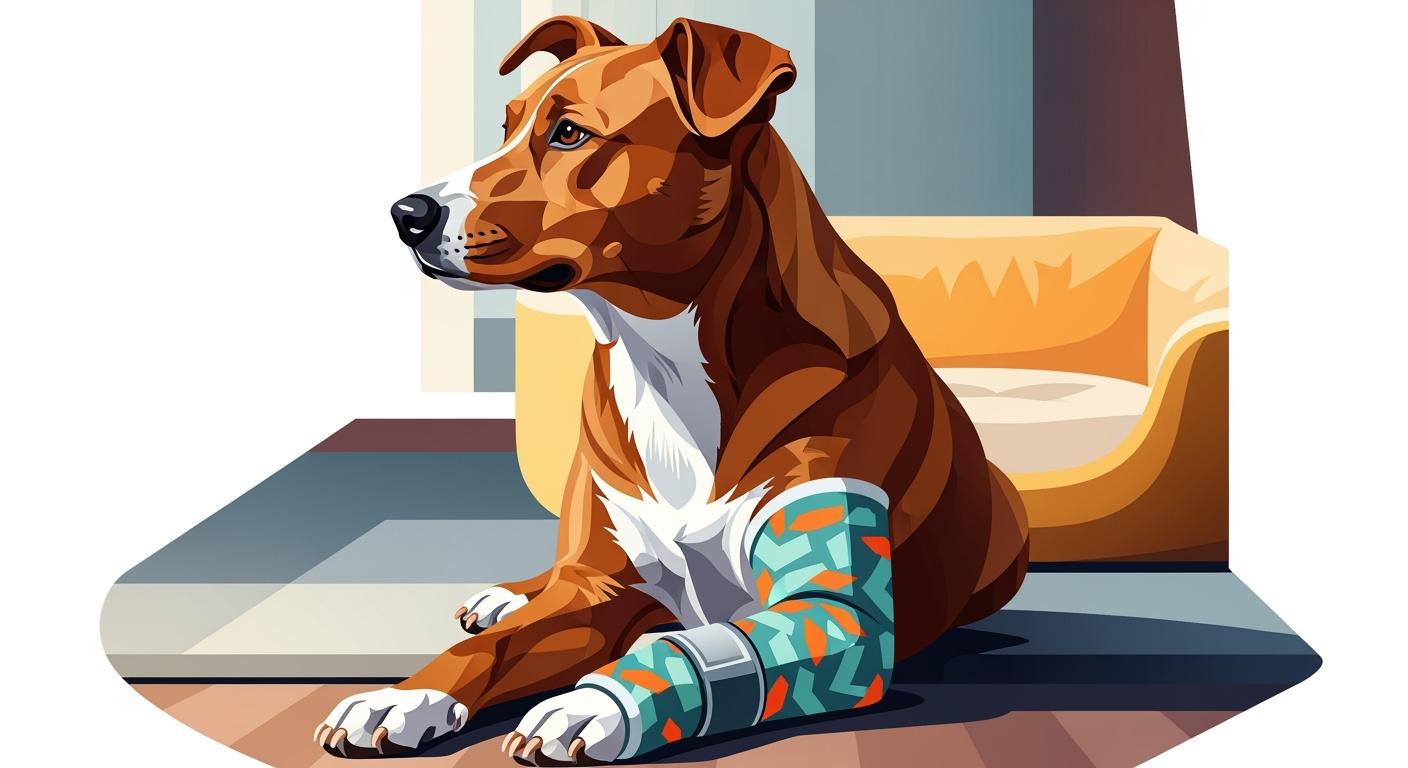
A dog sleeve to stop licking helps keep your dog’s wounds safe. You put the sleeve on your dog’s leg to stop licking and chewing. This helps your dog heal. Most dogs can move and rest easily in sleeves. Dogs feel less stress and move better than with a hard e-collar. The table below shows comfort and movement:
Feature | Anti-Lick Recovery Sleeves | Rigid E-Collars |
|---|---|---|
Comfort | High | Low |
Mobility | High | Low |
You can check and change sleeves without trouble. Your veterinarian’s plan is more important than any home plan. Your veterinarian’s plan is more important than device instructions if you worry.
Key Takeaways
A dog sleeve helps stop licking. It gives comfort and lets your dog move. Your dog can heal without a hard e-collar.
Licking wounds can bring in germs and wetness. This slows down healing. Use a sleeve to keep wounds clean and dry.
Look at the sleeve and your dog’s wound two times each day. Make sure it fits right. Watch for any redness or infection.
Use the sleeve with other safety tools if you need to. This is good for bendy dogs or homes with many pets.
Always listen to your vet about wound care and using devices. This helps your dog heal safely.
Why licking delays healing
Bacteria and moisture risks
When your dog licks a wound, you might think it helps. In reality, licking can introduce bacteria and moisture that slow healing. Dog saliva contains germs that can cause serious infections.
A man lost his limbs after his dog licked a wound on his leg. Doctors found a dangerous bacterium called Capnocytophaga canimorsus from the dog’s saliva.
This case shows that even a small lick can lead to life-threatening problems.
Moisture from licking keeps wounds wet. Wet wounds attract more bacteria and make it harder for the skin to close. You want to keep the area clean and dry. Using a dog sleeve to stop licking helps protect the wound from saliva and dirt.
Tip: Your veterinarian’s protocol overrides any home care plan. Always follow their advice for wound care.
Tissue damage from licking
Licking does not just add germs. It also damages the skin and tissue.
Repeated licking keeps the wound open and irritated.
This slows down the body’s natural repair process and causes more swelling.
Over time, licking can cause deeper infections, abscesses, or even bone problems.
You may notice redness or swelling if your dog keeps licking. If you see these signs, check the wound and contact your clinic. Your veterinarian’s protocol overrides device instructions if you have concerns.
Consistent protection until recheck
You need to protect the wound every day until your veterinarian says it is safe. Dogs can reach wounds quickly, even when you look away for a moment.
Use a dog sleeve to stop licking and keep the area covered.
Check the sleeve and the wound twice a day, morning and night.
Remove the sleeve for short breaks to let the skin breathe, but watch your dog closely.
Consistent protection helps wounds heal faster and lowers the risk of infection. Always ask your veterinarian if you have questions about wound care.
Dog sleeve to stop licking: strengths and limits
Best uses for limb wounds
A dog sleeve to stop licking works best for wounds, hot spots, or incisions on your dog’s legs. You can use it after surgery, for skin irritation, or when your dog has a mild injury that needs protection. The sleeve covers the area and keeps it clean and dry. Most dogs feel more comfortable and less stressed in a sleeve than in a hard cone.
You can see the benefits of using a sleeve in the table below:
Evidence Type | Description |
|---|---|
Infection Rates | Studies show reduced infection rates when using the Lick Sleeve compared to traditional collars. |
Owner Compliance | Improved owner compliance reported with the use of the Lick Sleeve during recovery. |
Dog Welfare Metrics | Enhanced metrics indicating better comfort and reduced stress for dogs using the Lick Sleeve. |
The sleeve fits well for limb wounds because it matches the shape of your dog’s leg. It allows your dog to walk, rest, and play with less restriction. The gentle compression can also help calm your dog during recovery. Your veterinarian’s protocol overrides any home care plan, so always check with your clinic before starting a new device.
When sleeves fail or need backup
Sometimes, a dog sleeve to stop licking does not give enough protection. You need to watch for signs that the sleeve is not working. Here are common situations where sleeves may fail or need extra help:
The sleeve slips or twists and exposes the wound.
Your dog chews or licks through the fabric.
The wound is on a paw, face, or neck, where sleeves do not fit well.
Your dog is very flexible and can reach around the sleeve.
More than one pet in the home tries to lick the wound.
The sleeve gets wet or dirty and cannot protect the area.
If you see any of these problems, you should act quickly. Try refitting the sleeve or switching to a backup barrier. Your veterinarian’s protocol overrides device instructions if you have concerns about wound safety.
You can use other barriers when a sleeve is not enough. Here are some options:
Elizabethan collar (E-collar): A hard cone that blocks licking and chewing.
Inflatable collar: A soft, round collar that limits neck movement.
Neck brace collar: A stiff collar for neck injuries.
Protective bandages or dog boots: Good for toe or paw wounds.
Recovery suits or post-surgical garments: Full-body coverage for some injuries.
If your dog can still reach the wound during a reach test, you should use a hard cone for better protection. Always check the sleeve and wound at least twice a day.
Pairing sleeves with other barriers
You can combine a dog sleeve to stop licking with other barriers for extra safety. This approach works well if your dog is determined to lick or if you have more than one pet at home. Pairing devices can help prevent infection and keep the wound clean.
The sleeve covers the wound and keeps it dry.
A cone or inflatable collar adds a second layer of protection.
The sleeve’s gentle compression can help reduce anxiety.
The design adapts to your dog’s leg, so your dog can move comfortably.
You should check the fit of all devices and make sure your dog cannot reach the wound. Watch for signs of skin redness, swelling, or hair loss. Remove the sleeve for short breaks and let the skin breathe. If you notice any problems, contact your clinic right away.
Tip: Always have two sleeves ready. You can wash one while your dog wears the other. Air dry the sleeve and avoid using a dryer.
A dog sleeve to stop licking gives your dog comfort and freedom during recovery. You can use it alone or with other barriers, depending on your dog’s needs. Remember, your veterinarian’s protocol overrides any device instructions. Safety comes first for your dog’s healing.
Matching protection to wound location
Choosing by wound site: leg, paw, belly, face
You need to match the right protection to the wound’s location. Each area on your dog’s body has different needs. For example, a leg wound often fits well with a dog sleeve to stop licking. Paw injuries need tougher coverings because your dog walks on them. Belly wounds may need a wrap or a recovery suit. Face wounds usually require a hard cone for full protection.
Veterinarians look at several things when they choose a device:
Wound site: Some areas need more secure or padded coverings.
Exudate control: Wounds that drain a lot need absorbent dressings.
Patient activity: Active dogs need stronger, more secure bandages.
Ease of use: Simple devices help you follow the care plan.
Cost and availability: You may need to pick what you can get quickly.
Your veterinarian’s protocol overrides any device instructions. Always ask your clinic if you are unsure.
Multi-pet and nighttime risks
You may have more than one pet at home. Other pets can lick or chew your dog’s wound when you are not watching. Nighttime is also risky because you cannot supervise your dog every minute. You should check the fit of all protective devices before bed. If you have a busy household, use extra barriers or keep your dog separated during healing.
Tip: Set up a safe, quiet space for your dog to rest at night. This lowers the chance of other pets bothering the wound.
When a hard cone is safest
Sometimes, only a hard cone can keep your dog safe. If your dog can reach the wound during a reach test, you need a cone. Face, neck, and paw wounds often need this level of protection. Dogs who chew or twist their sleeves also need a cone. Your veterinarian’s protocol overrides your home plan if you have any doubts.
You want your dog to heal well. Choose the right device for the wound’s location and always check with your clinic.
Fitting a dog sleeve to stop licking
Measuring and alignment tips
You want the right fit for your dog sleeve to stop licking. Start by having your dog stand on a flat surface in a natural position. Use a flexible measuring tape to measure from the base of the neck (where the shoulder blades begin) down the spine to where you want the sleeve to end, usually near the tail. Write down this length and round up to the nearest half inch. Next, measure around the widest part of your dog’s chest, just behind the front legs. Keep the tape flat and snug, but do not add extra space for fur. If you do not have a measuring tape, use a string or phone charger, then measure it against a ruler. Write down the chest size and round up if needed.
When you put the sleeve on, align the openings with your dog’s leg and shoulder. The sleeve should cover the wound fully but not pinch or bunch up. Check that your dog can walk and sit comfortably.
The reach and slip test
After fitting the sleeve, perform the reach test. Watch your dog try to lick or chew the covered area. If your dog can reach the wound, the sleeve is not enough. In this case, switch to a hard e-collar. Next, check for slipping. Gently move the sleeve and see if it stays in place. If it slips or twists, refit it or try a different size. Your veterinarian’s protocol overrides device instructions if you have any doubts.
Tip: Always check the sleeve and wound in the morning and evening for 14 days. Remove the sleeve for short breaks, but never leave your dog unsupervised.
Skin checks and circulation signs
Look at your dog’s skin under the sleeve every time you remove it. Check for redness, swelling, or hair loss. Make sure the sleeve does not leave deep marks or cut off circulation. If you see any problems, reduce wear time and contact your clinic. Do not let your dog wear the sleeve for more than 8 hours at a time unless your veterinarian says otherwise. Your veterinarian’s protocol overrides any home care plan.
14-day protection plan for healing
Days 1–3: vigilance and habit building
You start the healing journey with strict supervision. Keep your dog in a quiet, confined area to prevent slips or jumps. Use short leash walks for bathroom breaks, each lasting less than five minutes. Check the wound and sleeve every morning and evening. Watch for redness, swelling, or discharge. Apply cold compresses for 10–15 minutes several times a day if your veterinarian recommends it. Avoid play, running, or climbing stairs. Your veterinarian’s protocol overrides any home care plan.
Tip: Build a routine. Set reminders for AM and PM checks to help you remember.
Days 4–14: consistency and checks
You continue with the same routine for the next eleven days. Maintain two checks per day, totaling 28 checks over 14 days. Remove the sleeve for short “skin-air” breaks between wear blocks. Never exceed 8 hours of continuous wear unless your veterinarian says otherwise. Monitor for escalation triggers, such as sleeve slipping, chewing attempts, wet fabric, or new swelling. If you notice any of these, refit the sleeve or switch to a hard cone. Your veterinarian’s protocol overrides device instructions if you have concerns.
Recommendation | Details |
|---|---|
Strict Rest and Confinement | Keep your dog in a quiet area with minimal movement. |
Short Leash Walks | Allow only brief, supervised walks for bathroom breaks. |
Incision Monitoring | Check the wound twice daily for redness, discharge, or swelling. |
Avoid Exercise or Play | Prevent running, jumping, or climbing stairs. |
Cleaning, drying, and sleeve rotation
You need two sleeves for rotation. Wash one while your dog wears the other. Clean the sleeve in a machine at up to 90ºC/194ºF. Use a laundry bag to protect the fabric. Air dry the sleeve—never use a tumble dryer. This keeps the sleeve soft and safe for your dog’s skin.
Step | Instruction |
|---|---|
Cleaning | Wash at a maximum of 90ºC/194ºF. |
Care | Use a laundry bag to prevent fabric roughness. |
Drying | Do not tumble dry – let it air dry. |
A dog sleeve to stop licking helps you protect your dog’s wound with comfort and consistency. Follow this plan for the full 14 days, and always contact your clinic if you see any warning signs.
Quick reference and decision tables
Traffic-light safety table
You can use this table to decide if a sleeve is safe enough for your dog today. Look at each sign and match it to the color.
Status | What You See | What You Do |
|---|---|---|
🟢 Green | Sleeve fits well, wound covered, no licking | Continue with sleeve |
🟡 Yellow | Sleeve slips, mild redness, dog tries to lick | Refit sleeve, check again |
🔴 Red | Dog reaches wound, sleeve chewed, new swelling | Switch to hard cone, call clinic |
Your veterinarian’s protocol overrides any table or home plan.
Sleeve vs e-collar alternatives
This table helps you compare anti-lick protection options for your dog.
Option | Comfort | Mobility | Coverage | Best For |
|---|---|---|---|---|
Dog sleeve to stop licking | High | High | Limb | Leg wounds, hot spots |
Hard e-collar | Low | Low | Full | Face, neck, paw wounds |
Inflatable collar | Medium | Medium | Neck | Mild neck wounds |
Recovery suit | Medium | Medium | Body | Belly, chest wounds |
Your veterinarian’s protocol overrides device instructions.
Clinic discharge checklist
You can use this checklist when you leave the clinic.
Measure your dog for the right sleeve size.
Learn how to put on and take off the sleeve.
Plan for two sleeves for rotation.
Check the wound and sleeve every morning and evening.
Never let your dog wear the sleeve for more than 8 hours at a time.
Know when to switch to a hard cone.
Ask your clinic about warning signs.
Quick reference card mini-calculations
Monitoring workload: You need to check the sleeve and wound twice a day for 14 days. That means 28 checks in total.
Wear-block planning: Do not let your dog wear the sleeve for more than 8 hours at a time. If the sleeve gets wet, remove it and use the clean one.
Cone sizing fallback: Measure from the tip of your dog’s nose. The cone should extend 4–8 cm past the nose for best protection.
You can use these tables and tips to keep your dog safe. Always ask your veterinarian if you have questions.
Top mistakes and how to avoid them
Dog sleeves help your dog heal, but you need to use them correctly. Many owners make simple mistakes that slow recovery or cause new problems. Here are the most common mistakes and how you can prevent them:
Common Mistake | Prevention Tip |
|---|---|
Using a wet sleeve | Always keep the sleeve dry. Swap for a clean, dry one if wet. |
Measure carefully and check fit before each use. | |
Ignoring friction or redness | Inspect skin at every sleeve change. Adjust or refit if needed. |
Leaving the sleeve on too long | Remove every 8 hours for a skin check and air break. |
Not rotating sleeves | Use two sleeves—wash one while your dog wears the other. |
Skipping morning or evening checks | Set reminders for AM and PM checks for 14 days. |
Letting your dog chew the sleeve | Supervise closely and switch to a cone if chewing starts. |
Switching devices without testing | Test new devices with supervision before leaving your dog alone. |
Over-relying on e-collars | Use sleeves as your main tool for limb wounds. |
Inconsistent commands or reactions | Use the same words and actions every time. |
Not proofing in real-life situations | Practice sleeve use during walks and rest times. |
Lack of supervision outdoors | Watch your dog outside. Wet grass or dirt can soak the sleeve. |
Wet sleeves and friction issues
Wet sleeves can cause skin problems and slow healing. You should always check the sleeve after walks or play. If the sleeve feels damp, replace it right away. Choose soft, breathable materials and check for rubbing or redness. Inspect your dog’s skin and joints every time you remove the sleeve. Layer gear wisely in cold weather to avoid chafing.
Tip: Your veterinarian’s protocol overrides any home care plan. Always ask if you see redness or sores.
Switching devices without testing
Switching from a sleeve to a cone or another device can confuse your dog. Test new devices while you watch. Make sure your dog cannot reach the wound before leaving them alone. Use gentle corrections and avoid yelling or harsh handling. Consistent training builds trust and keeps your dog safe.
Supervision and outdoor risks
Dogs can slip out of sleeves or chew them, especially outside. Always supervise your dog during walks or play. Check the sleeve’s fit before and after outdoor time. If you have more than one pet, watch for licking or chewing from other animals. Your veterinarian’s protocol overrides device instructions if you have any concerns.
🐾 Stay alert and check your dog’s sleeve and skin often. This helps you catch problems early and keeps healing on track.
FAQs and clinic script
How long should my dog wear the sleeve?
You should keep the sleeve on your dog for up to 14 days, or until your veterinarian says the wound is healed. Remove the sleeve for short breaks so your dog’s skin can breathe. Always check the wound and sleeve in the morning and evening. Your veterinarian’s protocol overrides any home care plan.
Safe daily wear time
You can let your dog wear the sleeve throughout the day. Do not let your dog wear the sleeve for more than 8 hours at a time without a break. Watch for signs of discomfort, redness, or swelling. Remove the sleeve for washing and skin checks. Your veterinarian’s protocol overrides device instructions.
What if licking continues?
If your dog keeps trying to lick or chew the wound, check the sleeve fit. Perform a reach test to see if your dog can reach the area. If licking continues, switch to a hard cone and contact your clinic for advice.
Washing and care tips
Wash the sleeve in a machine at up to 194°F (90°C). Use a laundry bag to protect the fabric. Air dry the sleeve—never use a tumble dryer. Always keep a second sleeve ready so you can rotate them.
Can my dog sleep in the sleeve?
Your dog can sleep in the sleeve if it fits well and stays dry. Check the sleeve and skin before bedtime and again in the morning.
What signs mean I should call the clinic?
Call your clinic if you see new discharge, foul odor, swelling, heat, or sudden pain. If the wound opens or your dog limps, seek help right away.
How do I know the sleeve fits correctly?
The sleeve should cover the wound without pinching or slipping. Your dog should walk and rest comfortably. Check for redness or marks after each wear.
Clinic discharge script
Clinic Discharge Checklist:
Understand the four phases of wound healing: inflammatory, debridement, granulation, and maturation.
Recognize which phase your dog’s wound is in.
Cover the wound with a sterile bandage under the sleeve.
Check the wound and sleeve twice daily.
Never exceed 8 hours of continuous wear.
Know when to switch to a hard cone.
Contact the clinic if you see warning signs.
A dog sleeve to stop licking helps you protect your dog’s limb wounds and hot spots with comfort and care. You give your dog freedom to move and rest. You also lower stress and support healing.
Soft, breathable materials let your dog move easily.
The sleeve shields wounds and prevents licking.
Your dog feels less anxiety than with a hard cone.
Healing improves and life feels better during recovery.
Your veterinarian’s protocol overrides any home plan. Your veterinarian’s protocol overrides device instructions. Always ask your clinic for advice. You support your dog’s healing every step of the way.
FAQ
How long should my dog wear the sleeve?
You should keep the sleeve on your dog for up to 14 days or until your veterinarian says it is safe to stop. Your veterinarian’s protocol overrides any home care plan.
Can my dog go outside while wearing the sleeve?
Yes, your dog can go outside with the sleeve on. Always check that the sleeve stays dry and clean. Replace it if it gets wet or dirty.
What if my dog keeps trying to lick the wound?
Check the sleeve fit and do a reach test. If your dog can still reach the wound, switch to a hard cone. Your veterinarian’s protocol overrides device instructions.
How do I clean the sleeve?
Wash the sleeve in a machine at up to 194°F (90°C). Air dry it. Do not use a dryer. Keep a second sleeve ready for rotation.
Is the sleeve safe for overnight use?
You can let your dog sleep in the sleeve if it fits well and stays dry. Check your dog’s skin before bed and again in the morning.
