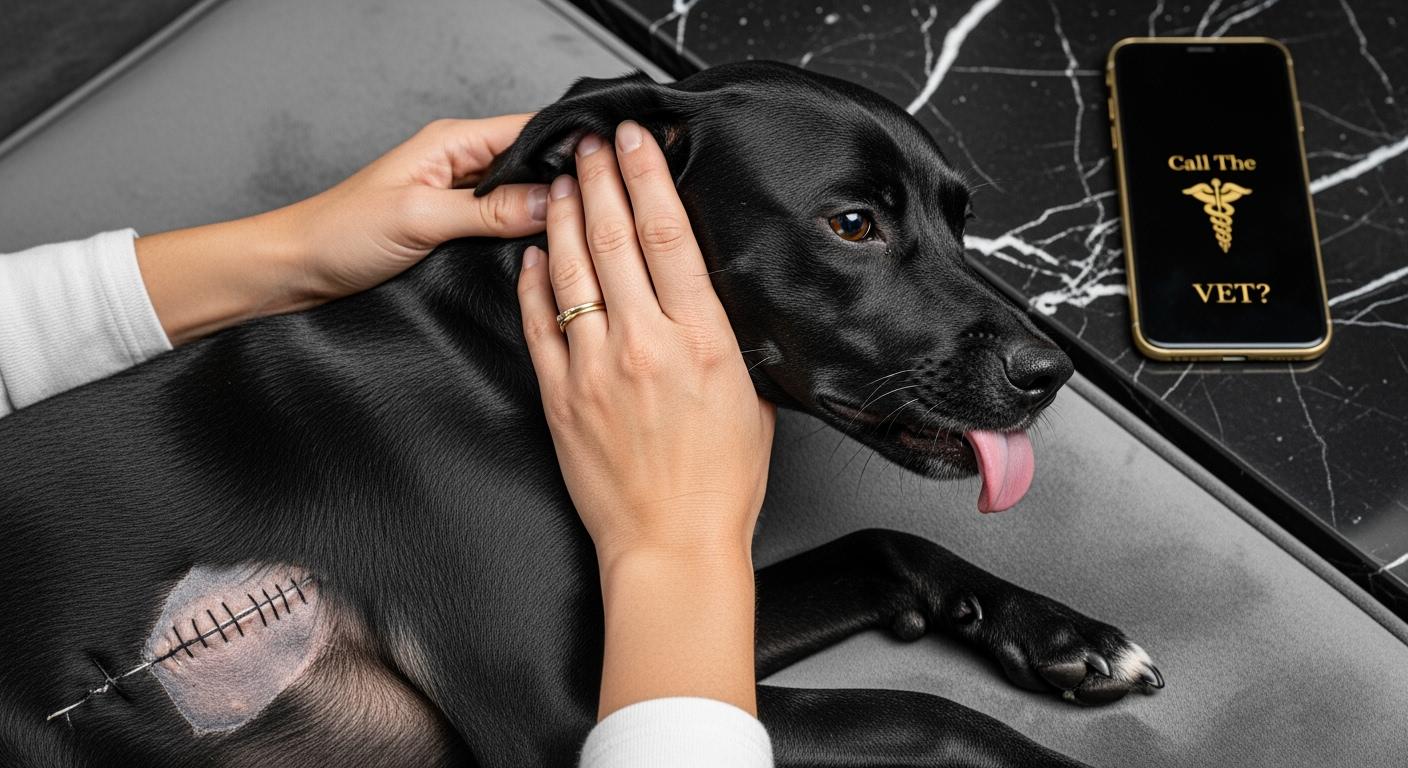
Proper dog spay incision care stop licking is essential for your pet’s smooth recovery after surgery. Watching your dog try to lick the incision can be stressful, but preventing this behavior is crucial. Licking the surgical site is not safe and can lead to serious complications such as fluid-filled lumps, painful swelling, or even the incision opening up. To ensure the best dog spay incision care stop licking, use tools like cones, recovery suits, and supervise your dog closely. Monitor the incision for any changes and know when it’s time to contact your veterinarian for help.
Common problems from licking include:
Seroma (fluid-filled lump)
Abscess (painful swelling)
Dehiscence (incision opens)
Hernia (tissue protrusion)
Infection (redness, swelling, fever)
Key Takeaways
Stop your dog from licking the incision. This helps prevent problems like infection or slow healing. Use things like E-collars or recovery suits as barriers.
Make a quiet and calm space for your dog to rest. Keep your dog’s activity low and the area peaceful. This helps your dog feel less stressed and heal faster.
Check the incision every day to see how it is healing. Watch for redness, swelling, or any discharge. Call your vet if you see anything that worries you.
Give your dog calm things to do so they do not get bored. Try food puzzles or gentle play to keep them busy. This also helps stop them from licking.
Know when you should call your vet for help. Look for signs like too much licking, big swelling, or discharge. Get help right away if you see these signs.
Why Dogs Lick Incisions and Risks of Licking After Surgery
Causes: Itch, Discomfort, and Boredom
Dogs lick their incisions for many reasons. The area may itch while it heals. Mild pain or discomfort can make dogs lick. Some dogs get bored after surgery. They may lick because they cannot play. Instinct is important, too. Dogs often lick wounds to care for themselves. This helps them feel better and may ease pain for a short time.
Your dog might lick more if they feel nervous. Some dogs want attention and lick for that reason. How much a dog licks can be different. Some dogs only lick a little. Others keep licking again and again. Licking can also be a way to show care. Wild dogs lick each other’s wounds to help and bond.
Did you know? Dog saliva has tissue factors and enzymes like lysozyme. These can help blood clot and fight some bacteria, such as Escherichia coli and Streptococcus canis. But licking is not safe for surgical wounds.
Licking After Surgery: Infection and Healing Risks
Licking after surgery can cause big problems. The first few licks might clean the area. But licking too much can hurt the incision. This can lead to infection, slow healing, or the incision opening.
Risk of Infection or Delayed Healing | Explanation |
|---|---|
Introduction of Bacteria | Licking can bring bacteria to the incision and cause infection. |
Irritation of the Wound | Too much licking can bother the wound and cause problems. |
Reopened Wounds | Licking can pull on stitches and open the incision. |
Delayed Healing | Age and health matter, but licking can make healing take longer. |
Increased Size of the Wound | Licking can make the wound bigger and harder to heal. |
You should stop your dog from licking the incision. Dog saliva can fight some germs, but licking is risky. Licking can bring bad bacteria, make the wound sore, and slow healing. If your dog keeps licking, the incision may open or get infected. This can mean more treatment and a longer recovery.
Dog Spay Incision Care: Stop Licking and Set Up Recovery
Calm Recovery Space and Activity Limits
You can help your dog heal by creating a calm recovery space. Choose a quiet area in your home with soft bedding. Keep lights low and reduce noise. Limit your dog’s contact with children and other pets for the first few days. Speak in a gentle voice and use slow, calm movements. This helps lower stress and keeps your dog from getting too excited. Place your dog’s bed away from busy areas. Use an E-collar as part of your dog spay incision care stop licking routine. Keep your dog indoors and calm. Do not allow running, jumping, or rough play. Make sure the incision stays clean and dry at all times.
Step-by-step setup for a safe recovery environment:
Pick a quiet, cozy spot with soft bedding.
Block off stairs and furniture to prevent jumping.
Place non-slip mats or rugs to help your dog walk safely.
Use a crate or playpen if your dog needs extra confinement.
Keep the E-collar on to support dog spay incision care stop licking.
Leash-Only Potty Breaks and Safe Handling
Take your dog outside only for short, leash-only potty breaks. Use a harness instead of a neck collar to avoid pressure on the incision. Do not allow off-leash time, long walks, or jogging. Guide your dog gently and avoid sudden movements. If your dog feels unsteady, use a support sling under the belly. This prevents slips and keeps the incision safe. Leash-only breaks are a key part of dog spay incision care stop licking because they limit activity and lower the risk of complications.
Quick Reference Card
You can use this quick reference card to guide your daily dog spay incision care stop licking routine:
Key Element | Description |
|---|---|
Incision Monitoring | Check the incision daily for the first 7-10 days to monitor healing. |
Clean and Dry Incision | Keep the incision clean and dry; avoid bathing or swimming for 14 days. |
Suture Removal | External sutures or staples may need removal within 10-14 days post-surgery. |
Signs of Complications | Watch for swelling, pain, discharge, bleeding, or bruising; contact a vet if any concerns arise. |
E-collar Usage | Use a hard plastic e-collar for 10-14 days to prevent the pet from chewing the incision. |
Activity Limitation | Limit activity to short leash walks for 10-14 days to prevent incision issues. |
Tip: Review this card each day to keep your dog’s recovery on track and support dog spay incision care stop licking.
Daily Incision Care and Monitoring
What’s Normal vs Not Normal Incision Guide
You are important in your dog’s healing after surgery. Check the incision every morning and night to find problems early. It is normal to see a little redness and swelling for a few days. This means the healing process has started. Your dog may get more energy as they heal. Dogs often want to lick their wounds, but you must stop this to help them heal.
Use this table to see what is normal and what is not:
Normal Signs of Healing | Abnormal Signs of Complications |
|---|---|
Slight redness or swelling (first 24–48 hours) | Increased redness or swelling after first few days |
Gradual decrease in swelling and bruising | Persistent or worsening bruising |
Dry incision, no excessive discharge | Discharge, pus, or bleeding |
Incision edges closed | Incision not closing or tissue sticking out |
Increased energy after first few days | Lethargy, loss of appetite, or bad odor |
Incision cool or only mildly warm | Incision hot to the touch |
If you see your dog licking their wounds or notice any bad signs, call your veterinarian for help.
Daily Incision Care Checklist
A daily routine helps your dog heal and keeps them from licking their wounds. Print or save this checklist so you can remember what to do:
Daily Incision Check Checklist
Look at the incision two times each day.
Watch for redness, swelling, or any discharge.
Make sure the incision edges are closed.
Stop your dog from licking their wounds.
Keep the incision clean and dry. Do not let your dog swim or take baths for 14 days.
Do not use ointments, sprays, or bandages unless your vet says it is okay.
Use an E-collar or barrier for 10–14 days, or until your vet says you can stop.
Notice if your dog gets more energy as they heal.
Write down any changes in how your dog eats, acts, or goes to the bathroom.
Household Rules for the Quiet Period
Keep your dog in a calm, quiet place with soft bedding.
Do not let your dog run, jump, or play rough for 10–14 days.
Only use a leash and harness for potty breaks.
Block stairs and furniture so your dog cannot jump.
Stop all licking their wounds by using barriers and watching your dog.
Most problems happen when dogs lick their wounds or get too active. Careful watching and a calm home help your dog heal well.
How to Keep Your Dog from Licking Stitches
After your dog’s spay surgery, you want to keep your dog from licking stitches. This helps the incision heal and lowers the risk of infection. You have several options to stop licking. Each method has its own fit rules, pros, and cons. You should choose the best one for your dog’s needs and comfort.
E-Collar Fit and Use to Prevent Licking
The Elizabethan collar, or E-collar, is the most common tool to prevent licking. This cone-shaped collar surrounds your dog’s head and blocks access to the incision. Most veterinarians recommend the E-collar because it works well for most dogs.
The E-collar prevents your dog from reaching the surgical site.
It is the best solution to prevent dogs from licking their spay incisions.
Most dogs cannot reach their stitches when wearing a properly fitted E-collar.
How to fit an E-collar:
Choose a size that extends 1–2 inches past your dog’s nose.
Place the collar over your dog’s head.
Secure the collar so you can fit two fingers between the collar and your dog’s neck.
Make sure your dog cannot slip out of the collar.
If your dog can still lick the incision, size up right away.
Tip: Remove the E-collar only for meals and only if you supervise your dog closely. Replace it right after eating.
Some dogs may try to remove the E-collar or get a paw between the collar and their neck. If this happens, check the fit and adjust as needed. If your dog keeps trying to lick the incision even with a cone, check the length and tightness. You may need a larger collar or an extra barrier.
Recovery Suits, Inflatable Collars, and Alternatives
You have other options if your dog cannot tolerate an E-collar. Recovery suits, inflatable collars, and soft cones can help prevent licking. Each has benefits and drawbacks.
Type of Barrier | Pros | Cons |
|---|---|---|
Full body protection, comfortable, less anxiety | Can overheat, needs washing, some dogs escape | |
Inflatable Collars | Soft, lightweight, better vision and movement | May not protect low incisions, can be punctured |
Soft Cones | Gentler on furniture, more flexible | Some dogs can reach around, may collapse |
Pool Noodle Collar | DIY, lightweight, affordable | Not as sturdy, may not fit all dogs |
T-Shirt Method | Cheap, easy to use, comfortable | Limited protection, needs frequent checks |
Deodorant/Coconut Oil | May deter licking with scent or taste | Not reliable, do not use without vet approval |
Recovery suits cover your dog’s body and block access to the incision. They work well for calm dogs and those who dislike cones. You must keep the suit clean and dry. Inflatable collars look like neck pillows. They are soft and allow your dog to see and move better. Some dogs can still reach their stitches, especially if the incision is on the belly. Soft cones and pool noodle collars offer comfort but may not prevent licking for all dogs.
Note: Always check with your vet before using sprays, deodorants, or coconut oil. Some products can irritate the skin or slow healing.
Stop Licking Options Comparison Table
You can use this table to compare the main options to keep your dog from licking stitches. This helps you choose the best method for your dog’s recovery.
Barrier Type | Best For | Not Ideal For | Fit Checks | Common Failure Mode |
|---|---|---|---|---|
E-collar (plastic) | Most dogs, all incision sites | Very anxious or small dogs | 2 fingers under strap, rim 1–2″ past nose | Too short, too loose, dog removes it |
Inflatable Collar | Calm dogs, neck/upper body wounds | Flexible dogs, low belly incisions | Snug fit, cannot slip over head | Dog reaches incision, collar pops |
Recovery Suit | Calm dogs, body incisions | Dogs who overheat, escape artists | Snug but not tight, covers incision | Dog escapes, suit gets wet/dirty |
Soft Cone | Dogs who dislike hard cones | Flexible or determined dogs | Rim past nose, cannot collapse | Dog bends cone, reaches incision |
Pool Noodle DIY | Small/medium calm dogs | Large or strong dogs | Noodles cover neck, cannot slip off | Noodle breaks, dog removes it |
T-Shirt Method | Small incisions, calm dogs | Large or active dogs | Shirt covers incision, not too loose/tight | Shirt moves, dog licks under shirt |
If your dog keeps trying to lick the incision even with a cone:
Check the fit and length of the cone.
Make sure the collar extends past the nose by 1–2 inches.
Try a larger or sturdier collar.
Add a second barrier, like a recovery suit or inflatable collar.
Contact your vet if you cannot prevent licking.
What to Do if Your Dog Keeps Trying to Lick the Incision
If you notice your dog keeps trying to lick the incision, stay calm. First, check the fit of the barrier. Make sure the E-collar or suit is secure and covers the area. If your dog still reaches the stitches, try a different barrier or double up. For example, use both an E-collar and a recovery suit. If nothing works, call your vet for advice. Tell your vet what you have tried and how your dog acts. Your vet may suggest a different product or check for pain or itching.
Preventing Licking Boredom: Calm Enrichment Ideas
Dogs often lick out of boredom during recovery. You can prevent licking by keeping your dog’s mind busy. Offer safe, calm enrichment activities:
Give your dog a food puzzle or slow feeder.
Offer a frozen Kong with a small amount of dog-safe filling.
Sit with your dog and offer gentle petting or brushing.
Use a snuffle mat for slow, quiet sniffing games.
Rotate safe chew toys (approved by your vet).
Calm enrichment helps your dog relax and focus on healing. Always supervise your dog with toys and puzzles during recovery.
You can keep dogs from licking by using the right barrier, checking the fit, and offering calm activities. If you cannot prevent licking or if you see any problems with the incision, contact your veterinarian right away. Your vet can help you find the best way to prevent dogs from licking and keep your dog safe.
When to Call the Vet: Red Flags and Monitoring
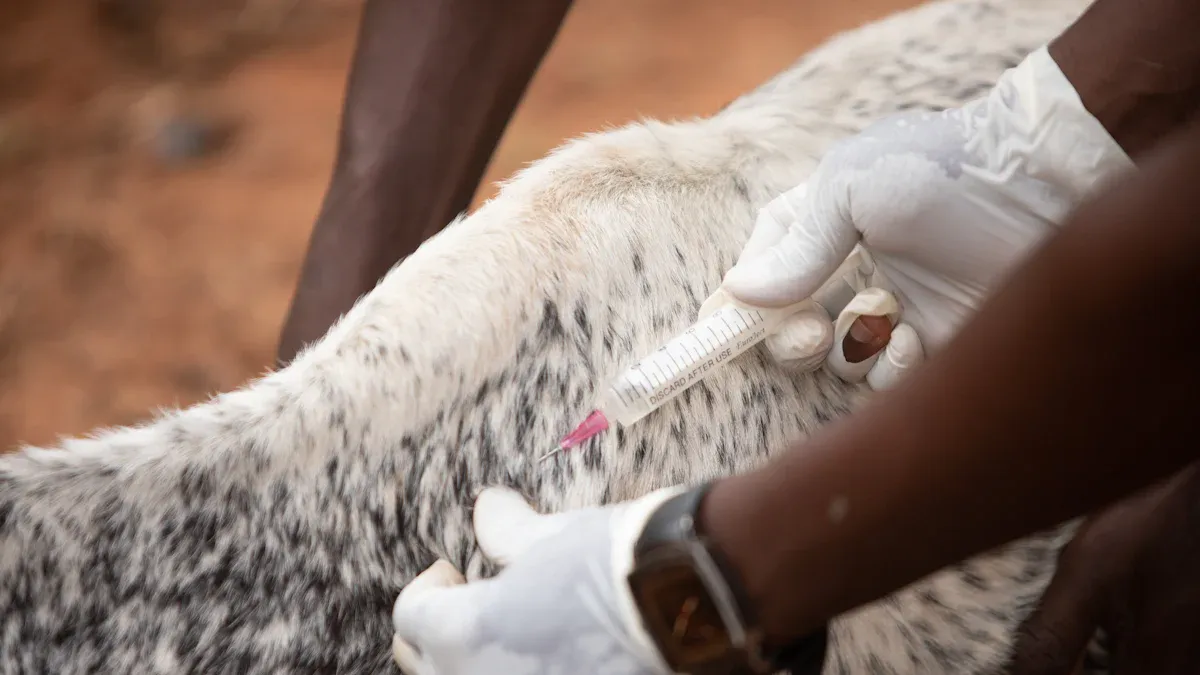
You help your dog get better after spay surgery. It is important to know when to call your veterinarian. This can stop small problems from getting worse. Watch for warning signs every day. Keep a log of your dog’s symptoms and temperature. This section explains what is normal, when to call your vet, and when you need urgent help.
Red Flags vs Monitor at Home Triage Table
Use this table to decide what to do if you see changes in your dog’s recovery. Green means you can watch your dog at home. Yellow means you should call your vet soon. Red means you need to get help right away.
Status | What You See or Notice | What to Do |
|---|---|---|
🟢 Green (Monitor) | Mild redness or swelling (first 2 days), small bruise, normal energy, no discharge | Keep monitoring twice daily |
🟡 Yellow (Call Vet) | Incision looks more red or swollen after day 2, mild discharge, mild limping, mild loss of appetite, excessive licking, stitches look loose, mild fever (up to 103.8°F) | Call your vet within 24 hours |
🔴 Red (Urgent) | Large amount of discharge or bleeding, pus, foul odor, tissue sticking out, incision opens, severe swelling, hot skin, fever above 104°F or below 99°F, collapse, pale gums, trouble breathing, vomiting more than once, lasting lethargy | Seek veterinary care immediately |
Scenario:
The incision looks more red today.
If the redness is mild and your dog acts normal, keep watching.
If the redness gets worse, the area feels hot, or your dog seems tired or in pain, call your vet.
If you see pus, bleeding, or your dog becomes weak, get help right away.
Temperature and Symptom Log
Check your dog’s temperature and symptoms every morning and night. Use a digital thermometer for best results. Write down what you see in a log. This helps you notice changes early and gives your vet good information.
Temperature Threshold | Symptoms | Action |
|---|---|---|
Below 99°F | Weakness, unresponsiveness | Wrap your dog in a warm blanket and call your vet |
100.0–103.8°F | Normal range | Continue to monitor |
Above 103.8°F | Fever, shivering, low energy | Call your vet |
Above 104°F | High fever, severe symptoms | Seek urgent veterinary care |
Fever, shivering, or shaking may mean infection or pain. Always call your vet if you see these signs.
What Not to Put on the Incision
Keep the incision clean and dry. Do not put anything on the incision unless your veterinarian says it is okay. Some things can hurt healing or cause infection.
Unsafe Substances | Reason for Unsafety |
|---|---|
Anything not prescribed by a vet | Can cause problems or infections |
Hydrogen peroxide | Hurts healing tissue, slows healing |
Rubbing alcohol | Hurts healing tissue, slows healing |
Do not use ointments, sprays, powders, or bandages unless your vet says it is safe. Water and moisture can also slow healing.
Quick Reference Card
Keep this card nearby during your dog’s recovery. It lists the most important signs and when to call your vet.
Complication Type | Signs to Monitor |
|---|---|
Infection | Lethargy, fever, refusal to eat, hot or swollen incision, pus, bad odor |
Vomiting | Vomiting after surgery, especially more than once |
Stitch Issues | Loose or missing stitches, incision opening |
Incision Care | Redness, swelling, discharge, tissue sticking out |
Call your vet if you see:
Incision opens or tissue sticks out
Bleeding, pus, or bad smell from the incision
Lasting tiredness or weakness
Fever above 104°F or below 99°F
Trouble breathing, pale gums, or collapse
Vomiting or diarrhea that does not stop
Too much licking or chewing at the incision
Your veterinarian’s instructions are always most important. If you feel unsure, call your vet for advice.
Remember: About 12% of dogs need a follow-up visit for abnormal healing. Most dogs get better with careful watching and quick action when needed. Your attention to licking, temperature, and behavior helps keep your dog safe.
You are very important in helping your dog get better after spay surgery. To stop licking and help healing, use things like an Elizabethan collar, fun distractions, and special pet clothes if your vet says so.
Method | Description |
|---|---|
Physical Barriers | Use an E-collar or inflatable collar to stop licking. |
Distraction Techniques | Give your dog calm activities and show love to distract them. |
Topical Applications | Only use sprays or medicine if your vet tells you to. |
Look for warning signs like not wanting to eat, being very tired, or acting different. Acting fast can stop problems from getting worse. Always do what your veterinarian says and ask questions if you are worried. Most dogs get better when you give good care and keep things calm and safe.
FAQ
How long should my dog wear the cone after spay surgery?
You should keep the cone on your dog for 10 to 14 days. Remove it only when your veterinarian says it is safe. The cone helps prevent licking and protects the incision.
Can I bathe my dog or let her swim after surgery?
You should not bathe your dog or let her swim for at least 14 days. Water can slow healing and increase the risk of infection. Keep the incision dry at all times.
What if my dog keeps trying to lick the incision even with a cone?
Check the fit of the cone. Make sure it extends 1–2 inches past your dog’s nose. If your dog still reaches the incision, try a larger cone or add a recovery suit. Call your veterinarian for advice.
Is it normal for the incision to look red or swollen?
Mild redness and swelling are normal for the first few days. If redness or swelling gets worse, or if you see discharge, call your veterinarian. Always check the incision twice a day.
What should I do if I see discharge or a bad smell from the incision?
Contact your veterinarian right away. Discharge or a foul odor can mean infection. Do not put anything on the incision unless your veterinarian tells you to.