
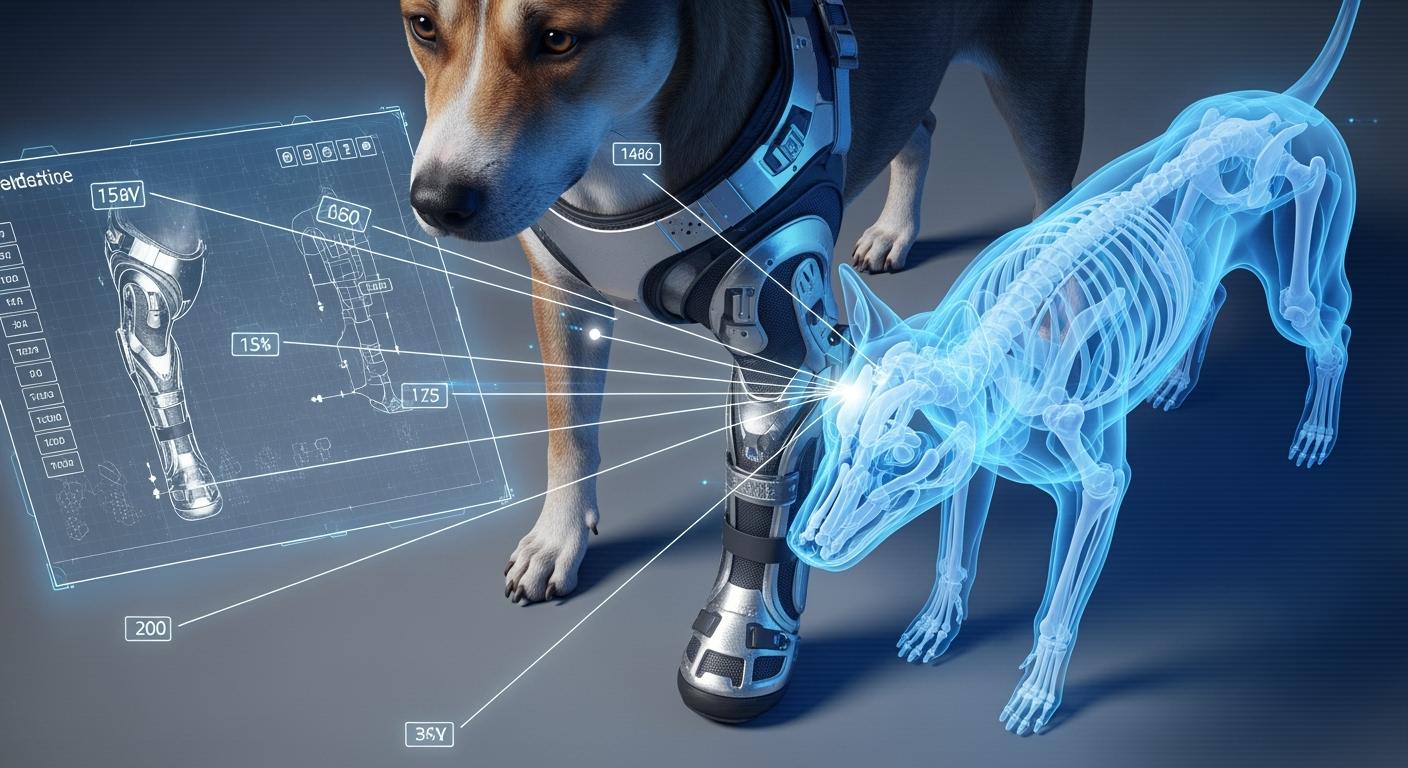
You often see better results when you choose ergonomic contouring for dog braces. Unlike a straight tube brace—a square peg in a round hole—anatomically contoured designs follow the angle of a dog’s hock joint, which is around 135 degrees. GaitGuard focuses on this type of design, providing devices that lock onto bony landmarks and help reduce brace migration.
Statistic | Value | Description |
|---|---|---|
Owner Perception Study | 84.9% | Improved ambulatory function with orthotic devices |
Good Outcome Rate (Small Breeds) | ~90% | With well-fitted braces |
Good Outcome Rate (Large Breeds) | ~78% | With well-fitted braces |
Key Takeaways
Ergonomic contouring for dog braces fits the natural shape of a dog’s leg, preventing migration and ensuring stability during movement.
Using contoured braces reduces the risk of skin abrasions and discomfort, promoting faster healing and better mobility for your pet.
Advanced off-the-shelf braces can provide similar benefits to custom options, making them a practical choice for many dogs needing support.
The Problem of Brace Migration in Canine Orthopedics
What Is Brace Migration?
Brace migration happens when a support device, like a dog brace, slides out of its intended position. You might notice the brace slipping down the leg, bunching at the paw, or rotating away from the joint. This movement often results from a poor fit. Imagine trying to keep a straight pipe on a bent elbow—without the right shape, it just won’t stay put. In canine orthopedics, the hock joint forms an angle of about 135 degrees. If you use a straight, tube-shaped brace, it cannot match this natural bend. The result? The brace moves, and your dog loses the support needed for healing.
Clinical Implications of Migration
When a brace migrates, your dog faces more than just inconvenience. You may see skin abrasions, open sores, or even hair loss within the first few months. These complications can slow recovery and cause discomfort. Sometimes, the device itself needs repairs, which interrupts therapy and frustrates both you and your pet. Some dogs may refuse to wear the brace altogether, which can increase the risk of further injury or delayed healing if the joint is left unsupported.
Complication Type | Description/Details |
|---|---|
Skin Complications | Abrasions, open sores, and hair loss, especially in the first 2-3 months. |
Mechanical Device Issues | Repairs needed, affecting usability and satisfaction. |
Patient Non-Acceptance | Dogs may reject the device, leading to decreased use and clinical decline. |
The “Tube” Brace Issue: Poor Fit and Angulation
Generic tube-shaped braces ignore the unique anatomy of your dog’s leg. The hock joint’s natural angle means a straight brace acts like a square peg in a round hole. Without ergonomic contouring for dog braces, the device cannot anchor to bony prominences. Physics tells us that when a brace lacks these anchor points, gravity and movement force it downward—a process called distal migration. Properly contoured braces, shaped to fit the dog’s anatomy, lock onto these bony landmarks, much like a tailored suit hugs your body. This design keeps the brace in place, reduces pressure points, and sets the stage for better healing.
Ergonomic Contouring for Dog Braces: The Solution
Glossary: Ergonomic Contouring
Ergonomic contouring for dog braces means shaping the brace to match the natural curves and angles of your dog’s limb. You do not force a straight tube onto a bent joint. Instead, you use a design that follows the anatomy, much like a tailored suit fits your body. This approach helps the brace hug the leg, lock onto bony landmarks, and stay in place during movement.
Fit Checklist for Retailers:
Does the brace gap at the top?
Does the brace bunch at the paw?
Is the brace flush with the hock’s curve?
Can you slide a finger between the brace and the skin without resistance?
Does the brace rotate or slip after walking?
3D Anatomical Design and Patterning
A well-designed brace should respect the engineering of your dog’s leg. The hock joint bends at about 135 degrees, forming a natural angle that a straight tube cannot match. Ergonomic contouring for dog braces uses 3D anatomical patterning, including darting, seaming, and pre-bent angulation. Darting technology, pioneered by GaitGuard, introduces strategic folds and seams that mimic the joint’s shape. This design creates a brace that fits like a glove, not a pipe.
Design Diagram Description:
Imagine a side view of the brace. The upper section curves forward, matching the dog’s thigh. The middle section bends sharply at the hock, pre-shaped to 135 degrees. The lower section aligns with the paw, maintaining contact without gaps. This pre-bent angle prevents the brace from acting like a square peg in a round hole.
Anti-Migration: Locking onto Bony Prominences
Physics explains why braces migrate. Gravity and movement push a poorly fitted brace downward, causing distal migration. When you use ergonomic contouring for dog braces, the brace anchors to bony prominences, such as the tibial crest and malleolus. These anatomical features act as natural stops, preventing the brace from sliding. The tailored fit ensures the brace remains stable, even during active play or rehabilitation.
Anatomy Lesson:
The hock joint, located on the dog’s hind limb, forms a distinct angle. If you use a straight brace, it cannot grip the joint’s contours. A contoured brace, shaped to the 135-degree angle, locks onto the bony landmarks and resists migration.
Comfort and Pressure Reduction
Comfort is critical for compliance and healing. A contoured brace distributes pressure evenly, reducing the risk of skin abrasions and pressure points. You avoid bunching at the paw and gapping at the top. Medical-grade neoprene, used by GaitGuard, is chosen for breathability and low risk of irritation. This material helps enhance comfort and can reduce skin issues compared with many standard options.The flexibility of neoprene allows your dog to move naturally, supporting recovery without restriction.
Tip:
Always check for signs of discomfort, such as licking, redness, or reluctance to walk. A well-contoured brace should feel like a second skin.
Custom vs. Ergonomic Off-the-Shelf Braces
You face a choice between custom and ergonomic off-the-shelf solutions. Custom braces offer a precise fit, tailored to your dog’s unique anatomy. However, advanced off-the-shelf options, like those from GaitGuard, deliver many of the same benefits through innovative design.
GaitGuard Product Innovations:
Medical-grade neoprene for breathability and hypoallergenic comfort
Flexible, durable support that does not restrict movement
Strict quality control and in-house inspections for safety and effectiveness
Practical design guidance recommends choosing braces with pre-bent angles, strategic darting, and anatomical seaming. You should always assess fit using the checklist above. Ergonomic contouring for dog braces, whether custom or advanced off-the-shelf, provides superior stability, comfort, and clinical outcomes.
Clinical Outcomes and Implementation
Improved Healing and Mobility
Many dogs show improved comfort and mobility when they are fitted with ergonomic contouring for dog braces. A brace that fits like a tailored suit supports more natural movement and stabilizes the joint, which can help reduce the risk of secondary injuries. A brace that fits like a tailored suit supports natural movement and stabilizes the joint, reducing the risk of secondary injuries. Accurate anatomical fit prevents compensatory movement patterns, which often lead to further complications. Lightweight materials and lattice structures in modern braces enhance comfort and airflow, minimizing skin irritation and pressure points. Production advancements now allow some custom orthotics to be delivered in as little as seven working days, so many dogs spend less time waiting and more time healing.
Technologies for Ergonomic Contouring
Advanced technologies now make it easier to achieve precise fit and reliable support.
Casting kits create exact molds of your dog’s limb for custom braces.
3D scanning, often using LiDAR technology, digitizes your pet’s anatomy for accurate modeling.
3D printing solutions, such as those from WIMBA, produce custom-fit orthotics tailored to your dog’s unique needs.
Lightweight materials like Ultrasint® TPU01 improve comfort and mobility.
Lattice design reduces pressure points and increases airflow.
Practical Steps for Veterinary Teams
You can follow a clear process to select and fit ergonomic braces for canine patients:
Step | Description |
|---|---|
1 | Cast the limb for custom braces (Carpal, Knee, Hock) using proper techniques. |
2 | Apply ready-to-fit performance braces, referencing demonstration videos. |
3 | Fit custom braces with guidance from application videos. |
4 | Use specialized braces, such as L’il Back Bracer, for conditions like IVDD. |
Tip: Consult with a veterinary orthopedic specialist to ensure the brace matches your dog’s specific needs. Educational initiatives help owners and veterinary teams understand the benefits of early intervention and proper supportive care.
You can often achieve better outcomes with ergonomic contouring for dog braces. Many veterinary professionals recommend advanced, anatomically contoured solutions for dogs that need both stability and comfort.
Medical-grade neoprene is selected for breathability and hypoallergenic support.
Thoughtful contouring and custom fitting help reduce migration and may support better healing.
Benefit | Impact |
|---|---|
Rehabilitation Support | Faster healing and reduced pain |
Emotional Well-being | Happier, more active pets |
FAQ
How does ergonomic contouring prevent brace migration?
You get a brace that fits like a tailored suit. The contoured shape locks onto bony prominences, stopping the device from sliding down due to gravity and movement.
Why is the hock joint angle important for brace design?
You must match the hock’s 135-degree angle. A straight brace acts like a square peg in a round hole. Pre-shaped braces follow the joint’s natural bend for stability.
Can off-the-shelf ergonomic braces work as well as custom ones?
You often see similar results. Advanced off-the-shelf braces use anatomical patterning and pre-bent angles, providing stability and comfort for most dogs.
