
A dog elbow brace gives extra help to your dog’s front legs. Vets often suggest a brace for dogs with elbow dysplasia, arthritis, or injuries. The brace keeps the joint steady and can lower pain. This makes it easier for your dog to move every day. Here are some common reasons to use a dog elbow brace:
Condition/Injury | Description |
|---|---|
Severe Osteoarthritis (OA) | Joint disease that causes pain |
Injury from trauma | Physical harm that makes the joint unstable |
Ligament laxity | Weak ligaments that do not support the joint |
Disease | Different diseases that hurt the elbow |
Always ask your vet before using a brace. This helps make sure it is safe and good for your dog.
Key Takeaways
A dog elbow brace helps support dogs with joint problems. It can also help reduce pain from elbow dysplasia or arthritis.
You should always talk to your vet before using a brace. This makes sure the brace is safe for your dog.
Pick the right size and material for the brace. This helps your dog feel comfortable and makes the brace work well. Soft and breathable materials are the best choice.
Watch your dog when they wear the brace. Start with short times and slowly let them wear it longer as they get used to it.
Check the brace often to make sure it fits right. This helps stop skin problems and gives your dog the support they need.
Dog Elbow Brace: What It Is and How It Works
Definition and Purpose
A dog elbow brace is a special tool for your dog’s front leg. It helps your dog move better and feel less pain. You use this brace if your dog has elbow joint problems. These problems can be from an injury or a disease. The brace keeps the elbow steady and stops bad movements. This helps your dog walk and play more easily.
A dog elbow brace is not like other braces for dogs. It wraps around the elbow and the top part of the front leg. The main job is to support the elbow, lower pain, and help swelling go down. It also helps your dog get better. Your vet might call it an orthotic device. This means it helps your dog move and feel more comfortable.
The brace helps in a few ways:
Function | Description |
|---|---|
Restrict rotation | Stops the elbow from turning in a painful way. |
Restrict frontal plane movement | Stops small sideways moves that can hurt. |
Limit joint motion | Lets the elbow move just enough to avoid pain. |
The brace supports the elbow, lowers pain, and helps with swelling. It keeps the upper front leg steady and holds the forelimb in a good spot. Dogs use their front legs for most of their weight. Good support is very important for healing.
Tip: Always talk to your vet before you use an elbow brace. Your vet will help you pick the right brace and make sure it fits.
Common Conditions Supported
Your dog may need an elbow brace for some health problems. These problems can make walking or running hard. The brace gives extra support and keeps the joint safe.
Here are some common problems that need an elbow brace for dogs:
Severe Osteoarthritis (OA)
Injury from trauma
Ligament laxity
Disease
Osteochondrosis Dissecans (OCD)
Elbow dysplasia
Arthritis
Degenerative joint disease
Chronic joint instability
Elbow luxation
Triceps tendon avulsion
Hygroma on elbow
Some dog breeds have more elbow problems than others. Labradors, Rottweilers, German Shepherds, and Golden Retrievers get elbow dysplasia and arthritis more often. The chart below shows how much risk each breed has:
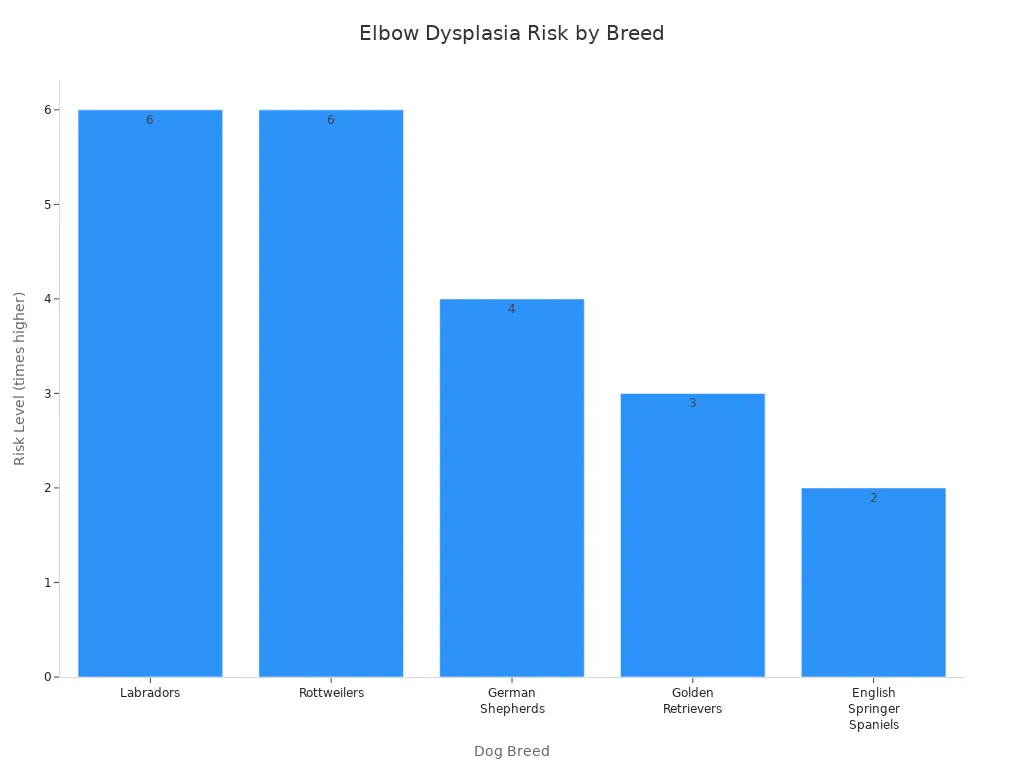
Custom elbow support is very important for dogs with bad injuries or joint pain. The front legs hold about 60% of your dog’s weight. If your dog has elbow trouble, a brace can help protect the joint and make moving safer.
The materials in dog elbow braces are important too. Some braces use stainless steel joints for strong support. Others use special fabric for comfort and to keep the brace in place. These materials help the elbow stay in the right spot and make sure your dog feels good while wearing it.
Note: The elbow brace for dogs is a helpful tool. It does not fix diseases. Always ask your vet for advice and a treatment plan.
Medical Terminology Related to Dog Elbow Braces
Learning some medical words helps you talk to your vet. It also helps you make good choices for your dog. You might see these words in vet notes or X-ray reports when using a dog elbow brace.
Elbow joint, humerus, radius/ulna
The elbow joint links three bones in your dog’s front leg. These bones let your dog walk, run, and play.
Anatomical Structure | Condition Associated |
|---|---|
Ununited anconeal process | Elbow dysplasia |
Fragmented medial coronoid process | Elbow dysplasia |
Osteochondrosis of the medial humeral condyle | Elbow dysplasia |
These long names are different types of elbow dysplasia that your vet may mention in X-ray reports.
Elbow joint: This is where the humerus, radius, and ulna meet.
Humerus: This bone is above the elbow and connects to the shoulder.
Radius/Ulna: These two bones are below the elbow and go to the paw.
You might hear these words at the vet or when reading about dog elbow braces.
Elbow dysplasia, arthritis, osteoarthritis
These problems can make your dog hurt and move less. A dog elbow brace can help your dog feel better.
Elbow dysplasia makes the elbow joint grow in a strange way. This can hurt the cartilage and bone.
Arthritis means the joint is swollen. Your dog may feel sore or stiff.
Osteoarthritis is a joint disease that lasts a long time. It can cause pain and swelling that does not go away.
Dogs with these problems may limp or not want to move. They might lose muscle. Bad cases can make joints stiff and cause other health problems, like obesity.
Osteoarthritis can cause pain and swelling for a long time.
Dogs may move less and lose muscle as it gets worse.
In bad cases, dogs may not want to move. This can make muscle loss and joint stiffness worse.
If osteoarthritis is not treated, it can cause more health problems, like obesity and heart trouble.
Conservative management, post-operative, rehab
You may hear these words when your vet talks about how to help your dog.
Conservative management: This means using rest, medicine, and a dog elbow brace instead of surgery.
Post-operative: This is care after surgery. A dog elbow brace can help your dog heal and keep the joint safe.
Rehab (rehabilitation): These are exercises and treatments to help your dog get strong and move better.
The main goals of these plans are:
Helping your dog get back to normal life fast and safe.
Lowering pain and swelling.
Making the joint move better and building muscle for comfort.
Always ask your vet what is best for your dog. A dog elbow brace helps most when your vet gives advice.
Product and Design Terms for Dog Elbow Braces
Knowing the words for dog elbow braces helps you pick the best one. You will see these words on boxes, websites, or when you talk to your vet. Here are some words you should know:
Orthosis / orthotic brace, compression, stabilization
Orthosis / Orthotic Brace: This is a device that helps or fixes the elbow joint. You might see this word on medical labels or hear it from your vet.
Compression: The brace gently squeezes the elbow. This can help lower swelling and keep the joint steady. You will see this word in product ads.
Stabilization: The brace keeps the elbow still. It stops bad moves and helps your dog get better. Vets talk about stabilization when they suggest a brace.
Here is a table that shows how compression and stabilization help:
Benefit | Description |
|---|---|
Support | The brace helps the elbow joint when your dog moves. |
Pain Relief | It helps with pain from elbow injuries, so your dog feels better. |
Inflammation Reduction | The brace can help lower swelling in the elbow. |
Proper Alignment | It keeps the elbow in the right spot for better movement and healing. |
A dog elbow brace with good compression and stabilization can help your dog move more and heal faster. Always ask your vet if this is a good choice for your dog.
Unilateral / bilateral, range of motion (ROM)
Unilateral: This brace goes on just one front leg. You might see this word on the box or in the details.
Bilateral: This brace goes on both front legs at once. Vets may pick bilateral braces if both elbows have problems.
Range of Motion (ROM): This means how much your dog’s elbow can move with the brace on. You will see ROM listed on product pages.
You can pick unilateral or bilateral braces for your dog. Bilateral braces help both legs, but unilateral braces help just one. Both types can help with pain and make moving easier.
Material words: neoprene, rigid support, padding, breathable, anti-slip straps…
Dog elbow braces use different materials to help your dog feel good and move well. Here is a table to show what the materials do:
Material | Effect on Comfort and Function |
|---|---|
Neoprene | Soft and lets air in, keeps the elbow comfy and snug. |
Padding | Adds extra help and protects the elbow from too much pressure. |
Rigid Support | Holds the joint steady, helps with pain and swelling. |
Velcro | Makes it easy to put on and take off the brace. |
Soft Fabric | Fits close and lets your dog move easily. |
Elastic Strap | Stretches and keeps the brace in the right place. |
Pick a dog elbow brace made from soft, airy materials with strong straps. This helps your dog wear the brace longer and stay happy. Always ask your vet to help you choose the best brace for your dog.
Main Functions and Indications of Dog Elbow Braces
Pain Relief and Joint Support
A dog elbow brace helps your dog feel less pain. It gives support to the elbow joint. If your dog has elbow dysplasia or arthritis, the brace acts like a shield. It keeps the joint steady and helps stop swelling. Your dog can move with less pain and more comfort. The brace stops the joint from moving in ways that hurt it more. This support lets your dog walk, run, and play more easily.
Tip: Using an elbow brace helps with pain, keeps the joint steady, and makes your dog more comfortable.
Post-Surgery and Injury Recovery
After surgery or an injury, your dog needs extra help. An elbow brace protects the healing spot. It keeps the elbow in the right place and stops sudden moves. This helps your dog heal faster. A custom elbow brace can stop more injuries while your dog gets better. Many vets say to use a brace after surgery or if your dog cannot have surgery.
Mobility and Quality of Life
You want your dog to stay active and happy. A dog elbow brace helps your dog move better. Many vets and case reports suggest that elbow braces can help some dogs walk more comfortably and may reduce the risk of further injury when used correctly. When you use an elbow brace, your dog can feel more sure and free. This makes life better for you and your dog.
Function | How It Helps Your Dog |
|---|---|
Elbow joint support | Keeps the joint steady and safe |
Pain relief | Reduces pain and swelling |
Injury prevention | Stops further damage to the elbow |
Improved mobility | Helps your dog walk and play more easily |
Signs Your Dog May Need an Elbow Brace
You may see signs that your dog needs more help. Watch for these problems:
Severe Osteoarthritis (OA)
Injury from a trauma
Ligament laxity
Disease
Other signs are limping, stiffness, swelling, or not using the front leg. If you see these, talk to your vet before using an elbow brace.
Veterinary Recommendations
Vets help you pick the right brace for your dog. They look at the injury or disease and how much support is needed. Your vet may suggest a brace for a long-term problem, after an injury, or if surgery is not possible. It is important to know the problem is in the elbow and not somewhere else. Bracing helps lower stress on the joint and lets your dog use the leg again. If other treatments do not work, your vet may suggest a brace instead. Always ask your vet about how to fit the brace and what is best for your dog.
Note: The elbow brace helps your dog but does not cure diseases. Always talk to your vet before starting a new treatment.
Safe Use and Choosing the Right Dog Elbow Brace
Sizing and Material Considerations
Picking the right size brace helps your dog feel better. You need to measure your dog’s leg, chest, and leg height. The table below shows what sizes fit different dogs:
Size | Forelimb Circumference | Chest Girth | Product Inner Height |
|---|---|---|---|
XS | 7-8 in | 16.5-19 in | Leg ≥ 4.5 in |
S | 8-9.5 in | 18-22 in | Leg ≥ 4.5 in |
M | 8.5-10.5 in | 20-25 in | Leg ≥ 5 in |
L | 9.5-12 in | 22-28 in | Leg ≥ 5.5 in |
XL | 11-13.5 in | 23-30 in | Leg ≥ 6 in |
Look for braces made with soft Neoprene that has tiny holes. This material is comfy and lets air in. Strong Velcro straps help keep the brace on when your dog moves.
Fitting and Adjustment Tips
The brace should cover about half to three-quarters of your dog’s leg. It should go from the floor up to the elbow. Make the straps tight but not too tight. The brace should not pinch your dog’s skin. Always ask your vet to check if the brace fits right. Some dogs need a custom brace if their legs are shaped differently or if they have a bad injury.
Activity and Monitoring Guidelines
Watch your dog when it wears the brace. Start with short walks and see if your dog feels okay. Slowly let your dog do more as it gets used to the brace. If you see swelling, red skin, or your dog limps, take off the brace. Call your vet if you notice these problems.
Tip: Check your dog’s skin often. This helps stop rashes and makes sure the brace works well.
Cleaning and Maintenance
Keep the brace clean so it lasts longer and keeps your dog’s skin safe. Follow these steps:
Take off straps or metal pieces before washing.
Put the brace in warm water with soap for five minutes.
Rub the brace gently with your hands to clean it. Do not use a brush.
Rinse the brace with warm water until all the soap is gone.
Let it air dry or use a hairdryer on cool.
Why Choose GaitGuard’s Dog Protective Gear?
GaitGuard’s gear uses strong medical materials and stops dogs from licking. Vets help design and test these braces for many breeds. The brace helps dogs heal from elbow dysplasia, arthritis, and injuries. It also protects against hygromas and helps wounds heal. Good brands like GaitGuard make braces that fit well and feel soft. They use gentle compression and let air in. These things help your dog stay safe, comfy, and able to move.
Note: Always talk to your vet before picking or changing a brace. The right fit and good materials help your dog feel better and keep joints healthy.
FAQ: Common Questions About Dog Elbow Braces and Terms
Below are short answers to common questions about surgery vs. bracing, wearing time, and using braces on both front legs.
1. Should you choose surgery or a brace for your dog’s elbow problem?
You should talk to your veterinarian first. Some elbow problems need surgery. Other times, a brace can help manage pain or support healing. Your vet will help you decide what is best for your dog.
2. How long can your dog wear an elbow brace each day?
Start with short periods, like 30 minutes to 1 hour. Watch your dog for any signs of discomfort. If your dog feels fine, you can slowly increase the time. Most dogs wear a brace during active times, not all day. Always remove the brace at night unless your vet says otherwise.
3. Can you use elbow braces on both front legs at the same time?
Yes, you can use braces on both front legs if your vet recommends it. Some dogs have problems in both elbows. Using two braces can help balance support and improve movement.
4. How do you know if the brace fits well?
A good fit covers half to three-quarters of the leg, from the floor to the elbow. The brace should feel snug but not too tight. Check for rubbing or red spots on the skin. If you see these, adjust the brace or ask your vet for help.
5. What should you do if your dog does not like the brace?
Some dogs need time to get used to a new brace. Try short sessions and give treats or praise. If your dog still struggles, check the fit or talk to your vet.
6. What is the main purpose of a dog elbow brace?
A dog elbow brace supports your dog’s front leg. It helps reduce pain and keeps the joint steady. You can use it for conditions like elbow dysplasia or after an injury. Always ask your veterinarian before using one.
7. Can my dog wear a dog elbow brace all day?
You should not let your dog wear the brace all day at first. Start with short periods. Watch for any discomfort or skin changes. Remove the brace at night unless your veterinarian says otherwise.
8. How do I know if the dog elbow brace fits correctly?
Check that the brace covers half to three-quarters of your dog’s leg, from the floor to the elbow. It should feel snug but not tight. Look for rubbing or red spots. Ask your veterinarian to check the fit if you are unsure.
9. Can I use a dog elbow brace on both front legs?
Yes, you can use braces on both front legs if your veterinarian recommends it. Some dogs need support on both sides. Always follow your veterinarian’s advice for safe use.
10. Will a dog elbow brace cure my dog’s joint problem?
A dog elbow brace does not cure joint problems. It helps manage pain and supports healing. You should always talk to your veterinarian for a full treatment plan. The brace is only an assistive tool.
Tip: Always check your dog’s skin and comfort when using a brace. If you see swelling, redness, or limping, remove the brace and call your vet.
Question | Quick Answer |
|---|---|
Surgery or brace? | Ask your vet for advice |
Wearing time per day? | Start short, increase slowly |
Both front legs? | Yes, if your vet suggests |
Signs of good fit? | Snug, covers elbow, no rubbing |
Dog dislikes brace? | Try short sessions, check fit, ask your vet |
You have learned how a dog elbow brace helps your dog’s front legs. The right brace can lower pain and help joints heal. It also gives support and helps your dog recover. Always make sure the brace fits well. Watch your dog for any new problems. Ask your vet if you have questions. Pick a good brand to keep your dog safe. The table below shows how elbow braces help with some joint problems:
Condition | Benefits of Elbow Brace |
|---|---|
Osteochondrosis Dessecans (OCD) | Pain relief and support during recovery |
Elbow Dysplasia | Less strain and better mobility |
Degenerative Joint Disease | Joint support for multiple issues |
Elbow Luxation | Keeps alignment and reduces discomfort |
Picking the right brace can help your dog move easier and feel happier.