
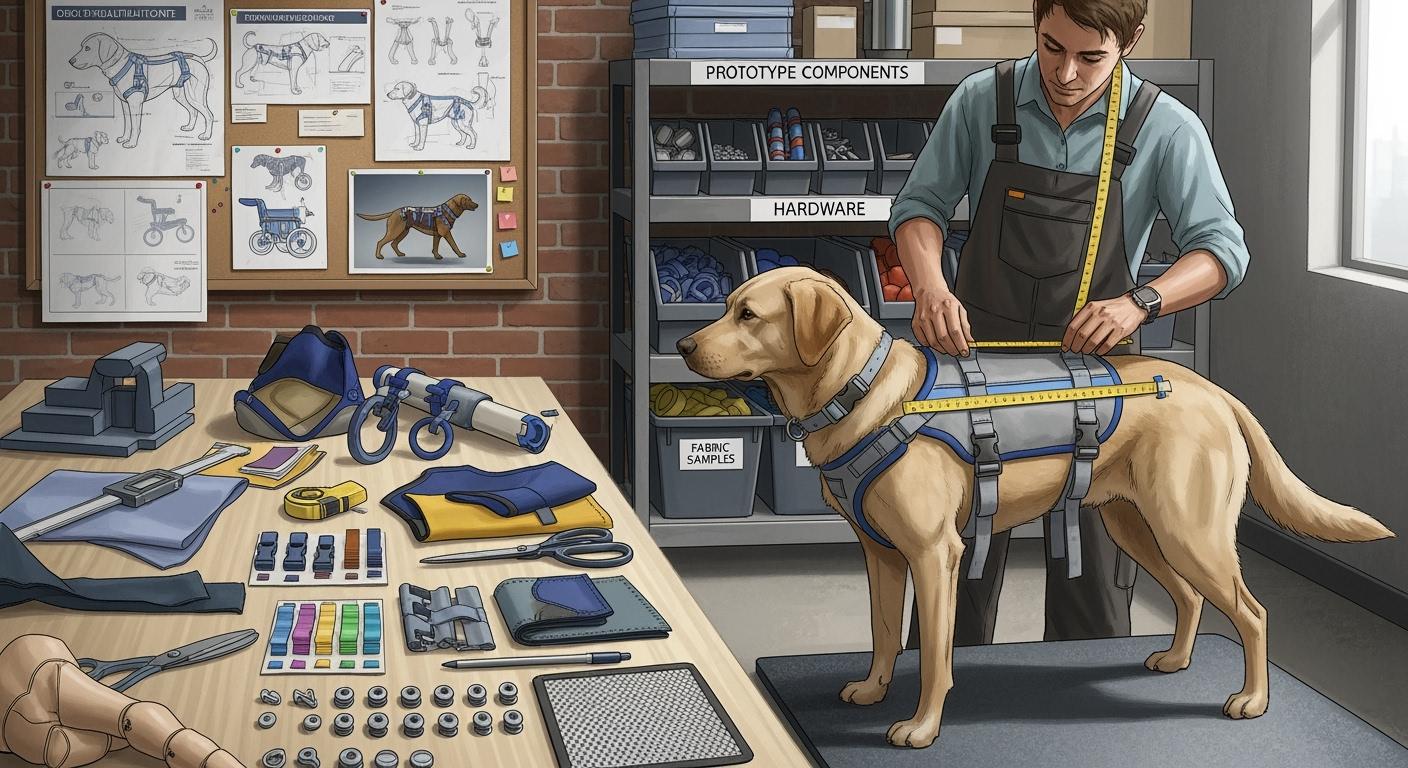
You want prototyping for dog rehabilitation gear to ensure anatomical fit and comfort before mass production. Careful prototyping helps you avoid complications in therapy, support natural gait, and reduce the risk of skin problems caused by poor fit. Many veterinarians and rehabilitation specialists report fewer issues when braces and prosthetics are refined through structured sampling and fit testing. Modern prototyping uses advanced tools like CAD and 3D printing, and GaitGuard applies strict standards at each step to help dogs recover with effective, well-fitted rehabilitation gear.Key Takeaways
Prototyping ensures anatomical fit and comfort for dog rehabilitation gear, preventing complications during therapy.
Using CAD and 3D printing allows for rapid design and testing of prototypes, leading to better final products.
Collaboration with veterinarians and physical therapists enhances the effectiveness of assistive devices, improving outcomes for dogs.
Prototyping for Dog Rehabilitation Gear
Creating assistive devices for pets requires a precise and systematic approach. You want to ensure that every product, from braces to prosthetics, fits a wide range of dogs and supports their mobility. GaitGuard’s workflow demonstrates how you can use technology and rapid sampling to achieve this goal.
CAD Design and Mock-up Creation
You start the process with a veterinary assessment. This step helps you understand the specific needs of dogs that will use the assistive devices. After gathering measurements, you use CAD software and 3d modeling tools like Blender 3d to design the initial mock-up. CAD allows you to create patient-specific guides and implants, which increases the accuracy of your designs. You can plan strut adjustments and simulate the fit on standard breed models, such as a Standard Labrador, to cover S/M/L sizing. This digital approach reduces human error and leads to higher accuracy in the final product.
3d printing advances let you quickly produce physical prototypes from your CAD files. You can compare different shapes and features, making it easier to refine the design before moving to mass production. This step is essential for assistive devices, as it ensures that the gear will support the natural movement and comfort of pets.
Tip: Use 3d printing to test multiple design variations in a short time. This method helps you identify the best solution for both fit and function.
Laser Cutting and Sewing Precision
Once you finalize the digital design, you move to material sampling. Laser cutting technology helps you achieve precise cuts for the components of your assistive devices. However, you must pay attention to the thermal response of materials like PET, as high temperatures can cause warping or rough edges. Smooth, accurate cuts are vital for the comfort and safety of pets using these assistive devices.
After cutting, you assemble the prototypes using advanced sewing techniques. Bar-tack stitching reinforces stress points, preventing seam failure in high-mobility areas. Box-X stitching distributes load across multiple directions, increasing the durability and safety of the gear. You should test different materials, such as neoprene and organic cotton, to find the best combination for comfort, durability, and resistance to abrasion, moisture, and UV exposure.
Fit Testing on Dogs
You need to test the prototypes on real dogs to validate the anatomical fit. Fit testing involves checking how the assistive devices conform to the dog’s body, ensuring there are no pressure points or areas that could cause irritation. You use standard breed models for S/M/L sizing, which helps you create master patterns suitable for mass production. During this stage, you also compare different neoprenes for shape retention and comfort.
GaitGuard’s rapid sampling service allows you to move from design to first sample in as little as 3-7 days. This speed enables you to make quick adjustments based on feedback from fit testing, improving the final product’s effectiveness.
Prototyping Timeline
Day | Activity |
|---|---|
1 | CAD Design |
3 | First Sample |
5 | Review & Fit Test |
7 | Final Sample |
Tolerance and Grading for Sizing
You must establish clear grading and tolerance standards for your assistive devices. This process ensures that each size provides the right level of support and mobility for different dogs. The table below shows how you can grade your products based on material and intended use:
Grade | Description | Purpose |
|---|---|---|
1 | Neoprene sleeve providing mild support | Compression for joints without significant impairment |
2 | Reinforced neoprene with Velcro | Increased structural support without full immobilization |
3 | Neoprene with thermoplastic | Immobilization for short periods, good for serial casting |
4 | Polypropylene orthotic | Long-term support and graduated movement control |
You should use a feedback checklist during sampling to ensure every detail meets your standards:
Feedback Checklist:
Check strap length for proper adjustment
Confirm velcro position for secure closure
Inspect seam strength at high-stress points
Evaluate material comfort against the dog’s skin
Test mobility and range of motion
By following this step-by-step process, you can create assistive devices and prosthetics that meet the needs of pets and support their rehabilitation. GaitGuard’s commitment to rapid sampling and high-quality materials ensures that every product delivers comfort, durability, and effective mobility support for dogs.
Customizable Prosthetics for Pets & Fit Validation
Development of Pet Prosthetics
You see rapid progress in the development of pet prosthetics. Today, you can use advanced modeling software and 3D printing to create artificial limbs that fit a wide range of dogs. These technologies allow you to design master patterns for S/M/L sizes, making it possible to produce prosthetics that help senior dogs, three-legged dog patients, and those with paralysis regain independence.
Continuous improvements in modeling software make it easier to design and adjust prosthetics for different breeds.
3D printing technology enables you to create durable, customizable prosthetics that match the unique anatomy of each dog.
New materials and smart technologies allow you to monitor health data in real time, which supports better therapy outcomes.
The demand for customizable prosthetics for pets grows as more owners seek advanced solutions for their animals.
You can use these innovations to improve mobility and provide support to walk for dogs facing injury or full-limb replacement. Specialized clinics and manufacturers now work together to deliver better fitting and aftercare services, which enhances the quality of life for pets.
Fit Validation and Feedback Loop
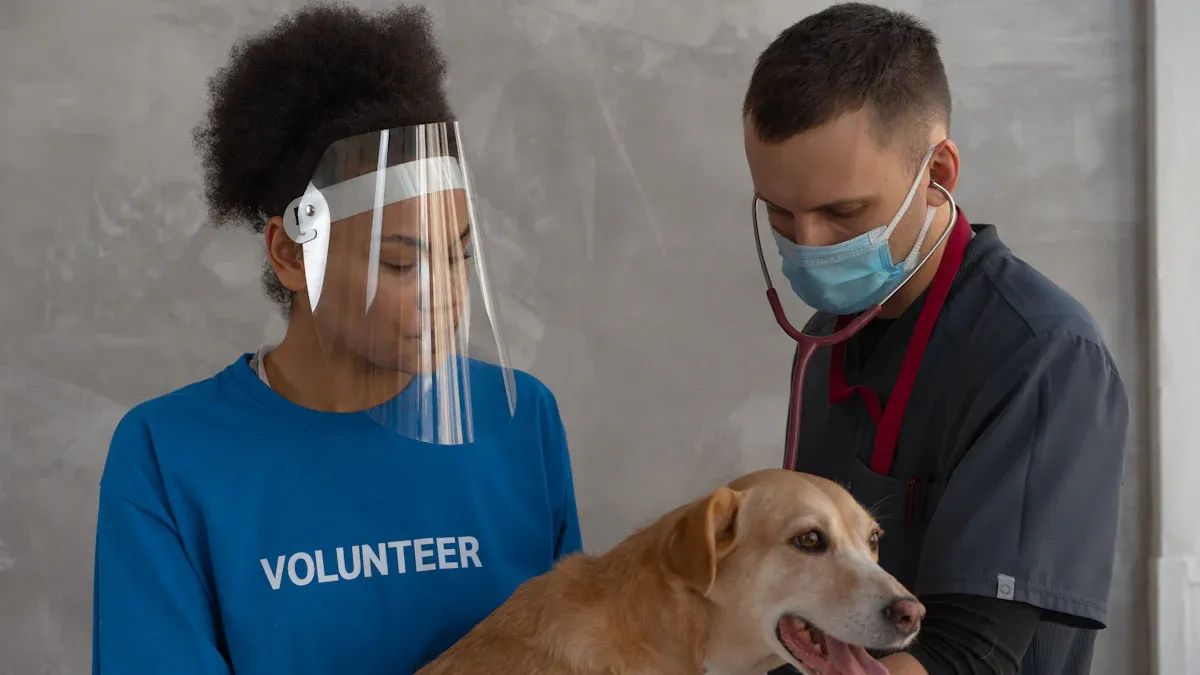
You must validate the anatomical fit of prosthetics before mass production. This process uses real dogs as fit models to ensure each device supports natural movement and prevents complications. You can use 3D scanners and digital sculpting tools to capture the exact shape of a dog’s limb. This data helps you create prosthetics that fit well and reduce the risk of skin sores or discomfort.
Technology | Application |
|---|---|
3D Scanners | Capture the topography of the dog’s limb for accurate prosthetic modeling. |
Digital Sculpting | Allows for the creation of a prosthetic tailored to the individual anatomy. |
You also benefit from a structured feedback loop. GaitGuard’s Golden Sample process lets you test prototypes on real dogs, gather feedback from veterinarians and owners, and make rapid adjustments. This approach ensures that each prosthetic meets high standards for comfort, durability, and function. You can move quickly from prototype to final product, which is essential for physical rehabilitation and therapy.
Veterinarians often report that skin sores are a common issue with prosthetics. You need to check the fit and make ongoing adjustments to prevent these problems. Many pet owners report a positive impact on their dog’s quality of life after using well-fitted prosthetics and say they would recommend these devices for animal physical therapy when they are properly designed and adjusted.
Collaboration in Animal Physical Therapy
You achieve the best results when you work with veterinarians and physical therapists. These professionals bring expertise in movement analysis, rehabilitation, and therapy techniques. You can develop tailored treatment plans that address the needs of dogs with mobility impairments, including older dogs and those recovering from injury or paralysis.
Veterinarians and physical therapists combine their skills to analyze gait and recommend the right prosthetics.
Physical therapists understand how to use assistive devices to improve mobility and independence.
Collaboration leads to better outcomes in animal physical therapy and veterinary rehabilitation.
You should involve pet owners in the process as well. Their feedback helps you refine the fit and function of prosthetics, making sure each device supports independence and comfort during physical rehab.
Addressing Customization and DIY Risks
You may consider making your own prosthetics at home, but this approach carries risks. DIY solutions often use less durable materials and lack the design expertise needed for proper fit and function. Professionally customized prosthetics, like those from GaitGuard, use medical-grade materials such as polypropylene plastics and carbon fiber. These materials provide the strength and flexibility needed for active dogs, three-legged dog patients, and those needing long-term support.
Aspect | DIY Pet Prosthetics | Professionally Customized Solutions |
|---|---|---|
Material Durability | Many hobby-grade 3D printing plastics are less durable under long-term load. | Made with ultra durable polypropylene plastics and carbon fiber. |
Design Expertise | Risks if designed by untrained individuals. | Designed by trained professionals ensuring proper fit and function. |
Cost and Time Efficiency | Time-consuming and potentially costly due to reprints. | More efficient with established fabrication techniques. |
Fit Adjustment | Requires new prints if the fit is wrong. | Can be modified for a perfect fit. |
In canine orthopedics, custom-designed implants created from CT images can enhance tissue integration and surgical outcomes. Advanced imaging and 3D printing allow you to create personalized solutions that may reduce the risk of implant failure. These options can help decrease surgery time and lower the risk of complications, which is especially important for senior dogs and those undergoing intensive physical therapy.
You should always choose professional customization for prosthetics. This choice reduces the risk of injury, improves independence, and supports the best possible outcomes in animal physical therapy and physical rehabilitation.
You can improve rehabilitation outcomes for dogs when you prioritize anatomical fit and rapid prototyping. Master patterns for S/M/L sizes support consistent quality across production runs. Expert input from veterinarians and rehabilitation specialists, combined with modern technology, helps you refine designs and enhance comfort.
Proper fit helps prevent injuries and increases device acceptance.
Iterative testing and structured feedback support reliable mass production.
FAQ
How does prototyping help you ensure proper fit for different dog sizes?
You use prototyping to create master patterns for S/M/L sizes. This process helps you check fit and comfort before you start mass production.
Why should you choose professional prototyping over DIY solutions?
Professional prototyping uses medical-grade materials and expert design. You get safer, more durable products that fit better and last longer.
What role does feedback play in the sampling process?
Feedback from veterinarians and pet owners helps you refine your designs. You improve fit, comfort, and function before moving to large-scale production.
