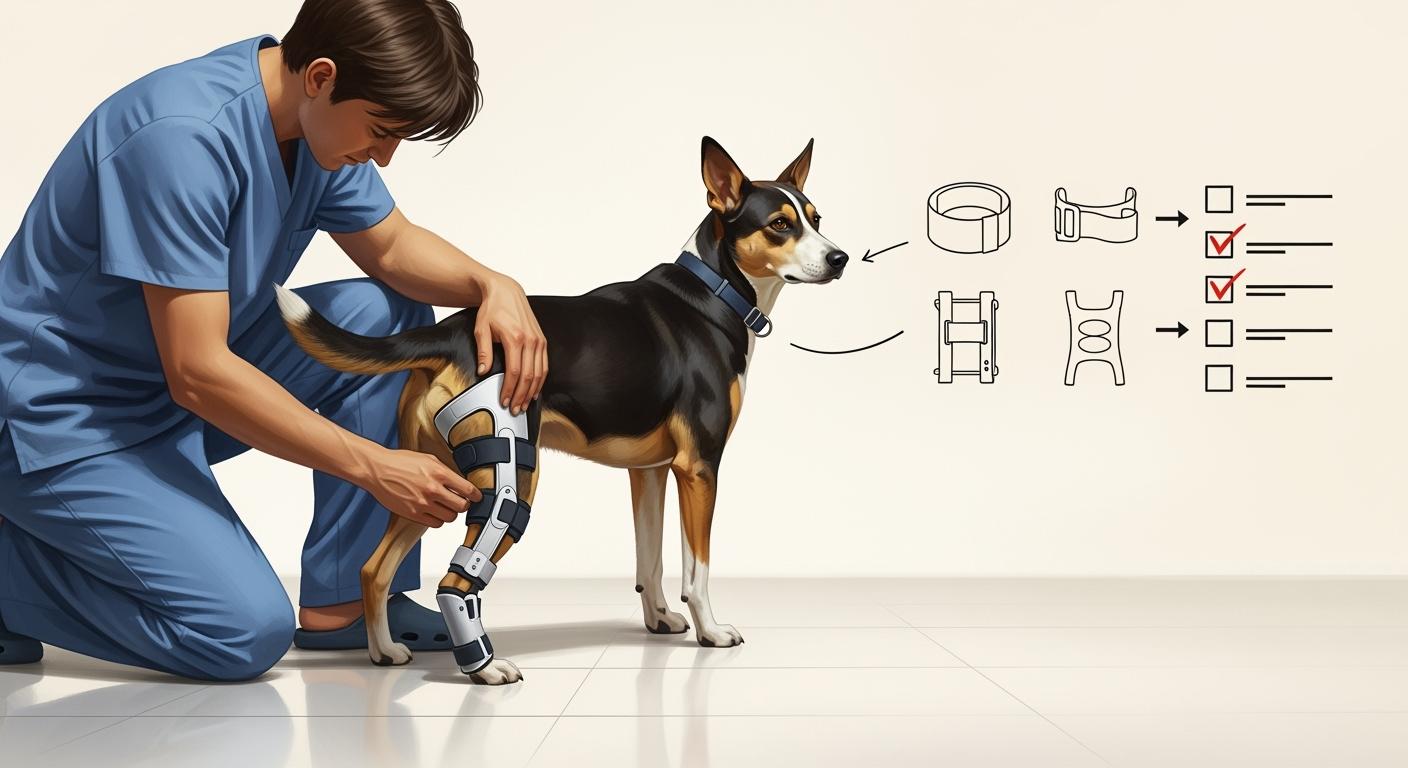
Choosing the right dog leg brace helps your dog heal. It lets your dog stay active and move around. You want your pet to feel safe and get support while healing. Studies show dog leg braces help limbs work better. They also keep joints stable and lower pain. GaitGuard’s gear uses strong medical materials. This gives your dog comfort you can trust.
Study
Findings
2020 Veterinary Surgery
Hinged braces helped limbs work better. They kept joints stable and stopped surgery for many dogs.
University of Tennessee 2018
Double braces lowered strain and helped dogs move more.
2021 Meta-Analysis
Bracing with therapy made life better and lowered pain.
Key Takeaways
Picking the right dog leg brace helps your dog heal. It lets your dog stay active. The brace lowers pain and helps your dog move better.
There are many types of braces for different injuries. Knee, hock, hip, carpal, and elbow braces all have special jobs.
Check your dog’s health before you choose a brace. Watch for limping or swelling to see if your dog needs help.
Ask your vet for advice on the best brace. Your vet knows what is best for your dog.
The brace must fit well to work right. Measure your dog carefully. Check the brace often to make sure it is comfortable.
Types of Dog Leg Braces
Dog leg braces help dogs heal from injuries. They let dogs move and play. These braces support joints and lower pain. They also stop more damage from happening. You use a dog leg brace to keep weak legs steady. Braces help healing and make moving easier. Most braces use strong materials like neoprene, plastic, or metal. Soft braces feel comfy and bend easily. Hard braces give strong support for bad injuries.
There are different dog leg braces for different problems:
Knee Brace or Stifle Brace: Helps dogs with ACL tears or knee injuries.
Tarsal or Hock Brace: Keeps the hock joint steady for hyperextension or soft tissue injuries.
Hip Brace: Supports dogs with hip dysplasia or other hip problems.
Carpal Brace: Helps lower front leg injuries and carpal joint issues.
Elbow Brace: Helps with elbow problems and pain from injuries like elbow dysplasia.
GaitGuard’s Dog Protective Gear has all these types of braces. Their braces use soft and adjustable materials for comfort. You can pick gear for anti-licking, rehab, or lifting help. Choose what your dog needs most.
Knee Braces for Dogs
Knee braces help dogs with ACL injuries or arthritis. They also help with joint problems. These braces keep the knee steady and lower pain. Studies and owners say knee braces help dogs:
Evidence Type | Description |
|---|---|
Clinical Studies | Show dogs stand and walk better with knee braces. |
Owner Reports | Say dogs move better and feel happier with custom knee braces. |
Custom Braces | Made for each dog, they give good support and stop more injury. |
Hock and Ankle Braces
Hock and ankle braces help the lower back leg. You use these braces for things like:
Hock dislocation from an accident or fall
Sprained hock or pulled muscle from quick moves
Canine Osteochondritis Dissecans (OCD) in big, young dogs
Osteoarthritis in the hock joint in older dogs
These braces help dogs walk with less pain. They also stop more injuries.
Elbow Braces
Elbow braces help the front leg and elbow joint. You use them for elbow arthritis, weak joints, or dysplasia. They help by:
Lowering pain when moving
Helping dogs walk better and feel braver
Stopping more joint damage
For example, a young hound named Lucy had elbow dysplasia. She used custom elbow braces and got better support. Custom elbow braces let the joint move just enough and keep it safe from more harm.
Custom vs. Standard Dog Leg Braces
Custom braces give better support and comfort. This is very important for healing, especially for ACL injuries. Standard fabric braces can stretch out and not work as well. They may need extra harnesses to stay in place.
Pick a brace that fits your dog’s problem and size. GaitGuard’s adjustable braces help you get the right fit for your dog.
How to Choose the Right Knee Brace
Assessing Your Dog’s Condition
You want your dog to feel comfortable and safe. Before you choose the right knee brace, you need to look at your dog’s health and daily life. Start by watching how your dog moves. Notice if your dog limps, avoids putting weight on a leg, or seems less active. These signs can mean your dog needs extra support.
Here are important factors to consider when you assess your dog’s need for a knee brace:
Type of injury: Is it an ACL tear, arthritis, or another joint problem?
Dog’s size: Small breeds may need a knee brace for small dogs, while larger breeds require stronger support.
Activity level: Does your dog run and play often, or is your dog more relaxed?
Overall quality of life improvements: Will a dog leg brace help your dog walk, play, and rest better?
If your dog shows signs of pain or trouble moving, you should act quickly. Early support can help your dog heal faster and avoid more injury.
Consulting Your Veterinarian
Veterinary guidance is key when you select the ideal dog knee brace. Your veterinarian knows your dog’s medical history and can help you make the best choice. You should always seek the importance of veterinary consultation before buying a brace.
When you visit your veterinarian, follow these steps:
Consult a veterinarian or orthopedic specialist to understand your dog’s specific needs.
Assess the severity of the injury with professional guidance.
Ensure the selected brace aligns with your dog’s health and well-being.
Your veterinarian may recommend the best dog knee braces for your dog’s condition. They can also help you decide if a custom brace or a knee brace for small dogs is better for your pet. Trust your veterinarian’s advice to keep your dog safe and comfortable.
Tip: Bring notes about your dog’s symptoms and activity level to your appointment. This helps your veterinarian give you the best advice.
Measuring for the Best Dog Knee Braces
Measuring your dog is a vital step in choosing the right knee brace. A good fit keeps your dog comfortable and helps the brace work well. Many dog leg braces come with manufacturer size charts, but these can sometimes be hard to understand. Some customers have found that sizing charts led to incorrect orders, and the braces did not fit their dogs properly. Always double-check your measurements and ask for help if you need it.
Follow these steps to measure your dog for the best dog knee braces:
Measure the thigh circumference: Wrap a tape around the upper part of your dog’s thigh, about one inch below where the leg meets the body.
Measure the knee circumference: Find the center of your dog’s knee joint and wrap the tape around this midpoint.
Measure the hock to knee length: Measure from the knee to the hock joint to determine brace height.
Measure the lower leg circumference: Measure halfway between the hock and the paw for strap fitting.
Note your dog’s weight and breed: Some braces are breed-specific, which affects the design.
Measurement Step | Description |
|---|---|
Thigh Circumference | Tape around upper thigh, just below the hip |
Knee Circumference | Tape around the center of the knee joint |
Hock to Knee Length | Distance from knee to hock joint |
Lower Leg Circumference | Tape halfway between hock and paw |
Weight and Breed | Record for breed-specific brace selection |
Note: Always use a soft measuring tape and keep it snug but not tight. If you have questions, contact the manufacturer or your veterinarian for help.
When you choose the right knee brace, check for comfort features like padding, adjustability, and stability. Make sure the brace does not rub or cause skin irritation. Watch for signs of discomfort, such as licking, biting, or redness. Adjust the straps as needed to keep your dog happy and safe.
Selecting the ideal dog knee brace takes time and care. With proper measuring, veterinary guidance, and attention to your dog’s needs, you can help your dog heal and enjoy life again.
Dog Leg Brace Fit & Comfort
Material Quality and Durability
When picking a dog leg brace, look at the material. Good braces use medical-grade materials that last a long time. These keep your dog safe every day. Some braces are soft, and some are hard. They use strong plastic, tough neoprene, and fabrics that let air through. These materials help support your dog’s leg. They also lower pain and help your dog heal faster. GaitGuard’s gear uses medical-grade materials for daily use. Waterproof braces protect your dog’s leg in wet weather. They are also easy to clean.
Strong plastic stops unwanted movement and gives better support than fabric.
Soft padding makes the brace comfy and stops rubbing.
Fabrics that let air through keep your dog cool and help stop skin problems.
Waterproof braces are simple to clean and take care of.
Owner surveys say over 80% of dogs move better and feel happier after using medical-grade braces.
Ensuring Proper Fit
A good fit helps your dog heal well. You should check the brace often to make sure it fits right. Straps that adjust let you change how tight the brace is. This keeps the brace in place. If the brace is too tight, your dog may hurt or swell. If it is too loose, it can slip or cause more harm.
Watch for these signs to see if the brace fits:
No red skin or sore spots under the brace
No swelling or color changes on the leg
Your dog walks fine and does not limp more
Toes do not stick out past the brace
Skin does not bulge over the straps
If you see any of these problems, fix the straps or ask your veterinarian for help.
Comfort Features in Dog Leg Braces
Comfort features help your dog feel better. The best braces have straps you can adjust, soft padding, and hinges that bend. These features let the brace move with your dog and stop slipping. GaitGuard’s braces use adjustable straps and fabrics that let air through to keep your dog comfy.
Feature | Description |
|---|---|
Adjustable straps | Fits each dog, stops slipping, and makes the brace comfy |
Flexible hinge design | Moves with your dog’s leg, helps healing, and keeps the brace in place |
Breathable fabrics | Lets air in, keeps skin dry, and lowers skin problems |
Both soft and hard braces give comfort and support. Check the brace every day for signs your dog feels bad. If your dog licks, bites, or does not use the leg, you may need to fix the brace. Always pick a dog leg brace with comfort features that fit your dog’s needs.
When to Use Dog Leg Braces
Signs Your Dog Needs a Brace
You might wonder how to know if your dog needs a leg brace. Dogs show signs when they need extra help. Watch for these signs your dog may need a leg brace:
Limping or not walking right
Swelling near the knee or hock
Trouble getting up or sitting down
Whining or making noises from pain
Not wanting to play or move much
Losing muscle in one leg
Joints that look bent or strange
Healing after losing a leg
Dogs often need a brace for sprains, CCL or ACL injuries, arthritis, after surgery, or if they are older and weak. If you see these signs, talk to your veterinarian. Helping your dog early can stop more problems and help them heal.
Introducing the Brace to Your Dog
Your dog may need time to get used to a brace. Let your dog sniff and look at the brace first. Put the brace on for a short time at the start. Slowly let your dog wear it longer as they get used to it. Give treats and praise to make it a good thing. Watch for limping, licking, or if your dog seems upset. Change the fit if your dog looks uncomfortable. Most dogs get used to a brace in a few days or a week. Some dogs may need more time. Be patient and cheer your dog on.
A study in the American Journal of Veterinary Research showed braces help knee movement after an ACL injury. Braces help dogs heal and keep moving.
Daily Routine and Activity Considerations
How active your dog is changes how you use a brace. Braces work best for dogs with mild or medium problems and who are not very active. Older dogs or dogs with health problems get the most help from braces. Dogs that run a lot may need surgery instead. Dogs who stay inside and do not exercise much get the most from dog leg braces.
Study | Findings |
|---|---|
2020 Study in Veterinary Surgery | Dogs with hinged braces moved better after 12 weeks and often did not need surgery. |
University of Tennessee Clinical Trial (2018) | Double braces lowered pain and helped dogs move more. |
Meta-Analysis (2021) | Braces with therapy made life better, mostly for small and medium dogs. |
Check your dog every day to see how they feel with the brace. Braces help joints stay steady, lower pain, and help your dog walk better. Braces do not fix every problem, but they help a lot during healing. Always listen to your veterinarian and change your dog’s routine if needed.
Picking the right dog leg brace helps your dog heal. It lets your dog move and feel good. You should care about support, fit, and comfort. Do not just look at price. Size, materials, and custom design change the cost. But quality and fit are most important for recovery.
Expert tips for selecting a brace:
Find strong support and pain relief
Pick materials that last and let air in
Measure your dog well for a snug fit
Check what other customers say
Talk to your veterinarian for help
Common Mistakes | How to Avoid |
|---|---|
Measuring too loosely | Use tape that is snug, not tight |
Inaccurate positioning | Measure when your dog stands |
Not double-checking | Measure twice to be sure |
Always ask your veterinarian for advice. Look at trusted brands like GaitGuard. Put your dog’s health first and get expert help for the best leg support.
FAQ
Do dog leg braces really work?
Dog leg braces help your dog walk better and feel less pain. You see improvement in movement and comfort. Many veterinarians recommend braces for joint support and injury recovery.
Can a brace replace surgery for my dog?
A dog leg brace does not replace surgery for severe injuries. You use a brace for mild cases, recovery, or when surgery is not possible. Always ask your veterinarian before making a decision.
Can my dog wear a brace all day?
You let your dog wear a brace during active hours. Remove the brace at night or for rest. Check your dog’s skin often for redness or irritation.
How do I know if the brace fits correctly?
You check for a snug fit. The brace should not slip or cause swelling. Look for signs of comfort: no limping, no red spots, and normal walking.
What types of dog leg braces are available?
You find knee braces, hock braces, elbow braces, and custom options. Each type supports a different joint or injury. GaitGuard offers adjustable braces for many needs.