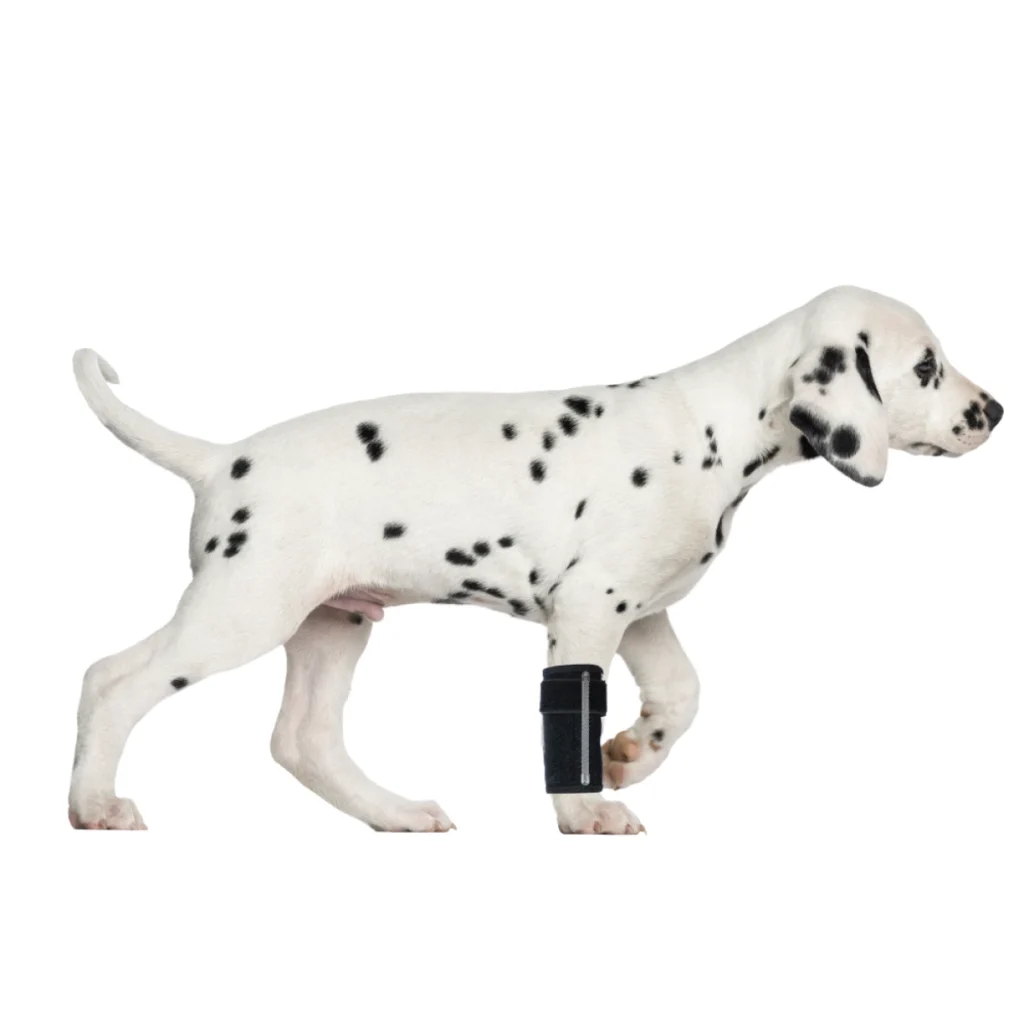
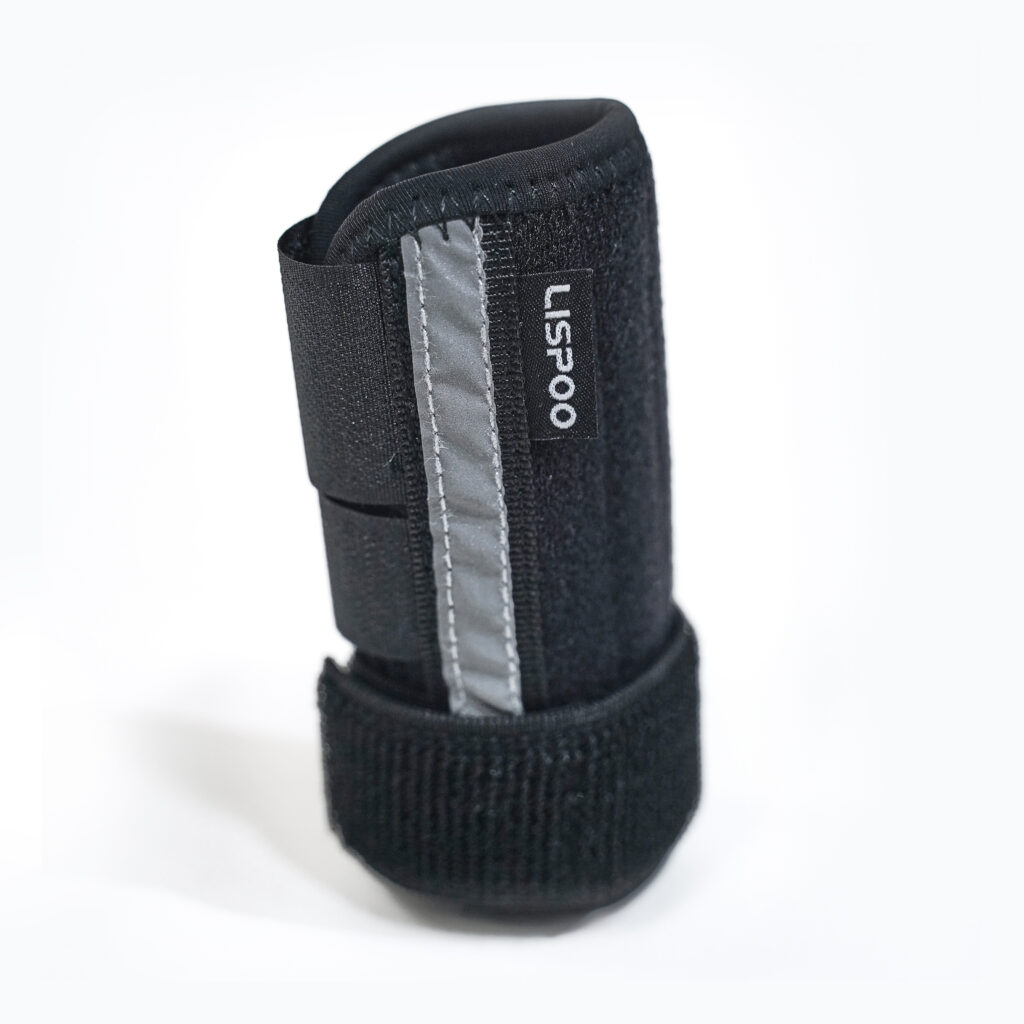
Dog carpal braces support the lower front-leg wrist area, where fit problems show up quickly because the leg narrows toward the paw. A brace that is too short may not support the carpal area well, while a brace that is too stiff, too wide, or strapped too close to the paw can rub, rotate, or limit natural foot placement. This category helps buyers compare carpal braces and splints by support height, strap position, flexibility, padding, and edge comfort before choosing a specific front-leg support product.
The carpal area sits low on the front leg, close to the paw, so a general front-leg measurement is often not enough. Buyers need to check where the brace ends, where the straps sit, and whether the lower edge leaves enough room for natural paw movement. Poor height or strap placement can make the brace slide, twist, or press into the wrist area.
A carpal splint may need firmer structure, but too much stiffness can make short daily movement uncomfortable. A brace that is too short may cover the leg without giving enough wrist-area control. The better choice depends on whether the product needs light support, firmer restriction, or a balance between structure and movement.
Carpal braces often fail at the lower edge. If the edge sits too close to the paw, or if the strap pulls unevenly, the dog may experience rubbing, pressure, or rotation during standing and walking. Soft edging, wider strap contact, breathable padding, and stable closure points help reduce these common fit problems.
For B2B buyers, carpal support products need clear size grading, repeatable brace height, stable strap placement, and product descriptions that separate carpal braces from general front-leg sleeves or paw protectors. GaitGuard supports bulk supply, sample development, packaging customization, and private-label production for dog carpal brace and splint product lines.
Get A Free Quote Now !
If you have any questions, please do not hesitate to contatct with us.