
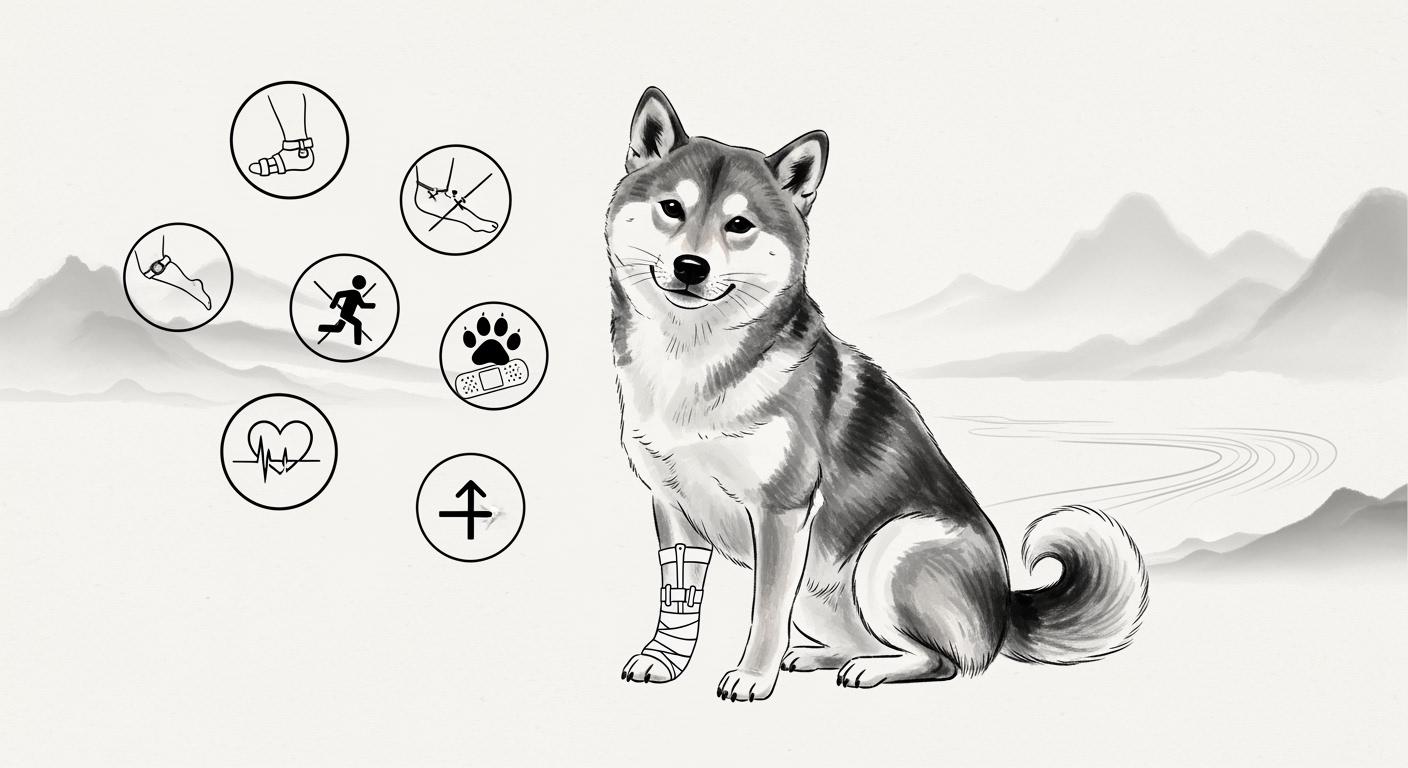
A dog foot brace can mean several different products: a paw protector, a brace that extends from the lower leg to the paw, a hock brace with a paw section, or a knuckling device that helps position the toes. These products do not perform the same function, and choosing the wrong structure can leave the actual problem unsupported.
The first step is to identify whether the dog needs paw protection, lower-joint support, toe positioning, or a rigid splint. Limping, scuffing, dragging, swelling, or reluctance to bear weight can come from orthopedic, neurological, skin, nail, paw-pad, or soft-tissue problems. A veterinarian should confirm the cause before a brace is selected.
| Observed need | Product direction to discuss |
|---|---|
| Paw-pad or toe protection from ground contact | Protective dog boot or paw cover |
| Support around the hock with coverage extending toward the paw | Hock brace with paw section |
| Dragging or knuckling that requires toe positioning | Knuckling support or toe-lift design |
| Defined need to restrict movement through the lower limb | Veterinary-selected splint or more rigid orthosis |
| Sudden non-weight-bearing lameness, open injury, severe swelling, or rapid decline | Veterinary assessment before support equipment |
Key takeaways
- A dog foot brace is not the same as a dog boot, hock brace, splint, or knuckling device.
- Confirm whether the support target is the paw, toes, carpus, hock, or another body region.
- A brace may provide external support or positioning, but it cannot guarantee pain relief, healing, or injury prevention.
- Correct fit requires more than a snug strap: check coverage, paw placement, toe clearance, pressure, rotation, and gait.
- There is no universal daily wear schedule for every dog foot brace.
- Remove the device if it causes swelling, color change, persistent redness, rubbing, increased dragging, or a new gait problem.
What is a dog foot brace?
The term “dog foot brace” is commonly used for products that cover some combination of the paw, toes, lower leg, hock, or carpus. The actual function depends on how far the device extends and whether it uses flexible fabric, reinforced panels, straps, a toe-lift component, or a rigid splint section.
| Product type | Main role | What it does not automatically provide |
|---|---|---|
| Dog boot | Protects the paw from surfaces, weather, contamination, or minor abrasion | Joint stabilization or toe-lift support |
| Paw wrap or soft foot brace | Adds light contact or protection around the paw and lower limb | Rigid immobilization or reliable hock control |
| Hock brace with paw section | Supports the hock area while extending coverage toward the paw | Hip, knee, or neurological treatment |
| Knuckling support | Helps position the paw or toes to reduce dragging during selected activity | Correction of the underlying neurological cause |
| Rigid splint | Restricts selected movement through a defined part of the limb | Universal suitability for every fracture, tendon injury, or postoperative case |
A product should be selected from the required function, not from the broad label “foot brace.” The same device cannot be expected to protect a paw pad, position knuckling toes, stabilize the hock, and immobilize a fracture equally well. To review GaitGuard’s current paw-positioning and no-knuckling product range, see the Dog Knuckling Brace category.
Dog foot brace vs boot, bandage, and splint
These products differ in coverage, rigidity, intended duration, and who should apply or monitor them.
| Option | Typical use | Main limitation |
|---|---|---|
| Dog boot | Surface protection, traction, weather protection, or covering a dressed paw | Usually provides little control above the paw |
| Soft brace | Light support, compression, or positioning depending on construction | May not provide the movement restriction required for a significant injury |
| Bandage | Wound covering, compression, or temporary support under professional direction | Incorrect pressure or moisture can create circulation and skin risks |
| Splint | More defined movement restriction or immobilization | Requires correct anatomical placement and close monitoring for pressure |
| Custom orthosis | Individualized coverage or structure for a defined support goal | Does not guarantee perfect fit, comfort, or clinical results |
Do not replace a prescribed bandage, cast, splint, or postoperative protocol with a commercial foot brace unless the treating veterinarian approves the change.
When paw protection is the main need
A protective boot or paw cover may be more appropriate when the main goal is to reduce direct contact with rough ground, hot or cold surfaces, moisture, dirt, or minor abrasion. This type of product should stay secure without compressing the toes or changing paw placement.
- Confirm that all toes sit naturally inside the product.
- Check that the paw does not rotate inside the boot.
- Make sure the upper edge does not rub the dewclaw or lower-leg tendons.
- Inspect for trapped moisture, grit, hair pulling, and nail pressure.
- Remove the product if the paw swells or the toes change color or temperature.
A boot can protect the paw, but it cannot diagnose or stabilize a painful hock, knee, hip, or spinal condition.
When hock support extends to the paw
A hock brace with a paw section covers more of the lower rear limb than a boot. Depending on the design, the paw section may help anchor the brace, control rotation, or maintain a selected hock and paw position.
The required level of support depends on the diagnosis and intended movement limit. A flexible wrap, semi-rigid panel, and full splint do not provide the same function. A more rigid device is not automatically more suitable; excessive restriction can transfer pressure to the toes, paw pads, or upper edge of the brace.
| Fit area | What to check |
|---|---|
| Hock | Support panels remain centered and do not force an unnatural angle |
| Lower leg | Straps remain flat without concentrated pressure on tendons or bony areas |
| Paw | Paw sits fully inside the intended section without twisting |
| Toes | No compression, curling, dragging, swelling, or nail contact |
| Ground contact | Base material provides suitable traction and does not wear through quickly |
When a knuckling support is different
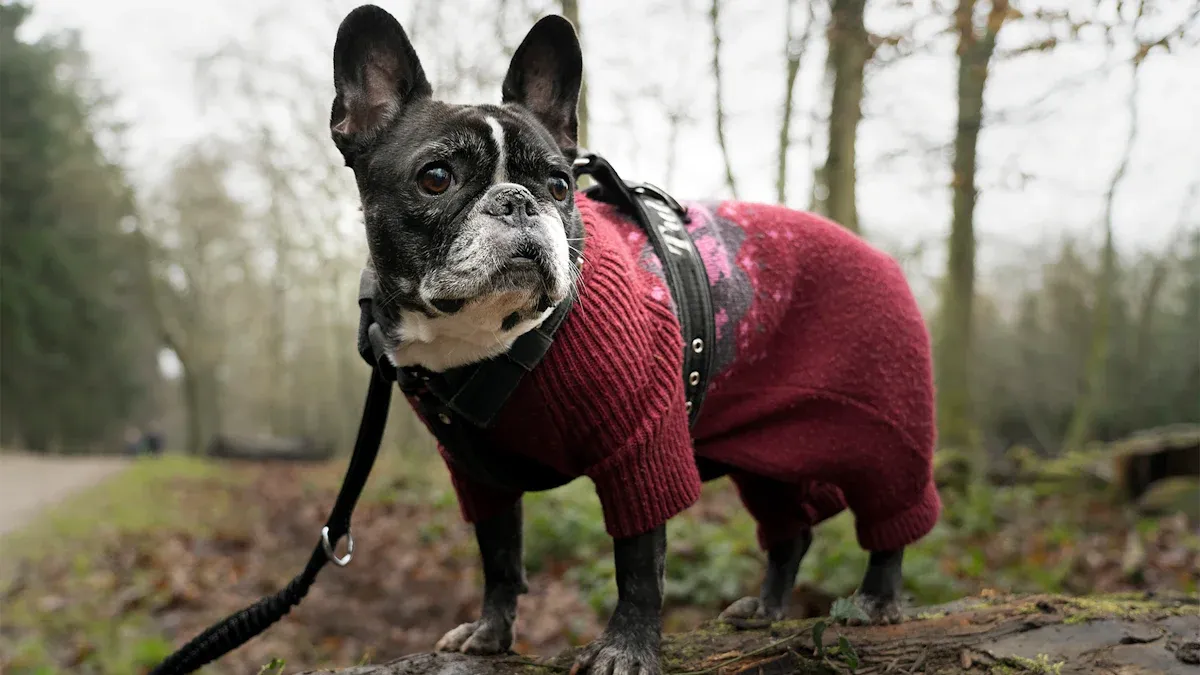
Knuckling occurs when a dog places or drags the top of the paw rather than maintaining normal paw position. It can be associated with neurological, spinal, peripheral nerve, muscle, or orthopedic problems. The cause must be assessed before a positioning device is used.
A knuckling support may use an elastic toe-lift, front strap, boot section, or other mechanism to guide paw placement during selected supervised movement. It does not repair nerve damage or guarantee restoration of normal gait.
- Check whether the toes clear the ground rather than being pulled into an unnatural position.
- Confirm that the elastic or lift force is not excessive.
- Watch for rubbing over the toes, nails, paw top, and lower leg.
- Stop if the dog trips more, crosses the limbs, resists movement, or develops skin damage.
- Use only within the activity and rehabilitation plan recommended for the diagnosed condition.
For a focused explanation of toe lift, lower-leg anchoring, walk testing, and daily monitoring, see the Dog Foot Brace for Knuckling Guide.
For a product-level example of a paw-covering design with a toe-lift function, review the No-Knuckling Boot Brace. Product suitability still depends on diagnosis, paw placement, strap tension, and supervised walk testing.
When a dog foot brace may be considered
A foot or lower-limb support may be discussed after the affected structure and support goal are defined. Possible scenarios include:
- Paw protection during selected controlled activities
- Toe positioning for diagnosed knuckling
- Hock support that requires coverage extending toward the paw
- Temporary support within a veterinarian-directed rehabilitation plan
- Postoperative use approved by the surgical team
- A custom orthosis prescribed for a specific anatomical or movement-control need
These categories do not mean every paw injury, fracture, arthritis case, nerve problem, or postoperative dog should use the same brace. The product structure, rigidity, coverage, and monitoring requirements must match the individual condition.
When not to rely on a dog foot brace
- The dog suddenly refuses to bear weight.
- There is an open wound, active infection, severe swelling, or suspected fracture.
- The toes are cold, discolored, swollen, or compressed.
- The dog drags or knuckles more after the device is applied.
- The brace creates a new limp or changes the limb angle.
- Postoperative use has not been approved by the surgical team.
- The dog repeatedly removes the brace because of pressure, heat, or rubbing.
- The underlying cause of weakness or gait change has not been assessed.
A foot brace should not be used to delay diagnosis or to make a dog continue activity despite worsening pain, weakness, swelling, or neurological signs.
How to choose the correct structure
1. Define the anatomical target
Clarify whether support is needed at the paw, toes, carpus, hock, or another joint. A product that ends below the target cannot control that region, while excessive coverage can restrict areas that should remain free.
2. Define the movement goal
Possible goals include ground protection, toe positioning, selected movement guidance, limitation of flexion or extension, or more rigid immobilization. These functions require different structures.
3. Compare soft, reinforced, and rigid designs
Soft designs may provide flexible contact and protection. Reinforced designs may add more shape and movement guidance. Rigid splints restrict more motion but also require more precise placement and pressure monitoring. No category is automatically best.
4. Review the paw and toe interface
Inspect toe space, nail clearance, inner seams, traction surface, sole thickness, moisture handling, and whether the paw can rotate. The paw section should not hide pressure or swelling from view for long periods.
5. Compare standard and custom options
A standard brace may offer faster availability and adjustable sizing. A custom device may be considered for unusual anatomy or a defined support requirement. Custom fabrication does not guarantee perfect fit, comfort, or better results; measurement, fabrication, adjustment, and follow-up still matter.
Use the product-specific sizing diagram rather than transferring measurements from another brace category. The knuckling guide above provides the closest current fitting framework for foot and toe-lift designs.
How to measure for a dog foot brace
Use the measuring diagram for the exact product. Different designs may require paw width, paw length, lower-leg circumference, hock circumference, brace height, or distances between anatomical landmarks.
- Measure while the dog stands naturally. A lifted or curled paw can change the dimensions.
- Measure the weight-bearing paw when requested. Paw width may increase when loaded.
- Include the nails only when the manufacturer’s diagram requires it.
- Keep the tape flat around the lower leg. Do not pull deeply through the coat.
- Measure both sides if the protocol asks for comparison. Swelling or muscle loss may be uneven.
- Do not rely on body weight alone. Dogs of similar weight can have very different paw and leg dimensions.
Dynamic fit check
| Check | Acceptable | Stop and adjust |
|---|---|---|
| Position | Brace remains over the intended paw or lower-leg area. | Slides, rotates, folds, or pulls the paw sideways. |
| Toes | Remain warm, normally colored, and naturally positioned. | Become swollen, cold, discolored, curled, or compressed. |
| Paw contact | Paw lands without abnormal rolling or dragging. | Dog trips, scuffs more, or avoids loading the paw. |
| Upper edge | Stays flat without digging into tendons or skin. | Persistent redness, pressure ridge, or hair pulling develops. |
| Gait | Dog takes controlled steps without a new compensation pattern. | Stride shortens, limb swings outward, or limping increases. |
Break-in and daily wear time
There is no universal schedule such as 30 minutes on day one and eight hours by day seven. Wear time depends on the diagnosis, product type, rigidity, skin response, fit, activity, and veterinary plan.
Begin with a short, supervised introduction according to the product instructions. The first objective is to confirm that the paw remains correctly positioned and that the brace does not create swelling, pressure, heat, moisture, or gait changes.
- Inspect the paw, toes, nails, and lower leg after each early session.
- Remove the brace if it becomes wet, dirty, twisted, or displaced.
- Do not increase running, jumping, or rough play because the brace is on.
- Do not assume overnight or unsupervised wear is appropriate.
- Recheck fit if swelling, body weight, coat, or movement changes.
- Follow postoperative or rehabilitation restrictions separately from the brace schedule.
Skin, circulation, and pressure checks
Foot and lower-leg devices can conceal swelling and concentrate pressure around small anatomical areas. Monitoring should include the toes and paw, not only the straps.
- Compare toe color and temperature with the opposite paw.
- Check for swelling above or below the brace.
- Look for redness at seams, edges, straps, nails, and dewclaws.
- Check for dampness, odor, grit, and trapped hair.
- Inspect whether the device changes nail or paw-pad contact with the ground.
- Stop use if marks remain, skin breaks, or the dog becomes more reluctant to walk.
Do not simply loosen or retighten the device when circulation, swelling, or persistent pressure is suspected. Remove it and seek professional reassessment.
Cleaning and maintenance
Follow the care instructions for the specific product. A brace may combine fabric, foam, hook-and-loop closures, elastic, rigid panels, metal stays, or a traction sole, and these components may require different cleaning methods.
- Remove loose dirt and hair after use.
- Hand-wash only when the product instructions permit it.
- Use mild detergent and rinse thoroughly.
- Air-dry completely before the next use.
- Do not apply high heat to elastic, foam, adhesive, or rigid components.
- Inspect seams, straps, sole wear, fasteners, and structural panels regularly.
A damp or damaged brace can change fit, increase friction, and reduce traction.
Common mistakes
- Using “foot brace” as one product category. Paw protection, hock support, knuckling support, and splinting are different functions.
- Choosing from limping alone. Confirm the anatomical and medical cause first.
- Using a boot to stabilize a joint. Most boots mainly protect the paw.
- Using a rigid splint without precise placement. Excess pressure can develop quickly.
- Assuming custom means perfect. Custom devices still require accurate measurement and follow-up fitting.
- Following a generic wear schedule. Use the product protocol and the dog’s response.
- Ignoring the toes. Toe swelling, color, temperature, and position are critical checks.
- Tightening to stop rotation. Rotation may indicate the wrong size or structure.
- Continuing after increased dragging or tripping. The device may be changing paw placement incorrectly.
- Using the brace to avoid veterinary reassessment. Worsening signs require diagnosis, not more support.
FAQ
What is the difference between a dog foot brace and a dog boot?
A dog boot mainly protects the paw from surfaces, weather, moisture, or abrasion. A foot brace may extend farther up the lower limb or include a structure intended to position the paw, support the hock, or limit selected movement.
Can a dog foot brace help with knuckling?
A knuckling-specific design may help position the paw or toes during selected supervised activity. It does not correct the underlying neurological or orthopedic cause, and an unsuitable lift force can increase tripping or pressure.
How long can a dog wear a foot brace each day?
There is no universal daily wear time. Follow the product-specific instructions and veterinary plan. Begin with supervised use and inspect the paw, toes, skin, brace position, and gait after each session.
Can a foot brace replace a cast, splint, or surgery?
No general replacement rule applies. Casts, splints, surgery, conservative care, and commercial braces serve different purposes. The treating veterinarian should decide which structure and movement restriction are required.
Is a foot brace safe for senior dogs?
Age alone does not determine safety. Suitability depends on diagnosis, skin condition, circulation, sensation, mobility, fit, and the dog’s ability to tolerate the product. Senior dogs with reduced sensation or fragile skin may require closer monitoring.
What should I do if the paw swells inside the brace?
Remove the brace immediately. Compare the paw and toes with the opposite side and contact a veterinarian, particularly if there is color change, coolness, significant swelling, pain, or reduced weight-bearing.
What if my dog chews the brace?
Remove the device and inspect for pressure, heat, moisture, rubbing, incorrect placement, or restricted movement. Do not use an anti-lick product to force continued wear before the cause of the chewing is identified.
For pet brands and rehabilitation-product buyers
For a commercial foot-support range, paw boots, hock braces with paw sections, knuckling devices, and rigid splints should not be treated as minor variants of one SKU. Buyers should define the anatomical target, movement goal, paw and toe interface, traction surface, rigidity, size grading, strap direction, skin-contact materials, cleaning method, and use boundaries before comparing samples.
GaitGuard works with pet brands, distributors, and sourcing teams on canine support products. Review the custom dog brace manufacturing process when evaluating OEM, private-label, or product-development requirements.
