
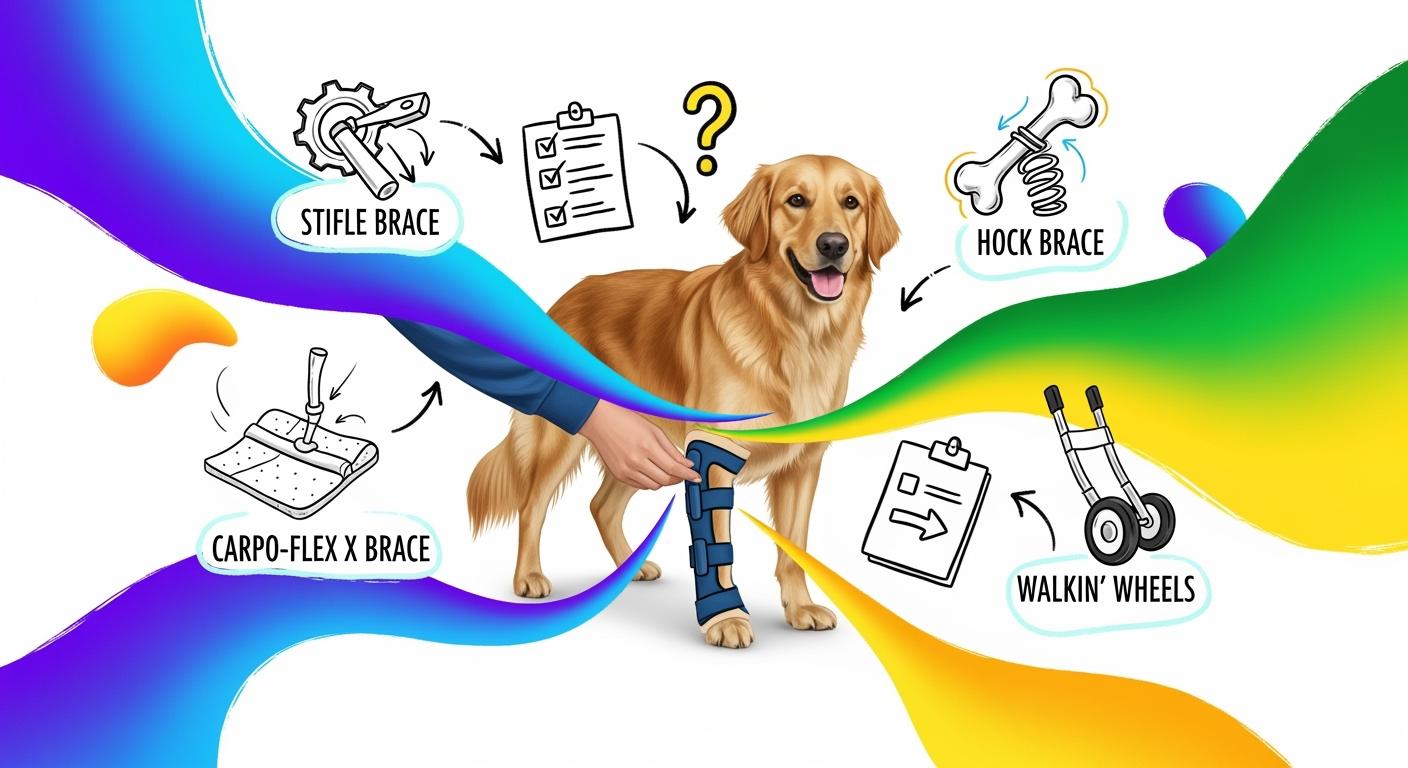
You might see your dog limping or not wanting to walk. This can mean their leg hurts. A dog leg brace is a special support for a dog’s front or back leg. Picking the right dog leg brace for your dog’s problem is important. The correct brace can help with pain. It can help your dog move better. It can also help the joint heal.
Dog leg braces have different styles for each joint
The veterinarian will help you choose if a brace is good for your dog
GaitGuard has trusted choices for dogs who need more support
Always ask your veterinarian for advice that fits your dog’s health.
Key Takeaways
A dog leg brace helps your dog’s leg feel better and move easier.
You should talk to your veterinarian to pick the best brace for your dog.
Braces can help with things like arthritis, injuries, and healing after surgery.
Make sure the brace fits well so your dog does not feel pain and can heal.
Check the brace often and keep it clean so it works well.
What Is a Dog Leg Brace?
Definition and Purpose
A dog leg brace is a special device that supports your dog’s leg when it feels weak or hurts. You can use a brace for different joints, such as the knee, ankle, or wrist. The main purpose of a dog leg brace is to help your dog move more easily and feel less pain. When your dog wears a brace, it gets extra support for the leg. This support helps your dog stand, walk, and play with more comfort.
A dog leg brace can do several things for your dog:
It keeps the leg steady and limits movements that might cause more injury.
It gives gentle pressure to the joint, which can help reduce swelling and pain.
It helps your dog rest the leg while still being able to move around.
You should always talk to your veterinarian before using a brace. The veterinarian will help you decide if a dog leg brace is right for your dog and which type fits best.
Common Uses for Dogs
Dogs need leg braces for many reasons. Some of the most common uses include:
Helping dogs with knee injuries, such as torn CCL or ACL.
Supporting dogs with arthritis or joint pain.
Giving older dogs more stability when their legs feel weak.
Assisting dogs during recovery after surgery or injury.
Tip: Dog leg braces work best when you use them as part of a full treatment plan from your veterinarian. They do not replace other care your dog may need.
You may notice your dog limping, avoiding walks, or struggling to stand. These signs often mean your dog could benefit from a brace. Dog leg braces help your dog enjoy daily activities and improve quality of life. Remember, each dog is different, and your veterinarian knows what is best for your pet.
Dog Leg Brace Terminology
This section is a simple glossary of terms you may see in vet reports or brace descriptions.
Understanding the right terms helps you choose the best dog leg brace for your pet. You will see words like orthosis, splint, and support when you look for a brace. Each term means something different and guides you to the right choice.
Orthosis, Splint, and Support
Here are the main types of devices you may find:
Orthosis: This is a custom-made device that supports or protects your dog’s limb. It can help decrease pain, increase stability, and assist joint movement. Orthoses are built for long-term use and fit your dog’s leg perfectly.
Splint: A dog splint is usually pre-made or adjustable. It helps immobilize and stabilize a joint or limb. Splints are often used for temporary support after an injury.
Support: This is a general term for any device that helps a limb. Supports do not have the same special features as orthoses or splints. They give basic help and comfort.
Tip: Orthoses offer the most tailored support, while splints and supports are better for short-term or mild needs.
Custom vs. Off-the-Shelf Braces
You can choose between custom and off-the-shelf braces for your dog. Here is a simple comparison:
Type | Advantages | Disadvantages |
|---|---|---|
Custom Dog Leg Brace | – Tailored fit and comfort | – Higher cost |
Off-the-Shelf Brace | – Affordable | – May not fit perfectly |
Custom braces fit your dog’s leg exactly and help with serious or long-term problems. Off-the-shelf braces work well for short-term support or mild injuries. Always ask your veterinarian which type is best for your dog.
Glossary of Important Medical Terms
Stifle/Knee: The main joint in your dog’s back leg. It helps your dog walk and jump.
Elbow: The joint in the front leg. It lets your dog bend and move the leg.
Hock: The ankle joint in the back leg. It gives stability when your dog stands or runs.
Carpal Joint: The wrist area in the front leg. It helps with movement and balance.
Ligament: A strong band that connects bones. It keeps joints stable.
Tendon: A tough cord that connects muscle to bone. It helps your dog move.
Osteoarthritis: Joint swelling and pain that can make walking hard for your dog.
Sprain: Stretching or tearing of a ligament. It causes pain and swelling.
Hyperextension: When a joint bends too far. This can lead to injury.
Rehabilitation: Exercises and care that help your dog recover after injury or surgery.
Note: A dog leg brace is only one part of your dog’s care. Your veterinarian will help you build a full treatment plan for the best results.
Product and Design Terms
Here is a glossary of common product and design terms used for dog leg braces.
Materials and Comfort
When you pick a dog leg brace, comfort matters. The materials in the brace affect how your dog feels. They also affect how long the brace lasts. GaitGuard uses medical-grade materials for support and comfort. Their braces go through strict checks for quality. This makes sure each brace meets high standards.
Here is a table that shows common materials in dog leg braces. It explains how each material affects comfort and durability:
Material Type | Effect on Comfort | Effect on Durability |
|---|---|---|
Carbon Fiber | Lightweight, helps your dog move | Very strong, does not wear out easily |
Specialized Plastics | Flexible, lowers pressure on the leg | Tough, stands up to daily use |
Advanced Composites | Can be shaped for a better fit | Gives support for a long time |
Some braces use neoprene, padding, or breathable fabric. These materials stop skin irritation and keep your dog cool. Soft braces give gentle support and are easy to wear for hours. Rigid braces help with serious injuries and keep the leg steady. Anti-slip straps hold the brace in place. Your dog can walk and play without worry.
Tip: Look for soft lining and breathable fabric when you choose a brace. This helps your dog stay comfortable while healing.
Adjustable Features and Fit
A good fit is important for any dog leg brace. Adjustable straps and size choices help you find the right fit. GaitGuard makes braces with straps you can change and easy closures. You can adjust the brace as your dog moves or gets better.
Adjustable features let the brace move with your dog. This gives support without making your dog feel trapped. A good fit stops rubbing and pain. You can change the brace for swelling or muscle changes during recovery.
Here are some product and design terms you might see:
Orthotic brace: Supports and keeps joints steady.
Support: Helps weak legs feel better.
Stabilization: Holds the leg still.
Compression: Lowers swelling and pain.
Range of motion (ROM): Lets your dog move the joint safely.
Soft vs. rigid brace: Soft braces for comfort, rigid braces for strong support.
Unilateral vs. bilateral brace: For one leg or both legs.
Padding and breathable fabric: Stops skin problems.
Anti-slip and adjustable straps: Keeps the brace in place.
GaitGuard has many products, like anti-lick gear, rehab braces, and lifting straps. These choices help you find what your dog needs. Remember, a dog leg brace is just one part of your dog’s care. Your veterinarian will help you pick the best option for your pet.
Types of Dog Leg Braces
Picking the right dog leg brace helps your dog move and feel good. There are different kinds of braces for each joint or injury. Your veterinarian will help you choose the best brace for your dog.
Knee (Stifle) Braces
A knee brace gives support to your dog’s stifle joint. Dogs with ACL tears, ligament problems, or arthritis use this brace. It keeps the leg steady and helps your dog walk better. Research shows custom stifle braces help dogs use their legs more and make joints stronger.
Study Type | Result |
|---|---|
Custom Stifle Braces | Limb function improved by 5.1% |
Computer Modeling | Joint stability increased |
Tip: A knee brace can help your dog heal after surgery or deal with knee pain.
Hock (Ankle) Braces
Hock braces support the ankle joint in the back leg. You use this brace for hock hyperextension, sprains, ligament injuries, or after surgery. Dogs with osteoarthritis or hock dislocation also use this brace.
Common uses:
Hock hyperextension
Sprained hock
Post-operative care
Carpal (Wrist) Braces
A carpal brace helps keep the wrist area steady in the front leg. Dogs with ligament problems, hyperextension, or wrist pain use this brace. Studies show most dogs with wrist injuries feel less pain and walk easier with a carpal brace.
Benefits:
Stabilization
Pain reduction
Improved mobility
Elbow Braces
Elbow braces help dogs with elbow dysplasia, arthritis, or weak joints. You might see your dog limp or not use the leg. An elbow brace gives support and helps lower pain from injuries or sickness.
Typical conditions:
Elbow dysplasia
Osteoarthritis
Ligament laxity
Full-Leg Braces
Full-leg braces cover the whole leg. These braces help small and medium dogs, older dogs, or dogs healing after surgery. They help dogs move better and protect the leg while it heals. Owners often see their dogs walk easier and limp less.
Condition | Outcome |
|---|---|
Recovery after surgery | Mild to no lameness |
Chronic knee issues | Improved mobility |
Note: Dog leg braces work best when your veterinarian makes a full treatment plan.
Dog Leg Brace Functions
Dog leg braces help your dog heal and stay active. They give support and lower pain. Braces protect your dog’s leg from getting hurt again. Knowing how braces work helps you pick the best one.
Support and Stabilization
A dog leg brace gives extra help when the leg feels weak. The brace keeps the joint steady and stops bad movement. This lets your dog walk and play with more confidence. Biomechanical studies show how braces help dogs.
Study Location | Findings |
|---|---|
Colorado State Veterinary School | Surgery makes owners happier than bracing, 98% vs 85%. |
University of Georgia Veterinary School | Braces change knee motion when weight is put on, but it is not clear if they stop bad movement. |
University of Louisville | A brace limited bad motion in a torn ACL as well as surgery. |
Braces keep the leg steady and control movement. You can use them for ligament injuries, arthritis, or after surgery. The brace holds the joint in a safe spot and lowers the chance of twists.
Dog knee braces spread weight and strain on the hurt leg. This helps lower swelling and gives comfort. The brace makes sure the knee does not carry all the weight. Your dog can walk with a balanced step.
Injury Recovery and Pain Relief
Dog leg braces help your dog heal after getting hurt. The brace supports the hurt leg and lowers pain. You can use a brace for mild injuries like medial patellar luxation or ligament sprains. Many dogs limp less and feel steadier with a brace.
Braces for medial patellar luxation keep the knee steady and lower pain.
They are good for mild cases and can make your dog feel better and delay surgery.
Many dogs limp less and feel steadier with a brace, especially in mild cases.
Wearing a brace reminds your dog to rest and not overuse the leg. You can use bracing with rehab therapy to help recovery. Dogs often heal faster and have fewer problems when using a brace with therapy.
Outcome | Result |
|---|---|
Improvement in limb function | Big improvement over 12 weeks |
Joint stabilization | Less abnormal movement |
Surgery avoidance | Many dogs returned to normal activity |
Pain reduction | Noticeable benefits seen |
Dog hind leg braces move weight and pressure off the hurt leg. This lowers the chance of more injury and helps healing. Your dog feels less pain while getting better.
Preventing Further Injury
Dog leg braces help with healing and stop new injuries. The brace keeps the joint steady and lowers strain. This is important for stopping more harm. Hinged knee braces give extra help for serious injuries by controlling movement.
Dog knee braces keep the joint steady and lower strain, which helps stop more injury.
Hinged knee braces give more help for serious injuries by controlling movement and stopping more damage.
Using braces with daily exercises makes joints stronger and helps recovery.
You can use a brace during daily activities or rehab. The brace keeps your dog’s leg safe and lets your dog move with less risk. Support options like GaitGuard braces have adjustable parts and medical-grade materials for comfort and safety.
Note: A dog leg brace is only one part of your dog’s care. Always work with your veterinarian to make a full treatment plan for the best results.
Safe Use for Your Dog
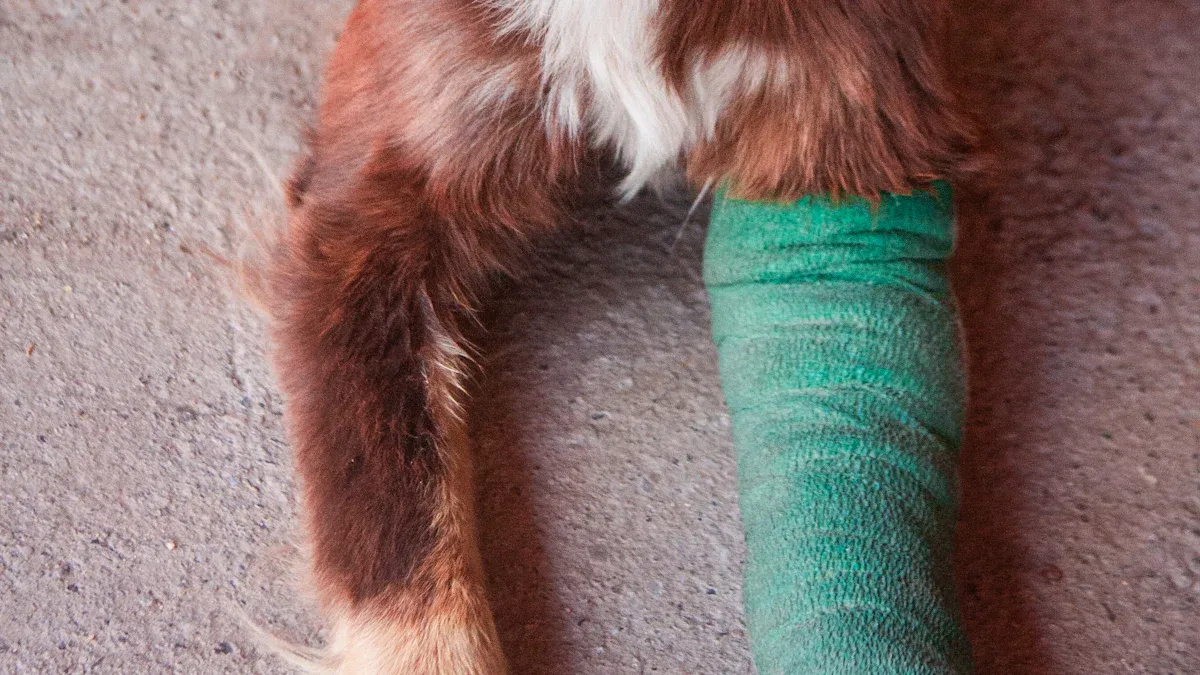
Fitting a Dog Leg Brace
Getting the right fit for your dog’s leg brace is important for comfort and support. GaitGuard’s adjustable features help you find a snug fit for any breed or size. Follow these steps to fit the brace safely:
Watch the fitting guide video if available.
Slide your dog’s leg into the brace.
Tighten the bottom strap first. Make sure it feels snug but not too tight.
Check for any wrinkles or pinching in the skin.
Tighten the middle strap to remove gaps at the knee.
Secure the top strap around the thigh. This strap should be snug, but not as tight as the lower straps.
Make sure you can fit one or two fingers between the brace and your dog’s groin fold.
The brace should sit just above the hock, letting your dog move the joint freely.
Start with short wear times, such as one to two hours a day. Gradually increase the time as your dog gets used to the brace.
Signs of Proper and Improper Fit
Check your dog’s leg brace every day. A good fit helps your dog heal and move safely. Use this table to spot the signs:
Indicator | Description |
|---|---|
Snug Fit | The brace feels secure, not too tight. You can fit a finger under the straps. |
No Rubbing/Chafing | The brace does not rub or irritate the skin. |
Full Range of Motion | Your dog can move the leg as needed. |
Comfort | Your dog does not try to remove the brace or limp more. |
If the brace is too tight, pressure sores can form. If it is too loose, chafing may happen. If the hinge does not match the joint, your dog may lose motion.
Daily Care and Maintenance
Keep your dog’s leg brace clean and in good shape:
Clean the brace with mild soap and water.
Dry it completely before putting it back on.
Remove hair from Velcro using a lint roller or tape.
Check for frayed straps, broken buckles, or worn padding.
Store the brace in a cool, dry place.
Regular cleaning prevents infection and keeps the brace working longer.
When to Consult a Veterinarian
Always talk to your veterinarian if you notice redness, swelling, pain, or new limping. If your dog shows discomfort or the brace does not fit right, stop using it and call your veterinarian. Custom braces should be fitted by a professional. Your veterinarian can help you choose the best support options for your dog’s injury and recovery.
You now know why it is important to learn about dog leg braces. Understanding the types and how they work helps you help your dog. Picking the right brace lets your dog heal and move better. Studies from veterinarians show a good fit stops pain and helps healing.
Make sure the brace fits tightly but is not too tight.
Choose a brace that is right for your dog’s problem.
Always talk to your veterinarian for help.
Product | Benefit |
|---|---|
GaitGuard | Helps dogs stand, walk, and feel happier |
Dog leg braces help your dog feel better and heal. You can help your dog stay active and enjoy life.
FAQ
Can a dog leg brace replace surgery?
A dog leg brace cannot replace surgery for serious injuries. You use a brace to support healing or help with pain. Your veterinarian decides if surgery or bracing is best for your dog.
Can my dog wear braces on more than one leg?
Yes, your dog can wear braces on more than one leg. Your veterinarian will guide you on safe use. Always check for comfort and watch for skin irritation.
How many hours per day should my dog wear a brace?
Start with one to two hours each day. Slowly increase the time as your dog gets used to the brace. Your veterinarian will tell you the best schedule for your dog.
Can a brace help arthritis as well as injuries?
A dog leg brace can help with arthritis and injuries. It gives support and eases pain. You should use the brace as part of a full treatment plan from your veterinarian.
What signs show my dog’s brace fits well?
Your dog walks comfortably.
The brace does not rub or cause redness.
You can fit one finger under the straps.
Your dog does not try to remove the brace.
