Dog knee braces for large breeds need more than a bigger size label. Heavier dogs place more load on the knee, so fit, strap placement, joint support, rubbing risk, and activity limits matter before a brace is used for daily support.
This article explains what veterinarians usually check before a large-breed dog uses a knee brace, where bracing may help, and which warning signs mean the dog needs a proper diagnosis before relying on support gear.
Conservative management to avoid surgery
Improved mobility, especially for older dogs
Lower costs compared to surgical options
Enhanced comfort and support during recovery
Recent advancements in knee brace technology for dogs include stronger materials, customizable designs, and advanced support systems that deliver better comfort and therapeutic benefits.
Key Takeaways
Large breed dogs are at higher risk for knee injuries. Consider a knee brace to stabilize the joint and support healing.
Look for braces with adjustable straps and soft padding so they fit securely and help prevent skin irritation.
Consult your veterinarian for a proper diagnosis before choosing a knee brace. This ensures the right type and fit for your dog’s needs.
Combine brace use with rehabilitation exercises and weight management. This approach enhances recovery and improves mobility.
Regularly check your dog’s skin for irritation while using a brace. Early detection of issues can prevent complications.
Knee Injuries in Large Breeds
Causes and Risk Factors
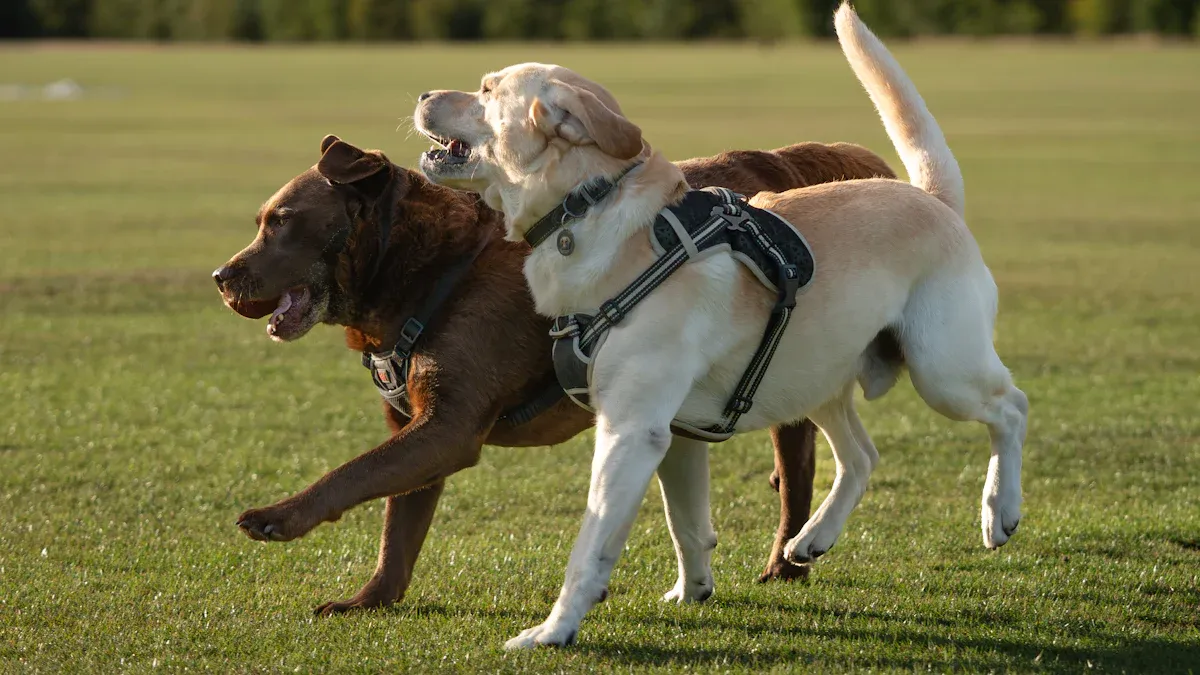
Large breed dogs face a higher risk of knee injury due to several factors. You may notice that breeds like Labrador Retrievers, Rottweilers, and German Shepherds experience more knee injuries than smaller breeds. The size and weight of these dogs put extra strain on the knee ligaments, making them more vulnerable to ACL tears. Even a slight increase in weight can add pressure to the joints, leading to ligament wear and possible injury.
Other risk factors include:
Middle-aged dogs, especially those between 4 and 8 years old, have a higher chance of acl injury.
Spayed females may face increased risk due to hormonal changes.
Certain anatomical features, such as a steep tibial slope, can add stress to the knee.
Dogs with low activity levels may suffer injuries when they suddenly become active.
Genetics also play a role, with some breeds more likely to develop ligament problems.
Signs of ACL/CCL Tears
Recognizing the signs of acl injury in your dog is crucial for early intervention. Common symptoms include:
Sudden lameness or limping
Difficulty rising from a sitting position
Swelling around the knee joint
Reluctance to play or decreased activity
“Toe-touching” posture, where your dog barely touches the ground with the affected leg
Stiff or awkward gait
Pain and stiffness, especially after rest
Clinical Sign | Description |
|---|---|
Limping or not bearing weight | Your dog may avoid using the injured leg. |
Trouble standing up | Difficulty getting up from a sitting position. |
Swelling around the knee | Noticeable increase in knee size. |
Muscle atrophy | Loss of muscle in the affected leg. |
If you notice any of these signs, your dog may be experiencing knee pain, which often points to an ACL or CCL tear.
Why Vet Diagnosis Matters
You should always seek a full veterinary exam before choosing a knee brace for your dog. A veterinarian can confirm whether your dog has an acl injury, arthritis, or another knee problem. This diagnosis ensures you select the right type and fit of brace, which is essential for effective support and recovery. Your vet may also recommend custom solutions based on your dog’s specific needs, helping you avoid further injury and improve your dog’s quality of life.
Tip: Early diagnosis and treatment can prevent long-term joint damage and help your dog return to normal activity faster.
What Vets Want in Dog Knee Braces
Stability and Joint Support
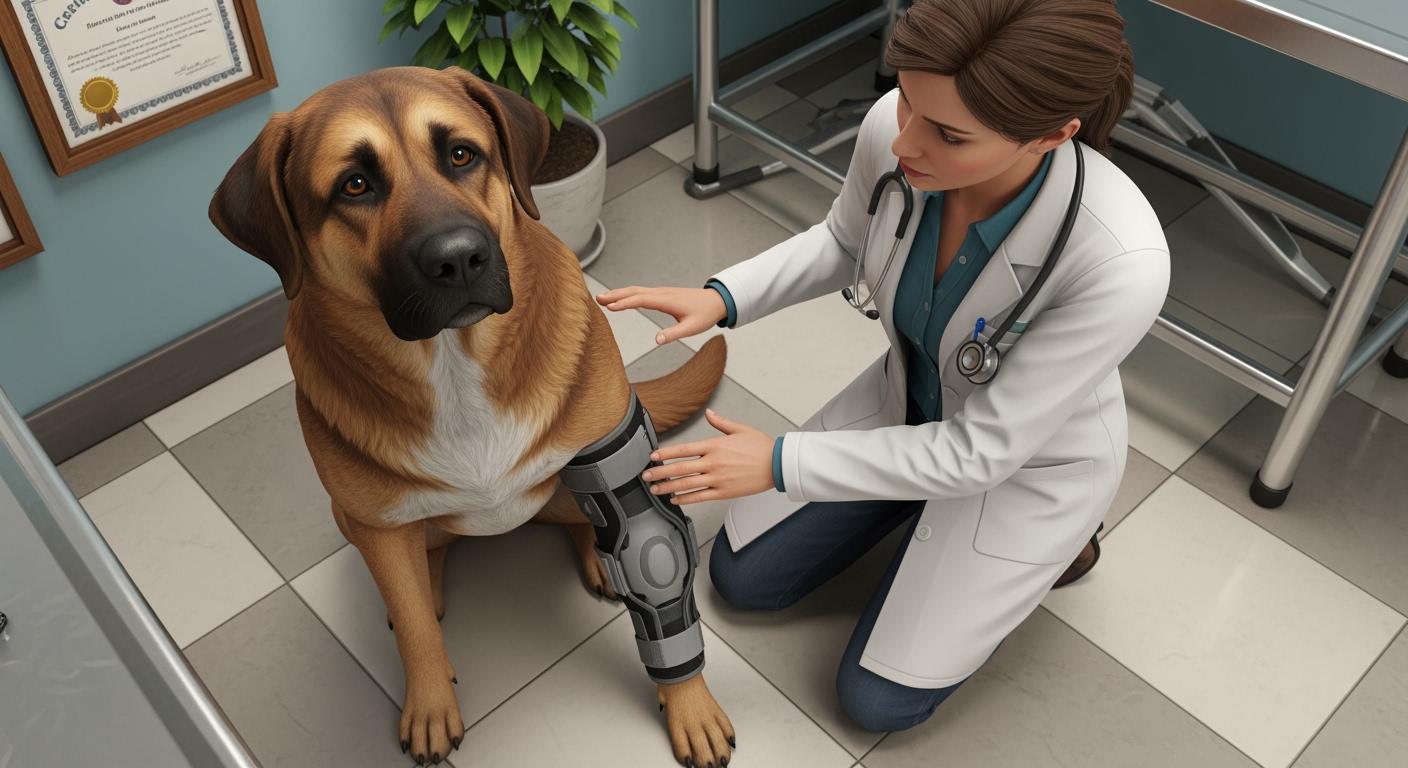
You want your dog to regain mobility and comfort after a knee injury. Veterinarians look for braces that provide strong support and stabilize the joint. Wide straps and reinforced padding help distribute pressure evenly, reducing strain on the knee. Hinged designs allow controlled movement, which supports natural walking and prevents further injury. You should choose a brace that keeps the knee aligned and offers reliable support during daily activities.
Note: Regular veterinary oversight ensures the brace continues to provide proper support as your dog heals.
Criteria | Description |
|---|---|
Custom Fit | Accurate casting or 3D scanning for a personalized fit |
Owner Compliance | Adherence to daily wear and monitoring by the owner |
Integration with Therapy | Coordination with physiotherapy and weight management |
Veterinary Oversight | Regular adjustments and progress checks by a veterinarian |
Improvement in Mobility | Clinical experience and early studies suggest meaningful improvements in mobility and comfort, especially in carefully selected non-surgical cases. |
Fit, Adjustability, and Comfort
A good dog knee brace must fit securely and comfortably. Adjustable straps and soft padding protect your dog’s skin from irritation. You need a brace that adapts to your dog’s size and shape, especially for large breeds. Hinged and double-support designs offer both flexibility and extra stability. Durable materials withstand heavy use, so your dog can stay active during recovery.
Look for these features:
Adjustable straps for a snug fit
Soft padding to prevent rubbing
Hinged design for natural movement
Sizing options for large frames
Feature | Description |
|---|---|
Support Type | Single vs. Double Dog Knee Brace |
Design | Hinged knee brace for added mobility and support |
Comfort and Fit | Padding, adjustable straps, and sizing for larger frames |
Durability | Strong materials to withstand heavy use |
Safe Materials for Large Dogs
You want a brace made from safe, medical-grade materials. Veterinarians recommend braces with breathable mesh, neoprene, and washable fabrics. These materials protect your dog’s skin and prevent overheating. Wide straps and extra padding add comfort and support. Some braces use spring-loaded or full-body designs for extra stability in large breeds.
Dog Knee Brace Type | Key Materials and Features |
|---|---|
Double Dog Knee Brace | Neoprene comfort material, adjustable, washable |
Hinged Dog Knee Brace | Hinged design, built-in compression, adjustable straps |
Spring-Loaded Knee Brace | Dual stabilizing springs, breathable mesh lining |
Full-Body Support Brace System | Designed for large and giant breeds, front-to-rear alignment |
Tip: Always check for signs of skin irritation and consult your veterinarian if you notice redness or discomfort.
What Vets Usually Check Before Recommending a Brace
GaitGuard Dog Knee Brace Features
You want the best support for your dog’s recovery from knee injuries. For clinics, retailers, and rehab product buyers, the safer comparison is not which brace sounds most advanced, but whether the brace can match the dog’s build, stay stable, reduce rubbing, and remain easy for owners to monitor during controlled daily use. GaitGuard dog knee brace options deliver stability, comfort, and rehabilitation support for large breeds. You can rely on their ergonomic design, which helps reduce dog knee pain and encourages natural movement.
GaitGuard braces use medical-grade materials that withstand daily wear and tear. Soft edging and adjustable straps help prevent rubbing and ensure a secure fit. These features help your dog stay active during rehabilitation. The anti-licking design protects wounds and surgical sites, speeding up healing and reducing the risk of infection. You can use GaitGuard braces on one or multiple legs, making them versatile for different rehabilitation needs.
GaitGuard’s rehabilitation options include auxiliary lifting straps that let you support your dog’s rear end during walks or therapy sessions. These help you guide your dog during walks or therapy sessions, supporting safe movement and reducing strain on the knee. The custom fitting and adjustable parts allow you to tailor the brace to your dog’s size and shape, which is especially important for large breeds. You will find that GaitGuard’s commitment to quality ensures your dog receives effective support throughout the rehabilitation process.
Other Knee Brace Designs for Large Breeds
You have several options when choosing dog knee braces for large breeds. Each design offers unique benefits for rehabilitation and pain relief. Veterinarian recommended dog knee braces for large breeds 2026 include soft sleeves, semi-rigid/hinged braces, full-leg supports, and support harnesses. You should select the type that matches your dog’s injury and activity level.
Soft Sleeves
These braces provide gentle compression and warmth. You may use them for mild strains or early rehabilitation. Soft sleeves offer comfort and flexibility, but they may not provide enough stability for severe injuries.Semi-Rigid/Hinged Braces
Hinged designs allow controlled movement while stabilizing the knee. You will find these braces helpful for moderate to severe injuries. Hinged braces use adjustable straps and padding to prevent slippage and discomfort. They support natural gait and reduce dog knee pain during rehabilitation.Full-Leg Supports
Full-leg braces cover the entire limb, offering maximum stability. You may choose this option for dogs with complex injuries or those recovering from surgery. Full-leg supports distribute pressure evenly and protect the knee from further damage.Support Harnesses
Harnesses help you lift and guide your dog during rehabilitation. These options are useful for dogs with limited mobility or those needing extra assistance. Support harnesses reduce strain on the knee and make daily activities safer.
Brace Type | Support Level | Comfort Features | Best For | Rehabilitation Use |
|---|---|---|---|---|
Soft Sleeve | Mild | Breathable, flexible | Early recovery, strains | Light rehabilitation |
Semi-Rigid/Hinged | Moderate | Adjustable, padded | ACL tears, active dogs | Moderate rehabilitation |
Full-Leg Support | High | Full coverage, stable | Post-surgery, complex | Intensive rehabilitation |
Support Harness | Assistive | Lifting straps | Limited mobility | Assisted rehabilitation |
Note: Accurate fit and hinge alignment are critical for effectiveness. You should always consult your veterinarian to select the right dog knee brace for your dog’s rehabilitation needs.
Choosing the Right Dog ACL Brace
You want to choose the best dog acl brace for your dog’s recovery. Veterinarian recommended dog knee braces for large breeds 2026 focus on matching the brace to your dog’s injury, size, and activity level. You should consider several factors before making your decision.
Type of Injury
Different braces help with different injuries. You should consult your veterinarian to determine if your dog needs a soft sleeve, hinged brace, or full-leg support. Partial ligament tears may benefit from conservative rehabilitation options, while complete tears often require more robust support.Activity Level
Active dogs need braces that allow natural movement and prevent further injury. You should look for options with reinforced stability and secure anchoring. Less active or senior dogs may prefer softer, more comfortable braces for rehabilitation.Comfort Features
Padding, adjustable straps, and breathable materials help reduce dog knee pain and prevent skin irritation. You should check the fit regularly and adjust as needed during rehabilitation.Durability
Large breeds require strong braces that withstand daily activity. You should select options made from medical-grade materials for lasting support during rehabilitation.
“Bracing can be especially helpful for large dogs where surgery might pose risks. It allows the joint to rest and heal with controlled movement.” – Dr. Angela Hines
You may also consider conservative treatment options, such as weight management, joint supplements, and physical therapy, especially for partial ligament tears or older dogs not ideal for surgery. Rehabilitation with a dog knee brace can improve mobility and reduce dog knee pain, helping your dog return to an active lifestyle.
Veterinarians report high owner satisfaction with supportive dog knee braces. You will see improvements in your dog’s mobility and comfort, which leads to a better quality of life. Rehabilitation options like GaitGuard, soft sleeves, hinged braces, and support harnesses provide effective solutions for large breeds.
Tip: Always follow your veterinarian’s guidance when choosing a dog acl brace. Proper selection and use of rehabilitation options ensure the best outcome for your dog’s recovery.
Matching Dog Knee Braces to Injuries
Mild Strains vs Complete Tears
You need to match the right dog knee brace to the severity of your dog’s injury. Mild strains often respond well to soft sleeves or lightweight braces. These options provide gentle compression and help control swelling. Your dog can benefit from increased comfort and support during early recovery. For complete tears, veterinarians recommend more robust braces. Hinged or full-leg braces stabilize the knee and prevent further damage. These braces keep the joint aligned and limit movement that could worsen the injury. You should always consult your veterinarian to determine the best treatment options for your dog’s specific injury.
Tip: Early intervention with the correct brace can reduce pain and speed up recovery for large breeds.
Non-Surgical vs Post-Surgery Use
You may wonder when to use a dog knee brace for non-surgical management or after surgery. Veterinarians often suggest braces for dogs who are not ideal candidates for surgery. Braces stabilize the joint, control inflammation, and work best when combined with anti-inflammatory medications, controlled exercise, and physical therapy. After surgery, braces support healing and protect the knee during rehabilitation. Consistent use as part of a holistic recovery plan helps your dog regain mobility and reduces the risk of re-injury.
Non-surgical cases:
Stabilize joints
Control inflammation
Combine with medication and therapy
Post-surgery cases:
Support healing
Protect surgical site
Use as part of a recovery plan
Active vs Senior Large Breeds
Active dogs and senior large breeds have different needs when it comes to knee injury management. Active dogs require stability and support during high-impact activities. You want a brace that prevents ligament injuries and strains from stress on the knee joint. Senior dogs need pain relief and enhanced mobility. Age-related issues and weakened ligaments can lead to instability, so a brace helps prevent further damage and supports daily movement.
Dog Type | Needs | Challenges |
|---|---|---|
Active Dogs | Stability during high-impact activity | Risk of ligament injuries and strains |
Senior Dogs | Pain relief and mobility | Age-related instability and weakened knee ligaments |
A knee brace stabilizes the joint, reduces strain on muscles and ligaments, and prevents overextension. You help your dog stay active and comfortable, whether recovering from surgery or managing chronic knee injury.
Note: Always follow your veterinarian’s advice when choosing treatment options for your dog’s knee injury.
Fitting and Using a Dog Knee Brace

Measuring and Sizing for Large Breeds
If your veterinarian recommends a custom knee brace, you can expect a measuring and casting process similar to the steps below.Accurate measurement is essential for a proper fit. Your rehab team may use fiberglass casting tape, gloves, stockinette, and scissors to take a precise mold of your dog’s leg. Lay your dog on their side with the leg positioned straight. Use a cloth measuring tape to measure thigh length from the groin to the knee cap, knee length from the knee cap to the tibial tuberosity, and tibia length from the knee cap to the hock. Take clear photos of each measurement for reference. Cover the leg with stockinette, wrap the casting tape around the knee, and squeeze the mold gently as it dries. Remove and label the mold before sending it for brace production.
Tip: Measure at the groin, top and bottom of the knee, and hock for best results.
Proper Fit and Break-In Tips
You want your dog to adjust comfortably to the new brace. Start with short leashed walks, using the brace for 10–15 minutes twice daily during the first week. Gradually increase wear time by 15 minutes each week. Slide the leg into the brace, tighten the bottom strap first, check for wrinkles, then secure the middle and top straps. Make sure there is space for one or two fingers between the brace and the skin. Your dog may walk awkwardly at first, but this improves with time. Remove the brace at night to let the skin breathe.
Day | Wear Time (minutes) | Activity |
|---|---|---|
1 | 30 | Leashed walk |
2–7 | +30 each day | Gradual increase |
Monitoring Comfort and Skin Health
Check your dog’s skin daily for irritation, friction wounds, or redness. Adjust the brace if you notice any rubbing or slippage. Most complications resolve with minor changes or short rest periods. Routine skin checks and ongoing supervision help prevent problems. If you see persistent issues, consult your veterinarian.
Note: Successful outcomes depend on proper fit, regular monitoring, and compliance.
Combining Braces with Rehab and Weight Control
You can improve recovery by combining the knee brace with rehabilitation exercises and weight management. Controlled physiotherapy enhances mobility and helps your dog bear weight naturally. Use ramps and non-slip flooring at home to support safe movement. Effective weight control reduces strain on the knee and supports healing after injury.
Tip: A multimodal approach with braces, rehab, and weight control breaks the pain-limp cycle and boosts your dog’s confidence.
What Retailers Should Avoid Overpromising
Building a 2026 Product Lineup
You want to offer large breed dog owners the best support options for knee injuries. Clinics, rehab centers, and retailers should focus on quality and fit when building a 2026 product lineup. Start by selecting braces that provide proper stabilization and allow natural motion. Hinged designs often work well for active dogs. Accurate fit and hinge alignment help prevent discomfort and improve recovery. Padding and breathable materials protect the skin and distribute pressure evenly. Adjustable straps and secure anchoring keep the brace in place during activity. Always match the size and weight of the brace to the dog’s build. High-quality brands like GaitGuard use medical-grade materials, offer versatile brace and harness solutions, and can support clinics or retailers with OEM/ODM options where needed. Avoid products that lack proper fit or use low-quality materials, as these can lead to poor outcomes.
Checklist for Clinics and Retailers:
Stabilization with natural motion
Accurate fit and hinge alignment
Padding and breathable materials
Adjustable straps and secure anchoring
Size and weight matched to the dog’s build
Tip: Regularly review new products and consult with veterinarians to ensure your lineup meets the latest standards for large breed dog knee support.
Educating Owners on Dog Knee Braces
You play a key role in helping owners use dog knee braces safely and effectively. Begin with a veterinary check to confirm the diagnosis and select the right brace. Teach owners how to fit the brace, aligning it with the dog’s knee joint and adjusting for comfort. Introduce a break-in schedule, starting with short wear periods and gradually increasing time. Encourage owners to use the brace during walks and physical therapy, but remove it during unsupervised sleep. Combine brace use with rehab exercises and weight management for best results. Remind owners to inspect the skin daily for irritation or pressure sores.
Owner Education Steps:
Vet check for diagnosis and guidance
Proper brace fitting and alignment
Gradual break-in schedule
Use during activity, remove at night
Combine with rehab and weight control
Daily skin checks
Note: Clear instructions and ongoing support help owners achieve better outcomes for their dog’s recovery.
Choosing veterinarian recommended dog knee braces for large breeds in 2026 gives your dog the best chance for recovery and comfort. You help your dog heal by limiting excessive movement in the knee and supporting the joint. Studies show that using a brace can improve mobility within just a few weeks. Work with your veterinarian to select the right brace and ensure a proper fit.
Key benefits of dog knee braces:
Stabilize the joint and prevent further injury
Reduce pain and swelling
Support safe movement and muscle strength
For many large dogs who are not ideal surgical candidates, a well-fitted brace offers controlled support so the joint can rest, heal, and stay more comfortable.
Benefit | Description |
|---|---|
Stabilization | Prevents excessive movement in the knee joint |
Compression | Reduces swelling and inflammation |
Weight Redistribution | Relieves pressure from the healthy leg |
Proprioception | Improves awareness of movement and gait |
You give your dog the support needed for a better quality of life. Always consult your veterinarian for diagnosis and brace selection.
FAQ
How do I know if my dog needs a knee brace?
You should watch for signs like limping, difficulty standing, or swelling around the knee. If your dog shows pain or avoids activity, consult your veterinarian for a diagnosis and advice on using a knee brace.
Can my dog wear a knee brace all day?
You should let your dog wear the brace during active periods and supervised walks. Remove the brace at night or when your dog rests. This helps prevent skin irritation and allows the leg to breathe.
Will a knee brace help my dog avoid surgery?
A knee brace can support your dog’s joint and improve mobility. Some dogs with mild injuries or those not suited for surgery benefit from conservative management. Always follow your veterinarian’s recommendations for the best outcome.
How do I measure my dog for a knee brace?
Use a cloth tape to measure your dog’s thigh, knee, and lower leg. Take clear photos of each measurement. Accurate sizing ensures the brace fits well and supports your dog’s recovery.
What should I do if my dog dislikes the brace?
Start with short wear times and positive reinforcement. Let your dog adjust gradually. If you notice discomfort or irritation, check the fit and consult your veterinarian for guidance.