
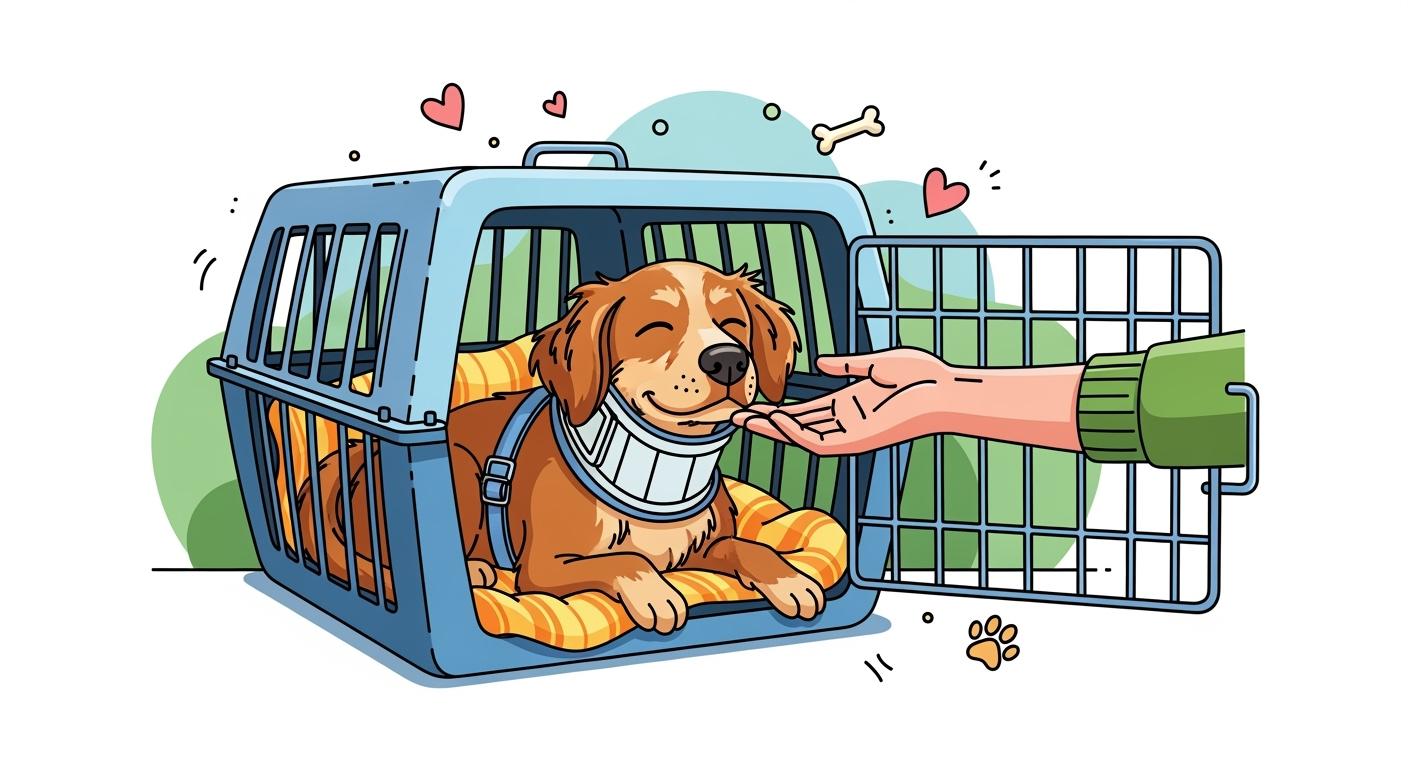
A dog neck brace for IVDD only works well when it stays stable without making the dog more uncomfortable. The brace should help reduce risky neck movement, but it should not press into the throat, slide forward, rub the skin, trap heat, or make resting harder. Before using one for daily support, the real question is not just whether the brace fits around the neck. It is whether the dog can breathe, rest, shift position, and stay comfortable while the brace keeps the neck area controlled.
The brace holds the neck steady and stops risky movement, which keeps injuries from getting worse.
It lowers swelling, helps blood move better, and makes the neck less stiff.
Your dog can feel better and more sure by not making painful moves.
Your veterinarian’s plan is more important than general timelines. Always remember, your veterinarian’s plan is more important than general timelines.
Key Takeaways
- A dog neck brace for IVDD should support the neck without squeezing the throat or forcing the head into an awkward position.
- Sliding, twisting, edge pressure, trapped heat, and skin redness are the first signs that the fit may not be working.
- A brace that looks secure while standing may still shift when the dog lies down, turns, or changes position inside a crate.
- Small dogs need extra care because short neck length and narrow body shape can make pressure points harder to notice.
- For bathroom breaks or short movement, a harness is safer than attaching leash pressure near the neck.
- If the dog pants heavily, coughs, refuses to settle, reacts to touch, or develops new skin marks, the brace should be removed and the situation should be checked with a veterinarian.
Dog neck brace for cervical support: what it does and doesn’t do
Limiting risky neck motion
A dog neck brace for IVDD is mainly a support tool for limiting unwanted neck movement. It may help in situations where the dog needs more control during rest, lifting, crate exits, or short supervised movement. But the brace is only useful if the dog can tolerate it. A stable brace should sit close to the neck, stay centered, and reduce motion without creating throat pressure, rubbing, or heat buildup.
Here is a table that shows the main benefits of using a neck brace for dogs with ivdd:
Benefit | Description |
|---|---|
Comfort Support | May reduce uncomfortable neck movement when brace use is part of the veterinarian’s plan. |
Motion Control | Helps reduce sudden bending or twisting when the brace stays centered and pressure-free. |
Rest Support | Helps the dog rest with a more controlled neck position when the fit remains stable. |
Handling Support | Supports careful handling and short supervised movement, while leash pressure should stay on a harness. |
Your veterinarian’s protocol overrides general timelines.
Comfort vs. safety in cervical support
A tighter fit is not always a safer fit. If the brace is tightened only to stop sliding, the pressure may move to the throat, jaw line, or lower neck. A better fit should feel even around the contact area. The dog should be able to rest with a neutral head position, breathe normally, and change posture without the brace pushing forward or digging into the skin.
Some dogs need time to accept a new brace, but ongoing distress is not just an adjustment issue. Watch for coughing, heavy panting, rubbing, redness, swelling, repeated pawing, or a brace that keeps rotating. These signs mean the fit or support method needs to be reviewed before the brace is used again.
Your veterinarian’s protocol overrides general timelines.
When harness-only is safer than a neck brace
There are times when a harness is safer than a dog neck brace for cervical support. If your dog has open wounds, skin infections, or cannot breathe well, your veterinarian may tell you to use a harness only. A harness takes pressure off the neck and lets your dog walk for bathroom breaks without risk.
You should always use a harness for leash walks, even if your dog wears a neck brace for dogs with ivdd. Never attach a leash to the neck brace for dogs. If your dog’s condition changes or you notice new problems, stop using the brace and contact your veterinarian right away.
A neck brace for dogs with ivdd helps support the neck, but it does not diagnose or cure cervical disease. It is one part of a full recovery plan. Always follow your veterinarian’s advice and check the brace often for fit and comfort.
Why people choose a neck brace for dogs with IVDD and other cervical issues
People usually consider a dog neck brace for IVDD when neck movement has become difficult to manage during rest, handling, or short supervised movement. The goal is not to promise recovery or replace veterinary care. The practical question is whether the brace can keep the neck area more controlled without creating new pressure, heat, skin, or breathing problems.
IVDD neck pain and guarding
A dog with neck discomfort may hold the head low, avoid turning, or guard the neck during handling. A dog neck brace for IVDD may help reduce unwanted movement in these moments, but it should not be judged by whether the dog seems “cured” or “back to normal.” The better check is whether the brace stays centered, avoids throat pressure, and lets the dog rest without new skin marks or breathing changes.
A dog in a neck brace may look supported when standing still, but the harder test happens during normal rest. Watch what happens when the dog lies down, turns in the crate, gets up, or lowers the head toward food or water. If the brace rotates, rides up, blocks a comfortable resting position, or leaves edge marks, the design or size may not match the dog’s body shape.
Post-surgical stabilization needs
After a veterinary procedure or during a strict support plan, some dogs may need more controlled neck positioning. A brace should only be used according to the veterinarian’s instructions for wear time, removal rules, and monitoring. Do not use a general timeline as the decision point. The safer question is whether the brace remains stable, clean, dry, and pressure-free during the dog’s actual rest and handling routine.
Senior dogs and handling challenges
Senior dogs with cervical spine ivdd or other dog neck injuries often have trouble moving or being handled. A neck brace can make daily care easier for you and your dog. It gives gentle support and keeps the neck stable. This helps prevent more damage and gives relief.
Here is a table showing how a neck brace helps senior dogs:
Feature | Description |
|---|---|
Stabilization | Keeps the cervical spine steady and prevents more injury. |
Lightweight Design | Reduces irritation and is easy for your dog to wear. |
Support for Controlled Handling | Helps limit unwanted neck movement during rest, transfers, and short supervised movement when brace use is appropriate. |
Comfort | Lowers pressure points and keeps the neck in a good position. |
You want your dog to feel safe and supported. Always check with your veterinarian before starting or changing any support device.
Veterinary evaluation: confirming cervical injury and monitoring progress
Neck pain vs. nerve or shoulder pain
You may notice your dog acting differently when neck pain starts. It is important to know the difference between neck pain and nerve or shoulder pain. Your veterinarian uses several tools to help confirm the cause. MRI scans give a clear picture of the spinal cord and show where the problem is. X-rays and CT scans can also help, but MRI shows more detail, like nerve root compression or swelling. Your veterinarian will look at your dog’s medical history and check for pain during the exam.
Here is a table to help you spot the signs of neck pain:
Clinical Sign | Description |
|---|---|
Cervical hyperesthesia | Your dog may react strongly to touch or movement. |
Hunched posture | Your dog may walk with a rounded back. |
Low head carriage | Your dog may keep its head lower than normal. |
Reluctance to walk or take stairs | Your dog may not want to move or climb stairs. |
Inappetance | Your dog may lose interest in food. |
Vocalizing | Your dog may whine or yelp when in pain. |
Limping or holding a limb off ground | Your dog may lift a paw to avoid pain. |
Muscle spasms | You may feel tight muscles in the neck. |
Your veterinarian’s protocol overrides general timelines.
Signs of worsening at home
You play a key role in watching for changes at home. Some signs mean your dog’s condition may be getting worse. Watch for these warning signs:
Low head posture or holding the head close to the shoulders
Refusing to look up or move the neck
Using only the eyes to look around instead of moving the head
Muscle spasms or twitching in the neck
Crying out in pain, even when resting
Eating or drinking while lying down
Not wanting to jump, walk, or flex the neck
Keeping a front leg lifted off the ground
Less activity or not wanting to eat
If you see any of these, contact your veterinarian right away. Your veterinarian’s protocol overrides general timelines.
Questions for your vet recheck
When you visit your veterinarian for a recheck, you want to get the best advice for your dog’s recovery. Here are some helpful questions to ask:
Is my dog’s neck brace fitting correctly?
How long should my dog wear the brace each day?
What signs should I watch for that mean the injury is getting worse?
When can my dog start gentle activity again?
Should I change anything about crate rest or feeding?
How often should I check my dog’s skin under the brace?
What is the next step if my dog’s pain returns?
Your veterinarian will guide you based on your dog’s progress and needs. Always follow their instructions for the safest recovery.
Decision guide: is a neck brace for dogs appropriate today?
Choosing when to use a dog neck brace can feel confusing. You want to help your dog heal, but you also want to keep your dog safe. This guide helps you decide if today is the right day to use a neck brace for your dog. Always remember: your veterinarian’s protocol overrides general timelines.
Is a neck brace appropriate today?
Here is a traffic-light decision table to help you check if a neck brace is safe for your dog right now:
Signal | When to Use a Neck Brace | What You Should Do | Examples |
|---|---|---|---|
🟢 Green | Safe to use a dog neck brace | Follow your vet’s instructions. Check fit and comfort daily. | Mild neck pain, stable walking, no sores |
🟡 Yellow | Strict controls needed | Use only with close monitoring. Watch for changes. | Recent skin redness, mild swelling, new brace use |
🔴 Red | Avoid neck brace, seek vet advice | Stop using the brace. Call your veterinarian right away. | Trouble breathing, open wounds, severe pain, brace shifts |
Tip: If you are not sure, always ask your veterinarian before putting on the neck brace.
Green: safe to use a dog neck brace
You can use a neck brace when your dog shows mild neck pain, walks steadily, and has no skin sores. The brace should fit well and not cause discomfort. You should check the fit every day. Make sure you can slide one finger between the brace and your dog’s neck. Your dog should keep its head in a neutral position. The brace should not block breathing or cause coughing.
You help your dog by following these steps:
Wash your hands before handling the brace.
Gently place the brace around your dog’s neck.
Adjust the brace so it sits evenly and does not rotate.
Check for one finger width of space between the brace and neck.
Watch your dog for signs of pain relief or discomfort.
Use a harness for walks and bathroom breaks.
Raise food and water bowls to head level if needed.
Check your dog’s skin under the brace every day.
Your veterinarian’s protocol overrides general timelines.
Yellow: strict controls needed
You need strict controls if your dog has mild swelling, redness, or is new to wearing a neck brace. Watch your dog closely. Limit activity and keep your dog on crate rest. Check the brace fit more often. Look for signs of pain, skin changes, or trouble moving. If you see any problems, stop using the brace and contact your veterinarian.
Follow this protocol:
Put the brace on for short periods at first.
Increase wear time slowly, following your veterinarian’s advice.
Check for pain relief and comfort after each session.
Never leave the brace on overnight unless your veterinarian says it is safe.
Use a harness for all walks.
Note: If your dog’s symptoms get worse, move to the red zone and call your veterinarian.
Red: avoid neck brace, seek vet advice
You must avoid using a neck brace if your dog has trouble breathing, open wounds, severe pain, or if the brace keeps shifting. Remove the brace right away. Call your veterinarian for help. Do not try to fix the problem yourself. Your dog’s safety comes first.
Signs that mean you should stop using the brace:
Your dog cries out or cannot move.
The brace causes new sores or swelling.
Your dog pants heavily or coughs.
The brace does not stay in place.
Alert: Never ignore these signs. Quick action can prevent more harm.
Quick Reference Card: Step-by-step protocol for using a dog neck brace
Confirm with your veterinarian that a neck brace is safe today.
Wash your hands and inspect the brace for damage.
Place the brace gently, keeping your dog’s head in a neutral position.
Adjust for one finger width of space.
Use a harness for all walks and bathroom breaks.
Raise food and water bowls if your dog has neck pain.
Check your dog’s skin under the brace every day.
Watch for pain relief and signs of comfort.
Remove the brace and call your veterinarian if you see any warning signs.
Remember: Your veterinarian’s protocol overrides general timelines.
Fitting a dog neck brace: positioning and safety
Measuring and adjusting fit
You want your dog’s neck brace to fit just right. Start by measuring your dog’s neck with a soft tape. Choose a brace that matches your dog’s size. When you place the brace, make sure you can slide one finger between the brace and your dog’s neck. This space helps prevent pressure sores and keeps your dog comfortable. Keep your dog’s head in a neutral position. The head should not point down or twist to the side. Adjust the brace so it sits evenly and does not pinch or rub.
Tip: Check the fit every day. If the brace feels too tight or too loose, adjust it right away. Your veterinarian’s protocol overrides general timelines.
Preventing rotation and pressure points
A neck brace that rotates or presses on one spot can cause problems. You want the brace to stay in place and spread pressure evenly. If the brace moves, it can rub the skin and cause sores. If it presses too hard, it can block blood flow or hurt nerves. Some dogs may have trouble breathing if the brace sits too high. You can prevent these issues by checking the brace often.
Make sure the brace does not rotate or shift.
Watch for signs of rubbing or redness.
Adjust the brace if you see any marks or swelling.
A loose brace can cause friction and sores.
A tight brace can lead to tissue breakdown or pressure necrosis.
Your veterinarian’s protocol overrides general timelines.
Skin checks and hygiene
You play a key role in keeping your dog’s skin healthy. Lift the edge of the brace every day to check for redness, swelling, or sores. Clean the skin with a damp cloth if needed. Wash the brace as directed by the manufacturer. Dry the brace before putting it back on your dog. If you see any skin changes, contact your veterinarian. Early action helps prevent bigger problems.
Skin Check Step | What to Do |
|---|---|
Daily inspection | Look for redness or swelling |
Clean skin and brace | Use a soft cloth and mild soap |
Dry before reapplying | Make sure brace is dry |
Report changes | Call your veterinarian if needed |
You help your dog heal by keeping the neck brace clean and checking the skin often.
Wear protocols: rigid brace vs. continuous collar
Choosing the right protocol
The safest wear protocol depends on the dog’s diagnosis, brace type, skin tolerance, and veterinarian instructions. A rigid brace may be used for controlled sessions, while a continuous collar or stronger support plan may need stricter monitoring. Do not copy a fixed schedule for every dog. Check whether the brace stays centered, whether the skin stays clean and dry, and whether breathing and resting remain comfortable.
Break-in schedule for rigid braces
A rigid brace usually needs a gradual introduction, but the pace should depend on tolerance rather than a fixed online schedule. Start only as directed by the veterinarian or product instructions. After each short session, check whether the brace shifted, left edge marks, trapped heat, changed breathing, or made the dog resist resting. If any of these signs appear, do not simply increase wear time.
You should check your dog’s skin and comfort after each session. Remove the brace at night unless your veterinarian says otherwise. Your veterinarian’s protocol overrides general timelines.
Continuous collar rules
Continuous collars stay on for longer periods. You should monitor your dog’s skin under the collar every day. Do not remove the collar unless your veterinarian tells you to. Most dogs with instability or post-surgical needs wear the collar for 6–8 weeks or 4–6 weeks without removal.
Example C: Decision logic narrative
If your dog has IVDD (Track A), use a rigid brace for 6 weeks. If your dog has instability (Track B), use a continuous collar for 6–8 weeks.
Protocol Type | Standard Timeline | Daily Monitoring | Removal Rules |
|---|---|---|---|
Rigid Brace | 6 weeks | After each wear | Remove at night |
Continuous Collar | 6–8 weeks | Every day | Do not remove unless directed |
Post-Surgery Collar | 4–6 weeks | Every day | Do not remove unless directed |
🐾 Always follow your veterinarian’s instructions for wear time and monitoring. Safety comes first.
Crate-rest and home setup for cervical recovery

Harness-only walks and handling
During crate-rest routines, leash pressure should not go through the neck brace. A harness is safer for bathroom breaks, short controlled movement, and gentle handling because it spreads force across the chest and shoulders instead of the neck. The brace should help keep the neck area controlled during rest; the harness should handle movement outside the crate.
Feeding and hydration for neck pain
Dogs with neck pain may have trouble eating or drinking from floor bowls. You can help by raising food and water bowls to head level. This makes eating easier and less painful. Your dog does not need to bend its neck. Give fresh water often and watch for signs of pain at meals. You make mealtimes easy and help your dog heal. If your dog will not eat or drink, call your veterinarian for help.
Flooring and environment planning
You keep your dog safe by planning the home well. Do not let your dog walk on slippery floors like tile or wood. These floors can cause falls and hurt joints. Put non-slip mats where your dog walks. Block stairs or use ramps so your dog does not jump or climb. Use a harness to help your dog move through doors or up steps. Make sure the crate or pen is big enough for your dog to stretch, stand, and turn. Most owners find that planning helps their dog move and feel better. Your veterinarian’s plan is more important than general timelines.
Tip: A safer home setup reduces sudden neck movement. Use stable flooring, controlled exits, harness-only bathroom breaks, and feeding positions that do not force the dog to bend the neck sharply. If the dog becomes weaker, refuses food, coughs, pants heavily, or seems more uncomfortable, contact the veterinarian instead of adjusting the brace on your own.
Home Setup Checklist | What to Do |
|---|---|
Prevent neck strain and support movement | |
Raise food and water bowls | Reduce neck pain during meals |
Add non-slip mats | Lower risk of falls and injuries |
Block stairs and furniture | |
Size crate or pen correctly | Allow stretching, standing, turning |
Top mistakes with dog neck brace and cervical support
Most brace problems are not caused by the idea of neck support itself. They happen when the brace is too loose, too tight, poorly centered, left on too long, or used when the dog’s current condition is not suitable for brace wear. The key mistakes to watch for are shifting, throat pressure, skin rubbing, trapped heat, leash pressure on the neck, and delayed vet contact when warning signs appear.
Fit errors causing sores
Fit errors usually show up as small changes first: a red edge mark, damp skin under the brace, rubbing near the jaw, or a brace that rotates after the dog lies down. Do not rely only on the one-finger space check. Also check whether the brace stays level, whether pressure feels even, and whether the dog can rest without coughing, panting, or pawing at the neck.
Tip: Always look for redness, swelling, or sores under the brace.
Activity errors risking reinjury
You keep your dog safe by controlling what it does. These mistakes can slow healing or make things worse: – Letting your dog use stairs, jump, or play rough when it should rest. – Using a neck collar leash instead of a harness for walks. – Letting your dog run or play with other pets. – Leaving a part-time brace on overnight when your veterinarian did not say to do so. – Not using crate rest or letting your dog walk around alone.
A harness and crate-rest help keep your dog safe. Your veterinarian’s protocol is always the most important.
Communication errors delaying care
Clear notes help the veterinarian judge whether the brace is still suitable. Track skin changes, brace rotation, breathing changes, appetite, movement, rest quality, and any sign that the dog is less comfortable than before. The brace should support a veterinary plan, not hide a worsening problem.
Mistake Example | Safer Alternative |
|---|---|
Using neck collar for leash | Use a harness for all walks |
Skipping daily skin checks | Inspect skin under brace daily |
Allowing stairs or jumping | Block stairs, use ramps |
Stay alert, ask questions, and follow your veterinarian’s plan to help your dog heal.
Monitoring and reporting: daily checks and clinic updates
Daily observation checklist
You help your dog heal by checking for changes every day. Look at your dog’s comfort, movement, and skin under the brace. Watch for signs of pain or new swelling. Check the fit of the brace and make sure you can slide one finger between the brace and your dog’s neck. Use this checklist each day:
Inspect the skin under the brace for redness or sores.
Watch your dog walk and move. Look for wobbliness or weakness.
Listen for whining, yelping, or changes in behavior.
Check if your dog eats and drinks normally.
Make sure the brace stays in place and does not rotate.
Your veterinarian’s protocol overrides general timelines.
Urgent symptoms to report
You must call your veterinarian right away if you see any of these signs:
Your dog gets worse or seems much weaker.
Your dog does not want to move, hides, or stops jumping.
You notice pain, arched back, or stiffness.
Your dog cannot walk or has trouble using legs.
Your dog cannot go to the bathroom.
Your dog stops eating or vomits.
Your dog drinks much more than usual.
You see rapid changes in your dog’s condition.
Alert: Quick action keeps your dog safe. Your veterinarian’s protocol overrides general timelines.
Documenting progress for rechecks
You can help your veterinarian by keeping notes. Write down changes in your dog’s walking, eating, and comfort. Take photos of the skin under the brace if you see redness or sores. Bring your notes to each clinic visit. This helps your veterinarian adjust the plan and keep your dog on track.
Quick Reference Card:
Check skin and brace fit daily.
Watch for pain, weakness, or changes in eating.
Use a harness for all walks.
Raise food and water bowls if needed.
Call your veterinarian for urgent symptoms.
Clinic script for owners:
“I am monitoring my dog’s neck brace daily. I check for skin changes, pain, and movement. I will call if I see any urgent symptoms or if the brace does not fit well.”
Cervical support options for dogs
Option | Best for | Limits | Owner workload | When to escalate |
|---|---|---|---|---|
Part-time rigid neck brace | Mild to moderate IVDD | Not for severe instability | Moderate (daily checks) | New pain, sores, worsening signs |
Continuous cervical collar | Instability, post-surgery | Needs daily skin checks | High (strict protocol) | Skin breakdown, breathing issues |
Harness-only management | Mild pain, skin issues | Less support for instability | Low | Worsening pain, new weakness |
Crate-rest-only management | Early or mild cases | No direct neck support | Low | No improvement, new symptoms |
Surgical pathway support | Severe or non-responsive cases | Surgery risks, recovery time | High (aftercare) | New pain, loss of function |
Your veterinarian’s protocol overrides general timelines.
A dog neck brace helps keep your dog’s neck steady during cervical IVDD recovery. You help your dog heal by using crate-rest and gentle handling every day. Check your dog often to make sure everything is okay. Always tell your veterinarian if you notice any changes. Your veterinarian’s plan is more important than general timelines. If you are not sure about something, ask questions and stay alert. Your veterinarian’s plan is always the most important. Giving your dog care and love helps your dog recover better.
FAQ
How does a dog neck brace help with IVDD support?
A dog neck brace for IVDD may help limit unwanted neck movement when brace support is part of the dog’s care plan. It should stay stable, avoid throat pressure, and allow the dog to rest without new skin or breathing problems.
Can I use a dog neck brace for intervertebral disc disease without a vet’s advice?
No. A dog neck brace should not be used without veterinary guidance when IVDD is involved. The wrong support method can create pressure, poor fit, or delayed care if the dog’s condition is changing.
How long should my dog wear a dog neck brace?
Wear time should follow the veterinarian’s plan, not a general online timeline. The right schedule depends on the dog’s condition, skin tolerance, brace stability, breathing comfort, and whether the brace stays in position during rest and handling.
Is a dog neck brace needed after surgery for IVDD?
Only the veterinarian can decide whether brace support is needed after surgery or during a strict support plan. If a brace is used, the main checks are stability, pressure, skin condition, breathing comfort, and whether the dog can rest safely.
What should I check daily when my dog wears a dog neck brace?
Check whether the brace shifts, presses into the throat, traps heat, rubs the skin, affects breathing, or makes resting harder. Also watch appetite, movement, posture, and comfort. Contact the veterinarian if anything changes.
