
If you see dog hind leg weakness or wobbling, check your dog’s safety right away. Make sure your dog stays calm and feels safe. Look for serious symptoms. These signs mean your dog needs a vet quickly:
Symptom | Description |
|---|---|
Sudden paralysis | Your dog cannot move its back legs at all. |
Weakness | Your dog’s back legs feel much weaker than usual. |
Collapse | Your dog falls down or cannot stand up. |
Ataxia | Your dog moves in an unsteady or clumsy way. |
Circling | Your dog walks in circles and seems upset. |
Call your vet if you notice new or worse symptoms. You can make small changes at home and give gentle help. This can help your dog feel braver. Your vet’s plan is more important than general advice. Most dogs get better with regular care. Your vet’s plan is more important than general advice.
Key Takeaways
Act fast if your dog’s back legs get weak suddenly. Call your vet right away to get the right help.
Keep a daily log of your dog’s movement and eating. Write down any changes you see. This helps you talk better with your vet.
Make your home safe by putting down non-slip mats and ramps. This lowers the chance of falls and helps your dog feel braver.
Add short, easy walks to your dog’s day. This keeps their muscles strong but does not tire them out.
Always ask your vet before trying new exercises or aids. Your vet’s advice is very important for your dog’s healing.
Dog Hind Leg Weakness: What Owners See
Weakness vs Limping vs Wobbling
You might notice your dog moving differently. Sometimes, you see your dog hesitate before jumping or struggle to stand up. Weakness means your dog cannot support weight well on the back legs. Limping often shows pain or injury in one leg. Wobbling looks like loss of balance or poor coordination. For example, a 55 lb dog may drag its back feet or sway while walking. These signs can point to conditions like nerve damage, degenerative myelopathy, or spinal cord injuries.
Here is a table to help you spot the differences:
Observable Sign | Description |
|---|---|
Weakness or loss of strength | Reduced ability to support weight on hind legs |
Dragging of legs | Legs may be dragged while walking |
Difficulty standing or jumping | Struggles to rise or leap |
Limping | Uneven gait due to pain or injury |
Loss of coordination | Inability to maintain balance |
Your veterinarian’s plan overrides general timelines.
Sudden vs Gradual Changes
You need to watch for how quickly changes happen. Sudden hind leg weakness can mean a serious problem. You may see your dog stumble, drag a paw, or fall without warning. Gradual changes often appear as slow loss of strength or more frequent slips over weeks or months. Dogs sometimes hide pain, so a sudden loss of function is a red flag. Always note when you first see changes and how fast they get worse.
Slipping on Floors vs True Weakness
Slipping on smooth floors can look like back leg weakness, but the cause is different. If your dog only slips on tile or wood but walks well on carpet, the problem may be poor traction. True hind leg weakness shows up on all surfaces. You may see dragging, knuckling, or trouble standing even on rugs.
Tip: Place your dog on a non-slip mat to check if the problem improves. If not, true weakness may be present.
Your veterinarian’s plan overrides general timelines.
Urgent vs Monitor: Safety Screen
Traffic-Light Decision Table
You need to decide if your dog’s hind leg weakness is an emergency or if you can monitor at home. Use this traffic-light table to help you make a safe choice. Your veterinarian’s plan overrides general timelines.
Status | Ability to Stand | Ability to Take Steps | Pain/Distress | Bladder/Bowel Changes | Rapid Worsening | Caregiver Ability to Assist Safely |
|---|---|---|---|---|---|---|
🟢 Green | Stands up easily | Walks short distance | Calm, no pain | Normal | Stable | Can assist safely |
🟡 Yellow | Needs help rising | Stumbles or drags feet | Mild distress | Occasional accidents | Getting worse | Needs extra help |
🔴 Red | Cannot stand | Cannot walk | Severe pain | Loss of control | Sudden change | Unsafe to lift alone |
If you see red signs, call your vet right away. If you see yellow signs, monitor closely and prepare to call if things get worse. Green signs mean you can continue gentle support and watch for changes.
Info to Collect Before Calling Vet
When you call your vet, you help them by sharing clear details. Write down these facts:
When did you first notice the weakness?
Has your dog fallen or lost balance?
Is your dog dragging its feet or stumbling more?
Can your dog stand and walk on its own?
Any changes in bladder or bowel control?
Is your dog showing pain or distress?
Has weakness spread to the front legs?
What surfaces does your dog struggle on?
Tip: Take a short video of your dog walking. This helps your vet see the problem.
Your veterinarian’s plan overrides general timelines.
Safe Transport and Handling
Dogs over 40 lb need extra care when you move them. Always ask for help if you need to lift your dog. Use a rear lifting harness to support the back legs. This keeps your dog safe and protects your back. Dog wheelchairs can help dogs with weak hind legs stay mobile and reduce falls. If you must lift your dog, use a team-lift with two people. Never twist your dog’s body when moving. Keep your dog calm and secure during transport.
Safety first: If you feel unsure, ask your vet or clinic team for advice before moving your dog.
Orthopedic Causes of Hind Leg Weakness
You might wonder why your dog has trouble with hind leg weakness. Many orthopedic problems can make it hard for your dog to walk or stand. Some common reasons for hind leg weakness are:
Hip dysplasia
Patellar luxation
Developmental disorders
Arthritis and Stiffness
Arthritis is a main reason older dogs feel stiff and sore. You may see your dog move slowly after resting or not want to get up. Normal aging stiffness gets better after a few minutes of gentle walking. Arthritis pain usually gets worse when your dog moves more. This pain can make your dog move less and feel sad. Dogs with arthritis may stay stiff, limp, or not want to jump. Your veterinarian’s plan is more important than general advice.
Sign | Normal Aging | Arthritis |
|---|---|---|
Stiffness | Gets better in minutes | Lasts or gets worse with movement |
Muscle tone | Muscles shrink overall | Muscles shrink in one leg |
The big difference is that aging makes dogs slow, but arthritis causes pain. Pain from arthritis can hurt your dog’s life more than just getting old.
Knee and Hip Pain Patterns
Knee and hip problems often make dogs limp or walk unevenly. Hip dysplasia can make your dog sway or hop like a bunny. Patellar luxation can make your dog skip or lock its leg. You may see your dog use one leg less or not put weight on it. These signs help you find the cause of hind leg weakness early. Always look for changes in how your dog stands or walks.
Muscle Loss in Older Dogs
Older dogs often lose muscle in their back legs. You may see their thigh muscles get smaller or thinner. Muscle loss can make standing and walking harder. Muscle loss does not always hurt like arthritis does. Dogs with muscle loss may get tired fast or slip more. Your veterinarian’s plan is more important than general advice.
Tip: If you see new weakness or changes in your dog’s movement, write down what you see and tell your vet.
Neurologic Causes in Senior Dogs
Spinal Pain vs Non-Painful Weakness
Older dogs can have weak back legs. This often happens because of neurologic problems. Some dogs feel pain in their spine. Others lose strength but do not feel pain. If your dog has spinal pain, it may cry or arch its back. It might not want to move much. Weakness without pain means your dog slowly loses balance or strength. Some common neurologic problems in older dogs are:
Intervertebral disc disease
Degenerative myelopathy
Vestibular disease
Spinal or brain tumors
Stroke
Degenerative myelopathy does not usually hurt. Dogs with this problem slowly lose control of their back legs. Idiopathic vestibular disease makes it hard for your dog to keep balance. Your dog may walk in circles or stumble. Your veterinarian’s plan is the most important.
Degenerative Myelopathy Progression
Degenerative myelopathy often starts in dogs between 8 and 14 years old. At first, you may see small changes. Your dog may sway or wobble when walking. Its back feet might drag or knuckle under. Climbing stairs or getting into the car can get harder. As time goes on, you may see:
Weak back legs
Knees buckle
Trouble standing up
Loss of balance (ataxia)
Not able to walk on back legs
Loss of bladder and bowel control in late stages
Sometimes, one side is worse than the other. Later, the whole spinal cord can be affected. Some dogs get weak front legs or have trouble breathing and eating. Your veterinarian’s plan is the most important.
Nerve Pathway Signs: Knuckling, Dragging
Problems with nerves can cause knuckling or dragging paws. You may see your dog walk on the top of its paw. It may take longer to flip its paw back. Signs include:
Paw curls under
Paws drag on the ground
Weak or unsteady legs
Stumbling or trouble standing
Toenails get worn down
Legs cross when moving
Muscles shrink from not using a leg
Dogs with these signs may not want to walk as much. You might see your dog have trouble getting up or drag its paws sometimes. If you notice these things, write them down and tell your veterinarian.
Strengthen Old Dogs Hind Legs: Movement Plans
Helping your older dog move safely can really help. You can use easy routines at home to build your dog’s strength and confidence. Always remember, your veterinarian’s plan is most important.
5-Minute Bathroom Trip Template
Short walks help your dog stay active without getting hurt. You can use a bathroom trip plan for your daily routine. Take your dog outside on a leash for 5 minutes each trip. Do this three times every day. This gives your dog gentle movement and keeps muscles working.
Here is a sample schedule:
Morning: 5-minute leash walk for bathroom break
Afternoon: 5-minute leash walk for bathroom break
Evening: 5-minute leash walk for bathroom break
This means your dog gets 15 minutes of leash walking each day. In two weeks, your dog will get about 210 minutes (3.5 hours) of safe movement. This routine helps keep joints moving and builds strength without doing too much.
Tip: Walks should be slow and steady. Do not let your dog run, jump, or play rough during this time.
Setback Rule for Increased Weakness
Sometimes, your dog may get weaker or limp more after you add activity. This is called a setback. If this happens, let your dog rest for one day and go back to the last safe activity level. Watch for your dog to get better in the next 2–3 days. If your dog does not improve, call your vet for advice. Your veterinarian’s plan is most important.
Here is a quick guide:
Notice more weakness or limping.
Rest your dog for 1 day.
Go back to the last safe activity level.
If your dog does not get better in 2–3 days, call your vet.
Safety first: Write down any changes you see. Share these notes with your vet team.
Controlled Surfaces at Home
The floors your dog walks on are important. Slippery floors can make weakness worse. Use rugs, runners, or non-slip mats where your dog walks most. This gives your dog better grip and helps stop falls. You can also use traction socks or booties for extra grip.
Try to keep your dog’s main walking paths clear and safe. Put food and water bowls where your dog can reach them easily. Do not let your dog use stairs unless your vet says it is safe. Safe surfaces help your dog feel braver and lower the chance of injury.
You can add easy exercises to your routine. Controlled leash walking, sit-to-stand exercises, and stepping over low poles can help old dogs get stronger back legs. Swimming or water therapy works well for many dogs because it builds muscle without hurting the joints. Balance work, like standing on a soft mat, helps with coordination.
Here is a table of common exercises and their benefits:
Exercise Type | Benefits |
|---|---|
Controlled Leash Walking | Keeps joints moving, builds strength |
Sit-to-Stand Exercises | Makes hind leg muscles stronger |
Cavaletti Poles and Stepping | Helps with coordination and muscle control |
Aquatic Therapy and Swimming | Builds strength with little joint stress |
Balance and Stabilization Work | Improves balance and confidence |
Stair Climbing (if approved) | Makes muscles stronger, only do if safe |
Passive Range of Motion | Keeps joints flexible for very weak dogs |
Note: Always ask your veterinarian before starting new exercises.
Your careful movement plan, safe floors, and gentle help can keep your dog active and happy at home.
Mobility Support Tools for Hind Leg Weakness
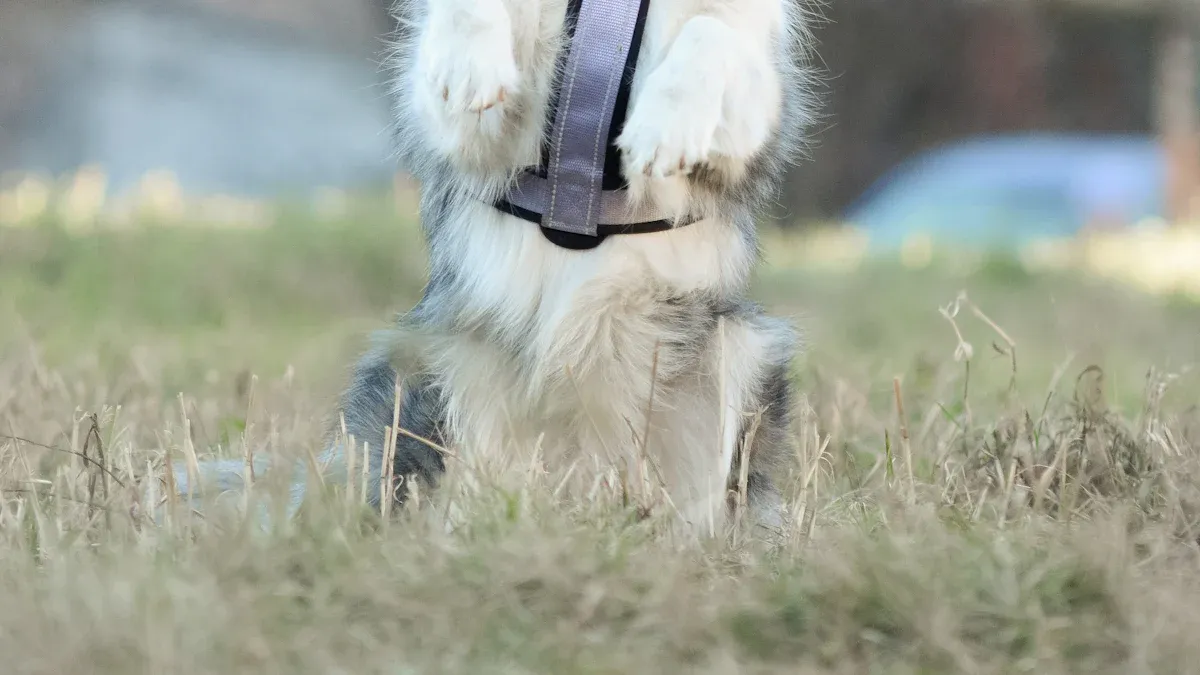
Helping your dog move safely starts with the right support tools. You can use different aids to make daily life easier and reduce the risk of falls. Your veterinarian’s plan overrides general timelines.
Rear Sling and Harness Support
Rear slings and harnesses give your dog extra help when standing or walking. You can use a Help ‘Em Up harness for full-body support. This harness supports both the front and back legs, which reduces strain on your dog’s joints. The GingerLead dog sling attaches to your dog’s regular harness and gives steady support for the hind legs. Many owners use these tools for dogs with weak limbs, arthritis, hip dysplasia, or after surgery. If your dog weighs over 40 lb, always use a two-person lift for safety.
Tip: Start with short sessions. Let your dog wear the harness or sling for 30–60 minutes, 3–5 times a day. Increase wear time by 25% every 3–4 days if your dog’s skin and walking look good. Check the fit and comfort after one week.
Traction Socks and Home Modifications
Traction socks help your dog grip slippery floors. These socks are breathable and comfortable for all-day indoor use. If your dog has sore paws, you can layer socks for extra comfort. Home changes like ramps and steps help your dog move around safely. Rubberized or carpeted floors give better balance and stability. These changes help your dog feel more confident and independent.
Traction socks improve mobility and prevent slips.
Ramps and runners make it easier for your dog to reach favorite spots.
Carpeted paths reduce the risk of falls.
Wheelchairs and Carts
Some dogs need more support. Wheelchairs and carts, like Walkin’ Wheels or Eddie’s Wheels, help dogs with severe hind leg weakness. These devices are lightweight and work on many surfaces. Vets often recommend them for dogs with advanced arthritis, spinal injuries, or degenerative myelopathy. Wheelchairs let your dog stay active and enjoy walks again.
Your veterinarian’s plan overrides general timelines.
Mobility Support Comparison Table
Option | Best for | Limits | Owner workload | When to escalate |
|---|---|---|---|---|
Rear sling | Short-term help, post-surgery | Not for long walks | Moderate | If weakness worsens |
Full-body harness | Ongoing support, large dogs | Needs correct fit | Moderate-High | If dog cannot stand |
Traction socks | Slippery floors, mild weakness | Wear indoors only | Low | If slipping continues |
Ramps/runners | Stairs, high surfaces | Needs space at home | Low | If dog avoids movement |
Cart (wheelchair) | Severe hind leg weakness | Needs training, setup | High | If dog cannot walk at all |
Always check your dog’s skin under any gear. Watch for redness or sores. If you see new pain or weakness, contact your vet.
Home Setup Upgrades for Safety
Runners and Traction Zones
You can make your dog feel safer at home. Put runners or non-slip mats on main paths. Dogs with weak hind legs slip on tile or wood floors. Rubber or carpet floors help your dog grip and balance better. Thin yoga mats work well in small spaces for extra traction. Use gates or barriers to block stairs and stop falls. Indoor ramps or steps help your dog get to furniture or cars without jumping.
Feature | Ideal Specification | Why It Matters |
|---|---|---|
Slope | 10–18 degrees | Gentle incline supports weak hind legs |
Width | 18–24 inches | Wide ramps offer safety and security |
Surface | High-traction material | Non-slip surfaces boost confident movement |
Stability | No wobble or flex | Stable ramps prevent accidents |
Your veterinarian’s plan is more important than general advice.
Food and Water Placement
Make eating and drinking easy for your dog. Keep food and water bowls close and away from slippery floors. Put non-slip mats under bowls so they do not slide. Raised bowls help your dog’s neck and back feel better. Dogs with trouble moving may need help at mealtime. When bowls are in safe spots, your dog can drink and eat easily. Helping at meals keeps your dog healthy and confident.
Put bowls on carpet or non-slip mats.
Use raised feeders for comfort.
Make sure your dog can reach bowls easily.
Calm Confinement Routines
A quiet space helps your dog heal faster. Keep noise and excitement low in your dog’s area. Calm places lower stress and stop sudden moves. During recovery, keep your dog in a safe spot and use a leash outside. This stops your dog from running and hurting joints. A peaceful routine helps your dog’s body and mind. Your veterinarian’s plan is more important than general advice.
Tip: A calm mind helps your dog heal. Make a quiet space for your dog to recover.
Top Mistakes in Managing Dog Hind Leg Weakness
When you help your dog with dog hind leg weakness, try not to make common mistakes. These mistakes can slow your dog’s progress or cause problems. Your veterinarian’s plan is more important than general advice.
Gear Fit and Twisting Errors
You might think any harness or sling is fine. But gear that does not fit can rub your dog’s skin or twist its body. Twisting your dog when moving can hurt joints or cause pain. Always check harnesses and slings for a good fit. Make sure straps do not pinch or slide. If your dog weighs over 40 lb, use two people to lift. Never twist your dog’s spine when moving. Watch for skin irritation under gear and fix it if needed.
Common gear mistakes:
Using gear that does not fit
Twisting your dog’s body during transfers
Not checking for skin irritation under gear
Overactivity and Setbacks
You may feel happy when your dog has a good day. But letting your dog walk too far or play too much can cause setbacks. Dogs with dog hind leg weakness need careful movement. If you skip traction aids on slippery floors, your dog can fall. If you see new limping or weakness, let your dog rest for one day. Go back to the last safe activity level. Your veterinarian’s plan is more important than general advice.
Activity mistakes:
Letting your dog walk too far on good days
Skipping traction aids on slippery floors
Not following the setback rule for increased weakness
Communication Delays
You help your dog most by sharing changes with your vet quickly. Waiting too long for vet visits after sudden changes can be risky. Not telling your vet about knuckling or dragging can hide nerve problems. Leaving food or water in hard-to-reach places makes life harder for your dog. If you do not write down daily changes, you may miss important patterns. Not asking for help when you are unsure can lead to mistakes.
Communication mistakes:
Delaying vet visits for sudden changes
Not reporting knuckling or dragging
Leaving food/water in hard-to-reach spots
Failing to log daily changes
Not asking for help when unsure
Tip: Do not use the same plan for every dog. Think about your dog’s special needs. Make sure you check diagnostics and diet for full care.
Top Mistakes Table
Mistake | Impact on Dog’s Health |
|---|---|
Using gear that doesn’t fit | Skin injury, discomfort |
Twisting during transfers | Joint pain, injury |
Overactivity on good days | Setbacks, increased weakness |
Skipping traction aids | Falls, loss of confidence |
Not monitoring for skin irritation | Sores, infection |
Ignoring new pain or vocalization | Missed warning signs |
Delaying vet visits | Missed early intervention |
Not reporting knuckling or dragging | Undiagnosed nerve issues |
Leaving food/water in hard-to-reach spots | Poor nutrition, dehydration |
Not using runners or mats | Increased slipping |
Failing to log daily changes | Missed progress or setbacks |
Not asking for help | Unsafe handling, missed advice |
Your veterinarian’s plan is more important than general advice.
Monitoring and Reporting Progress
Daily Observation Log Checklist
You help your dog most by keeping a daily log. Writing down changes helps you spot problems early. You can share clear updates with your vet team. Use a simple table to write important details each day. This habit makes moving your dog safer and helps stop falls. It also helps you follow your care plan better.
Aspect to Monitor | Description |
|---|---|
Date/Time | Write down when you observe your dog |
Walking Ability | Note any changes in mobility |
Paw Dragging | Watch if your dog drags its paws |
Appetite | Track eating habits |
Mood | Monitor emotional state |
Toileting | Record bathroom habits |
Falls or Slips | List any incidents |
Pain Signs | Look for whining or limping |
Skin/Gear Checks | Check for redness or sores |
Video Tracking | Take short videos for your vet |
Asymmetries | Watch for differences in leg strength |
Notes for Vet | Write questions or concerns |
Tip: Keeping logs helps your vet change your dog’s plan fast. Your veterinarian’s plan is always most important.
Skin and Comfort Checks
You keep your dog comfortable by checking skin and gear every day. These checks help stop skin problems and save you from returning products. You lower the chance of sores and keep your dog happy.
Check your dog’s belly, chest, and underarms for redness or sores.
Look for rubbing where harnesses or slings touch the skin.
Massage your dog’s legs to help blood flow and make them less stiff.
Note: Checking the fit keeps gear safe and comfy. Your veterinarian’s plan is always most important.
Questions for Your Vet or Rehab Team
You help your dog most when you ask clear questions. These questions help you learn what your dog needs and how to help them move better. Keeping your dog at a healthy weight is also important. Try to keep your dog at a Body Condition Score of 4–5 out of 9.
What exercises can I do at home to help my dog get stronger?
Is canine rehabilitation better than other therapies?
How long does it take for my dog to get stronger after rehab starts?
How does diet help with hind leg weakness?
How do I know if my dog needs rehab for a long time?
Asking questions helps you make a good routine and keeps your dog safe. Your veterinarian’s plan is always most important.
You help your dog most when you spot hind leg weakness early and do something quickly. Acting fast can help your dog get better, especially if you see sudden changes or loss of control.
Getting urgent care in 24 hours can help some dogs recover better.
Noticing signs like not being able to stand or changes in peeing helps your dog get the right treatment.
You make your dog feel braver by using movement plans, support tools, and making your home safer.
Doing what your vet says helps dogs with osteoarthritis stay active for more time.
Making care easy and comfy helps your dog do well for a long time.
Write down what you see each day, look for new signs, and talk to your vet team often. Your veterinarian’s plan is always the most important. Most dogs get better with steady and gentle help. Your veterinarian’s plan is always the most important.
FAQ
What should you do first if your dog shows sudden hind leg weakness?
Stay calm and keep your dog safe. Limit movement and call your veterinarian right away. Your veterinarian’s plan overrides general timelines.
Can you help your dog walk better at home?
You can use runners, traction socks, and harnesses. Place food and water bowls on non-slip mats. Always check for skin irritation. Your veterinarian’s plan overrides general timelines.
How often should you log your dog’s progress?
Write notes every day. Track walking ability, appetite, bathroom habits, and any falls. Share updates with your vet team for better care.
Is exercise safe for dogs with hind leg weakness?
Short, controlled walks help most dogs. Avoid running or jumping. Ask your veterinarian before starting new exercises.
When should you call your vet about changes?
Call your vet if you see sudden weakness, pain, or loss of bladder control. Quick action helps your dog get the right care.
