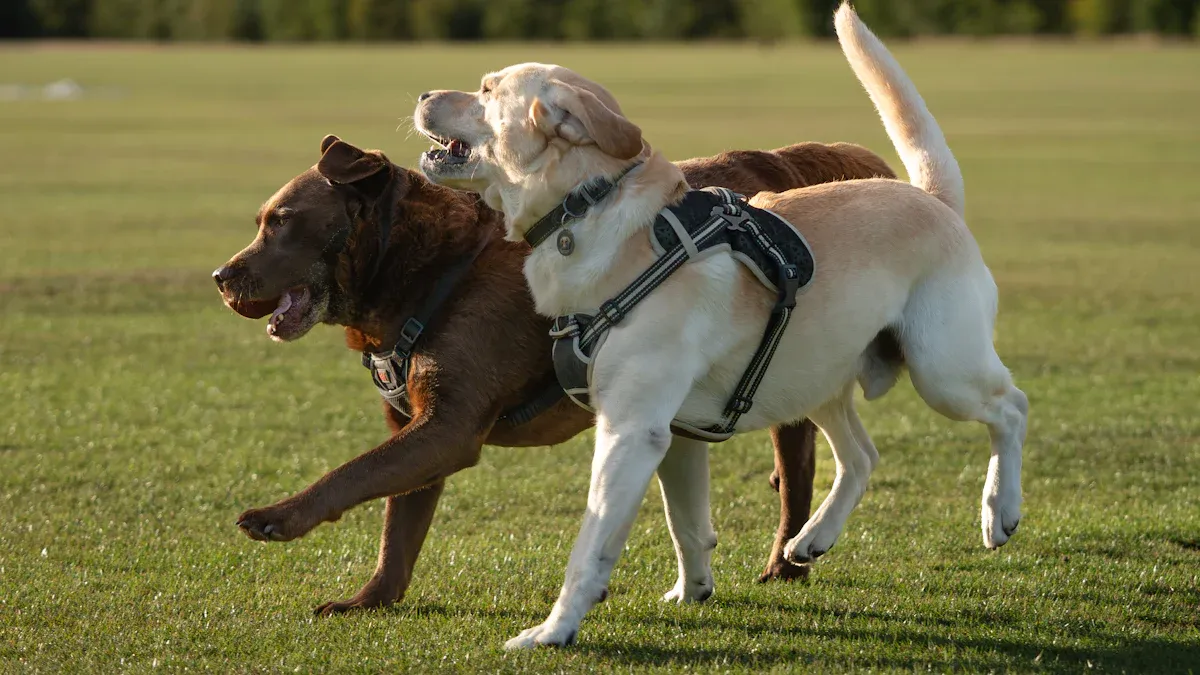
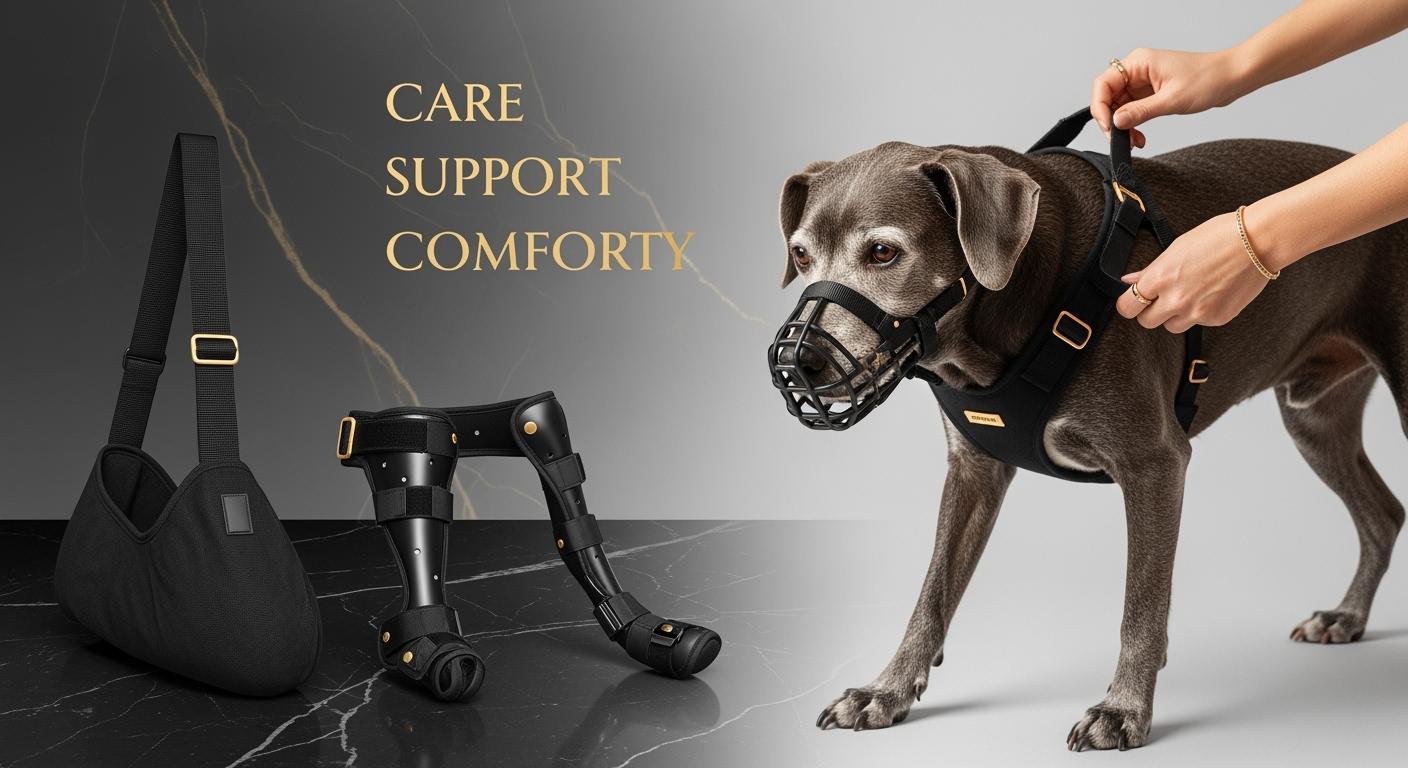
A brace, rear lift sling, and full-body support harness do not solve the same mobility problem. A brace focuses support around a specific joint or limb. A rear lift sling helps a handler assist the hindquarters during short tasks such as standing, toileting, or controlled walking. A full-body harness spreads assistance across the front and rear of the dog when broader support or more handling control is needed.
The right senior dog mobility support therefore depends on three questions: where support is needed, what task the dog is trying to complete, and whether the aid stays stable without rubbing or restricting movement. For a broader overview of recovery products, movement support, anti-lick protection, and fit risks, start with the Dog Recovery Support Guide.
Safety note: Mobility gear does not diagnose or treat the cause of weakness, limping, collapse, or sudden movement changes. New or worsening symptoms require veterinary evaluation before a support aid is selected.
Brace vs Sling vs Full-Body Harness: Quick Comparison
| Support type | Best matched to | Main support area | Important limitation |
|---|---|---|---|
| Brace | A defined joint or limb that needs localized external support | Knee, hock, carpal, elbow, back, or another specific area | Does not lift the whole dog or replace diagnosis and treatment |
| Rear lift sling | Short periods of hindquarter assistance for standing, toileting, or controlled walking | Rear abdomen, pelvis, or hindquarters, depending on design | Does not stabilize one specific joint and offers limited front-end control |
| Full-body support harness | Broader weakness, transfers, stairs, car entry, or balanced front-and-rear assistance | Chest, abdomen, and hindquarters | Does not provide the same localized control as a joint brace |
Start with the dog’s main limitation rather than the product name. A dog that favors one knee may need a different type of support from a dog whose hindquarters drop during toileting. A dog that cannot be safely guided from both ends may need more coverage than a rear-only sling provides.
Step 1: Identify Where Support Is Needed
Observe the dog during ordinary movements rather than judging from one standing photo. Watch the dog rise from rest, turn on a non-slip surface, walk a short straight line, pause, and return. Note whether the problem stays around one joint, affects only the hind end, or appears across the whole body.
- One joint or limb: The dog consistently favors the same knee, hock, carpal area, elbow, or back region.
- Hindquarter weakness: The dog can still use the front legs but needs help standing, toileting, or maintaining rear-end height.
- Broader weakness: The dog leans, wobbles, collapses, or needs assistance at both the chest and rear.
- Task-specific difficulty: The dog mainly struggles with stairs, car entry, transfers, or slippery flooring.
Do not use the product category alone to decide. Two dogs described as “senior and weak” may require completely different support because the weak area, remaining balance, body shape, and daily task are different.
When a Brace Is the Better Match
A brace is the most focused of the three options. It is designed around a defined body area rather than around lifting the whole dog. The support level, coverage, strap position, and flexibility should match the location being supported and the dog’s ability to tolerate the brace during movement.
A brace may be the more appropriate category when:
- The movement problem remains concentrated around one joint or limb.
- The dog can still stand and walk but needs localized external support.
- The support goal is different from lifting the chest, abdomen, or hindquarters.
- The dog’s body shape allows the brace to remain centered without rotating or sliding.
For example, a knee brace and a hock brace cannot be substituted for each other simply because both are worn on a rear leg. Their coverage areas and fit points are different. Buyers comparing available knee-support structures can review the Dog Knee Brace category, while the final use decision should still be based on veterinary guidance and product-specific fitting instructions.
What a Brace Cannot Replace
A brace does not provide a lifting handle for the dog’s whole body. It may also be unsuitable when the dog cannot remain upright, when weakness affects several limbs, or when the handler needs to support the dog during transfers. In those cases, a sling or full-body harness may perform a different and more relevant job.
When a Rear Lift Sling Is More Appropriate
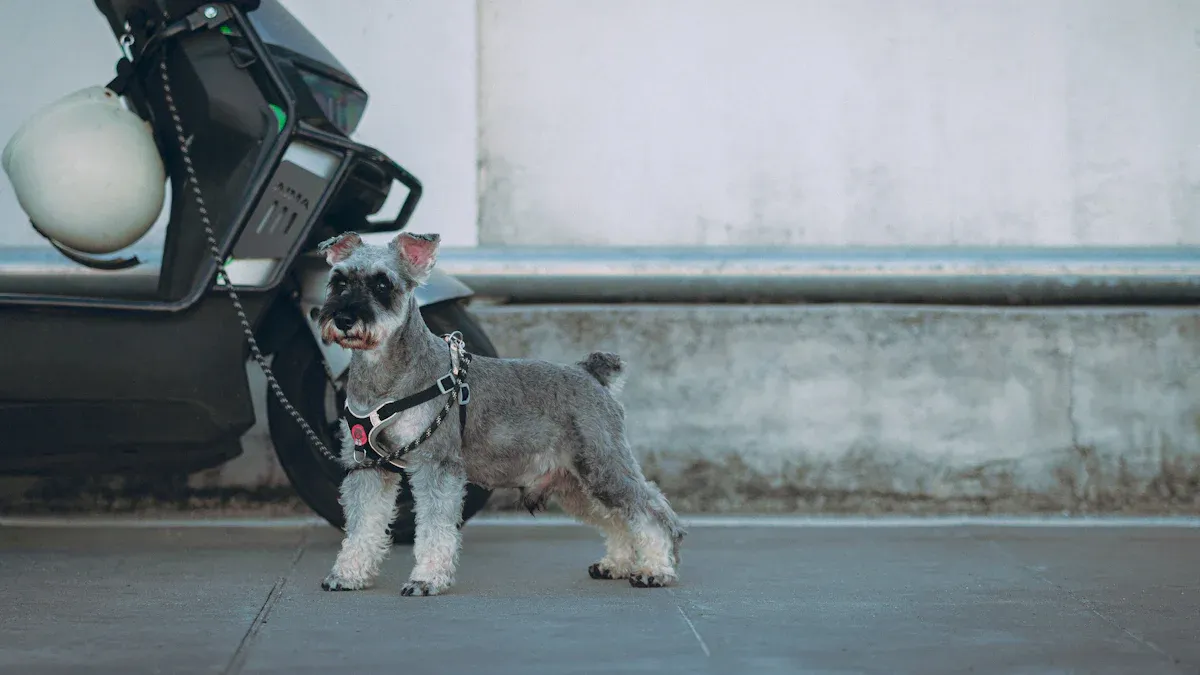
A rear lift sling is intended for controlled hindquarter assistance. It is often the simpler option when the dog can still coordinate the front legs and take steps but needs partial help at the rear during short daily tasks.
A rear sling may fit the task when:
- The dog needs help rising from rest but can continue stepping once upright.
- The main problem is hind-end height or rear-leg weakness rather than whole-body balance.
- The handler needs short-duration assistance for toileting or moving across a small area.
- The dog does not require substantial front-end control.
The Rear Harness for Lifting shows the basic role of a rear-support design: it assists the hind end while leaving the front of the dog comparatively free. This does not mean every rear sling fits every dog. The panel must sit flat, avoid blocking elimination, and remain stable without concentrating pressure around the abdomen, thighs, or groin.
Rear Sling Limits
A rear-only sling provides less control when the dog also leans at the chest, loses front-leg balance, or twists during transfers. It can also become unstable if the panel is too narrow, the handles pull from one side, or the dog’s body shape causes the sling to roll forward or backward.
For a focused comparison of these two lifting categories, read Rear Lift Sling vs Full-Body Harness for Weak Back Legs.
When a Full-Body Harness Is Needed
A full-body harness is designed for broader handling support. Front and rear support sections allow the handler to guide, steady, or partially lift the dog from more than one point. This can matter when weakness is not limited to the hindquarters or when stairs and transfers require greater control.
A full-body harness may be the better category when:
- The dog needs assistance at both the chest and hindquarters.
- Rear-only lifting causes the dog to tip, lean, or lose front-end stability.
- The handler needs two-point control for stairs, car entry, or transfers.
- The dog’s support needs vary between front-only, rear-only, and balanced assistance.
A product such as the Lift Harness for Front and Hind Legs illustrates the difference: support can be applied at either end or across both ends, depending on the task. The extra coverage also creates more possible fit points, so chest straps, belly panels, rear sections, and handles all need to remain aligned.
For a dedicated selection and fitting reference, use the Best Dog Lift Harness Guide. That guide covers lift-harness structure in more detail; this article remains focused on deciding whether the dog needs a brace, rear sling, or full-body system in the first place.
Scenario-Based Selection Table
| Observed situation | First category to assess | Reason | What to check before use |
|---|---|---|---|
| One knee or lower-leg area remains the clear problem | Brace | Targets a defined joint or limb | Correct body area, strap position, rotation, skin marks |
| Hind end drops during standing or toileting but front legs remain coordinated | Rear lift sling | Adds short-duration rear support | Panel width, elimination clearance, groin pressure, even handle tension |
| Dog needs help at both ends during transfers | Full-body harness | Provides front-and-rear handling points | Weight distribution, chest clearance, belly support, strap alignment |
| Rear sling lifts the back end but the dog still tips at the front | Full-body harness | Rear-only support does not address whole-body balance | Front handle position, shoulder movement, two-point control |
| Dog can walk but one brace repeatedly slides or rotates | Reassess brace size or design | The problem may be fit rather than lack of support | Measurements, limb shape, strap angles, compression, edge rubbing |
Sizing and Fit Checks Across All Three Options
Braces, slings, and full-body harnesses use different measurements. A generic body-weight label is not enough. Measure the body area required by the product while the dog is in a natural, supported stance, and use the manufacturer’s measurement points rather than transferring measurements from another product type.
Before the First Use
- Confirm that the selected product supports the intended body area.
- Check that straps and panels lie flat rather than twisting.
- Make sure closures do not sit directly over a sensitive joint, wound, or bony point.
- Use a non-slip surface for the first fit and movement check.
- Test a short, controlled movement rather than beginning with stairs or a long walk.
During Movement
- The support aid should remain centered rather than rotating or migrating.
- The dog should not freeze, shorten the stride sharply, or fight the equipment.
- Handles should allow steady assistance without lifting the dog unevenly.
- Panels should not fold into the armpit, groin, abdomen, or joint crease.
- Support should be reduced or stopped if the dog becomes more unstable.
After Removal
Check the skin, coat, and movement pattern after each early use. Light, temporary coat compression may occur, but lasting redness, swelling, hair loss, deep strap marks, moisture accumulation, or repeated licking indicate that the fit or product choice needs reassessment.
More detailed skin-risk examples are covered in Dog Brace Pressure Sores: Preventing Rubbing and Skin Breakdown.
Common Selection Mistakes
Choosing by Product Name Instead of Support Job
A product described as “mobility support” may still perform only one narrow task. A walking harness may guide a dog but provide little lifting assistance. A rear sling may lift the hindquarters but provide no joint-specific stability. A brace may support a knee but offer no help during a car transfer.
Using More Coverage Than the Dog Tolerates
More straps and panels are not automatically better. Extra coverage can increase heat, friction, dressing time, and adjustment complexity. Select the minimum structure that safely performs the required job, then reassess if the dog’s condition or daily task changes.
Treating Slippage by Tightening Every Strap
Slippage may come from incorrect size, poor strap angle, an unsuitable panel shape, coat compression, or a mismatch between the product and the dog’s movement. Tightening every strap can create new pressure points without correcting the underlying fit failure.
Expecting One Aid to Cover Every Daily Task
A dog may use localized joint support during a controlled walk but still need a lifting aid for stairs or transfers. That does not mean the products are interchangeable. Each should have a defined task and its own fit check.
When the Support Type Should Be Reassessed
- The dog’s weakness spreads from one limb to several limbs.
- A rear sling no longer provides enough front-end balance.
- A full-body harness causes repeated rubbing despite correct adjustment.
- A brace rotates, slides, or changes the dog’s movement pattern.
- The dog’s weight, muscle mass, coat, or body shape has changed.
- The handler cannot provide stable assistance without lifting unevenly.
- New pain, collapse, knuckling, bladder changes, or inability to stand appears.
For an example of how daily harness support differs from broad product selection, see Senior Dog Mobility Support Harnesses for Daily Home Support.
B2B Sourcing Note for Mobility-Support Product Lines
For pet brands, distributors, and sourcing teams, brace, rear-sling, and full-body-harness projects require different sizing logic, coverage decisions, strap layouts, handle positions, packaging instructions, and fit-risk checks. Buyers planning product adaptation or a mixed mobility-support range can review GaitGuard’s OEM/ODM Pet Orthotics page for the appropriate project scope before submitting an RFQ.
Final Decision Checklist
- Identify the support area: one joint, hindquarters only, or front and rear.
- Define the task: walking, standing, toileting, stairs, car entry, or transfer.
- Choose the product category: brace, rear lift sling, or full-body harness.
- Use product-specific measurements: do not reuse one product’s sizing method for another.
- Test on a non-slip surface: begin with a short, supervised movement check.
- Inspect fit and skin: look for rotation, pressure, rubbing, moisture, and altered movement.
- Reassess when needs change: a product that suited one stage may not suit the next.
The most appropriate senior dog mobility support is not the product with the most coverage or the strongest-looking structure. It is the aid that matches the dog’s actual support area, performs the required daily task, remains stable during movement, and can be checked safely after use.
FAQ
Should I choose a brace or a lift harness for a senior dog?
Choose by support job. A brace is intended for a defined joint or limb. A lift harness assists the dog’s body during standing, walking, stairs, or transfers. A dog may need one, the other, or different products for different tasks.
What is the difference between a rear lift sling and a full-body harness?
A rear lift sling supports mainly the hindquarters and is usually suited to short rear-assistance tasks. A full-body harness adds front and rear handling points for broader weakness, balance problems, stairs, or transfers.
Can a support harness stabilize a knee joint?
A support harness can help a handler guide or partially lift the dog, but it does not provide the same localized joint coverage as a knee brace. The two product categories perform different jobs.
How do I know whether mobility gear fits correctly?
The aid should remain centered, allow the intended movement, and avoid lasting skin marks, swelling, pinching, rotation, or repeated slipping. Measurements and fit checks must follow the instructions for that specific product type.
When should I stop using the support aid?
Stop and reassess if the dog becomes less stable, develops persistent redness or swelling, shows a marked gait change, resists movement, or has new or worsening symptoms. Sudden inability to stand, collapse, neurologic changes, or bladder problems require prompt veterinary attention.