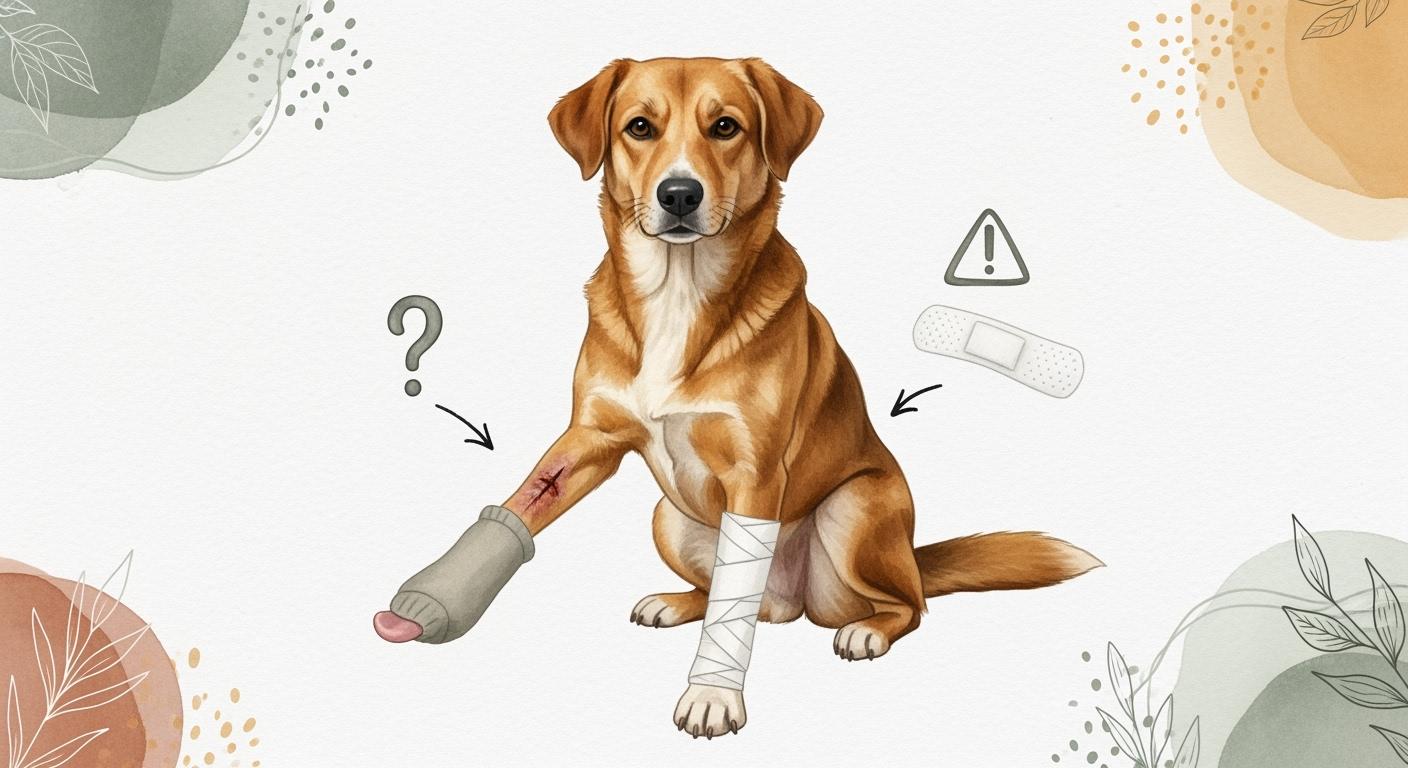
You want to keep your dog’s limb wound safe at home. You may wonder about the differences between a dog lick sleeve vs bandage and which is better for your pet. Licking must be stopped because it can worsen the wound, leading to irritation, infection, or reopening the injury. Both options have their pros and cons regarding comfort, safety, and ease of use. Always follow your vet’s advice first. Your choice will depend on the nature of the wound and your dog’s behavior. This guide will help you decide between a dog lick sleeve and a bandage, providing clear safety rules.
Owners often worry about these issues:
Licking increases the likelihood of irritation and infection.
Healing tissues can be damaged.
Wounds might reopen and become more difficult to treat.
Key Takeaways
Licking can harm your dog’s wound. It may cause irritation, infection, or slow healing. Use a barrier like a lick sleeve or bandage to prevent this.
A lick sleeve is best for minor wounds that do not need heavy support. It allows movement and is reusable, but check it often for fit and cleanliness.
Bandages provide more support and keep wounds clean. Use them for open or draining wounds, but ensure they fit well and check them regularly for wetness or tightness.
Always follow your vet’s advice when choosing between a lick sleeve and a bandage. Monitor the wound closely for any signs of infection or discomfort.
If your dog defeats the covering, consider stronger options or consult your vet for better solutions to keep the wound safe.
Licking vs wound protection
Why licking delays healing
You may notice your dog wants to lick any wound or stitches. This is a natural instinct. Some people believe dog saliva helps wounds heal. Dog saliva does contain compounds that can fight infection and help cells grow. However, licking does much more harm than good.
Licking can introduce bacteria into the wound. This increases the risk of infection.
Too much licking can break open stitches or slow down healing.
Wounds that are protected from licking heal faster and with fewer problems.
You need to keep your dog from licking stitches to prevent these risks. If you want to know how to keep your dog from licking stitches, you should use a barrier like a sleeve or a bandage. These tools help protect the wound and give it the best chance to heal.
Coverage vs proper bandaging
You might think that covering a wound is enough. In reality, coverage alone does not always protect your dog. The new skin that forms during healing is very fragile. Normal walking or playing can reopen the wound if you only use a simple cover.
Relying only on coverage can lead to longer healing times and weak scars. You may see:
Increased length of healing time.
Incomplete healing.
Formation of fragile scars that break easily.
Proper bandaging does more than cover the wound. It supports the area, absorbs drainage, and keeps the wound clean. If you want to know how to keep your dog from licking stitches, you must choose the right protection. Always check with your vet to see if a bandage or a sleeve is best for your dog’s wound.
Lick sleeve for dogs: pros and cons
Best uses for sleeves
You may find a lick sleeve for dogs helpful when your pet has a limb wound that does not need a heavy bandage. This protection sleeve works well for minor sprains, strains, and even some orthopedic injuries like fractures or dislocations. If your dog has a closed incision or mild skin irritation, you can use a protection sleeve to block licking and chewing. Many owners choose a lick sleeve for dogs because it is reusable and allows you to check the wound easily. You should inspect the sleeve and the wound at least twice a day. Remove the protection sleeve briefly to look for redness, swelling, or moisture. Clean and dry the sleeve often to keep the wound safe.
Tip: A tail protection sleeve can also help if your dog has a wound near the tail or lower limb. Make sure the sleeve fits snugly but does not cut off circulation.
A protection sleeve is best for calm dogs who do not chew or pull at the fabric. If your dog is active but not a heavy chewer, you may find the lick sleeve for dogs keeps the wound covered without causing stress.
Common sleeve failures
Some problems can happen when you use a lick sleeve for dogs. The protection sleeve may slide down the leg or bunch up, leaving the wound exposed. Dogs who chew or scratch may damage the sleeve or reach the wound. Moisture can build up under the protection sleeve, which may slow healing or cause skin irritation. You should check the sleeve often for signs of chewing, dampness, or slipping.
Common Sleeve Failures | What to Watch For |
|---|---|
Sliding or bunching | Wound exposed |
Chewing or tearing | Holes in fabric |
Moisture buildup | Damp or smelly sleeve |
Licking through openings | Wet spots on skin |
If you notice any of these problems, remove the protection sleeve and inspect the wound. Switch to another method if your dog can still reach the site. For wounds near the tail, a tail protection sleeve may offer better coverage.
Bandage basics and risks
When bandages are needed
You might wonder when to use a bandage instead of a protection sleeve for your dog’s limb wound. Bandages have some benefits that sleeves do not. Use a bandage if your dog needs extra support, drainage control, or a clean layer over the wound. Bandages keep wounds clean and steady, especially if your vet says to use one.
Here is a table that shows the main reasons to use a bandage:
Indication for Bandage Use | Description |
|---|---|
Protects from contamination | Bandages keep dirt and debris away from wounds, which helps healing. |
Holds injured parts together | Bandages can hold an injured area in place, making it more stable. |
Covers topical medications | They cover medicine on wounds so your dog cannot lick it off. |
Check the bandage at least two times each day. Look for wet spots, bad smells, swelling, or if it slips. If you see redness or discharge, you may need to change the bandage one or two times a day. Always do what your vet tells you for bandage care.
Bandage problems at home
Bandaging at home can be tricky. Problems can happen if you do not put the bandage on right or forget to check it often. Dogs sometimes chew on bandages. This can mean the bandage is not comfortable or does not fit well. If you use a protection sleeve over a bandage, make sure both stay clean and dry.
Common problems with bandaging at home are:
Putting the bandage on wrong or leaving it too long can make the wound worse.
Not checking the bandage enough can cause swelling or make it too tight.
Dogs may chew or pull at the bandage, which can open the wound or cause new injuries.
DIY bandaging can be risky. Do not try to make a full medical wrap if you are not trained. Bandages that are too tight or too loose can hurt your dog. Wet or dirty bandages can cause infection. If you see any problems, take off the bandage and call your vet. A protection sleeve may help stop chewing, but you still need to watch the wound closely.
You want to stop your dog from licking stitches, but you also need to keep your dog safe from bandage problems. Safety is most important. Always ask your vet if you are not sure what to do.
Dog lick sleeve vs bandage: comparison table
Best for, not for, what to monitor
Choosing between a dog lick sleeve vs bandage can feel confusing. You want to protect your dog’s limb wound, but you also want to keep your pet comfortable and safe. The right choice depends on the wound type, how much support the area needs, and your dog’s behavior.
The dog lick sleeve is designed to protect wounds while letting your dog move naturally. This helps healing and keeps your dog comfortable. The sleeve stays in place better than many bandages and allows airflow, which is important for recovery. You can use a sleeve for closed incisions, mild skin irritation, or when licking is the main problem. Bandages work best for wounds that need a sterile layer, support, or drainage control. You should use a bandage if your vet applied one or if the wound is open, draining, or needs extra protection.
Here is a quick comparison table to help you decide:
Option | Best For | Not For | What to Monitor |
|---|---|---|---|
Lick Sleeve | Closed incisions, mild irritation, licking only | Open wounds, heavy drainage, intense chewers | Slipping, chewing, moisture, coverage |
Bandage | Open wounds, drainage, support, vet-applied wraps | Minor irritation, wounds with no drainage | Wetness, odor, swelling, tightness |
Tip: Always check the wound and the covering at least two times per day. Remove the sleeve or bandage briefly to inspect the skin for redness, swelling, or discharge.
Troubleshooting Table
If you notice problems, use this table to find the cause and solution:
Problem | Possible Cause | What to Do |
|---|---|---|
Wound exposed | Sleeve slipped or bunched | Adjust fit or switch to bandage |
Wet or smelly covering | Moisture buildup | Dry area, clean or change cover |
Swelling or cold toes | Bandage too tight | Remove bandage, call your vet |
Chewing or licking | Poor fit or strong chew drive | Try a different barrier |
Red/Yellow/Green Status Box
🟢 Green: Wound covered, skin dry, no licking, no swelling
🟡 Yellow: Cover slipping, mild dampness, dog tries to lick
🔴 Red: Wound exposed, swelling, odor, discharge, or dog reaches wound
If you see yellow or red signs, check the wound and switch methods or call your vet.
Decision rules for switching
You may need to switch between a dog lick sleeve vs bandage as your dog’s needs change. Use these decision rules to guide you:
Start with a bandage if your vet applied one, or if the wound is open, draining, or needs support.
Use a dog lick sleeve for closed wounds or mild irritation when licking is the main risk.
Combine a sleeve over a bandage for extra protection, but check both often.
Switch to a bandage if the sleeve slips, gets wet, or your dog chews through it.
Switch to a sleeve if the wound closes and you want to allow more airflow and movement.
Always monitor the wound for signs of infection, swelling, or exposure. If you see problems, stop and call your vet.
Step-by-Step Decision Flow
Look at the wound. Is it open, draining, or did your vet apply a bandage?
Yes: Use a bandage.
No: Go to step 2.
Is the main problem licking or mild irritation?
Yes: Try a dog lick sleeve.
No: Ask your vet for advice.
Does your dog chew or slip out of the sleeve?
Yes: Switch to a bandage or add extra protection.
No: Continue with the sleeve and check twice daily.
Worked Example Scenario
Your dog has a limb incision after surgery. You start with a dog lick sleeve. On day three, you notice the sleeve has slipped, and your dog licked the edge of the wound. You switch to a bandage for better coverage. You check the bandage two times each day for wetness, swelling, or odor. If you see redness or discharge, you call your vet. When the wound closes and stays dry, you switch back to the sleeve for comfort and airflow.
Product Categories to Consider
You can choose from several products to protect your dog’s wound:
Lick sleeves for limbs
Paw covers for foot wounds
Recovery suits for larger areas
Vet-applied bandages for complex wounds
The right tool depends on the wound type, location, and your dog’s risk of chewing or licking. The dog lick sleeve vs bandage decision is not always simple. You may need to switch methods as your dog’s wound heals or if problems arise. Always put safety first and follow your vet’s advice.
Bandage safety checklist
Wetness, odor, swelling checks
You want to keep your dog’s bandage safe and clean. Checking the bandage often helps you catch problems early. You should inspect the bandage at least two times each day. Look for signs that the bandage is wet, smells bad, or seems loose. Wetness can slow healing and cause infection. A bad odor may mean bacteria are growing. Swelling can show that the bandage is too tight or that the wound is getting worse.
Here is a simple checklist to follow:
Feel the bandage for any dampness or wet spots.
Smell the bandage for any unpleasant or strong odors.
Look for swelling above or below the bandage.
Check if the bandage has slipped out of place.
Watch for redness, warmth, or discharge near the wound.
Make sure your dog is not licking or biting the bandaged area.
Tip: If you notice any wetness, odor, or swelling, remove the bandage and call your vet for advice.
Signs of a too-tight bandage
A bandage that is too tight can hurt your dog. You need to check for signs that show the bandage is pressing too hard on the limb. Swelling above or below the bandage is a warning sign. Cold toes or skin discoloration can mean blood is not flowing well. Your dog may limp more or refuse to use the leg. Unsettled behavior or trouble resting can also mean the bandage is too tight.
Watch for these signs:
Swelling in the toes or limb near the bandage.
Toes that look puffy or do not touch each other.
Skin that feels cold or looks pale or blue.
Your dog bites, licks, or seems uncomfortable.
Increased limping or reluctance to walk.
Trouble lying down or resting.
🛑 If you see any of these signs, remove the bandage right away and contact your vet. Keeping your dog safe is the most important step.
Sleeve fit and hygiene tips
Confirming fit and coverage
You want the sleeve to fit your dog’s limb well. A good fit keeps the wound covered and stops your dog from licking or chewing. Start by positioning your dog so the operated leg is easy to reach. If your dog lies on the side, make sure the injured leg is on top. Roll the sleeve up over the paw and pull it up to the ankle. Stretch the material until the foot comes out. The logo should face outward. Wrap the long strap under your dog’s belly. Go under the belly and then over the back, making sure the fabric does not bunch up. Secure the buckles and adjust the strap so the sleeve feels snug but not tight.
Tip: Check that the sleeve covers the wound completely. The fabric should not slide down or leave gaps. If you see any exposed skin, adjust the sleeve or try a different size.
A sleeve that fits well will stay in place when your dog walks or rests. You should check the fit every time you inspect the wound. If the sleeve slips or bunches, your dog may reach the wound and slow healing.
Keeping site dry and chew-free
Cleanliness helps wounds heal faster. You need to keep the sleeve dry and free from dirt. Remove the sleeve briefly twice a day to inspect the skin. Look for redness, swelling, or moisture. Wash the sleeve if it gets dirty. Let it dry fully before putting it back on your dog. If the sleeve feels damp or smells bad, replace it with a clean one.
Dogs sometimes try to chew or lick the sleeve. Watch your dog closely, especially in the first few days. If you see chewing or licking, distract your dog or use a barrier like a cone. A sleeve works best for calm dogs who do not chew much.
Owner Routine for Sleeve Care | How Often |
|---|---|
Inspect sleeve and wound | Twice daily |
Wash sleeve if dirty | As needed |
Dry sleeve before reapplying | Every wash |
Check for chewing or licking | Every inspection |
🧼 Note: Keeping the sleeve clean and dry helps prevent infection and keeps your dog comfortable.
A well-fitted, clean sleeve protects the wound and helps your dog heal safely at home.
When to call the vet
Red flags to watch for
You need to know when home care is not enough. Some problems mean you should stop what you are doing and call your vet right away. If your dog can still lick or chew the wound, the protection has failed. You must act quickly to prevent more harm. Watch for these warning signs:
Your dog gets access to the wound and starts licking or chewing.
The area around the wound becomes red, puffy, or swollen.
You see any sign of infection, such as pus, a bad smell, or heat near the wound.
The wound opens up or starts bleeding again.
The bandage or sleeve becomes wet, dirty, or smells bad.
The limb swells above or below the bandage.
Your dog stops using the leg or seems in pain.
The bandage slips, bunches up, or comes off.
The wound is in a sensitive area like the chest or abdomen.
The injury goes deep and fully penetrates the skin.
🛑 If you notice any of these red flags, remove the covering if it is causing harm and call your vet as soon as possible.
What to document for your vet
Good notes help your vet understand what is happening. Write down what you see and when it started. Take clear photos if you can. Share these details with your vet:
When the problem started and what you noticed first.
If the bandage or sleeve slipped, bunched up, or came off.
If the covering became wet, dirty, or smelly.
Any sign of bleeding, discharge, or swelling.
If your dog stopped using the leg or seemed more uncomfortable.
Any sores or redness around the top of the bandage.
How often you checked and cleaned the area.
Any changes in your dog’s behavior, appetite, or energy.
These details help your vet decide the next steps. You show you understand the importance of keeping stitches clean and safe. Quick action and good records can make a big difference in your dog’s recovery.
Owner FAQs
Using a sleeve over a bandage
You may wonder if you can use a dog lick sleeve over a bandage. Many owners try this method to add extra protection for limb wounds. You want to keep your dog from licking or chewing, especially after surgery or when the wound is healing. A lick sleeve can help in these situations:
It blocks your dog’s tongue and teeth from reaching the bandage.
It works well when bandages slip or your dog pulls them off.
You can use it for tail tip injuries, post-surgical care, or chronic skin problems.
You should check both the sleeve and the bandage at least twice a day. Make sure the sleeve fits snugly but does not squeeze the limb. Remove the sleeve for cleaning and to inspect the wound. If you notice swelling, wetness, or odor, call your vet for advice.
Tip: Always follow your vet’s instructions first. If your dog keeps removing the bandage, a sleeve may help, but you must watch for signs of discomfort or poor fit.
If your dog defeats every option
Some dogs are clever and determined. You may find your dog removes both the bandage and the sleeve. If this happens, you need to try new strategies to keep the wound safe. Products with special features can help you protect the injury and allow your dog to heal.
Feature | Description |
|---|---|
Breathable padded tail sleeve | Protects the wound and lets air reach the skin. |
Supportive harness system | Holds the sleeve in place, stopping twisting or slipping. |
Adjustable components | Lets you change the fit for your dog’s shape and size. |
Freedom of movement | Allows your dog to walk, stretch, sleep, and go potty without trouble. |
Easy cleaning and maintenance | You can remove and wash the sleeve to keep it clean during recovery. |
You should choose a solution that fits your dog’s needs and behavior. If your dog keeps defeating every option, talk to your vet about stronger barriers or other products. Safety and comfort matter most. You want your dog to heal without stress or risk.
You want to find the best way to keep your dog’s limb wound safe. Look at this table to see how each choice compares:
Decision Point | Lick Sleeve Benefits | Bandage Limitations |
|---|---|---|
Comfort | Covers just the wound, not too tight | Can feel big and heavy for active dogs |
Movement Freedom | Lets your dog walk and rest as usual | Can make it hard to move |
Cleaning | Simple to wash and use again | Needs to be changed often |
Effectiveness | Stops licking and lets air in | Can fall off if your dog is very active |
You should always do what your vet says. Check the wound for red skin, swelling, or any fluid. Use a list to make sure you have what you need:
Bandages, scissors, gloves
Saline solution, antiseptics
Your pet’s health records
Watch for any problems and help your dog right away if you see something wrong.