
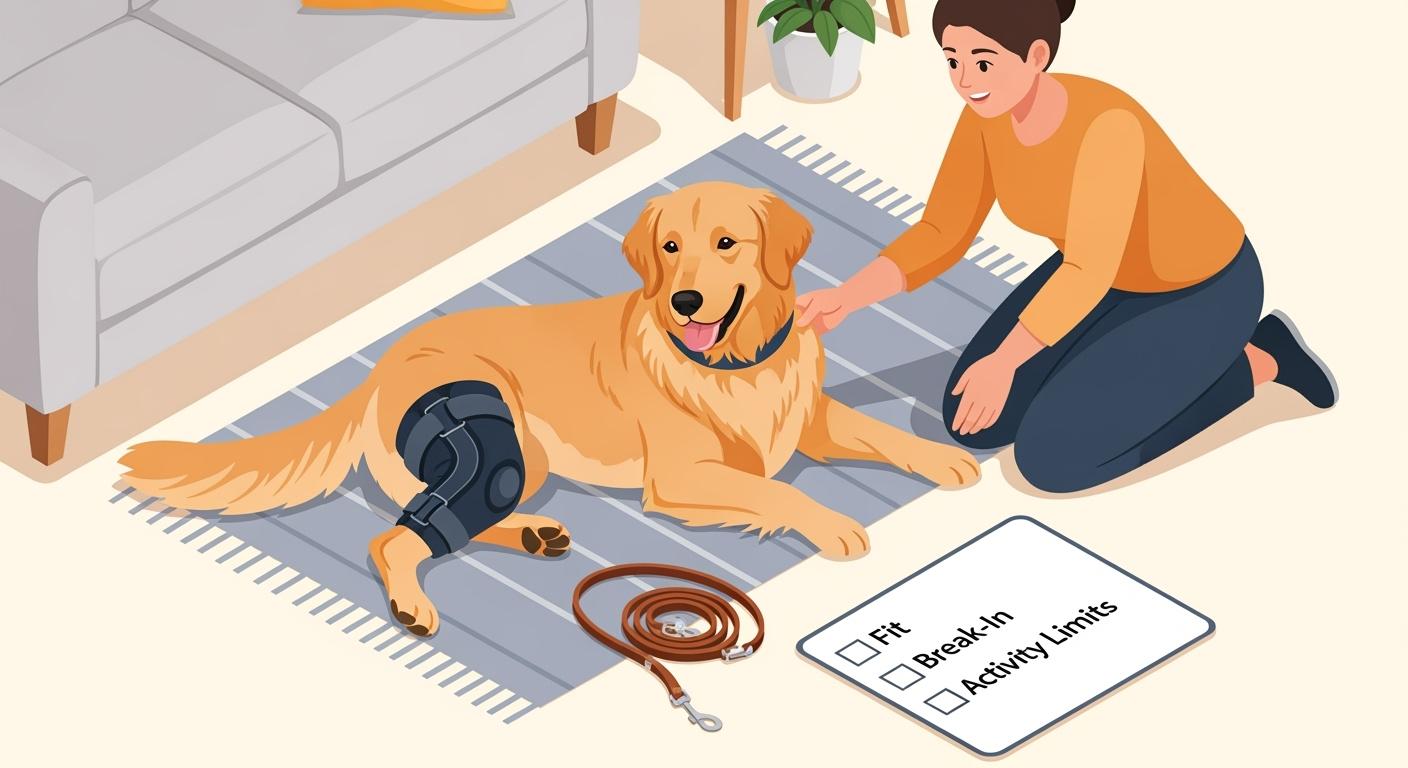
An adjustable dog knee brace needs a careful fit check before it becomes part of daily support. A brace that looks secure can still slide, rub, twist, or make a dog move differently if the straps are too loose, too tight, or placed in the wrong position.
This article explains how to check fit, manage the break-in period, watch for rubbing or pressure marks, and set activity limits so the brace does not encourage too much movement too soon.
Key Takeaways
Measure your dog’s leg carefully to get the right fit for the knee brace. A good fit lets your dog move easily and stay safe.
Let your dog wear the knee brace for a short time at first. This helps your dog get used to it and lowers the chance of skin problems.
Watch your dog closely for any signs of pain or skin trouble when using the brace. Finding problems early can stop bigger issues later.
Why Adjustable Fit Matters
An adjustable dog knee brace is a device you can use to help your dog’s knee heal and move better. This type of brace is not custom-molded. You buy it off the shelf or get it as a semi-custom product. It uses adjustable straps to fit your dog’s leg. You can change the tightness to match your dog’s needs. Most people use an adjustable dog knee brace for dogs with CCL or ACL instability, after an injury, during rehab, or while waiting for a vet consult. Sometimes, a vet may approve it for use after surgery.
Adjustable vs Custom Braces
You might wonder how an adjustable dog knee brace compares to a custom-molded brace. Here is a simple table to help you see the differences:
Feature | Adjustable Dog Knee Braces | Custom-Molded Dog Knee Braces |
|---|---|---|
Fit | Fits most dogs, not exact | Made to fit your dog exactly |
Material | Uses soft, flexible parts | Uses strong, durable parts |
Stability | May move a little | Stays in place well |
Adjustment | You can adjust straps | Made for your dog’s shape |
Cost | Less expensive | Costs more |
A custom brace matches your dog’s leg shape and gives very strong support. An adjustable dog knee brace gives good support for many dogs, but it may not fit as closely as a custom one.
Support for Comfort and Activity
An adjustable dog knee brace helps your dog walk and move with less pain. It gives extra support to the knee and helps control movement. This brace can make daily walks safer and more comfortable. You can adjust it as your dog’s needs change. Always remember, a dog knee brace supports comfort and controlled activity. It does not replace a vet’s diagnosis or surgery. You should use it as part of a full care plan for your dog.
Why Dog Knee Support Is Needed
CCLD Prevalence in Dogs
Many dogs experience knee problems during their lives. Cranial cruciate ligament disease (CCLD) is one of the most common causes of dog knee pain. You may not realize how often this happens. Here are some facts:
CCLD affects about 3–5% of all dogs.
Some studies report the prevalence ranges from 0.56% to 2.55%.
If your clinic sees 1,000 dogs each year, you can expect 30 to 50 of them to develop CCLD. This number shows why you should watch for signs of dog knee pain and act early. Early support can help your dog stay active and comfortable.
Contralateral Knee Risk
When your dog has CCLD in one knee, the other knee faces a high risk too. Research shows:
Up to 50% of dogs with CCLD in one knee will develop the same problem in the other knee within 12–18 months.
Other studies report the risk ranges from 22% to 54% in that time frame.
This means you need to keep checking both knees, even after the first injury heals. Ongoing support and regular follow-up visits help you catch new problems early. If your dog starts to limp or shows new dog knee pain, you can act fast. Many owners need to reorder braces or adjust care plans as new injuries appear. Staying alert protects your dog’s comfort and long-term health.
Tip: Always talk to your veterinarian if you notice changes in your dog’s walk or signs of pain. Early action can make a big difference.
When an Adjustable Brace May Be Appropriate
Best Candidates
You might ask if your dog should use an adjustable knee brace. Vets usually suggest these braces for dogs with mild or medium knee problems. Some common reasons are:
Partial ligament tears that do not need surgery right away
Limping, swelling, or trouble going up stairs
Luxating patella, when the kneecap moves out of place
Dogs in rehab after an injury or waiting to see a vet
If your dog has these issues, a brace can help with comfort and safe movement. Always listen to your vet before trying any new device.
When to See a Vet First
Some signs mean you should talk to your vet before using a brace. Look for:
Sudden refusal to use the leg or not putting weight on it
Big swelling, heat, or fever
Popping or clicking sounds from the knee
Muscle loss in one thigh
Toe-tapping or a short stride
Hard time getting up
Pulling away or flinching when you touch the knee
Safety Tip: If you see any of these warning signs, stop and call your vet before using a brace.
Steps to Decide if a Brace Is Right Today:
Figure out the problem: Is it a limp that comes and goes or is your dog not using the leg at all?
If you see warning signs, stop and call your vet first.
If you keep going, use the fit test and break-in plan before letting your dog wear the brace for a long time.
Your dog’s safety is most important. Always look for warning signs and ask your vet for help.
How to Check Strap Tension and Brace Position
Sizing and Measurement Points
You want the best fit for your dog’s knee brace. Accurate measurements help you choose the right size. Follow these steps:
Measure above the knee. Wrap a tape around the thigh, just above the knee joint.
Measure below the knee. Move the tape below the knee and record the circumference.
Measure the leg length. Start at the top of the thigh and measure down to just above the paw.
Double-check each measurement. This helps you avoid mistakes and ensures the brace will fit your dog.
A good fit keeps the brace stable and helps your dog move safely.
Comfort and Skin Protection
Your dog’s comfort matters every day. Look for these features in a knee brace:
Padding reduces friction and protects the skin.
Breathable materials keep the area dry and comfortable.
Smooth edges prevent rubbing and irritation.
Clean the brace often to avoid infection.
Check your dog’s skin for redness or sores after each use.
Durable and comfortable materials allow your dog to wear the brace longer without discomfort. Regular skin checks help you spot problems early.
Support and Instructions
You should always follow the instructions from the manufacturer and your veterinarian. Most companies provide guides for fitting and adjusting the brace. Introduce the brace slowly so your dog can get used to it. Supervise your dog while wearing the brace to ensure proper use. Inspect the brace often for signs of wear. Encourage gentle walks to help your dog build strength. Schedule regular vet visits to monitor progress and adjust the brace if needed. These steps help you give your dog the best possible support.
How to Check Strap Tension and Brace Position
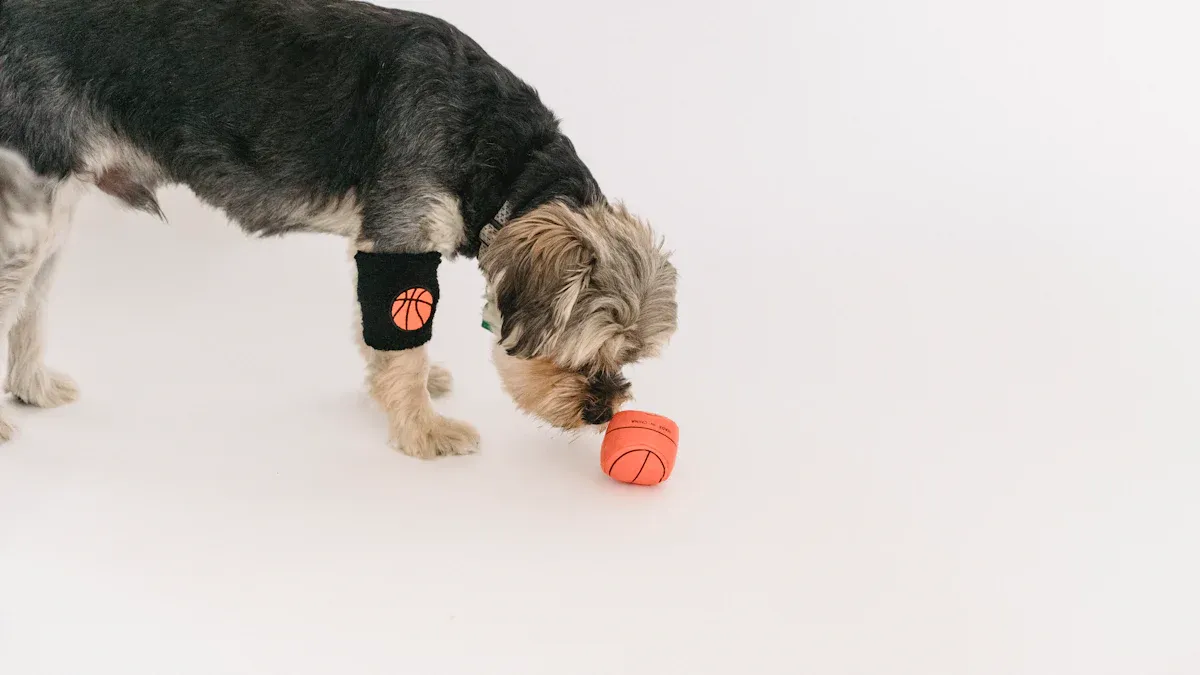
Fitting Steps and Alignment
You want your dog to feel comfortable and safe when wearing a knee brace. Start with a vet check to confirm your dog needs a brace and to get advice on the best type. Accurate fitting is the key to success. Follow these steps for the first fitting:
Measure your dog’s leg above and below the knee, and check the length from thigh to just above the paw.
Choose the right size brace based on your measurements.
While your dog stands, gently bend the knee and align the center hinge of the brace with the knee joint.
Anchor the bottom strap first, just above the hock, to keep the brace from sliding down.
Adjust the other straps for a secure fit. You should be able to slip two fingers under each strap.
Check that the brace does not twist or slide. The top of the brace should sit two fingers below the groin.
Let your dog wear the brace for a short time and watch for signs of discomfort.
Tip: Always follow the break-in schedule. Start with 3 hours on the first day and add about one hour each day as your dog gets used to the brace.
Movement and Stability Check
After putting on the brace, you need to test how well it works. Use this step set to check fit and stability:
Put the brace on and confirm it sits correctly above the hock.
Have your dog walk, sit, lie down, stand, and turn while wearing the brace.
Watch closely. If the brace twists, rides down, or causes rubbing right away, adjust the straps or try a different size or model.
Let your dog take several steps. Make sure the brace stays in place and the knee joint stays aligned. Allow your dog to wear the brace for about half an hour at first. Check for redness or irritation after removing the brace. Build up wear time slowly, adding half an hour each day. Always check for a secure fit before each use.
Table 1: Fit and Failure Checklist
What you see | Likely cause | What to do next |
|---|---|---|
Brace twists or slides down | Straps too loose, wrong size | Tighten straps or try new size |
Redness or rubbing | Poor alignment, rough edges | Refit, check padding, trim edges |
Brace gaps at knee joint | Incorrect placement | Realign hinge with knee joint |
Dog limps more or resists | Discomfort, improper fit | Remove brace, check measurements |
Troubleshooting Fit Issues
You may face some common problems during fitting. Here are tips to solve them:
If the brace does not stay in place, check the straps and make sure you have the right size.
Some dogs may not like wearing a brace at first. Give your dog time to adjust and use treats for encouragement.
If you see redness, hair loss, or sores, stop using the brace and check the fit. Try adding padding or adjusting the straps.
Improper fitting can cause discomfort or even injury. Always check for a secure fit and comfort before each use.
Patience and proper usage help your dog get used to the brace and move with more confidence.
Note: Daily care and skin checks are important. If you see any problems that do not improve, contact your veterinarian for advice.
Break-In Period: What to Watch During Early Use
Helping your dog adjust to a new knee brace takes time and patience. You want to make sure your dog feels comfortable and safe. Follow a clear break-in plan and check your dog’s skin often. This routine helps prevent problems and supports healing.
Break-In Schedule
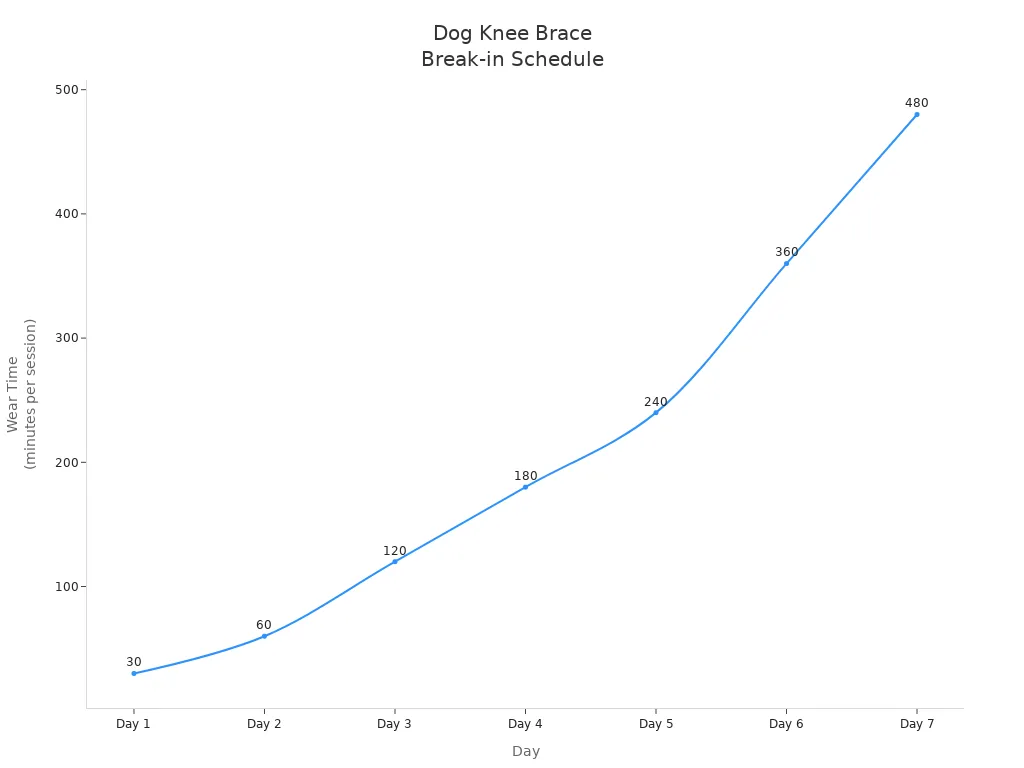
Start slow when you first put the brace on your dog. Use short sessions and increase the time each day. Most veterinary guidelines recommend a gradual break-in schedule. Here is a simple table to guide you:
Day | Wear Time (per session) | Frequency per day |
|---|---|---|
1 | 30 mins | 2-3 times |
2 | 1 hour | 2-3 times |
3 | 2 hours | 2-3 times |
4 | 3 hours | 2-3 times |
5 | 4 hours | 2 times |
6 | 6 hours | 1 time |
7 | 8 hours | 1 time |
Continue up to 12 hours a day | Off at night while sleeping |
You can also see the recommended increase in wear time in this chart:
Tip: Always watch your dog during each session. If your dog seems uncomfortable, stop and check the fit.
Step Set C: Break-In and Daily Routine
On Day 1, let your dog wear the brace for a total of 3 hours, split into short segments.
Add about 1 hour each day, as your dog tolerates.
Build up to 8–14 hours of daytime wear. Remove the brace at night and never use it in a crate.
Check your dog’s skin after every early session. Redness should fade within 15 minutes.
Daytime Wear and Night Rule
You want your dog to wear the brace only during the day. This gives the skin time to breathe and lowers the risk of irritation. Follow these steps for safe daily use:
Put the brace on your dog during active times, such as walks or play.
Start with 2–4 hours of wear during activity. Increase to 6–12 hours as your dog gets used to the brace.
Always remove the brace at bedtime. Never leave it on while your dog sleeps or stays in a crate.
Let your dog’s skin rest overnight. This helps prevent moisture buildup and keeps the skin healthy.
Alert: Nighttime removal is important. Leaving the brace on too long can cause skin problems.
Skin Checks and Redness
Check your dog’s skin at least twice a day. Look for any signs of redness, swelling, or irritation. Here is what you should watch for:
Redness or chafing around the edges of the brace
Swelling above or below the brace
Licking or chewing at the brace area
Reluctance to walk or changes in gait
If you see mild redness, it should fade within 15 minutes after removing the brace. If redness lasts longer, or if you see sores or blisters, stop using the brace and adjust the fit. Call your veterinarian if you notice swelling, pain, or if your dog refuses to walk.
Note: Regular skin checks help you catch problems early. This keeps your dog safe and comfortable during recovery.
By following these steps, you help your dog get the most benefit from the knee brace. A careful routine supports healing and keeps your dog active and happy.
Activity Limits While Using a Knee Brace
Early Activity Guidelines
You want your dog to feel safe while healing. For the first two or three weeks, only take short walks with a leash. Try to walk your dog two or three times each day. Each walk should last about ten to fifteen minutes. This helps your dog get stronger without getting hurt again. Always use the knee brace during these walks. The brace helps support the knee and makes walking easier.
Here is a simple table that shows how long to wear the brace at each stage:
Recovery Stage | Recommended Wear Time |
|---|---|
Early Stage (1–2 Weeks) | 2–4 hours per day, split into shorter sessions |
Mid Stage (3–8 Weeks) | 6–8 hours per day |
Long-Term Management | Up to 10–12 hours per day, not continuously |
Tip: Always watch your dog during walks. Look for signs of pain or tiredness.
Play and Stairs Restrictions
You need to limit play and stairs while your dog heals. Do not let your dog run or chase balls for four to six months. Keep your dog away from stairs, especially in the first few weeks. Moving carefully keeps the knee safe and helps it heal. If your dog tries to jump or run, gently stop it. Safe routines help your dog stay comfortable and avoid new injuries.
Healing Expectations
Dogs with CCL or ACL tears need time to get better. Using a knee brace as part of care means healing can take six to nine months. During this time, your dog should only take short, slow walks and do gentle activities. Scar tissue takes a long time to form, so you need to be patient. You help your dog by following these rules and watching how it does. Always talk to your vet before changing your dog’s routine. Careful steps help your dog heal and move better over time.
When a Brace Is Not Enough
Comparison Table Overview
You have a few ways to help your dog’s knee heal. Each choice has good points and some limits. Look at this table to see how adjustable braces, rehab, surgery, and bridge plans are different:
Plan Type | Best for | Limitations | What success looks like | What to track weekly |
|---|---|---|---|---|
Adjustable brace plan | Older dogs, partial tears, chronic issues | Temporary support, does not fix instability | Dog walks with less pain, more stable | Limping, skin, brace fit |
Rehab + weight management focus | Dogs with mild symptoms, early CCLD | May not stop progression, needs close monitoring | Dog moves easier, gains strength | Muscle size, activity, comfort |
Surgery + rehab | Young, active dogs, full ligament tears | Expensive, invasive, long recovery | Dog returns to normal activity | Swelling, wound, walking ability |
Bridge plan (awaiting consult) | Dogs waiting for surgery or diagnosis | Short-term, not a final solution | Dog stays comfortable, avoids setbacks | Pain, swelling, brace position |
Note: Adjustable dog knee braces help with comfort and support. They do not fix full tears. Surgery is usually best for active dogs who need strong knees.
Signs of Success
You want to see if your dog is getting better. Watch for these signs:
Your dog limps less and walks more easily.
The knee feels steadier and does not make clicking sounds.
Swelling around the knee gets smaller.
Your dog climbs stairs or jumps with less fear.
Your dog plays more and holds its tail up.
A good plan lets your dog walk safely and have fewer problems. Check your dog’s progress every week. Look for changes in walking, swelling, and comfort. If you notice new problems, ask your veterinarian for help.
Red Flags and FAQs
Red-Flag Triage Table
You need to watch your dog closely while it uses a knee brace. Some signs mean you should act fast and call your veterinarian. Use this table to help you decide what to do if you see a problem:
Status | What you see | What to do |
|---|---|---|
🟢 Green | Mild redness, brief limping | Check fit, monitor, adjust straps |
🟡 Yellow | Repeated slipping, mild swelling | Remove brace, refit, call vet if not better |
🔴 Red | Intense pain, rapid swelling, difficulty bearing weight, knee instability, audible popping/clicking, skin breakdown | Stop brace use, contact vet immediately |
You should stop using the brace and seek help if your dog shows intense pain, rapid swelling, cannot bear weight, or if you hear popping or clicking sounds from the knee. Skin breakdown like open sores or blisters also means you need to call your vet right away.
Common Questions
How many hours a day should my dog wear the brace?
Start with 3 hours on the first day. Add 1 hour each day. Build up to 8–14 hours during the day. Remove the brace at night.
What if the brace keeps slipping?
Check the straps and fit. Make sure the brace sits above the hock. Try adjusting or changing the size.
Is skin redness normal?
Mild redness should fade in 15 minutes. If redness lasts longer or you see sores, stop using the brace and refit.
Can my dog use stairs?
Limit stairs, especially in the first few weeks. Help your dog go slowly and use support if needed.
What if both knees need support?
Talk to your vet before using two braces. Your dog may need extra help with balance.
When should I stop using the brace?
Stop if your dog shows pain, swelling, or skin problems. Always ask your vet before making changes.
How do I clean the brace?
Use mild soap and water. Let the brace dry fully before putting it back on your dog.
When should I call the vet?
Call your vet if your dog refuses to walk, shows swelling, pain, or if the brace causes skin breakdown.
You help your dog by following these steps for long-term care:
Start with a veterinary diagnosis for your dog’s knee issue.
Fit the brace properly and check your dog’s skin often.
Combine brace use with rehab and weight management.
Communicate with your veterinarian to monitor your dog’s progress.
Choose a brace that fits your dog’s needs and adjust activity as your dog heals.
Use high-quality materials for comfort and durability.
Watch for warning signs and make small adjustments to keep your dog safe.
