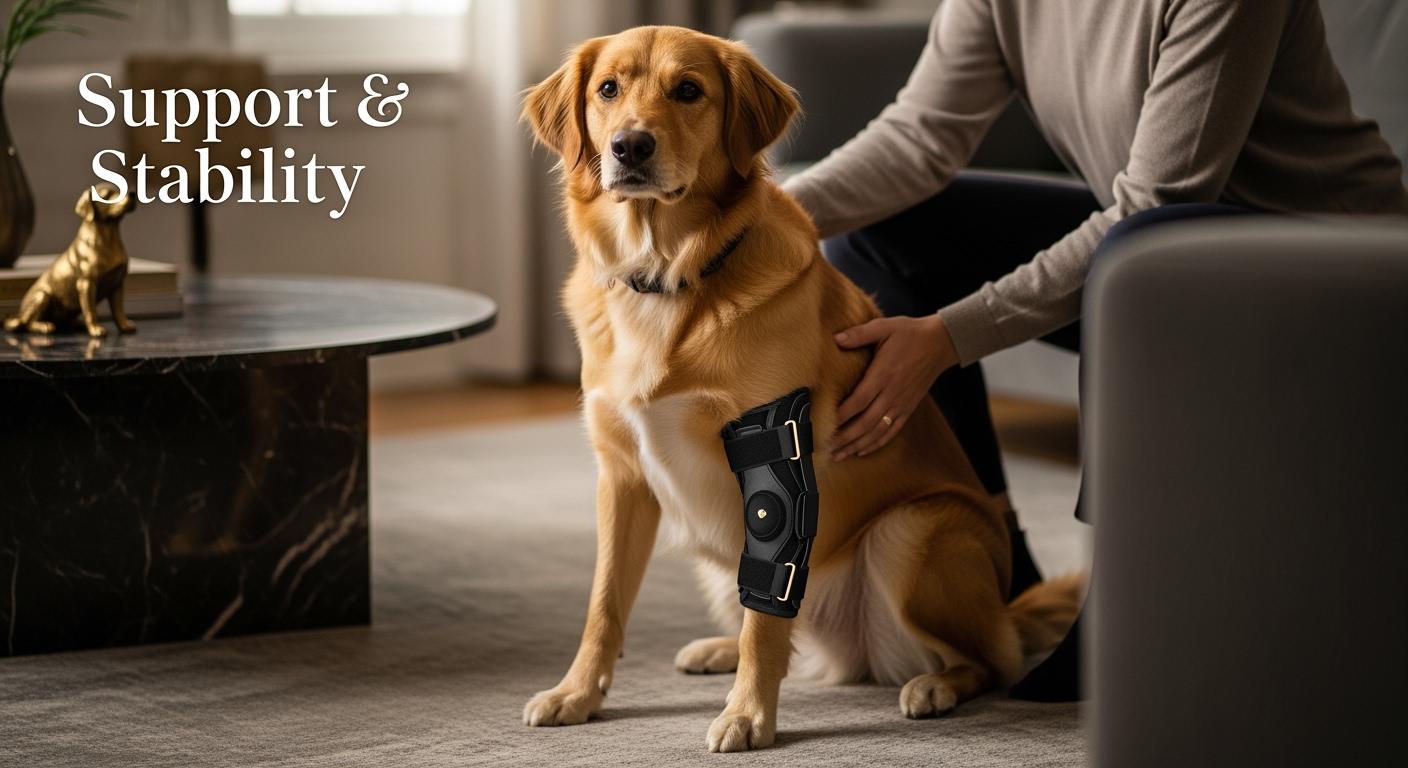
A luxating patella dog brace is used to support knee alignment, reduce compensatory limping, and improve controlled daily mobility in selected mild-to-moderate cases. You may notice skipping steps, intermittent hind-leg use, or hesitation during stairs and turning. This type of support should always be used as part of a veterinarian-guided care plan.
Key Takeaways
A luxating patella dog brace gives important support. For a broader comparison of brace types, fit priorities, and support levels, start with our knee brace for dog guide.
The brace must fit well. Measure your dog’s leg carefully and use an adjustable dog knee brace fit guide to check break-in time, strap tension, and skin response. This makes the brace work better.
Talk to your veterinarian before using a brace. Make sure the brace fits your dog’s needs. Ask about other care options too.
Begin with short wearing times of 15-30 minutes. Slowly increase the time as your dog gets used to the brace.
Check your dog’s skin often for irritation. Look at the brace for signs of wear. This keeps your dog comfortable and the brace working well.
Luxating Patella In Dogs
What Is Luxating Patella
Knowing about luxating patella in dogs helps you see why your dog has knee trouble. Luxating patella means the kneecap moves out of place. This problem affects the knee, called the stifle joint. You might see your dog lift a back leg or skip steps. Some dogs look uncomfortable or do not want to use one leg.
There are many reasons for luxating patella. Some dogs get it because of their genes. Certain breeds are more likely to have this problem. These breeds are:
Chihuahua
Boston Terrier
Toy Poodle
Miniature Poodle
Cocker Spaniel
Yorkshire Terrier
Pekingese
Pomeranian
Lhasa Apso
Shih Tzu
Papillon
Basset Hound
Cairn Terrier
Big dogs can also get luxating patella, like:
Great Pyrenees
Boxer
Saint Bernard
Husky
Golden Retriever
Labrador
German Shepherd
Great Dane
Newfoundland
Cane Corso
Akita
Other causes are injuries, bone shape problems, and issues like a shallow femoral groove or odd hip joints. Muscles that are too tight or weak around the knee can also cause it.
Impact On Knee Stability
Luxating patella changes how your dog’s knee works. When the kneecap moves, the knee is not steady. Your dog may find it hard to run, jump, or walk on slick floors. You might see your dog stop before going up stairs or playing.
Biomechanical studies show how patellar luxation affects knee stability:
aLDFA Angle (°) | Patellar Luxation | Knee Stability Impact |
|---|---|---|
≥ 103 | Medial Luxation | Compromised |
≤ 102 | Normal Position | Stable |
If the kneecap does not stay in place, the knee cannot move right. This makes limping, skipping steps, or weakness in the back leg happen. Seeing these signs helps you keep your dog comfortable and moving.
Signs Of Luxating Patella
Recognizing the signs of luxating patella in your dog can help you support their comfort and mobility. You may notice changes in how your dog walks, stands, or uses their hind legs. These signs often appear during daily activities like playing, running, or climbing stairs.
Limping And Skipping Steps
Dogs with luxating patella often show a skipping gait or sudden limping. You might see your dog run on three legs for a few steps, then return to normal walking. Sometimes, your dog may hold up a back leg or kick it out to the side. These actions help the kneecap move back into place. The table below shows common signs you may observe:
Sign Description | Details |
|---|---|
Skipping gait | Your dog skips a step or runs on three legs, then walks normally again. |
Holding up leg | Your dog lifts the lower part of the leg when the kneecap shifts. |
Kicking the leg | Your dog kicks the leg to snap the kneecap back into position. |
Reluctance to jump | Your dog hesitates to jump or walk down slopes. |
Sudden stops | Your dog may stop suddenly and look back at the affected limb. |
Hind Leg Weakness
You may notice your dog has less strength in one or both hind legs. This weakness can make it hard for your dog to climb stairs or jump onto furniture. Some dogs show intermittent lameness, which means the problem comes and goes. You might also hear a clicking or popping sound when your dog walks. These signs often point to luxating patella affecting the knee joint.
Unstable Movement
Unstable movement is another sign of luxating patella. Your dog may have trouble keeping balance, especially on slippery floors. This instability can happen because of changes in muscle strength or bone shape around the knee. Sometimes, unstable movement links to other knee problems, which can make walking even harder for your dog. Watch for these signs:
Wobbly or unsteady steps
Difficulty turning quickly
Trouble keeping up during walks
If you see these signs, talk with your veterinarian about the best support options for your dog.
Why Use A Luxating Patella Dog Brace
Knee Support And Stability
You want your dog to feel safe and move easily. For product-side comparison, review our dog knee brace options for extra knee support and stability. It helps keep the kneecap in place when your dog walks or plays. This support stops the knee from moving in strange ways. Your dog can walk, run, or play with more balance and help. Owners often see their dogs limp less and use the sore leg more.
Studies show dog knee braces help with stability and support. The table below shows what researchers found:
Study Type | Findings |
|---|---|
2020 Study Published in Veterinary Surgery | Dogs with hinged braces got better limb function in 12 weeks. Braces made the joint steady and stopped strange movement. Many dogs did not need surgery and could play again. |
Meta-Analysis on Conservative Management (2021) | Fourteen studies looked at non-surgical care. Bracing with weight control and therapy lowered pain and made life better. Small and medium dogs did best, but big dogs improved if the brace fit well. |
Dog knee braces are important for non-surgical care. They make the joint steady so your dog can move and play again. Over time, your dog gets used to the brace. This helps the knee stay strong.
Tip: Always check if the luxating patella dog brace fits right. A good fit stops skin sores and gives your dog the best support.
Mobility Management
Luxating patella dog braces help your dog move every day. You may see your dog walk with more confidence. Your dog might climb stairs or get in cars with less trouble. Braces help your dog use the sore leg. This keeps muscles strong and helps your dog move normally. Braces help your dog stay active and enjoy daily life.
Helps your dog feel confident walking, climbing, or getting in cars.
Reduces limping and not using the sore leg.
Keeps muscles strong by helping your dog move without pain.
Braces are a good choice if your dog does not have surgery. Your dog may walk better and feel less pain. You can use braces with weight control and gentle exercise. This helps your dog move with less trouble.
Note: Start with short times of 15–30 minutes, two or three times a day. Slowly make sessions longer as your dog gets used to the brace.
Comfort During Daily Activities
Your dog’s comfort is important every day. Luxating patella dog braces use soft, light, and safe materials. These keep your dog comfortable. You can help your dog enjoy walks, play, and rest without hurting the knee. Owners often say their dogs feel more confident and limp less.
Make sure the brace fits well to stop skin sores.
Use soft, light, and safe materials for comfort.
Ask your vet for help with brace use and care.
Use the brace when your dog walks or plays. Take it off when your dog rests or sleeps to stop skin problems. This way, your dog gets good knee support and stability when active.
Luxating patella dog braces give helpful solutions for dogs with kneecap problems. You help your dog move with balance and support, manage movement, and stay comfortable all day.
Types Of Dog Knee Braces
When you want to help your dog with luxating patella, you can compare broader dog leg brace options before narrowing down the best knee-specific design. Each brace has its own benefits for comfort and movement. The best brace depends on your dog’s needs, how active your dog is, and the breed.
Rigid Luxating Patella Dog Braces
Rigid braces keep your dog’s kneecap steady. They use strong materials like plastic to hold the knee firm. Sometimes, you need a custom brace if your dog is big or has a special leg shape. Rigid braces are good for dogs who need lots of support. But wearing them too long without breaks can make muscles weak.
Type of Brace | Description |
|---|---|
Rigid Braces | Hold the patella firmly in place, preventing movement, but can lead to muscle atrophy if misused. Requires custom fitting and is more expensive. |
Flexible Dog Knee Braces
Flexible dog knee braces let your dog move a little while still helping the knee. These braces use soft, airy fabrics that fit your dog’s leg. Flexible braces are easier to put on and take off. They help your dog walk and play in a natural way and feel good during daily activities.
Type of Brace | Description |
|---|---|
Flexible Braces | Allow limited movement while stabilizing the knee cap, generally less expensive than rigid options. |
Pros And Cons
You should learn the good and bad parts of each brace before picking one. Here is a quick comparison:
Treatment Option | Pros | Cons |
|---|---|---|
Braces vs. surgery | Costs less at first. No surgery or anesthesia needed. Helps mild cases feel better. | Does not fix the knee’s shape. Needs regular checks and care. Might not stop future joint problems. |
Rigid braces give more support and last longer.
Flexible braces are more comfy and easy to adjust.
Breed Considerations
Breed and size are important when you choose a dog leg brace. The right size and fit stop pain and injury. Different breeds have special leg shapes, so you need a brace that fits your dog’s body. Dog knee braces give support and squeeze the knee for luxating patella, helping your dog stay active and comfy.
Tip: Always check if the brace fits well and feels good, especially if your dog is still growing or has a special body shape.
When To Use Luxating Patella Dog Braces
Activity And Recovery Support
You might wonder when your dog needs more knee help. Luxating patella dog braces are useful in many cases. Dogs often need them after surgery or when healing from an injury. Some dogs wear braces if they have knee problems all the time. Braces can also stop injuries when dogs play or do sports. Older dogs may need help to stay steady and active. Small breeds that get kneecap problems often need extra support too.
Here is a table that shows when to use dog knee braces:
Scenario | Description |
|---|---|
Post-Surgery Stabilization | A brace keeps the joint steady and stops too much movement while healing. |
Chronic Condition Management | Braces give support for dogs with knee problems that last a long time. |
Injury Prevention in Active Dogs | Braces protect the knee when running, jumping, or rough play. |
Breed-Specific Protection | Small breeds use braces to keep the kneecap in place. |
Mobility Enhancement in Elderly Dogs | Older dogs get better balance and comfort for daily walks. |
Rehabilitation and Physical Therapy | Braces help safe movement during therapy and make muscles stronger. |
If your team needs a quick mild-case vs. vet-first reference, review our luxating patella knee brace when to use article.
Daily Mobility Assistance
You want your dog to move easily every day. Luxating patella dog braces help your dog walk, climb stairs, and play with less trouble. You may see less limping and more even steps. Braces help your dog use the sore leg, so muscles stay strong. They also help your dog feel steady on slippery floors or bumpy ground. Many owners use dog knee braces every day to help their dogs stay comfy and active.
Tip: Start with short times using the brace and watch your dog move. Make the time longer as your dog gets used to it.
Veterinary Guidance
You should always ask your veterinarian before using a brace. Dog knee braces work best with other care steps. Your vet might suggest joint supplements, weight control, or therapy with the brace. Braces help your dog stay safe and active during rehab, like swimming or gentle exercise. They also help your dog know where the joint is, which helps with healthy movement.
Dog knee braces help your dog walk or climb stairs with more confidence.
They lower limping and stop your dog from favoring one leg.
Braces keep muscles strong by letting your dog move without pain.
They work well with other care like therapy and supplements.
Braces let your dog join safe exercises during recovery.
Remember, luxating patella dog braces help your dog’s knee and daily life. They do not fix the problem but help your dog stay active and comfy.
Choosing The Right Dog Knee Brace
Selecting the best luxating patella dog brace for your dog’s knee can make a big difference in daily comfort and movement. You want a brace that fits well, feels good, and supports your dog’s needs. Here are the most important features to look for when choosing a dog knee brace.
Fit And Adjustability
Fit is the most important part of a luxating patella dog brace. You need to measure your dog’s leg and knee carefully. Use a soft tape measure and follow the sizing chart from the brace brand. A good fit keeps the brace in place and stops rubbing or slipping. If your dog has a unique leg shape, you can look for custom options. These braces give better support and comfort.
Adjustability helps you change the brace as your dog moves or grows. Look for braces with adjustable straps or Velcro. You can tighten or loosen the brace for a snug fit. A well-fitted brace should stay in place when your dog walks, sits, or turns. Check the fit often and adjust as needed. This keeps your dog safe and comfortable.
Tip: Try the brace for short periods first. Watch your dog walk and play. Adjust the straps if you see any slipping or discomfort.
Comfort And Support Level
Comfort helps your dog wear the luxating patella dog brace for longer times. Soft, smooth edges and breathable liners prevent rubbing and skin problems. You want your dog to move without pain or irritation. Always check your dog’s skin after using the brace. If you see redness that lasts more than 20–30 minutes, remove the brace and talk to your veterinarian.
Support level matters for knee stability. The brace should keep the kneecap in the right place and hold the knee steady. This reduces pain and helps your dog move with confidence. Some braces use soft, stretchy materials for mild support. Others use rigid parts for more stability. Choose the support level that matches your dog’s needs and activity.
Key benefits of a well-chosen brace:
Keeps the kneecap in place
Reduces discomfort
Helps your dog walk and play with fewer problems
Supports healing and safe movement
Secure Straps And Materials
Secure straps keep the luxating patella dog brace in place during daily activities. Look for wide, stable straps that wrap around the leg without pinching. Velcro or buckle closures let you adjust the fit easily. Straps should not cut into the skin or cause swelling.
Materials also affect comfort and support. Many braces use neoprene for a soft, stretchy feel. Some custom braces use medical-grade plastic for strong support. Others combine soft and rigid materials for balance. Choose a brace with breathable liners to keep your dog cool and dry.
Type of Brace | Material Used | Comfort and Support Effects |
|---|---|---|
Soft, Stretchy Materials | Neoprene | Comfortable, reduces swelling, best for mild support and short-term use |
Custom Rigid Braces | Medical grade polypropylene plastic | Strong support, durable, good for more severe instability |
Semi-Custom Braces | Soft and rigid materials combined | Moderate support, may need adjustments for best fit |
Note: Durable materials last longer and handle daily wear. Check the brace often for signs of wear or damage.
Ease Of Use
You want a luxating patella dog brace that is easy to put on and take off. Clear fitting instructions help you use the brace the right way. Simple designs with easy closures save time and reduce stress for you and your dog. Try the brace at home and see how your dog reacts. Make sure your dog can walk, sit, and turn without trouble.
Checklist for easy daily use:
Clear instructions for fitting and cleaning
Simple straps or closures
Lightweight design for comfort
Easy to wash and dry
Always ask your veterinarian for help choosing and fitting a brace. Your vet can guide you to the best option for your dog’s size, activity, and knee support needs.
A well-chosen luxating patella dog brace supports your dog’s knee, improves comfort, and helps with daily movement. Focus on fit, adjustability, comfort, secure straps, quality materials, and ease of use. This way, you give your dog the best chance for steady, confident steps every day.
Safe Use And Expectations
Realistic Mobility Goals
You want your dog to move safely and feel good with a luxating patella dog brace. Setting simple goals helps you see how your dog improves. Veterinarians suggest these goals:
Pain relief: Your dog feels less pain and moves easier.
Improved mobility: The brace keeps the knee steady so your dog can walk, run, and play.
Prevention of further injury: The brace lowers the chance of worse knee problems or arthritis.
Enhanced quality of life: Your dog enjoys daily life with more confidence and comfort.
Dog knee braces help manage luxating patella. You can help your dog stay active and enjoy daily things without doing too much.
Monitoring Comfort
You need to check your dog’s comfort every day. A good fit and regular changes are important for safe use. Follow these steps:
Measure your dog’s weight, height, and knee size above and below the joint.
Use a soft tape measure while your dog stands normally.
Compare the numbers with the sizing chart from the brace company.
Ask your veterinarian or brace expert for advice.
Adjust the brace after fitting and go to follow-up visits.
A brace that fits well stops slipping and rubbing. Check the skin under and around the brace every day for redness, sores, or irritation. Take off the brace often to let the skin breathe and check for wet spots. Follow-up visits help make sure your dog stays comfortable and heals.
Tip: If you see redness or discomfort that does not go away, take off the brace and call your veterinarian.
Usage Tips And Maintenance
Safe use and good care keep your luxating patella dog brace working well. Here are easy ways to care for the brace each day:
Fitting the brace: Slide it on gently and line it up with the markers from the company.
Adjusting straps: Fasten straps so they are snug but not too tight; check them often.
Monitoring fit: Look at the skin every day and check the fit if your dog’s weight changes.
Cleaning routine: Wash the brace with mild soap and let it dry in the air.
Regular adjustments: Check strap tightness a few times each day.
Inspect for wear: Look for damage every week and change parts if needed.
Use protective accessories: Try breathable socks to stop rubbing.
Professional assessment: Go to regular check-ups with your veterinarian.
Take off the brace at night and when your dog rests. This stops skin problems and lets your dog’s leg recover. Careful daily care and checking help your dog’s knee stay stable and supported.
You want your dog to walk easily and feel good. Luxating patella dog braces help support the knee every day. They work best for small and medium dogs. Owners often see less limping and better movement with the brace. Always watch how your dog walks and ask your veterinarian for advice. Begin with a good fit, short times wearing the brace, and check often. Using a brace in your dog’s plan helps your pet live happier and stay more active.
FAQ
How do you know if your dog needs a luxating patella dog brace?
You may notice limping, skipping steps, or your dog holding up a back leg. If your dog seems less active or avoids stairs, a brace may help. Always ask your veterinarian before starting any new support.
Can a luxating patella dog brace replace surgery?
A luxating patella dog brace does not replace surgery. You use it to support your dog’s knee and help with daily movement. Your veterinarian will tell you if a brace is right for your dog’s needs.
How long should your dog wear a luxating patella dog brace each day?
Start with short sessions, like 15–30 minutes, two or three times daily. Watch your dog for comfort. Increase the time slowly. Remove the brace at night or when your dog rests.
What is the best way to clean a luxating patella dog brace?
Use mild soap and cool water. Let the brace air dry. Check the straps and materials for wear. Clean the brace often to keep your dog’s skin healthy.
Will a luxating patella dog brace fit all breeds and sizes?
Most braces come in different sizes. Measure your dog’s leg and follow the sizing guide. Some breeds need custom braces for the best fit. Ask your veterinarian for help if you are unsure.