
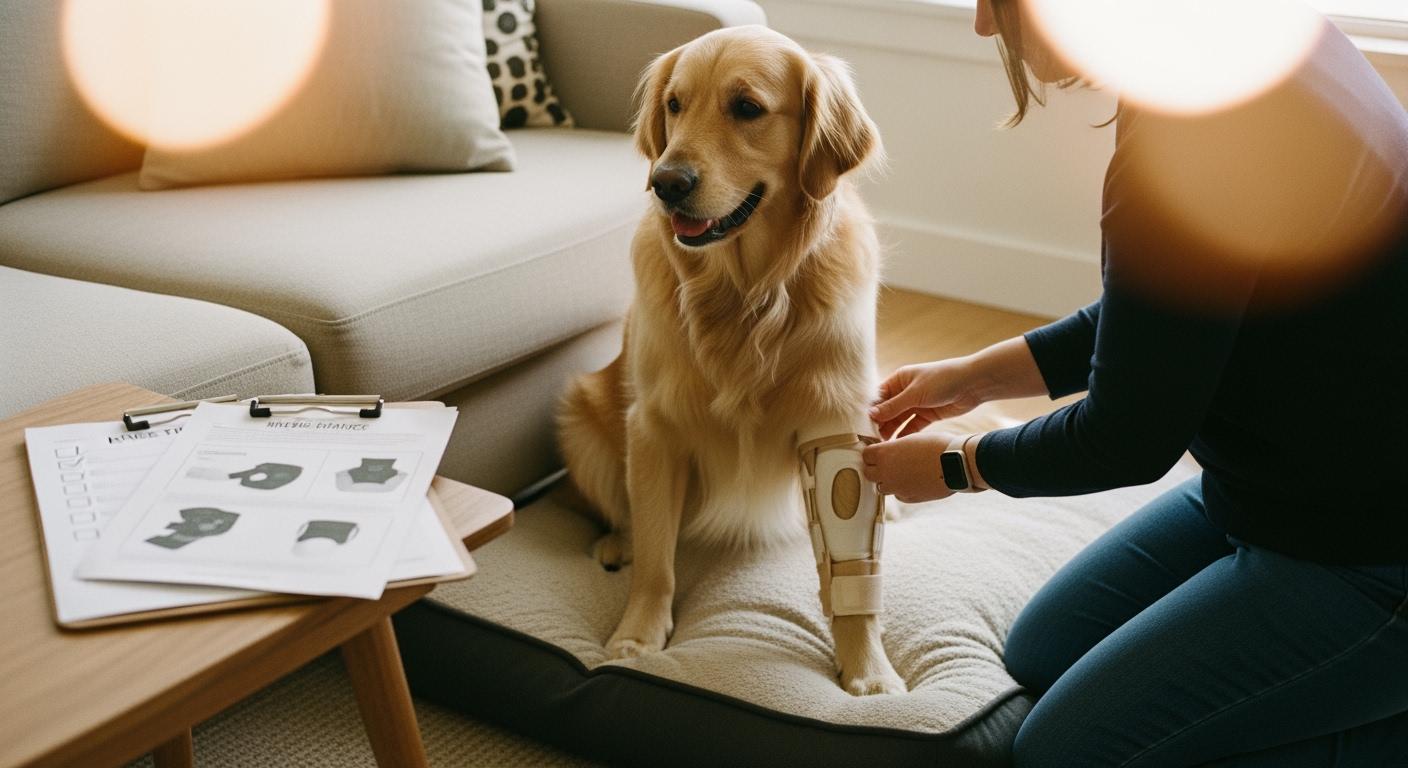
If your dog has a ccl tear or torn acl, you may wonder how to use a dog knee brace at home. Making sure the brace fits right, breaking it in slowly, and following a daily routine can help stop knee pain and keep your dog happy. Braces give knee support for dogs and can be a good choice instead of surgery for some families, but they do not fix the ligament or take the place of a vet. You should always look at your dog’s skin and check comfort during the day. The table below shows an easy daily plan for using a dog knee brace for torn acl:
Time of Day | Activity | Notes |
|---|---|---|
Morning | Put on the brace after breakfast | Make sure it fits right |
Midday | Take off for 15 minutes, check skin | Let your dog rest |
Afternoon | Put the brace back on for light activity or rehab | Watch for any pain |
Evening | Take off the brace, check skin | Let your dog relax |
For product-side browsing across current knee-support designs, review our dog knee brace options category.
If you want to learn more about torn-ACL bracing, fit checks, and condition-led support choices, review our related GaitGuard resources below.
Key Takeaways
Make sure the dog knee brace fits well. This helps reduce skin problems and supports safer healing. A good fit can lower pain and help your dog move better.
Let your dog get used to the brace slowly. Begin with short wear sessions and add more time as your dog stays comfortable.
Check your dog’s skin and comfort every day. Watch for redness, swelling, or sores. This helps you find problems early.
Put the brace on when your dog is active. Take it off when your dog rests or sleeps. This lets the skin get air and stops irritation.
Talk to your vet often. They can help you use the brace right and check your dog’s healing.
Why Fit Matters for a Dog Knee Brace for Torn ACL
A dog knee brace for torn acl helps your dog’s knee stay steady. It gives extra support while your dog heals. The brace does not fix the ligament or take the place of a vet. It works best when used with other care for ccl or acl injuries. You can read more about conservative-use support, safer rehab logic, and torn-ACL bracing in our dog knee brace for torn ACL article.
If your team is comparing bracing with broader conservative-care options, review our non-surgical dog ACL brace options article before final selection.
Risks of Poor Fit
If you do not check the fit, your dog can have problems. A bad fit can hurt your dog’s skin and cause sores. These sores make healing slower and can cause more pain. You might see swelling or red marks under the brace. If you keep using a brace that does not fit, bigger problems can happen. Your dog could hurt the other knee or make the torn acl worse.
Short-term Risks | Description |
|---|---|
Skin Complications | Braces that do not fit can rub and cause sores. |
Swelling | A bad fit can make the knee area swell. |
Long-term Risks | Description |
|---|---|
Progressive Conditions | Injuries can get worse if you ignore early warning signs. |
Contralateral CCL Rupture | The other knee can get hurt if the brace does not fit right. |
Tip: Check your dog’s skin and comfort every time you use the brace. This helps stop these problems.
Benefits of Proper Fit
When you make sure the brace fits well, your dog feels better. A good fit helps the knee move like normal. This support takes away some pain and keeps your dog safe from more injury. Studies show that a dog knee brace can make the knee more stable. It can also lower swelling and help the knee heal.
Benefit | Description |
|---|---|
Minimizes pain | Makes moving less painful for your dog. |
Prevents worsening of the injury | Keeps the knee safe and stops more damage. |
Reduces inflammation | Helps keep swelling down in the knee. |
Supports natural healing | Helps the torn ACL heal over time. |
Slows down arthritis progression | Keeps the knee healthy for longer. |
You should always pick a brace that fits your dog well. This helps stop knee pain and makes healing safer. For more sizing, comfort, and daily-use guidance, review our adjustable dog knee brace fit guide.
Dog Knee Brace Fit Check & Comfort
Signs of Good Fit
You want your dog knee brace for torn acl to fit just right. A good fit helps your dog move with less pain and keeps the brace in place. Here are signs that show you have the right fitting:
Your dog walks with a smooth stride and puts weight on the leg.
The brace stays in place and does not slip or twist during activity.
The straps feel snug but do not pinch or leave deep marks.
The skin under the brace looks healthy, with no redness or sores.
Your dog bends the knee easily, and the hinge lines up with the joint.
You see no gaps between the brace and your dog’s leg.
Your dog acts comfortable and does not try to chew or remove the brace.
Tip: Watch your dog walk on a leash. Look for even steps and a steady gait. If your dog moves well, the brace is likely fitting correctly.
Signs of Poor Fit
A poor fit can cause problems and slow healing. You need to check for these signs every day:
The brace slips down or twists around the leg.
Your dog avoids putting weight on the leg or walks with a limp.
The knee feels hot or swollen, and your dog cries when moving.
You hear a new sharp click in the knee, or limping gets worse.
The straps leave deep marks, wrinkles, or pinched skin.
Your dog shows tiredness, fever, or sudden changes in behavior.
You see redness, irritation, or hair loss under the brace.
Problem Sign | What It Means |
|---|---|
Slipping brace | Brace is too loose or not anchored |
Deep strap marks | Brace is too tight or pinching |
Redness/sores | Skin is irritated or damaged |
Limping or refusal | Brace is causing pain or discomfort |
Alert: If you notice any of these signs, remove the brace and check your dog’s skin. Contact your vet if problems continue.
Step-by-Step Fit Check
You can follow these steps to make sure your dog knee brace fits well and gives proper knee support for dogs:
Start with a vet check to confirm the acl or ccl injury and get advice on brace use.
Measure your dog’s leg using a soft tape measure. Do not pull too tight. Record the measurements and compare them to the size chart for the correct custom brace.
Slide your dog’s leg into the brace through the opening at the bottom. You can turn the brace sideways for easier access.
Tighten the bottom strap first to anchor the brace. Make sure it feels snug but not overly tight.
Check for wrinkles or pinching in the skin. Adjust the strap pads so they are centered and smooth.
Tighten the middle strap to remove gaps at the knee. Keep the skin smooth and comfortable.
Secure the top strap around the thigh. Leave one or two finger widths between the brace and the groin fold to prevent rubbing.
Bend your dog’s knee to about a 90-degree angle. Align the brace hinge with the knee joint.
Move the leg gently. Check for pinching or gaps. Let your dog take a few steps to see if the brace stays in place.
Inspect your dog’s skin after each use. Look for redness, irritation, or hair loss under the brace.
Note: Start with short wear periods of 30 to 60 minutes. Increase the time as your dog gets used to the brace. Inspect the skin often, especially during the first two weeks.
You can find more tips about fitting, break-in, and activity limits in our adjustable dog knee brace fit guide. If the diagnosis is already confirmed, start with our solutions by condition page before final selection.
Dog Knee Brace Break-In Guide
A dog knee brace for torn ACL needs a careful break-in process. You want your dog to get used to the brace slowly. This helps prevent skin problems and keeps your dog comfortable. You should always follow your vet’s advice and check your dog’s skin every day.
Break-In Schedule (First 2 Weeks)
Start with short wear sessions. Let your dog wear the brace for 30 to 60 minutes at a time. Repeat this two or three times a day. Add 30 minutes to each session every day if your dog stays comfortable. Do not let your dog sleep in the brace or wear it while crated. The skin needs time to breathe.
Here is a simple break-in schedule you can follow:
Day | Wear Time per Session | Sessions per Day | Total Daily Wear Time |
|---|---|---|---|
Day 1 | 30 minutes | 2–3 | 1–1.5 hours |
Day 2 | 1 hour | 2–3 | 2–3 hours |
Day 3 | 2 hours | 2–3 | 4–6 hours |
Day 4 | 3 hours | 2 | 6 hours |
Day 5 | 4 hours | 2 | 8 hours |
Day 6–7 | 6–8 hours | 1 | 6–8 hours |
Week 2 | 8–10 hours | 1 | 8–10 hours |
Note: Always remove the brace at night and during crate time. This prevents rubbing and lets the skin recover.
Veterinary experts recommend splitting wear time into shorter sessions during the first two weeks. In the early stage, aim for 2–4 hours per day, not all at once. By the third week, you can increase to 6–8 hours per day. For long-term management, you may use the brace up to 10–12 hours per day, but never continuously.
Monitoring Skin and Comfort
You must check your dog’s skin and comfort every time you remove the brace. Look for any signs of redness, swelling, or sores. Watch for changes in your dog’s behavior, such as limping, refusing to walk, or acting tired. These signs can mean the brace does not fit right or your dog needs a break.
Here are important steps for monitoring:
Check the skin and fur under the brace after each session.
Look for red spots, hot areas, or swelling.
Watch for hair loss or sores.
Notice if your dog limps more, refuses to put weight on the leg, or acts aggressive.
Report any problems to your vet right away.
Tip: Early checks help you catch problems before they get worse. Daily skin checks are key for safe use.
Adjusting Fit During Break-In
Custom fitting is important during the break-in period. Your dog’s leg may change shape as swelling goes down or fur compresses. You should adjust the straps and pads several times a day. Make sure the brace stays snug but not too tight.
Follow these steps for adjusting fit:
On Day 1, let your dog wear the brace for 30 minutes, two or three times.
On Day 2, increase to one hour per session.
On Day 3, try two hours per session.
By Day 4, move up to three hours.
On Day 5, use four hours per session.
On Day 6, try six hours.
On Day 7, reach eight hours.
After the first week, you can continue up to 12 hours per day, but always remove the brace at night.
You may need to adjust the straps and neoprene cuffs as your dog moves. Hair coat compression, swelling, or stretching can change the fit. If you see hair loss or sores, stop using the brace and talk to your vet. Custom fitting and regular checks help prevent problems and keep your dog safe.
Alert: Never leave the brace on overnight or when your dog is in a crate. This can cause pressure sores and discomfort.
You can find more details about knee support, custom fitting, and conservative cruciate-care paths in our non-surgical dog ACL brace options article.
Daily Use, Activity, and Care
Daily Wear Limits
You should use a dog knee brace for torn ACL during your dog’s most active times. Most dogs wear the brace for 8 to 12 hours each day. Remove the brace when your dog rests, sleeps, or stays in a crate. This routine gives the skin time to breathe and helps prevent irritation. Always follow your veterinarian’s advice about how long your dog should wear the brace. Some dogs need support for 8 to 12 weeks, depending on the severity of the acl injury.
Injury Severity | Average Duration for Improvement |
|---|---|
Minor Injuries | 4–6 weeks |
Moderate Tears | 8–12 weeks |
Tip: Use the brace during walks, playtime, and exercise. Take it off when your dog relaxes or naps.
Skin Checks and Cleaning
Check your dog’s skin every time you remove the brace. Look for redness, swelling, or hair loss. These signs may mean the brace needs adjustment. Clean the brace often to keep it free from dirt and bacteria. For daily wear, wipe the brace with a damp cloth each day and do a deep clean two to three times a week. Always follow the manufacturer’s instructions for cleaning.
Remove hair, dirt, and debris before washing.
Hand wash the brace with mild soap.
Clean Velcro and straps thoroughly.
Rinse well and let the brace air dry.
Note: Clean more often if your dog is active outdoors. A clean brace helps prevent skin problems.
Activity Guidelines and Restrictions
Let your dog do safe activities while wearing the dog knee brace. Short walks, gentle play, and light rehab exercises are best. Avoid running, jumping, or rough play until your vet says it is safe. Remove the brace during rest or sleep. Always monitor your dog for signs of discomfort. If you see limping, swelling, or pain, stop activity and check the fit.
For more tips on safe activity planning and condition-led support, review our solutions by condition page.
Common Mistakes with Dog Knee Braces
Dog owners often want the best for their pets, but using a dog knee brace for torn ACL can come with challenges. You can avoid many problems by learning about the most common mistakes and how to prevent them.
Over-Tightening or Loose Fit
You might think a tighter brace gives better support. In reality, wearing the brace too tight can cause pain, swelling, and skin sores. A loose brace can slip, twist, or fail to support the knee. Both mistakes can slow your dog’s recovery.
Common fit mistakes include:
Wearing the brace too tight
Leaving the brace on overnight
Skipping rest days
Using the brace instead of limiting activity
Ignoring skin checks
Tip: Always check that you can fit one or two fingers under the straps. Adjust the fit as your dog moves or as swelling changes.
Skipping Skin Checks
You should check your dog’s skin every time you remove the brace. Skipping this step can lead to missed signs of irritation, redness, or sores. These problems can get worse if not caught early. Clean the brace often and let your dog’s skin breathe during rest times.
Note: Healthy skin means a more comfortable and safer recovery. For more brace-use and torn-ACL support context, review our dog knee brace for torn ACL article.
Ignoring Discomfort or Red Flags
Never ignore signs that your dog feels pain or discomfort. If you see any warning signs, remove the brace and talk to your vet. Watch for these red flags:
Warning Sign | Description |
|---|---|
Persistent limping | Your dog keeps limping or avoids using the leg. |
Swelling around the knee | The knee looks bigger or feels warm. |
Sudden changes in activity levels | Your dog becomes less active or refuses to walk. |
Difficulty in standing or sitting | Your dog struggles to get up or sit down. |
Popping noise from the joint | You hear a click or pop when your dog moves the knee. |
Alert: These signs mean your dog needs a vet check. Braces support stability but do not heal the ligament or replace veterinary care.
You help your dog recover by making sure the dog knee brace for torn acl fits well, breaking it in slowly, and checking your dog’s comfort every day. A good fit can reduce pain and improve movement. Start with short wear times and increase them as your dog gets used to the brace. Watch for any signs of discomfort or changes in your dog’s acl injury. Talk to your vet if you notice problems.
Evidence Type | Details |
|---|---|
Proper Fitting | A properly fitted brace can reduce instability and improve weight-bearing. |
Compliance Importance | Results depend on correct fitting and owner compliance. |
Gradual Break-in | Start with a few hours a day and increase wear time gradually. |
You can find more support and tips in our dog knee brace for torn ACL article and our solutions by condition page.
Learn about brace options and recovery steps.
Get advice on non-surgical care for dogs with torn acl.
Find out how to choose the right knee-brace fit routine for your dog.
FAQ
How long should my dog wear a knee brace each day?
Most dogs wear a knee brace for 8 to 12 hours during active times. Remove the brace at night and when your dog rests. For more details, see our dog knee brace for torn ACL article.
Can a dog knee brace heal a torn ACL?
A dog knee brace supports the knee and helps with stability. It does not heal the torn ligament. Always follow your veterinarian’s advice. Learn more in our solutions by condition page.
How do I know if the brace fits right?
Check for a snug fit without pinching or slipping. Your dog should walk comfortably and show no redness or sores.
Should my dog wear the brace during sleep?
No, your dog should not wear the brace while sleeping or in a crate. The skin needs time to breathe. Remove the brace at night to prevent irritation.
What activities are safe with a dog knee brace for torn ACL?
Short walks, gentle play, and rehab exercises are safe. Avoid running, jumping, or rough play.
