You want your dog to be active and feel good every day. A dog hip brace helps support the hips and back legs. It helps your dog stay steady and move better when it gets hard. Around 10 to 15% of dogs have hip dysplasia. This can cause arthritis or weak back legs. Big dogs have an even bigger chance of getting it. Owners often see their dogs slow down or have trouble getting up. Dogs may also stop using stairs as much. You look for help because of:
Hip dysplasia or arthritis
Weak back legs
Getting older
Healing after surgery
Trouble moving every day
A dog hip brace gives support and helps your dog move easier. This support can make your dog healthier and more comfortable. It can also make your dog’s life better.
Key Takeaways
A dog hip brace helps your dog’s hips and back legs. It makes it easier for your dog to move. It also helps your dog feel better and more comfortable.
Watch for signs like weakness or trouble standing. Your dog may also hesitate on stairs. These signs can mean your dog needs a hip brace.
Pick a brace that fits tight but is not too tight. Make sure it has straps you can adjust. This gives your dog good support when they walk.
Clean the brace often and check it for damage. This keeps the brace working well and feeling good for your dog.
A dog hip brace can help your dog walk better. It can make your dog’s life better. Your dog can enjoy daily activities more.
What Is a Dog Hip Brace?
Purpose and Benefits
A dog hip brace helps your dog feel steady and safe. You use this brace to support the hips and back legs. Many people get a dog hip brace when their dog seems weak or has trouble standing. The brace gives extra help when your dog moves every day. It helps your dog walk, stand, and go to the bathroom with more confidence.
You want something that does not need surgery. Dog braces are a way to help your dog without surgery. The brace keeps the hip joint steady and lowers pain. Your dog can move easier and enjoy daily life. You can pick a brace that fits your dog best. Most braces cost less than surgery and work for many dogs.
Tip: You can use a dog hip brace for dogs with hip dysplasia, arthritis, or trouble moving because of age. The brace helps your dog stay active and feel good.
How Braces Support the Hip Area
Dog braces use gentle pressure to help the hips and back legs. The brace wraps around your dog’s hips and lower back. This pressure helps your dog feel steady and lowers pain. The brace helps muscles work and keeps joints steady. Your dog can walk with less stress and more balance.
Here is a table that shows what a dog hip brace does and how it helps your dog:
Definition of Dog Hip Brace | Primary Functions for Rear-End Support |
|---|---|
A device that gives support and keeps joints steady. It helps dogs heal after surgery or exercise without pain. | 1. Compression and Support: Gives gentle pressure for steadiness and less pain. |
Dog braces help your dog by giving steady pressure. Your dog feels more comfortable and moves with less worry. The brace stops big movements and keeps the hip area safe. You help your dog enjoy daily life with more ease.
Signs Your Dog Needs Support
Knowing when your dog needs help can make them feel better. Many owners see changes in how their dog moves or acts. These changes often happen as dogs get older or after surgery. Hip problems can also cause these signs. Watching for these signs helps you pick the right dog hip brace.
Hind Leg Weakness and Instability
You might see your dog have weak back legs. This can look like shaking or stumbling. Sometimes, dogs drag their back feet. Some dogs hop with both back legs to avoid pain. Your dog may get tired fast and not want to walk. Lameness and bad balance can make your dog fall. In bad cases, your dog may barely move and feel pain all the time.
Symptom | Description |
|---|---|
Difficulty Standing | Your dog shakes and has trouble standing up. |
Bunny-hop Gait | Your dog hops with both back legs to avoid pain. |
Exercise Intolerance | Your dog gets tired fast and does not want to walk. |
Lethargy | Your dog moves less because it hurts. |
Lameness | Weak leg bones make it hard for your dog to walk. |
Falling Easily | Bad balance makes your dog trip and fall. |
Difficulty Standing or Walking
You may see your dog struggle to stand after resting. Limping or walking unevenly is common. Your dog may use one leg more than the other. Your dog may not want to play or run. Some dogs do not want to jump or climb stairs. Your dog may whine or bite at the hip if it hurts. Sitting with legs out or rocking to stand up are also signs.
Hard time getting up from lying down
Hopping with both back legs when running
Hips sway and back legs feel stiff
Steps are short and legs are close together
Avoids stairs, jumping, and playing
Back leg muscles shrink while shoulder muscles get bigger
You may hear a click or pop in the hips
Your dog feels pain if you touch the hips
Your dog may act grumpy, lick, or chew at the hips
Tip: If your dog has many of these signs, a dog hip brace can help your dog move better and feel steadier.
Swaying, Stiffness, and Hesitation on Stairs
Dogs with hip problems often sway their back end. Stiffness is worse after resting and makes moving hard. Many dogs do not want to climb stairs or jump. Your dog may look wobbly or not want to exercise. These signs mean your dog needs more help for the hips and back legs.
Swaying when walking
Stiff after resting
Does not want to climb stairs
Looks wobbly
Does not want to exercise
If you see these signs early, you can get a dog hip brace. The brace helps your dog’s hips and back legs. This support can help your dog move better and feel more comfortable every day.
How Dog Hip Braces Improve Stability

Rear-End and Joint Support
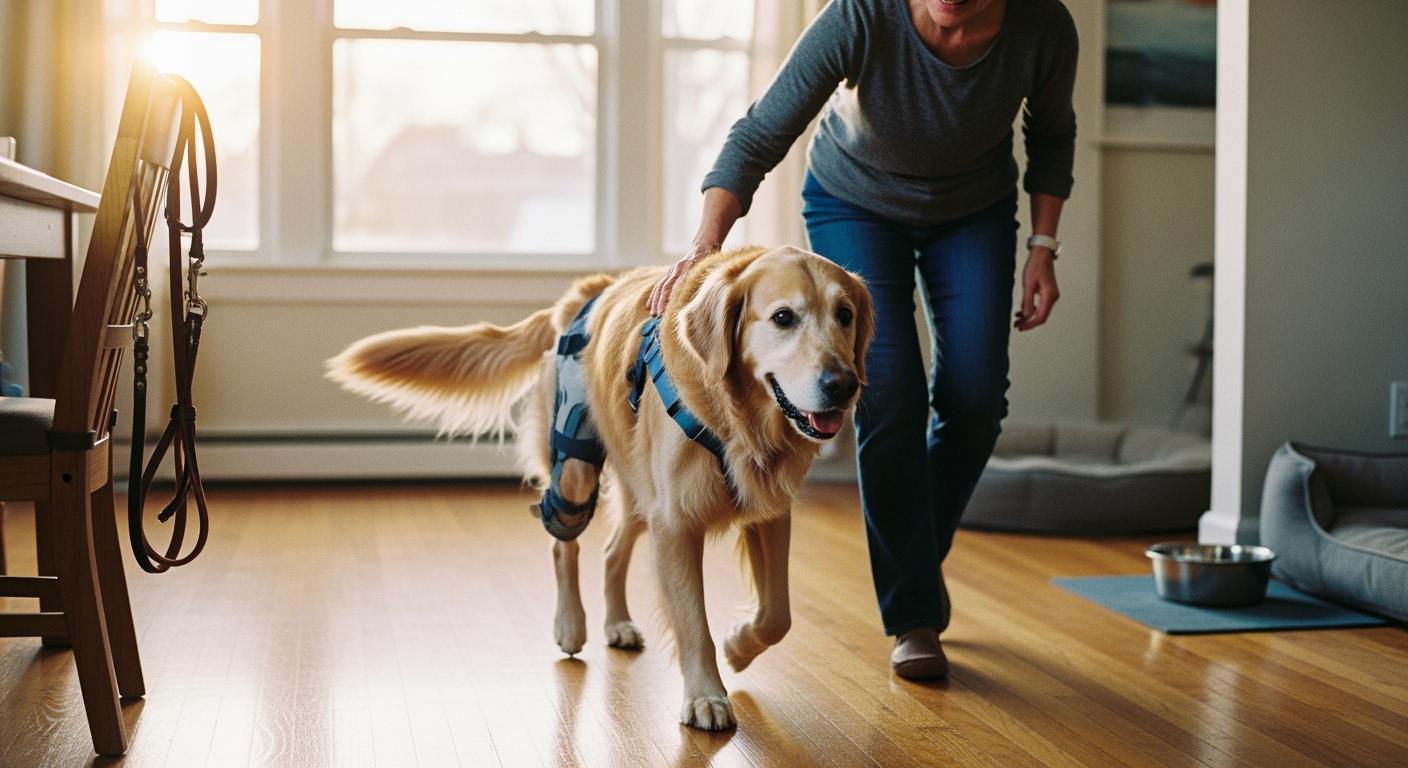
You want your dog to feel steady and safe when moving. A dog hip brace gives your dog the extra help needed for the hip area and rear legs. The brace wraps around the hips and lower back. This design gives gentle compression to the joint. The brace keeps the hip joint from moving too much. Your dog feels more secure with each step.
When you use a brace, you help your dog’s muscles work better. The brace supports the hip joint and helps your dog stand and walk with less pain. Your dog can move with more confidence. This support means your dog will not get tired as fast. The brace helps your dog stay active and enjoy daily life.
Note: A dog hip brace does not replace vet care, but it gives your dog the joint support needed for better mobility and comfort.
You may notice your dog stands up faster and walks with less swaying. The brace keeps the hips steady and helps your dog balance. Your dog can use the back legs more, which builds strength over time. The brace also helps your dog feel less pain during movement. You give your dog a chance to move with less worry.
Preventing Overcompensation and Injury
Dogs often change how they walk when their hips feel weak. Your dog may put more weight on the front legs or move in a way that causes stress on other joints. This overcompensation can lead to new problems, like sore shoulders or tired muscles.
A brace helps your dog keep a natural walking pattern. The brace limits extreme movements and keeps the hips in a safe position. Your dog does not have to shift weight to other parts of the body. This support lowers the risk of new injuries. Your dog can walk, stand, and even climb stairs with more stability.
You help your dog avoid extra strain and fatigue. The brace reduces the chance of falls or slips. Your dog can focus on moving forward instead of worrying about pain. This makes daily routines easier and safer for your dog.
Tip: Using a brace early can help your dog keep good mobility and avoid more serious problems later.
A dog hip brace gives your dog the support needed for both stability and safety. You help your dog enjoy life with less pain and more freedom to move.
Enhancing Mobility with Dog Leg Braces
Walking and Daily Movement Assistance
You want your dog to walk easily and feel sure. A brace helps your dog move forward without slipping or tripping. When you use a dog hip brace, your dog gets extra support for the hips and back legs. This support helps your dog stay balanced during walks. You see your dog stand taller and move with less worry.
Many dogs have trouble moving as they get older or heal from injury. Braces help your dog walk farther and enjoy being outside. You notice your dog takes steady steps and does not drag the back legs. The brace keeps the hips straight and lowers stress on the joints. You can help your dog walk on grass, pavement, or carpet.
Tip: Start with short walks. Watch your dog’s comfort and change the brace if needed.
Here is a table that shows how a brace helps your dog move every day:
Activity | How the Brace Helps |
|---|---|
Walking | Keeps hips steady and legs straight |
Standing | Helps balance and lowers tiredness |
Climbing stairs | Gives support for each step |
Support for Bathroom and Routine Activities
You want your dog to use the bathroom without trouble. A brace helps your dog squat or lift a leg and stay balanced. Many dogs feel safer when using the bathroom because the brace supports the hips. You see fewer slips or falls at these times.
Daily things like eating, drinking, or greeting family are easier. Your dog stands up faster and stays steady while moving around the house. The brace gives your dog confidence to join in daily life. You see your dog move better and feel more comfortable.
Note: Dog leg braces give real help for daily routines. You help your dog enjoy life with less worry and more freedom to move.
Common Uses for Dog Hip Braces
Hip Dysplasia and Arthritis
You often see your dog struggle with hip dysplasia. This condition makes the hip joint loose. Your dog may walk with a sway or show pain. A dog hip brace gives your dog steady support. You help your dog move with less discomfort. Canine arthritis also affects many dogs. The hip joint becomes stiff. Your dog may slow down and avoid stairs. You use a brace to help your dog walk and stand. The brace keeps the hip area stable. You notice your dog feels more confident during daily routines.
Tip: A dog hip brace helps your dog stay active with dysplasia or canine arthritis. You give your dog a chance to enjoy walks and playtime.
Senior Dog Mobility and Recovery
Older dogs often lose strength in their back legs. You see your dog hesitate before standing up. Your dog may need extra help after surgery. A dog hip brace supports your dog during recovery. You use the brace to help your dog stand and walk. The brace gives gentle compression to the hip area. Your dog feels safer and steadier. You notice your dog moves more easily around the house.
Situation | How a Dog Hip Brace Helps |
|---|---|
Senior dog slowing down | Provides hip support for movement |
Post-surgery recovery | Offers stability for healing |
Weak back legs | Helps your dog stand and walk |
General Rear-Leg Instability
You may see your dog stumble or drag its back legs. Rear-leg instability makes daily movement hard. Your dog may avoid playing or running. You use a dog hip brace to give your dog extra support. The brace keeps the hips steady. Your dog walks with more balance. You help your dog feel comfortable during bathroom breaks and routine activities. The brace lets your dog join family moments without worry.
Note: You can use a dog hip brace for many situations. The brace supports your dog’s hips and back legs. You help your dog move with confidence and comfort.
Choosing the Right Dog Hip Brace
Fit, Comfort, and Adjustability
When you choose a dog hip brace, you want the right fit. The brace should be snug but not tight. Your dog needs to move naturally without slipping or pinching. Adjustable straps help you get a custom fit as your dog moves or changes weight. Soft-edged materials prevent irritation and keep your dog comfortable during long use. You should check the brace often to make sure it stays in place and feels good for your dog.
A snug brace supports the hip area and rear-end.
Adjustable straps allow you to change the fit as your dog grows or loses weight.
Durable, skin-friendly materials protect your dog from rubbing or discomfort.
Support Level and Durable Materials
You need a brace that gives the right support for your dog’s needs. Some dogs need more support for walking, while others need help standing or going up stairs. Look for a brace made from strong materials that last. Neoprene panels provide compression around the joint and help reduce swelling. The brace should wrap around the upper hind leg and hip area for steady support. Removable pads add comfort and make cleaning easier. Breathable materials keep your dog cool and prevent moisture buildup.
Tip: Choose a brace with lift handles if your dog needs extra help getting up or moving around.
Ease of Use for Walking and Standing
You want a dog hip brace that is easy to use every day. The brace should help your dog walk, stand, and do routine activities without trouble. Proper fitting ensures your dog gets the best support and stability. Some braces come in custom sizes for special needs, while others are ready to use right away.
Feature | Benefit |
|---|---|
Neoprene panels | Compression and healing for the hip joint |
Comfort design | Pain-free walking and steady movement |
Proper fitting | Best support and stability for your dog |
Custom brace option | Tailored fit for unique mobility needs |
Off-the-shelf option | Quick help for dogs needing immediate support |
You help your dog stay active and comfortable by choosing the right brace. The right dog hip brace makes daily movement easier and safer for your dog.
Using and Caring for Dog Hip Braces
Proper Fitting and Safe Use
You want your dog to get the best support from a hip brace. Start by choosing the right size for your dog. A good fit helps the brace support the hip area and rear-end. Put the brace on your dog during the day to give steady support and stability. Take the brace off at night so your dog’s skin can breathe and stay healthy. Always check that the brace sits flat and does not twist or pinch. Watch your dog for any signs of rubbing or discomfort. Adjust the brace as needed to keep your dog comfortable. If your dog seems unsure, let them wear the brace for short times at first.
Tip: Introduce the brace slowly and watch your dog’s movement. This helps your dog feel safe and confident.
Cleaning and Maintenance Tips
You want to keep the brace clean for your dog’s comfort and health. Wipe the brace each week with a soft cloth and mild soapy water. Focus on the parts that touch your dog’s skin. Rinse with a clean damp cloth and let the brace air dry. Do not use harsh cleaners. Check the brace often for frayed straps or loose stitching. If you see damage, contact the maker for help. As your dog grows or changes weight, re-measure and adjust the brace for the best fit. Good care keeps the brace working well and helps your dog stay active.
Clean the brace weekly
Inspect for wear and tear
Adjust the fit as your dog changes
Setting Realistic Expectations
A dog hip brace gives your dog support and comfort, but it does not cure hip problems. You should use the brace as part of your dog’s daily care plan. Keep in touch with your vet for full care. The brace helps your dog move better and feel steadier. With good care, your dog can enjoy more walks and daily routines. Remember, the goal is to give your dog the best quality of life with safe, steady support.
Note: A hip brace supports your dog’s hips and rear-end, but it does not replace regular vet care.
Real-Life Dog Hip Brace Success Stories
Senior Dog with Arthritis
You may have a senior dog who finds it hard to get up in the morning. Arthritis can make the hip area stiff and sore. Your dog might walk slowly or avoid stairs. You want your dog to feel better and enjoy daily life. A dog hip brace can help your dog stand up and move around the house. You see your dog use the brace for support when walking to the food bowl or going outside. The brace wraps around the hips and rear-end to give steady help. Your dog starts to show improved mobility after using the brace each day. You notice your dog joins family walks again and stands longer at the park. The brace gives your dog the confidence to move without fear of falling. You feel happy when your dog greets you at the door with a wagging tail.
Many owners say their senior dog acts younger and more playful after using a dog hip brace. You can help your dog enjoy more good days with the right support.
Young Dog with Dysplasia
You may have a young dog who loves to run and play. Dysplasia can make the hip joint loose and weak. Your dog might limp or hop with both back legs. You want your dog to stay active and safe. A dog hip brace gives your dog the support needed for daily movement. You see your dog wear the brace during walks and playtime. The brace keeps the hips steady and helps your dog balance. Your dog starts to run with less swaying and stands up faster after resting. You notice your dog climbs stairs with more ease and plays fetch again. The brace helps your dog build strength and enjoy life. You feel proud when your dog chases a ball or greets friends at the park.
Dog Story | Challenge | How the Brace Helped |
|---|---|---|
Senior dog | Arthritis | Stood up, walked, played more |
Young dog | Dysplasia | Ran, climbed, played fetch |
You give your dog a chance for improved mobility and comfort with a dog hip brace. You see your dog live a fuller, happier life.
You want your dog to enjoy life with comfort and confidence. A dog hip brace gives your dog stability and support for the hip area and rear-end. You help your dog improve mobility and daily movement. Watch for signs of weakness or changes in how your dog moves. Choose the right solution for your dog’s needs and use it as part of your dog’s mobility plan. You support dog health and help your dog stay active. Consider practical support options to give your dog the best chance at a happy, mobile life.
FAQ
How do you know if your dog needs a hip brace?
You notice your dog struggles to stand, walks with a sway, or avoids stairs. Weak back legs, stiffness, and hesitation during daily movement often mean your dog needs extra hip support.
Can your dog wear a hip brace all day?
You can let your dog wear a hip brace during active hours. Remove the brace at night or when your dog rests. This helps your dog’s skin breathe and prevents discomfort.
How do you clean a dog hip brace?
You clean the brace with mild soap and water. Wipe the parts that touch your dog’s skin. Let the brace air dry before using it again. Check for wear regularly.
Will a dog hip brace help with bathroom routines?
A dog hip brace supports your dog’s hips and rear-end. Your dog can squat or lift a leg with more balance. This makes bathroom routines safer and easier.
What features should you look for in a dog hip brace?
You look for adjustable straps, durable materials, and a snug fit. Removable pads and lift handles add comfort and help with daily movement. Choose a brace that supports walking and standing.