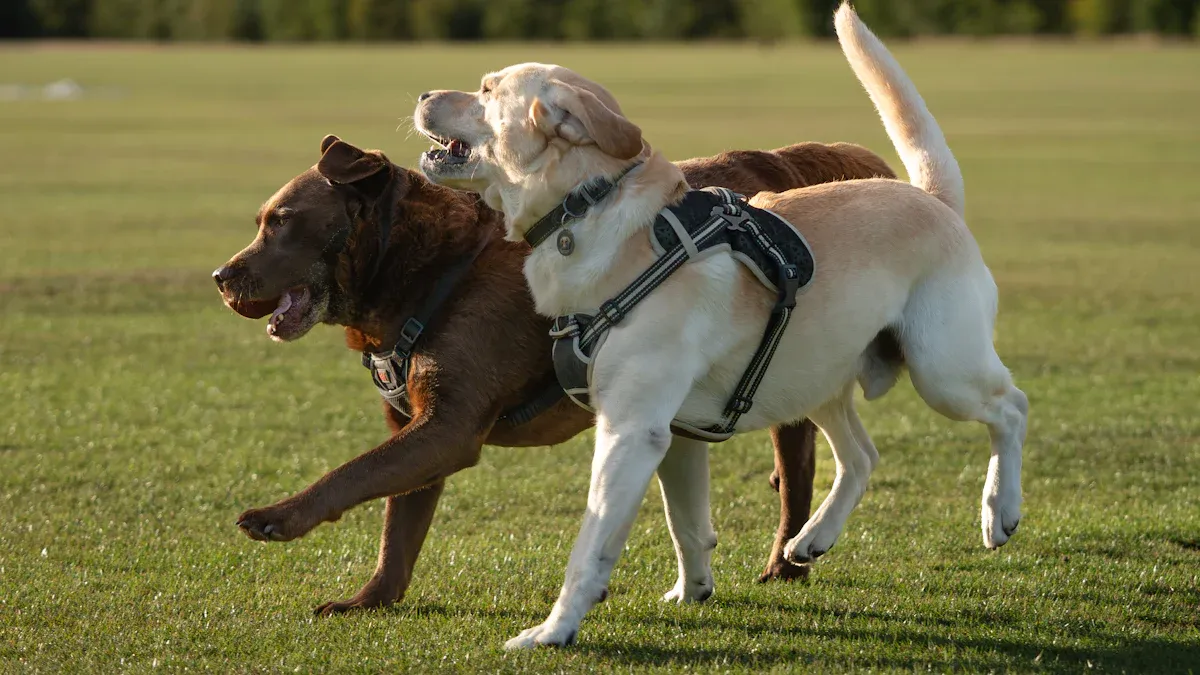
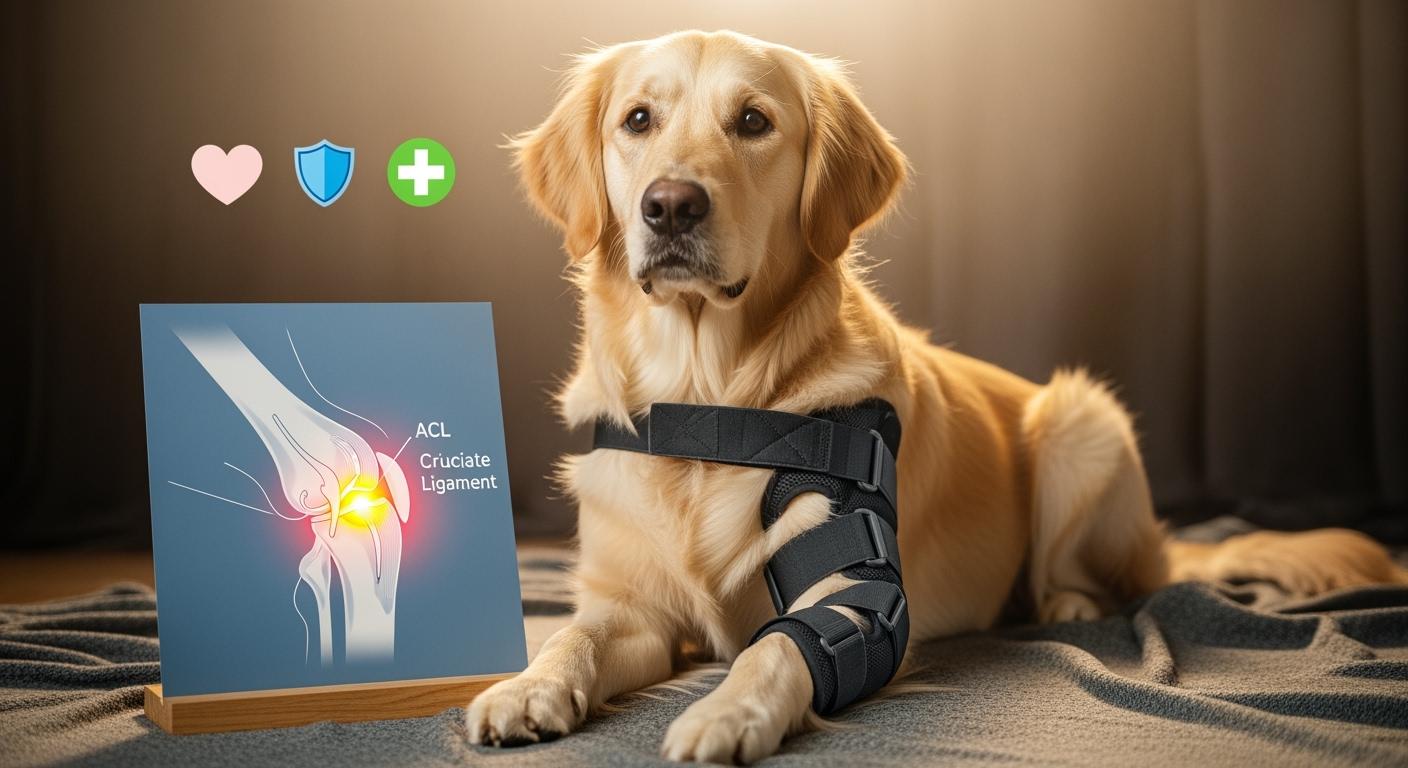
If you see your dog limping or having weak back legs, you might wonder if a dog cruciate ligament brace can help. Many owners look for ways to help their dogs feel better and stay steady after a cruciate ligament injury or when their knees are not stable. A brace gives gentle support from the outside and helps your dog move with more confidence. New studies show that dogs with braces often walk better and move more easily. For many dogs, a dog cruciate ligament brace can make daily life easier and more comfortable.
Key Takeaways
A dog cruciate ligament brace gives important help to dogs with knee injuries. It helps them walk better and feel less pain.
It is important to notice signs of a cruciate ligament injury. Signs like limping or not wanting to play mean your dog needs help soon.
Picking the right brace means you must think about fit, comfort, and support level. You also need to match the brace to your dog’s injury pattern and daily activity needs.
A brace can help your dog get better after surgery. It also helps dogs with knee problems move around. This can lower pain and stop more injuries.
You should always talk to your veterinarian to find the best brace and plan for your dog. This will help your dog heal well and feel comfortable.
Understanding Cruciate Ligament Injuries in Dogs
What Is a Cruciate Ligament Injury?
You may hear your veterinarian talk about a ccl injury when your dog starts limping or struggles to stand up. The ccl, or cranial cruciate ligament, sits inside your dog’s knee and helps keep the joint stable. When this ligament stretches, weakens, or tears, your dog can develop pain and trouble moving. Many people also call this problem a torn acl, even though the term ccl is more accurate for dogs.
Several factors can increase the risk of dog knee injuries. Some dogs develop ccl injuries as they age, while others face higher risk due to their breed or weight. Take a look at the most common causes:
Cause | Description |
|---|---|
Aging | The ligament weakens over time, making injury more likely. |
Obesity | Extra weight puts more strain on the ccl and knee joint. |
Poor physical condition | Weak muscles and ligaments make injuries more common. |
Genetics | Some dogs inherit a higher risk for ccl injury. |
Breed predisposition | Breeds like Labradors and Rottweilers have more ccl injuries. |
You may notice that certain breeds, such as Labrador Retrievers, Rottweilers, and Bulldogs, often experience ccl injuries. Dogs between 2 and 10 years old have the highest risk, but both young and older dogs can be affected. Large and overweight dogs face more stress on their joints, but small breeds can also develop ccl injuries, especially as they get older.
How It Affects Dog Mobility
A ccl injury can change the way your dog walks, runs, or even stands. When your dog suffers a torn acl or ccl injury, you might see them hold up a hind leg and avoid putting weight on it. This usually means your dog feels pain and the knee feels unstable. Sometimes, a partial tear causes only a slight limp, but your dog may still avoid using the leg fully.
Here is what you might notice if your dog has a ccl injury:
Your dog may suddenly stop using one hind leg and hold it up.
You might see a limp that lasts for weeks.
Your dog may walk with a wobbly or stiff gait.
Some dogs avoid running, jumping, or playing.
Tip: If you see these signs, your dog may need extra support for their knee. Early support can help your dog stay comfortable and active.
Dog knee injuries like ccl tears can make daily activities difficult. Your dog may struggle to get up, climb stairs, or go for walks. By understanding these changes, you can better support your dog’s comfort and mobility.
Signs Your Dog Needs Knee Support
Limping and Hind Leg Weakness
You may notice your dog limping or favoring one hind leg. This is often the first sign that your dog needs extra support. Dogs with cruciate ligament injuries can show mild limping or severe lameness. Some dogs hold up their leg and avoid putting any weight on it. Others may walk but not fully use the leg. You might see your dog struggle to climb stairs or jump onto furniture. Sometimes, your dog will whimper or flinch when moving. These signs tell you that your dog feels discomfort and needs help.
Limping or hind-leg lameness
Holding a leg up
Trouble climbing stairs
Difficulty jumping
Whining or whimpering when moving
If your dog shows these symptoms, you should pay close attention. Early support can make daily life easier for your dog.
Stiffness and Reduced Activity
Stiffness is another common symptom. Your dog may have trouble rising from a sitting or lying position. You might see your dog move slowly after resting. Dogs often show a sudden decrease in activity level. They may avoid playing or running. Sometimes, you notice muscle loss on the sore side. Your dog may shorten their stride or tap their toes when walking.
Note: Early signs of cruciate ligament injuries include reduced activity levels and reluctance to play. These changes often mean your dog feels discomfort in the knee joint.
Unstable Gait and Reluctance to Move
An unstable gait can make your dog walk with a wobbly or stiff motion. Your dog may hesitate to move or avoid physical activities. You might hear clicking or popping sounds in the knee. Swelling around the joint is also possible. Dogs often show reluctance to play or engage in daily routines. Ignoring these signs can lead to more pain and long-term joint damage.
Unstable or wobbly gait
Reluctance to walk or play
Visible swelling around the knee joint
Clicking or popping sound in the knee
Early detection and support can reduce pain and prevent further damage. If you see these signs, consider options like a dog cruciate ligament brace to help your dog stay comfortable and active.
Why Knee Stability Matters for Dogs
Daily Comfort and Mobility
You want your dog to have fun every day. This means running, climbing stairs, or playing with you. The ccl is in your dog’s stifle joint. It helps your dog do these things. When the ccl is strong, your dog moves easily. If the ccl is hurt, your dog may have trouble moving.
A stable knee helps your dog feel good and sure. Knee stability helps your dog in many ways:
Your dog’s knees take a lot of weight when running or jumping.
The stifle joint lets your dog walk, play, and stand up.
A healthy ccl means your dog can play without pain.
Knee problems can make your dog hurt and move less.
If your dog is moving slower or not playing, they may need help. A brace can give gentle support. For fit, traction, and safe daily use, see our dog knee brace for CCL tear guide.
Preventing Further Injury
Knee stability does more than help comfort. It also keeps your dog safe from more harm. If the ccl is weak, the knee can move in bad ways. This can cause more pain or damage. A dog cruciate ligament brace helps stop these bad movements. It supports the knee when your dog moves.
You can see how extra support helps in many ways:
A brace stops the knee from moving too much and helps with pain.
It controls how the joint turns and moves forward, keeping the ccl safe.
Braces help your dog walk more normally and with better balance.
Studies and owners say dogs with braces walk better and feel braver.
Some dogs, like a middle-aged lab with a partial ccl tear, got better with a custom brace and rehab, and did not need surgery.
Helping your dog’s knee can stop new injuries and help healing. This can really help your dog move better and feel good for a long time.
Dog Cruciate Ligament Brace as a Support Solution
How Braces Work
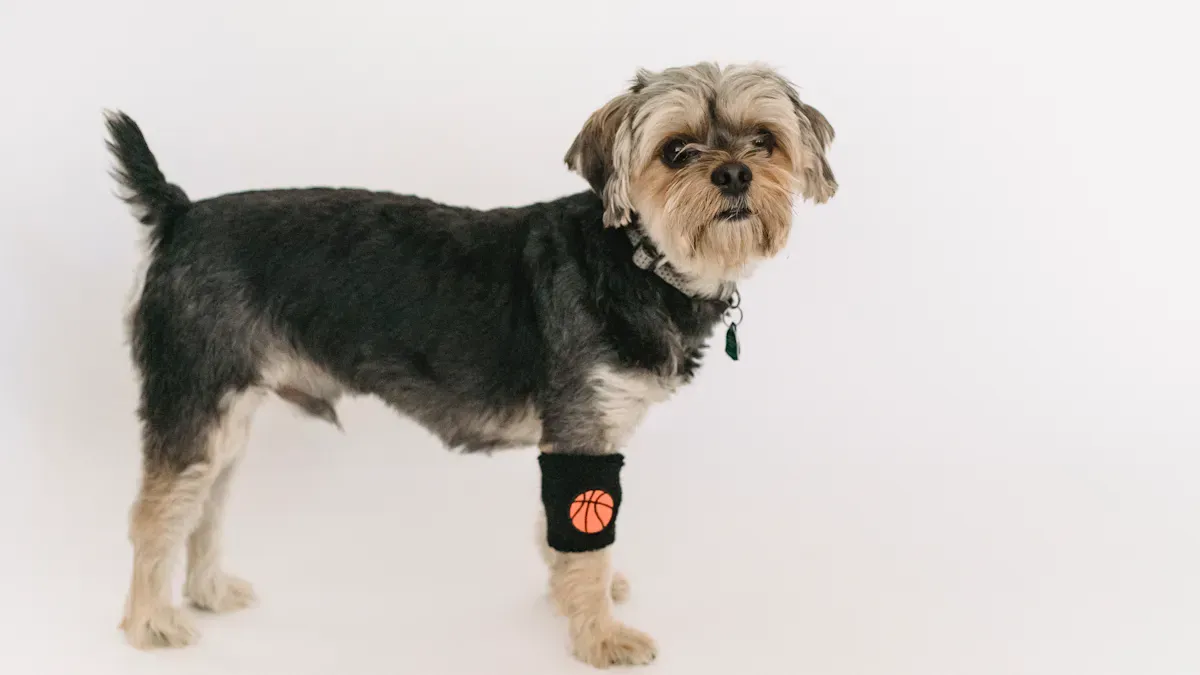
A dog cruciate ligament brace is a special tool. It wraps around your dog’s knee, called the stifle joint. You use this brace when the ccl is weak or hurt. Some people call it an ACL or CCL. Both words mean the ligament that keeps your dog’s knee steady.
When your dog wears the brace, it gives extra support. The brace holds the knee in a normal spot. This helps your dog move with less pain. Your dog can feel braver when walking. The brace stops bad movements that can make things worse. It also helps your dog put weight on the leg without too much stress.
You can see how braces help by looking at studies:
Evidence Type | Findings |
|---|---|
Biomechanical Studies | Knee braces cut down forward tibial movement. This makes the joint more steady and comfy. |
Long-term Observational Studies | Dogs do better with careful management. They have less pain and move better. |
Clinical Observations | Dogs with braces have less swelling and limping. They can do more activities. |
A dog cruciate ligament brace helps your dog’s knee every day. It lets your dog walk, stand, and play with less pain. You can use a dog knee brace for dogs with ccl injuries. It gives extra help during healing or daily life.
Benefits for Recovery and Mobility
You want your dog to be active and happy. A dog cruciate ligament brace gives support for better healing and movement. The brace helps in many ways:
Benefit | Explanation |
|---|---|
Stabilization and Support | The brace keeps the knee steady. It stops more injury and lets your dog move normally. |
Weight Distribution | The brace spreads weight evenly. This means less stress on the sore knee. |
Pain Relief | The brace helps with pain from ligament injuries. Your dog can move more easily. |
Inflammation Reduction | The brace stops bad movements. This lowers swelling and pain. |
Enhanced Mobility | The brace lets dogs stay more active. This is good for health. |
Prevention of Further Damage | The brace protects the hurt ligament. It also keeps other legs safe. |
When your dog uses a brace, you may see less limping. Your dog may want to walk or play more. The brace helps your dog put weight on the sore leg. This can make muscles stronger. It also lowers the chance of hurting other legs. Many owners say their dogs look happier and more comfy when healing.
You can see these good things in new studies:
Benefit Type | Description |
|---|---|
Stabilization | The brace cuts down cranial tibial thrust and bad movement. This works best with easy walks. |
Proprioception | The brace helps your dog know where the leg is. This makes your dog use the leg better. |
Pain reduction | The brace stops small movements at the hurt spot. This helps with swelling and limping. |
Objective gait gains | Dogs can put more weight on the sore leg after using a brace. |
Owner-reported benefits | Owners see less limping and more activity. Dogs have a better life. |
Recent trials | Hinged braces can help with limping. They are good if surgery is not possible. |
Tip: You can use a dog cruciate ligament brace as part of healing, on walks, or when your dog needs more support. Always ask your veterinarian to pick the best brace for your dog.
A dog cruciate ligament brace does not fix the ligament. But it gives your dog the support needed for better comfort and movement. With the right help, your dog can play more and feel better.
When to Use a Dog Knee Brace
Conservative Support Plans
You might use a dog cruciate ligament brace if your dog needs more help for a ccl injury. For decision points around bracing versus surgery, review our dog knee brace vs surgery article. Many people pick this choice when surgery is not possible, costs too much, or must wait. A brace can help dogs with small ligament tears, some knee weakness, or arthritis. Older dogs often feel better and move easier with extra support. You can use a brace as part of a careful treatment plan, especially if your veterinarian says it is a good idea.
Surgery is not possible or must wait
Small ccl tears
Some knee weakness
Older dogs with arthritis
Careful treatment plans
Hinged braces have strong frames and special hinges. These parts help control how the knee moves and take in force on the stifle joint. The brace can stop bad movement and keep healing tissues safe during daily life.
Post-Surgery and Rehab
A dog cruciate ligament brace can also help after surgery and during rehab. After surgery, your dog may need more help to get strength and balance back in the knee. Studies show that dogs using a brace after surgery often put more weight on the leg and move the joint better.
Study | Findings |
|---|---|
Veterinary Evidence Study | Dogs put 5.1% more weight on the sore leg (p = 0.0020). |
University of Louisville Study | Braces help the stifle joint move better and make weak joints more steady. |
Many owners say their dogs move better and do more after using a brace while healing. Over 80% of owners see their dogs walk easier and look more comfortable.
Daily Stability for Chronic Cases
Some dogs have ccl injuries or weak knees for a long time. In these cases, a dog cruciate ligament brace can give daily help and let your dog stay active. Small studies show that dogs with knee braces move better and put more weight on the leg for a short time. One study found that dogs with custom stifle orthoses had better pressure on the leg and limped less after 90 days.
Benefit | Description |
|---|---|
Joint Stabilization | Braces keep the joint steady and lower strain. |
Improved Weight-Bearing | Dogs put more weight on the leg with a brace. |
Reduced Lameness | Many dogs limp less after a few weeks. |
Muscle Mass Maintenance | Braces help keep muscles strong and moving. |
Conservative Management Aid | Braces give a non-surgery choice for long-term problems. |
A new study in the Journal of Veterinary Medicine found that dogs with long-term ccl problems put more weight on the leg and limped less after a few weeks with a brace. This means you can help your dog feel steadier and get more support every day.
Tip: Always ask your veterinarian before starting a new support plan. The right brace can really help your dog feel better and move more.
Choosing Dog Knee Braces
Fit and Comfort
When you choose a dog knee brace, you want your dog to feel comfortable and secure. For broader brace-category comparison and buying logic, review ourGuides. A good fit helps your dog move naturally and get the most benefit from the support. Here are some important things to look for:
Type of brace: Decide if your dog needs a single or double brace, depending on which legs need support.
Hinged or non-hinged: Think about how much movement your dog needs for daily activities.
Size and fit: Measure your dog’s leg carefully. A proper fit keeps the brace from slipping or causing discomfort.
Material and comfort: Pick a brace with soft padding and breathable fabric. This helps prevent rubbing and keeps your dog cool.
Ease of use: Choose a brace that is simple to put on and take off, so you can help your dog quickly.
Tip: Always check the sizing guide before you buy. A well-fitted brace gives your dog the best support and comfort.
Support Level and Materials
The materials in a dog knee brace affect how much support your dog gets. Some braces use soft foam for comfort, while others add plastic or metal for extra stability. Here is a quick look at common materials and their support roles. For stays, hinges, straps, liners, and sizing logic, review our dog knee brace for CCL tear guide:
Material | Effect on Support Level |
|---|---|
Foam | Provides cushioning and comfort |
Fabric | Offers flexibility and breathability |
Plastic | Adds structure and stability |
Metal | Enhances durability and support |
You may also see braces made with neoprene or mesh for breathability. Reinforced stitching adds durability. A soft inner lining helps prevent skin irritation, and moisture-wicking fabric keeps your dog dry and comfortable during daily use.
Secure Straps and Daily Use
Secure straps keep the brace in place and help your dog feel steady. Adjustable straps let you change the fit as your dog’s leg changes over time. Look for user-friendly features like Velcro or clip closures. These make it easy to put the brace on and take it off each day. A snug fit gives your dog the right support without cutting off circulation. This helps your dog stay active and comfortable during walks, play, or rest.
Note: The right dog knee brace should fit well, offer strong support, and be easy for you to use every day. With the right choice, you help your dog move with more confidence and comfort.
Dog Leg Braces and Alternative Supports
Other Support Options
There are many ways to help your dog with a cruciate ligament injury. Dog knee braces give support to the joint and help your dog move safely. Braces keep the knee steady and stop more injuries. Bracing costs less than surgery and helps your dog walk with less pain. Some dogs need braces for a long time if they get hurt again.
Physical therapy is another way to help your dog. You can help your dog build muscle and move better with gentle activities. Swimming, stretching, and walking are good exercises. NMES can lower swelling and pain and help the joint move. Non-surgical options include easy exercises and pain medicine like NSAIDs. Custom stifle braces spread weight and keep your dog comfy.
Here are some ways to support your dog:
Dog leg braces for steady joints and safe movement
Physical therapy to build muscle and help mobility
Swimming and stretching for easy exercise
NMES for pain relief and better joint movement
NSAIDs for pain control
Custom stifle braces for spreading weight
Studies show dog leg braces help dogs put more weight on their legs. You can see the results in this table:
Evidence Type | Study Reference | Findings | Limitations |
|---|---|---|---|
Prospective Trial | Rosen et al., 2022 | All stifle-braced dogs put more weight on their legs; most had mild problems | Small group; short follow-up |
Retrospective Study | Carr, 2016 | Dogs used their legs better after 90 days | No control group; retrospective |
Expert Consensus | Dycus & Carr, 2015; VCA Hospitals, 2024 | Bracing works for dogs who do not have surgery; surgery is still the best choice | No big studies |
For short lifts, stairs, bathroom breaks, and transfer support, compare our dog lift harness options.
Tip: You can use more than one support to help your dog stay active and comfortable.
When to Seek Veterinary Advice
You should always ask your veterinarian to find the best plan for your dog. If your veterinarian says your dog has a torn cruciate ligament, you need to know what the injury means and what your dog needs. Your veterinarian can help you pick the right brace, therapy, or pain plan. You may need help if your dog limps badly, has swelling, or cannot stand up. Early advice helps your dog get the right support and feel better.
Note: Your veterinarian can help you choose if a dog cruciate ligament brace or other support is best for your dog’s knee injury.
You give your dog the best chance to heal when you work with your veterinarian and use the right support. Many dogs move better and enjoy daily life with good support.
Safe Use and Expectations
Fitting and Introducing the Brace
You want your dog to feel safe and comfortable when using a dog cruciate ligament brace. For fit checks, traction, and safe use steps, see our dog knee brace for CCL tear guide. Start by visiting your veterinarian. This helps you make clear plans for your dog’s healing. Your veterinarian checks if the brace fits your dog’s knee. Measure your dog’s leg carefully. Sometimes, you use a casting kit to get the right size. Make sure the brace lines up with the knee joint during the first try.
Let your dog get used to the brace slowly. Begin with short walks so your dog can adjust. Watch your dog for signs like licking, limping, or trying to take off the brace. Use harnesses or slings to help your dog on stairs. Avoid slippery floors and use ramps for cars to stop falls. Do gentle rehab exercises with the brace to help your dog get stronger and steadier.
Best practices for introducing a dog cruciate ligament brace:
Visit your veterinarian and set clear goals.
Measure and fit the brace carefully.
Make sure the brace lines up with the knee joint.
Begin with short, supervised walks.
Watch for discomfort and change things if needed.
Monitoring Progress
You can check your dog’s progress by looking for good changes. See if your dog puts more weight on the sore leg. Notice if your dog wants to play and walk more. Look for less limping and easier movement with the brace. Many dogs get better in the first few days. You may see more improvement over weeks.
Signs of Improvement | Description |
|---|---|
Improved weight-bearing | Your dog uses the sore leg more. |
Increased willingness to be active | Your dog wants to play and walk more. |
Decreased limping | Your dog limps less during daily movement. |
Better mobility with the brace | Your dog moves more freely and confidently. |
Early and ongoing improvement | Progress starts in days and grows over time. |
Help your dog’s recovery with good weight control and gentle exercise. Short walks and physical therapy keep muscles and joints healthy.
Understanding Limitations
A dog cruciate ligament brace gives helpful support, but it has limits. The brace cannot fix joint damage or heal the ccl. It does not help with nerve problems. The brace works best with your veterinarian’s care plan. It does not replace a professional diagnosis or medical advice.
Note: Always use the brace as a support tool, not instead of veterinary care. Your veterinarian can help you decide how to use the brace for your dog’s needs.
With careful use and the right support, your dog can feel more comfortable and steady. Many owners see their dogs move better and feel braver with a dog cruciate ligament brace as part of daily life.
You can help your dog feel better and move more with the right support. A dog cruciate ligament brace keeps the knee steady and helps with pain. This lets your dog stay active while getting better. Custom braces with polycentric hinges fit well and control how the knee moves. Many owners say their dogs walk better and seem happier. Always ask your veterinarian to help pick the best brace for your dog’s knee. Look at the choices and help your dog enjoy daily life again.
FAQ
How does a dog cruciate ligament brace help my dog?
A dog cruciate ligament brace gives extra support to your dog’s knee. It helps your dog walk better and feel more confident. The brace keeps the stifle joint steady. This lowers stress on the knee when your dog moves.
When should I use a dog cruciate ligament brace?
You can use a dog cruciate ligament brace if your dog’s knee is not stable. It is helpful after surgery or while your dog recovers. Your veterinarian may suggest a brace for daily support. Sometimes, it is part of a careful treatment plan.
How do I choose the right brace for my dog?
First, measure your dog’s leg with care. Find a brace with straps you can adjust. Soft padding and breathable fabric make the brace comfortable. Pick a brace that fits well and feels good for your dog’s daily life.
Can my dog wear the brace all day?
Your dog can wear the brace when walking, playing, or resting. Check often for signs your dog feels uncomfortable. Take off the brace at night or when your dog is relaxing. Always listen to your veterinarian’s advice.
Where can I find dog cruciate ligament braces?
Dog cruciate ligament braces are sold online and at veterinary clinics. Many brands have custom and adjustable braces. Ask your veterinarian for the best choice for your dog.
Tip: Look for trusted brands and talk to your veterinarian about the best dog cruciate ligament brace. Your dog needs steady support and comfort every day.