
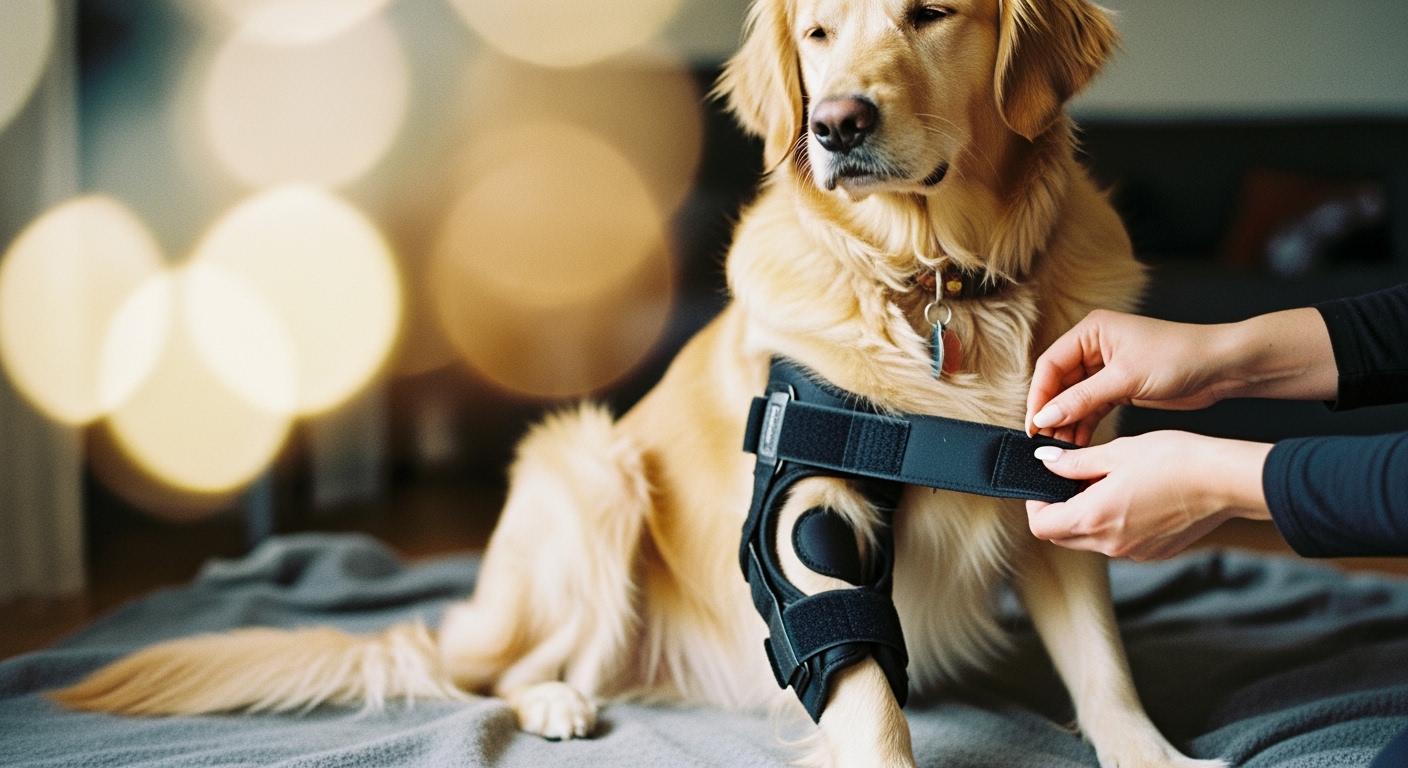
A vet recommended dog knee brace is typically selected based on fit, joint stability, daily-use practicality, and the dog’s underlying condition. In clinical and rehab settings, knee bracing is commonly considered for ACL/CCL injury, patella luxation, arthritis, and post-op support. The goal is not simply to add compression, but to improve controlled movement, comfort, and safer day-to-day function as part of a broader care plan.
Key Takeaways
Choose a knee brace based on veterinary guidance, condition type, fit quality, and realistic daily-use needs.
Measure your dog’s leg the right way. This makes sure the brace fits well. It stops pain and skin issues.
Let your dog wear the brace for short times first. This helps your dog get used to it slowly.
Check your dog’s skin often for any redness. Change the brace if your dog feels uncomfortable.
Ask your vet how brace type, wear schedule, and rehab goals should be matched to your dog’s knee condition.
Vet Recommended Dog Knee Brace Criteria
Veterinary Evaluation Standards
When you pick a vet recommended dog knee brace, you follow rules that keep your dog safe. Vets use special steps to check each brace. They look at how it fits, how much support it gives, and how it is built. You should talk to a vet or rehab expert before you buy a brace. This helps you find the best orthosis for your dog.
Tip: Let your dog get used to the brace slowly. Start with short times for 7-10 days. Add more time as your dog gets comfortable.
Veterinary teams look for these things:
The brace should fit right and not press too hard.
Check your dog’s skin often so it does not get sore.
Clean the brace and your dog’s skin to stop problems.
The brace needs to match how active your dog is.
You can read more about fitting in our dog knee brace fitting guide.
Common Dog Knee Conditions
Dogs use knee braces for many reasons. Some common ones are:
Ligament injuries like cranial cruciate ligament tears. These happen a lot in active dogs.
Arthritis, which makes joints hurt and stiff.
After surgery, braces help dogs heal, like after TPLO.
Patella luxation, when the kneecap moves and needs support.
Cranial cruciate ligament rupture is very common. Big or heavy dogs get it most. Dogs like Labrador, Newfoundland, and Rottweiler have higher risks. Small dogs can get hurt too. In older dogs, studies say one out of five may hurt the other ligament in a year.
For more help, see our dog ACL brace guide and luxating patella knee brace guide.
For a condition-led overview, review our dog brace solutions by condition. If cruciate instability is the main concern, continue with our dog knee brace for torn ACL guide.
Key Features for Knee Braces
When you compare dog knee brace options, look for features that improve fit, comfort, support, and day-to-day usability. Vets say the best braces have:
Custom fitting for your dog’s body.
Stabilization to keep the joint safe from more harm.
Comfort, with soft and adjustable materials.
Durability for daily use and easy cleaning.
The right orthosis type, like single, double, or hinged braces.
For product-side comparison of support styles and structure, review our dog knee brace options.
Single knee braces help one leg and are simple to use. Double braces are for dogs who need both legs supported. Hinged braces let the joint move a little but stay safe. These features help your dog move and heal better.
Pick a brace that fits your dog’s needs and how active they are. Using a brace with a full rehab plan works best. For more tips, visit our dog knee support brace guide and torn ACL dog brace guide.
Assessing Fit for Dog Knee Braces
Measurement and Sizing
You need to measure your dog’s leg carefully to get the right knee brace fit.Accurate sizing helps the brace work well and keeps your dog comfortable. Start when your dog feels calm, such as after a walk or play session. Use treats or toys to help your dog stay still. Ask someone to help hold or comfort your dog during the process.
Familiarize your dog with the measuring tape. Let them sniff it and reward them for calm behavior.
Gently place the tape around the knee area. Do not pull the tape tight.
Take several measurements at different times. Average the numbers for the most accurate fit.
A good fit supports the knee joint and reduces the risk of slipping or rubbing. You can find more details in our dog knee brace fitting guide.
Adjustability and Comfort
You want a brace that allows for easy adjustments. Proper adjustments help the brace stay in place and give steady support. Look for features like straps or closures that you can change as needed. Anti-slip designs help keep the brace from moving during activity.
The choice of materials also matters. Some braces use fabric, while others use plastic shells. Fabric can feel softer, but plastic often gives more stability. A well-fitted brace helps your dog feel secure and lets them move with less pain. You should check the fit often and make adjustments if your dog seems uncomfortable.
Tip: Watch your dog during the first few days of use. Make small adjustments to improve comfort and support.
Skin Health and Safety
You must check your dog’s skin every day when they wear a knee brace. Vets see skin irritation and pressure sores in many dogs during the first weeks of brace use. These problems can happen if the fit is too tight or if the brace moves too much.
Look for redness, swelling, or sores around the knee and leg.
Remove the brace if you see any signs of irritation.
Clean both the brace and your dog’s skin to prevent problems.
Most dogs show better movement and comfort with a well-fitted brace, but you need to watch for early signs of skin issues. Regular checks and quick adjustments help keep your dog safe and healthy. For more tips, visit our monitoring guide.
Support and Structure for Dog Knee Pain
Stability and Motion Control
You want your dog to move with less pain. A knee brace helps keep the joint steady. It also controls how much the knee moves. This is very helpful for dogs with stifle injuries or cranial cruciate ligament problems. Using a good orthosis can sometimes mean your dog does not need surgery for a partial tear. The brace keeps the joint stable and helps stop swelling. It also supports safer recovery and better movement control.
Dr. James St. Clair, DVM, says, “Using a good brace can help avoid surgery for some partial tears. It keeps the joint steady, stops swelling, and helps healing.”
Knee braces stop the knee from moving in ways it should not. They help your dog stand and walk better. These braces also help your dog know where their leg is.
Evidence Type | Findings |
|---|---|
Clinical Study | Many dogs had little or no limping when they used braces and did rehab. |
Expert Opinion | Braces stop bad movement, help your dog feel their leg, and make it easier to stand. |
Limitations | Braces do not work as well if your dog is very active or heavy. They do not replace surgery for all dogs, especially big ones. |
Material and Durability
Pick a knee brace made from strong but light materials. Good braces use soft padding and hard shells together. This keeps your dog’s skin safe and gives good support. Strong braces last through daily use and cleaning. They keep working even if your dog is very active. The brace should not twist, slip, or rub. This helps stop sores and keeps your dog happy.
Custom vs. Standard Knee Braces
You can pick a custom knee orthosis or a standard one. A custom orthosis fits your dog’s leg perfectly. It uses special hinges that let the knee move like normal. This stops bad movement and helps your dog heal. Custom braces let your dog use the sore leg more. This helps keep muscles strong. They also protect the other leg and help your dog get better.
Standard knee braces give basic support and are ready to use. They cost less and fit most dogs with small or medium problems. Custom braces cost more and take longer to make, but they fit better and give more support. You might need a custom brace for hard injuries, special leg shapes, or if your dog needs help for a long time.
Custom braces cost more but fit better.
They are more comfy for your dog.
Custom braces give better support and do not slip or rub.
They are best if your dog needs help for a long time or needs careful movement.
Some owners do not want to pay more, but custom braces help dogs with big problems.
Aspect | Custom Dog Knee Brace | Standard Dog Knee Brace (implied) |
|---|---|---|
Cost | Costs more because it is made just for your dog | Costs less |
Turnaround Time | Takes longer to make | Ready to use sooner |
Fitting Requirements | Needs a vet to fit and adjust | Usually fits out of the box |
Best Use Cases | Hard injuries, many torn ligaments, special leg shapes | Basic support, not as bad injuries |
Benefits | Fits better, more comfy, gives more support | Fits most dogs, not as personal |
Talk to your vet team to pick the best orthosis for your dog. This helps you find the right way to help your dog’s knee pain and keep them moving.
Daily Use and Monitoring
Wear Time and Activity
You need to follow a schedule when you use knee braces for your dog. Most dogs should wear a brace during activity only at first. Start with 30 to 60 minutes per session. You can increase this to 6 to 12 hours each day if your dog needs more support. Always remove the brace at night to let the skin rest. This routine helps your dog adjust and reduces the risk of skin problems. You should watch for signs of improved mobility and less dog knee pain as your dog gets used to the brace. If you see any limping or discomfort, make adjustments or talk to your rehab team.
Tip: Begin with short sessions and slowly add more time. This helps your dog get used to the brace and supports conservative management of knee instability.
For safer walk progression, brace pairing, and movement checks during recovery, see our dog gait training support guide.
Cleaning and Maintenance
You must keep knee braces clean to protect your dog’s skin and make the brace last longer. Good hygiene stops bacteria from building up. Wipe the brace with a damp cloth after each use to remove dirt. Wash fabric parts as the manufacturer suggests. Check all straps and closures for wear. Clean braces work better and help with proper fitting. If you see any damage, replace worn parts right away. Regular cleaning also helps you spot any changes that need adjustments.
Wipe down after each use
Wash fabric parts as needed
Inspect for wear and tear
Replace damaged parts
Adaptation and Oversight
You need to monitor your dog closely when using knee braces. Look for signs that the brace fits well. Your dog should move comfortably, and the brace should not slip or rotate. Check for improved weight-bearing and less limping. Watch for any rubbing or irritation on the skin. Make adjustments if you see any problems. Proper fitting and regular adjustments help your dog get the best support. Use knee braces as part of a dog mobility support plan, including rehab, physical therapy, and weight control.
What to Monitor | Signs of Good Fit | When to Make Adjustments |
|---|---|---|
Brace position | Stays in place, no rotation | If brace slips or rotates |
Dog’s movement | Moves comfortably, less limping | If pain or restriction shows |
Skin condition | No redness or sores | If irritation appears |
Note: Regular checks and timely adjustments keep your dog’s knee braces effective and safe.
Choosing the Right Dog Knee Brace
Matching Brace to Condition
You want to match the right orthosis to your dog’s condition, activity level, and rehabilitation goals. Each type of brace supports different conditions and helps improve quality of life.
Single knee braces work well for partial tears, arthritis, or short-term support after surgery.
Double braces help when both knees need support or when you want to protect the healthy leg after an injury.
Hinged braces give stability but let your dog move. These are useful for cranial cruciate ligament recovery and post-surgery care.
You should think about your dog’s activity level, the type of injury, and your goals for support. Veterinary recommendation matters most when brace choice is matched to diagnosis, fit quality, and realistic daily-use demands. If your dog has complex needs, a custom orthosis may give better fit and comfort. Always check the fitting and make sure the orthosis matches your dog’s routine and rehabilitation plan.
Professional Consultation
You need to talk with your vet before you choose a brace.
Your vet will check your dog’s injury and help you pick the best orthosis.
A vet-approved choice means you get advice based on your dog’s size, pain level, and daily needs.
Your vet can guide you on fitting and show you how to monitor for changes.
A vet recommended dog knee brace works best when you use it as part of a full rehab and monitoring plan. You should ask about the right wear time, cleaning, and how to spot problems early. This helps you support your dog’s knee and manage dog knee pain.
You can help your dog feel better by picking the right knee brace. Focus on how it fits, how much support it gives, and how you use it each day. Make sure to check the brace often and ask a vet for help. This helps lower pain and keeps your dog safe. Vets say you should do these things:
Use knee braces if your dog cannot have surgery.
Get a vet or expert to fit the brace and teach you.
Go to check-ups and change the brace if needed.
Add physiotherapy and let your vet check your dog.
Aspect | Importance |
|---|---|
Optimal Support | Gives the joint and tissues the right stability. |
Comfort | Stops rubbing and chafing so your dog wears the brace. |
Proper Circulation | Keeps blood moving well to help healing. |
Effectiveness | Makes sure the brace stays on and works right. |
Safety | Lowers the chance of slipping or getting hurt. |
Monitoring Reaction | Watch your dog’s comfort and behavior to know if you need changes. |
You can look at fitting and monitoring guides to get more help and tips.
FAQ
How do you know if your dog needs knee braces?
You should watch for limping, stiffness, or trouble standing. If your dog avoids using one leg or shows signs of knee pain, consult your veterinary team. They can help you decide if knee braces will support your dog’s recovery.
Can knee braces help with arthritis in dogs?
Yes. Knee braces can give extra support to the joint. They help reduce stress and improve movement. You may see your dog walk with less pain and more stability when using the right braces for arthritis.
How long should your dog wear knee braces each day?
Start with short sessions, about 30 to 60 minutes. Increase wear time as your dog gets used to the braces. Most dogs wear knee braces during activity or walks. Always remove the braces at night.
What is the best way to clean knee braces?
Wipe the braces with a damp cloth after each use. Wash fabric parts as needed. Check for dirt or damage. Clean braces help protect your dog’s skin and keep the knee area healthy.
Do knee braces replace surgery for knee injuries?
Knee braces do not replace surgery for every injury. They can support healing for some dogs, especially with partial tears or mild instability. Always ask your veterinary team if braces are right for your dog’s knee condition.
