
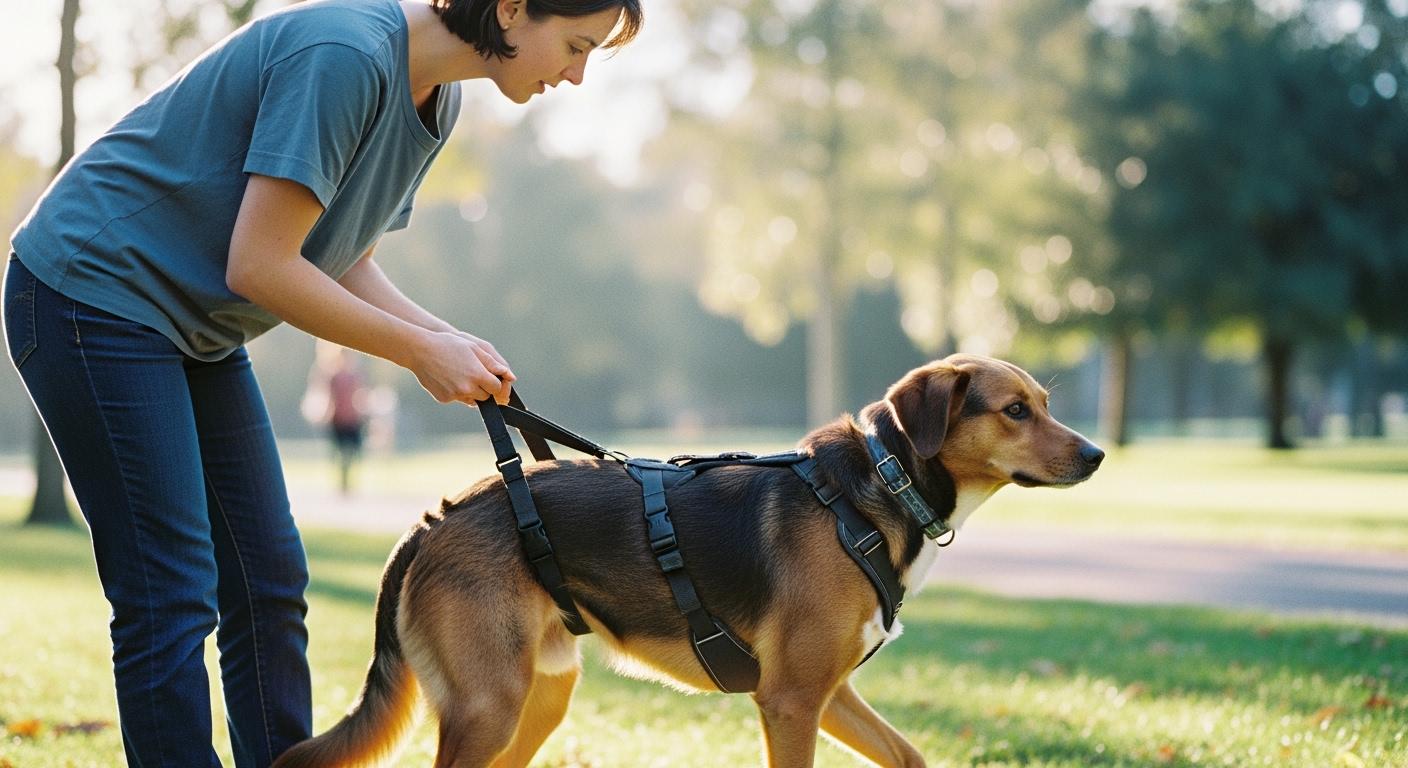
Choosing the best dog lift harness is not about finding one harness for every dog. It is about matching lift points, support area, and daily routine to the dog’s actual mobility problem. This guide is for owners, rehab teams, and buyers who need to compare rear-lift, front-lift, and full-body harness options, evaluate fit and handling safety, and decide when a harness is more appropriate than a brace or other mobility tools. If you are comparing condition-led support in the Solutions hub, deeper educational content in the GaitGuard blog, or product-level options in the products hub, this page should work as the main starting point.
Quick Answer: The best dog lift harness is the one that matches the dog’s real support zone, fits securely without rubbing, and can be used safely in everyday routines such as walking, stairs, transfers, and recovery care. The “best” option depends more on fit and lift design than on marketing claims.
- Best for: rear-end weakness, front-end weakness, recovery support, and safer daily mobility
- Not always enough for: dogs that need true joint stabilization rather than guided lifting support
- Most important factors: support zone, fit, weight distribution, and handling safety
Key Takeaways
- The best dog lift harness is the one that matches the dog’s real mobility problem, not the one with the most features.
- Rear-lift, front-lift, and full-body harnesses solve different problems and should not be treated as interchangeable.
- Fit, weight distribution, and handle placement matter as much as padding and materials.
- Daily checks for rubbing, slipping, and movement quality are essential for safe long-term use.
Understanding Dog Lift Harnesses
What Is a Dog Lift Harness
A dog lift harness is a mobility-support tool that helps you guide, steady, or partially lift a dog during walking, standing, stairs, transfers, or recovery routines. Unlike a brace, a lift harness does not mainly stabilize one joint. Its main job is to distribute handling support more safely across the body while the dog moves.
- Mobility harnesses help guide dogs safely during movement.
- They spread handling force more evenly across support zones.
- You can use them for senior dogs, post-surgical dogs, or dogs with weakness and instability.
- Many harnesses include handles or multiple lift points for controlled assistance.
Tip: The best lift harness should support movement without shifting, rubbing, or forcing the dog into an unnatural posture.
Who Benefits from a Lifting Harness
You might need a dog lift harness if your dog has trouble moving safely during normal daily routines. Many dogs benefit from guided lifting support, especially when the problem is weakness, instability, or recovery rather than a need for rigid joint control.
| Condition Type | Why a Lift Harness Helps |
|---|---|
| Age-related weakness | Helps senior dogs move with more stability and less strain. |
| Recovery from surgery | Allows safer guided walking and controlled daily movement. |
| Neurological disorders | Supports dogs that need steadier front-end or rear-end handling. |
| Temporary injuries | Makes short-term movement safer while healing continues. |
| Physiotherapy and rehab | Helps manage guided movement during recovery routines. |
You can use a harness for dogs with joint problems, after surgery, or during rehab. For broader mobility planning, you can also connect readers to the dog mobility support solutions page.
Key Features of the Best Dog Lift Harness
Fit and Adjustability
A lift harness should fit your dog securely without shifting or pinching. Fit and adjustability matter because the best dog lift harness must stay aligned during real movement, not just while the dog is standing still. Multiple adjustment points help you match the harness to your dog’s body shape and support zone.
You can still use the Two-Finger Rule as a quick check. If two fingers fit snugly between the harness and the body, the harness is usually close to the right tightness. The harness should feel secure, but it should not compress soft tissue or restrict breathing.
| Feature | Why It Matters |
|---|---|
| Multiple adjustment points | Help match the harness to the dog’s shape and support zone. |
| Balanced weight distribution | Reduces strain during lifting and guided movement. |
| Separate support zones | Help you choose front, rear, or full-body assistance more accurately. |
| Two-Finger fit check | Helps confirm the harness is secure without being too tight. |
| Stable daily wear | Keeps the harness useful during real daily routines. |
| Low-light visibility features | Improve safety during early-morning or evening walks. |
Comfort and Materials
Comfort is essential when using a dog lift harness daily. The best dog lift harness uses soft, durable, and breathable materials that support the dog without creating friction or heat buildup. Padding matters most at the pressure zones where the harness contacts the chest, abdomen, shoulders, or rear-end support area.
Instead of choosing by fabric name alone, focus on what the material actually does. You want breathability, easy cleaning, soft contact surfaces, and enough durability for repeated daily use.
- soft contact surfaces help reduce rubbing
- breathable construction helps reduce overheating
- durable fabric helps the harness hold shape under daily use
- padding helps distribute pressure more comfortably
Support and Weight Distribution
Support and weight distribution are some of the most important features in a dog lift harness. The best dog lift harness should spread handling force across stronger body zones so the dog feels more stable and the handler uses less unsafe force. Poor weight distribution can create new discomfort even if the harness looks well padded.
You want the harness to support movement, not drag the dog awkwardly. Rear-lift designs should help the back end without pulling the dog off balance. Front-lift designs should support the chest and shoulders without compressing them. Full-body designs should connect both support zones smoothly.
Handles and Lifting Points
Handles and lifting points determine how practical the harness is in real life. You need handles that are strong, easy to reach, and positioned where you can guide the dog safely without twisting the body or lifting from the wrong angle. The best dog lift harness does not just include handles. It places them where they actually improve control during stairs, transfers, and daily movement.
- strong handles help with stairs and transfers
- multiple lift points improve handling flexibility
- well-placed handles reduce strain for both dog and handler
Safety Alert: Always check handles and stitching before each use. A damaged lift point can turn a routine assist into a safety risk.
Types of Dog Lifting Harnesses
Rear-Leg Support Harness
A rear-leg support harness is best for dogs that struggle with the back end. It helps you guide, steady, or lightly lift the rear area during walks, stairs, car entry, or daily transfers. This type makes the most sense when the dog’s main weakness is in the hind legs rather than the front.
- best for rear-end weakness, instability, or recovery support
- helps with stairs, standing, and short walks
- useful for senior dogs and dogs recovering from rear-limb or spinal problems
A rear-leg support harness is often the most practical choice when the dog mainly needs help behind the shoulders rather than full-body assistance.
Full-Body Harness
A full-body harness supports your dog from front to back and is the best choice when movement problems affect more than one area. This harness is useful for dogs with broader weakness, post-surgical needs, or daily routines that involve more than just rear-end lifting.
- better for dogs that need more than one support zone addressed
- supports both front and rear movement control
- helps with stairs, transfers, and recovery walking
Front Support Harness
A front support harness is best for dogs that need help at the chest and shoulder area. It supports the front end during walking, standing, and recovery routines when the main weakness is not in the rear legs.
- best for front-end weakness or front-limb recovery
- helps reduce strain during controlled movement
- useful for dogs that need chest and shoulder lifting support
A front support harness is often the right choice when the dog’s front-end function is the main limiter rather than the hips or back legs.
Choosing the Right Harness Type
Pick the harness type that matches the dog’s real support zone. The best dog lift harness is not always the strongest one. It is the one that fits the mobility problem most accurately.
| Harness Type | Best For | Main Strength |
|---|---|---|
| Rear-leg support | Rear weakness, instability, recovery support | Focused back-end lifting assistance |
| Full-body | Multi-zone mobility problems, senior support, recovery | Front-and-rear assistance together |
| Front support | Front-end weakness, chest and shoulder support needs | Focused front-area lifting assistance |
Evaluating Fit and Sizing
Measuring Your Dog
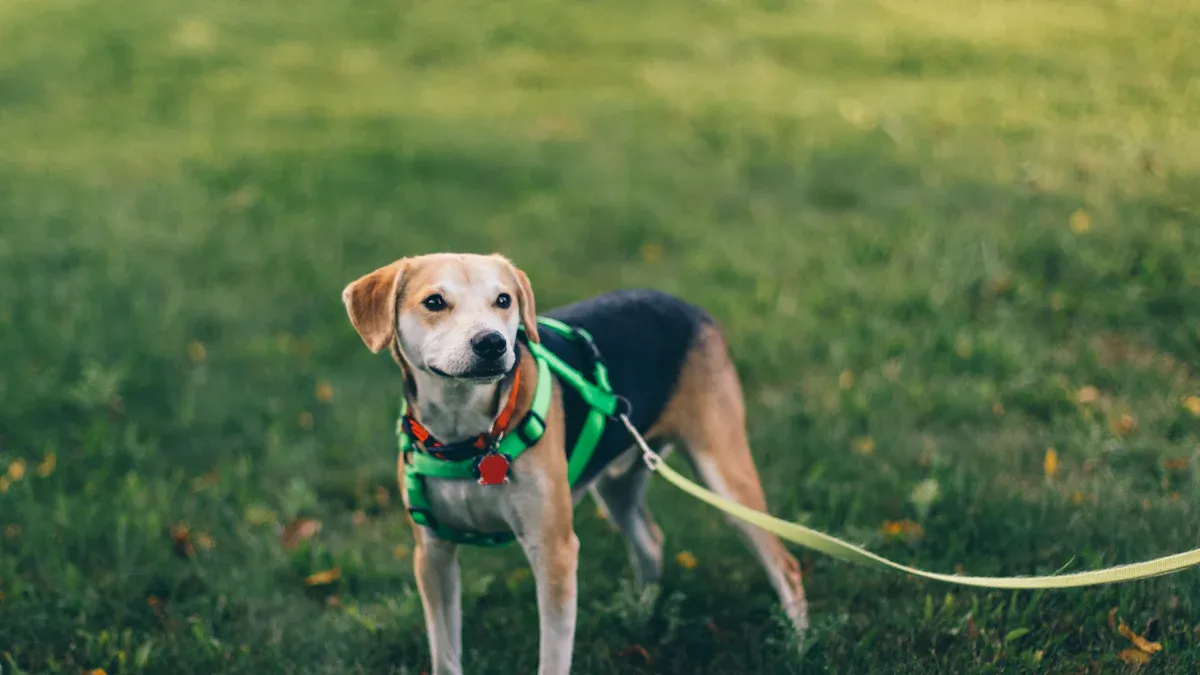
Accurate measurements help you choose the best dog lift harness for daily support and rehabilitation. You need enough measurement detail to match the harness to the correct support zone.
- Measure chest girth around the widest part of the ribcage, just behind the front legs.
- Measure neck or shoulder area only if the harness sizing guide requires it.
- Measure back length for full-body designs and note whether the dog has an unusually long or short torso.
- Record weight and compare it with the brand’s support guidance if available.
Tip: Write down the measurements and compare them carefully against the harness sizing chart before you decide on size.
Adjusting for Proper Fit
You must adjust the harness until it stays stable during real movement. A harness that looks correct while the dog is standing still can still shift during walking, stairs, or transfers. Check the fit after your dog walks, sits, and turns so you can see whether the harness stays aligned.
Adjust each strap so the harness feels secure but does not press into sensitive areas. The dog should be able to move normally while still receiving guided support.
Signs of Poor Fit
You need to monitor your dog’s harness daily. Signs of poor fit include:
- the dog can step or wiggle out of the harness
- chafing appears under the front legs or around the chest
- fur loss develops at contact points
- the harness loosens or rotates during movement
- the dog resists wearing it or moves more awkwardly in it
A poor fit reduces support quality and can discourage the dog from moving. Daily fit checks help you keep the harness useful instead of letting it become a new discomfort problem.
Safety Alert: Always check for slipping, rubbing, and movement changes before each use.
Daily Use and Maintenance
Ease of Use
You want a harness that fits into the dog’s real daily routine. The best dog lift harness should be easy to put on, easy to take off, and easy to adjust without turning routine care into a struggle. Low-friction handling matters because the harness may be used several times a day for walks, stairs, transfers, or recovery support.
Simple closures, stable handles, and an intuitive fit process make the harness more practical for both the dog and the handler.
Cleaning and Durability
Keeping the harness clean protects your dog’s skin and helps the harness keep its shape and support quality. Follow the care label, clean padding and straps regularly, and let the harness dry fully before reuse. Daily-use equipment should be easy to maintain because dirt, moisture, and body oils can make even a good harness less comfortable over time.
- avoid using damaged harnesses in active routines
- clean contact areas regularly
- dry fully before reuse
- check straps, seams, and handles for wear
When to Replace a Harness
You need to replace a harness when it can no longer provide safe support. Frayed stitching, broken buckles, stretched straps, lost padding, twisted panels, or loose handles all reduce reliability. A harness that no longer fits or causes discomfort is no longer the best harness for your dog’s daily needs.
Safe Handling and Best Practices
Lifting Techniques
You must use the harness in a way that protects both you and your dog. Keep your stance stable, lift with control instead of jerking upward, and guide the dog through movement rather than trying to carry too much body weight at once. A good harness should improve leverage and safety, not tempt you into unsafe lifting habits.
Tip: Use the harness to guide and support the dog’s movement, not to swing or fully suspend the dog unless the design is made for that use.
Integrating into Daily Routines
Using a dog lift harness daily can make movement safer and more predictable. Many owners use it for outdoor breaks, stairs, car entry, and short guided walks. The harness should fit into ordinary routines without making every movement harder than it needs to be.
- use the harness during the specific activities where support is actually needed
- check fit before each active-use session
- watch how the dog responds during and after use
Note: Daily consistency matters more than overusing the harness in every situation.
Consulting Professionals
You should talk to your veterinarian or a rehab professional when the dog has neurological issues, post-surgical needs, complex weakness, or a support pattern that is not easy to classify. A professional can help you decide whether the dog needs rear support, front support, full-body support, or a different mobility tool entirely.
- ask for help if movement gets worse instead of better
- ask for help if you are unsure which support zone is the real problem
- ask for help if the dog needs both harness support and other mobility tools
Related Guides and Further Reading
Dog lift harness for back legs
Use this guide when the dog’s main mobility problem is in the rear end and you need more specific back-leg handling logic.
Full-body dog harness
Use this guide when the dog needs coordinated front-and-rear support rather than one-zone lifting help.
Rear support sling for dogs
Use this guide when a simpler rear-lift solution may be enough for short daily support tasks.
IVDD dog lift harness
Use this guide when spinal protection and safer guided movement are the main concerns rather than general mobility assistance alone.
Fitting and handling guides
Use fit and handling guides when you need more detailed instructions on measuring, positioning, and daily-use safety checks.
You can continue from this page into these internal paths:
- Solutions hub for condition-first and support-first planning
- Blog hub for narrower comparison and troubleshooting articles
- Products hub for product-level support review
- dog mobility support solutions page for broader movement planning
- brace fit, comfort, and safety guide for broader fitting education
This internal structure makes the page more useful for both users and search engines because it clearly connects the lift-harness guide to supporting content and product paths.
Choosing the best dog lift harness means matching the harness type, support zone, and fit to the dog’s real mobility problem. A harness should make daily movement safer and more manageable without adding rubbing, slipping, or awkward handling stress.
- good fit prevents discomfort and poor weight distribution
- the Two-Finger Rule is a useful quick fit check
- the dog should still move naturally through the supported area
- daily checks help catch rubbing or wear before they become bigger problems
Use this guide as the starting point, then move into the Solutions hub, the Blog hub, and the Products hub depending on whether you need condition planning, article-level comparison, or product review. Data authenticity note: This guide is for educational purposes only. It is designed to help readers understand best dog lift harness fit, support, and daily use, not to replace veterinary diagnosis or individualized treatment advice.
FAQ
How do you choose the best dog lift harness for your dog?
You choose the best dog lift harness by matching the harness type to the dog’s real support zone, checking fit carefully, and making sure the harness works in the dog’s actual daily routine.
Can you use a dog lift harness every day?
Yes, many dogs can use a lift harness daily, but daily use only works well if the harness stays comfortable, stable, and easy to monitor.
What signs show your dog’s harness does not fit well?
Common warning signs include rubbing, fur loss, slipping, rotation, loose straps during movement, and resistance when you put the harness on.
How do you clean a dog lift harness?
Clean the harness according to the care label, dry it fully before reuse, and inspect the padding, straps, and handles regularly for wear.
When should you replace your dog lift harness?
Replace the harness when stitching frays, buckles break, straps stretch out, padding fails, or the harness no longer provides safe support.
Simple Daily Lift Harness Log
| Date | Harness Type | Main Activity | Movement Check | Skin Check | Next Step |
|---|---|---|---|---|---|
| Example | rear / front / full-body | walk / stairs / transfer | better / same / worse | clear / red / rubbing | hold / adjust / shorten use |
This simple log helps you track whether the harness is improving stability, whether fit changes are needed, and whether your dog is tolerating daily use safely.
