
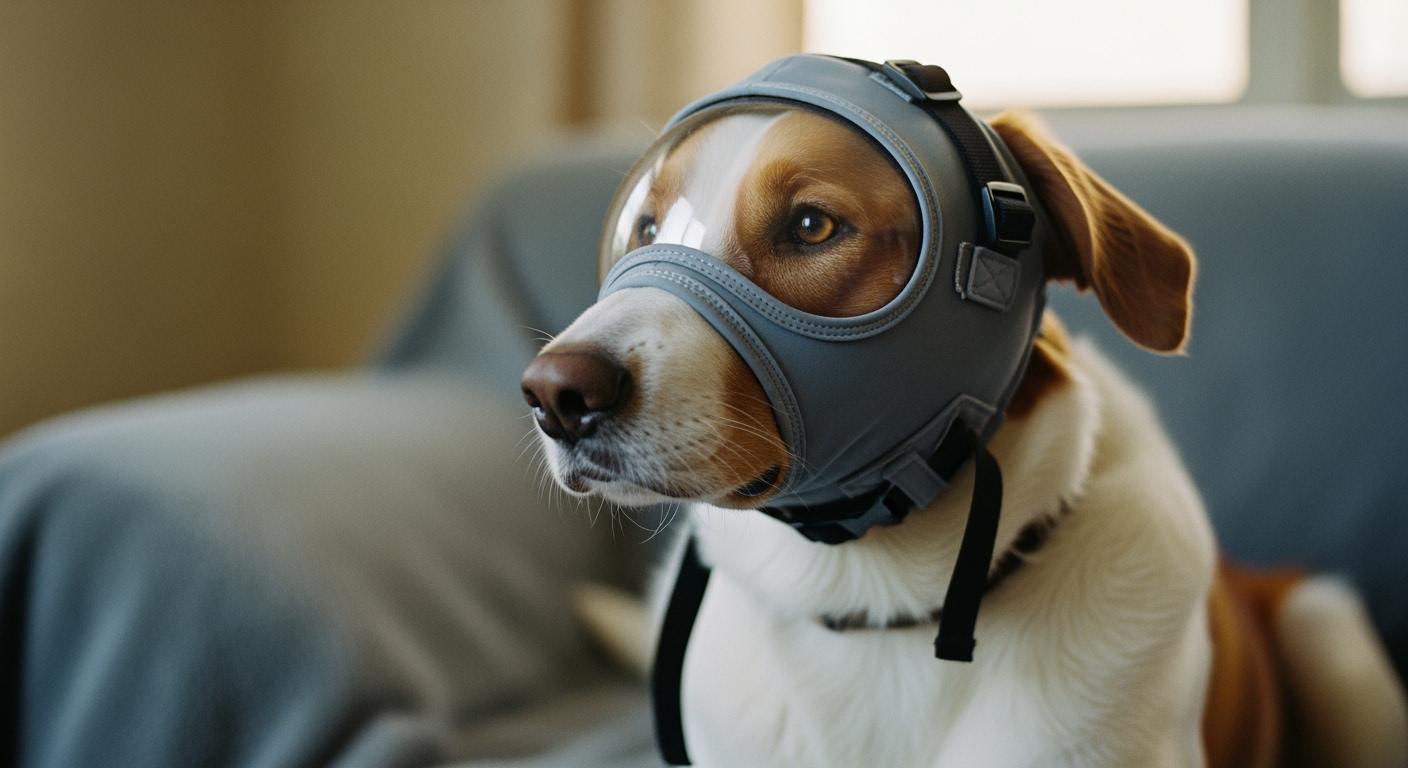
Dog head cover is a broad category of protective gear used to help cover the head, face, ears, or nearby sensitive areas during recovery or daily care. This guide is for owners, rehab teams, and buyers who want to understand what a dog head cover includes, when it helps, how it differs from face masks or anti-lick head protection, and how to choose, fit, and monitor it safely. If you are comparing support paths in the Solutions hub, deeper educational content in the GaitGuard blog, or product-level options in the products hub, this page should work as the top-level starting point.
Quick Answer: A dog head cover is usually most useful when a dog needs targeted head or face-area coverage for recovery, anti-lick management, or daily environmental protection. It is a broader category than a face mask alone, and the right option depends on coverage zone, comfort, and daily-use tolerance.
- Most important factors: protection area, fit, visibility, and daily comfort checks
- Best for: face-area coverage, anti-lick support, and daily protective wear
- Not always enough for: full-body recovery needs or cases that mainly require neck stabilization
Key Takeaways
- Dog head cover is a broad protective-coverage category, not just one single face-protection product.
- The right option depends on whether the dog needs facial coverage, anti-lick support, outdoor debris protection, or post-procedure protection.
- Correct fit, visibility, and daily-use tolerance matter as much as the cover type itself.
- Head covers work best as part of a broader care plan that may include wound care, anti-lick management, activity control, and veterinary follow-up.
What Is a Dog Head Cover?
A dog head cover is a broad term for protective gear designed to cover part of a dog’s head, face, ears, or nearby sensitive areas during recovery or daily routines. Depending on the design, it may help protect healing tissue, reduce licking or scratching, block outdoor debris, or provide more controlled face-area coverage.
This page should treat dog head cover as a broader topic than one single head protector design. Some dogs need a cover after a procedure. Some need anti-lick head protection. Some need face-area shielding from sun, dust, or outdoor irritation. That is why this page should act as the umbrella Pillar, while narrower pages can handle specific support types.
The main goals of a dog head cover are usually:
- protecting the face, ears, or nearby sensitive areas
- reducing licking, scratching, or rubbing
- supporting safer recovery after a procedure or irritation flare
- helping with daily protective wear in selected outdoor or recovery situations
A good head cover should match the protection area, stay in place during normal movement, and feel comfortable enough for realistic daily use.
What a Dog Head Protector Is Designed to Help With
Face-area protection
You want to protect sensitive head and face areas during daily activity or recovery. A dog head cover can help reduce contact with dirt, hard surfaces, or irritating environments while keeping the covered area safer.
Coverage for eyes, ears, and nose surroundings
Some head covers are used to help shield the area around the eyes, ears, or nose from dust, debris, light contact, or everyday irritation. The exact coverage need should guide the design choice, because not every dog needs the same level of face-area protection.
Anti-lick or anti-scratch protection
Dogs often try to lick, scratch, or rub healing areas. A head cover may help by creating a physical barrier over the target area so recovery is easier to manage during daily routines.
Comfort during daily protection routines
A useful head cover should protect the area without making the dog more stressed than necessary. Good protective wear supports calmer routines, safer movement, and realistic daily use.
| Support Goal | How a Head Cover May Help |
|---|---|
| Face-area protection | Helps reduce contact with dirt, surfaces, or irritating environments. |
| Eye, ear, or nose-area coverage | Helps shield nearby sensitive areas during recovery or daily routines. |
| Anti-lick management | Creates a barrier that makes self-trauma harder. |
| Daily comfort | Supports more manageable recovery and protective routines. |
Main Types of Head and Face Protection for Dogs
Protective head covers
Protective head covers are usually chosen when the dog needs broader coverage over the top or sides of the head, ears, or nearby sensitive areas. They are useful when the main goal is general protection and coverage rather than a very narrow face-only solution.
Face-protection masks
Face-protection masks are more focused on the front of the face. They usually make the most sense when the dog needs more exact coverage around the eyes, nose, or face area, while still allowing normal daily movement.
Anti-lick head protection designs
Anti-lick head protection is more recovery-focused. It is mainly chosen when the dog keeps licking, scratching, or rubbing healing areas around the head or face.
Protective wear used for outdoor exposure
Some head-cover designs are more useful for outdoor debris, dust, sunlight, or environmental irritation. These options make more sense when the support goal is everyday outdoor protection rather than post-procedure recovery.
| Support Type | Main Role | Usually Best For |
|---|---|---|
| Protective Head Cover | Broader head-area coverage | General protection over the head, ears, or nearby areas |
| Face-Protection Mask | More targeted face-area coverage | Eye, nose, or front-face protection needs |
| Anti-Lick Head Protection | Recovery-focused barrier support | Dogs that keep licking or scratching healing areas |
| Outdoor Protective Wear | Environmental shielding | Dust, debris, sunlight, or outdoor irritation management |
Tip: This page should stay focused on recovery-oriented and daily protective head coverage, not on unrelated equipment categories.
Dog Head Cover vs Other Protective Tools
Head protector vs anti-lick wear
Anti-lick wear is a broader category that may include body wear, sleeves, or other devices designed to stop self-trauma. A dog head cover is more specific to the head and face area. Use a head cover when the target zone is around the face, ears, nose, or nearby healing sites.
Head protection vs neck support
Dog head covers and neck supports solve different problems. A head cover protects the face or head area. A neck brace or neck support is meant to stabilize the cervical area and reduce harmful neck movement. Some dogs may need both, but the support goal is different.
When targeted face coverage makes more sense
Targeted face coverage makes more sense when the sensitive area is limited to the face, ears, or nearby recovery site. This lets you protect the necessary area without adding support or restriction where it is not needed.
Tool Type Main Purpose Dog Head Cover Protects the head or face area Anti-Lick Wear Reduces licking or scratching across a wider set of body areas Neck Support Supports the neck and cervical area
How to Choose the Right Dog Head Protector
Choose by protection area
Start by matching the cover to the exact area that needs protection. Some dogs need broader head coverage. Some only need face-area shielding. Some only need anti-lick protection over a small recovery site. The best design is the one that matches the real target zone.
Choose by comfort and breathability
Comfort matters because the dog may need repeated daily use. Look for softer contact areas, breathable construction, and enough adjustability to keep the cover stable without creating pressure or overheating.
Choose by daily use routine
Think about how your dog actually lives. A cover used during outdoor walks may need different priorities than one used mainly during supervised recovery at home. Pick a design that fits your dog’s real routine, not an imagined ideal use case.
Choose by ease of fit and monitoring
You need to be able to check the fit, inspect the skin, and reapply the cover without a complicated process. A head cover that is too hard to monitor or maintain will be harder to use safely every day.
| Decision Factor | What to Ask |
|---|---|
| Protection area | Does the cover match the exact part of the head or face that needs protection? |
| Comfort | Can the dog wear it without visible stress or overheating? |
| Daily routine | Does the design fit home recovery, outdoor wear, or supervised use? |
| Monitoring | Can you easily check fit, skin, and alignment every day? |
How Fit and Coverage Affect Performance
Why correct sizing matters
Fit is non-negotiable when you use a dog head cover. You need the right size to keep your dog safe and comfortable. If the cover is too tight, it may create pressure or interfere with normal behavior. If it is too loose, it may slip and stop protecting the target area.
How a head cover should sit
The cover should sit securely but gently over the intended protection zone. It should not block the dog’s breathing, make vision unsafe, or shift dramatically during normal movement. A proper fit should protect the area without making the dog visibly stressed.
Common rubbing or slipping issues
- pawing or scratching at the cover
- slipping out of the target position
- hair loss or sore spots where the cover contacts the skin
- visible discomfort or reduced willingness to move normally
When to adjust or reassess fit
You need to adjust or reassess fit if you see slipping, rubbing, stress behavior, or visible pressure marks. Recheck the fit whenever your dog’s recovery stage changes, your routine changes, or the protective goal becomes narrower or broader than before.
| Fit Check Step | What to Look For |
|---|---|
| Initial fit | Secure coverage without obvious pressure |
| Movement check | No major slipping, twisting, or distress |
| Skin check | No redness, rubbing, or hair loss |
| Ongoing review | Adjust for recovery changes or wear-related changes |
Common Use Cases for Dog Head Covers
Outdoor debris protection
Outdoor use is one common case for dog head covers. Some dogs need extra shielding from dust, pollen, sunlight, or rough environments during walks or outdoor time.
Face-area protection during recovery
During recovery, a head cover can help protect healing facial or head-area sites from contact, dirt, or self-trauma. This makes daily care more manageable when the sensitive area is local rather than full-body.
Anti-lick and anti-scratch support
Dogs often try to lick, scratch, or rub healing areas. A head cover can help reduce access to those areas and support calmer recovery routines, especially when the wound or sensitive area is around the face or head.
Daily supervised protective wear
Some dogs need repeated daily use rather than one-time use. In these cases, supervised wear routines matter more than long-hour promises. Start with short sessions, observe the dog closely, and build tolerance only if the fit remains safe and comfortable.
What to Consider Before Daily Use
Comfort and breathing checks
You want your dog to feel comfortable in a head cover. Always make sure the cover is not too tight around the head or neck and that your dog can breathe calmly and normally.
Vision and movement observation
A dog head cover should not block your dog’s ability to move safely in the intended routine. Watch how your dog walks, turns, rests, and reacts while wearing it. If your dog seems confused, distressed, or unstable, reassess the fit or the support type.
Supervised wear time
Start with short supervised wear periods and increase only if your dog stays calm and comfortable. Do not assume the dog can tolerate long wear immediately just because the cover fits once.
Cleaning and maintenance
Keep the dog head cover clean and dry. Wash it as recommended, let it dry fully before reuse, and inspect it for stretched areas, worn straps, or rough contact points. Regular maintenance helps the cover stay safe and comfortable.
| Daily Check | What to Look For |
|---|---|
| Comfort check | No obvious stress, overheating, or breathing difficulty |
| Movement check | The dog can move safely in the intended routine |
| Skin check | No redness, rubbing, or hair loss |
| Cleanliness check | The cover is dry, clean, and safe to reuse |
Tip: Good daily checks make head-cover use safer and more realistic over time.
Related Guides and Next Steps
This page should work as the umbrella entry point for your head and face protection topic cluster, then guide readers into more specific internal content depending on whether they need condition planning, article-level comparison, or product-level review.
Dog anti lick guide
Use a dog anti lick guide when the real problem is repeated licking, scratching, or self-trauma rather than general face coverage alone.
Protective recovery wear guide
Use a protective recovery wear guide when the dog needs broader recovery coverage beyond the head or face area.
Dog neck support guide
Use a dog neck support guide when the main support need is cervical stability or neck-area comfort rather than face-area protection.
How to fit a dog head cover
Use a narrower fitting guide when you need more detailed instructions on strap adjustment, alignment, visibility checks, and daily monitoring.
You can continue from this Pillar page into these internal paths:
- Solutions hub for condition-first and support-first planning
- Blog hub for narrower comparison and troubleshooting articles
- Products hub for product-level support review
- dog neck brace guide for neck-support comparisons
- brace fit, comfort, and safety guide for broader fitting education
This internal structure makes the page more useful for both users and search engines because it clearly connects the Pillar page to supporting content and product paths.
Frequently Asked Questions About Dog Head Covers
- Is a dog head cover the same as a face mask?
No. A dog head cover is the broader category. A face-protection mask is one more targeted option inside that category. - Can a head cover help stop licking or scratching?
Sometimes, yes. A head cover can help reduce access to a healing area, especially when the target zone is around the face or head. - How do I know the fit is wrong?
Common warning signs include slipping, rubbing, visible pressure marks, breathing discomfort, or movement that looks unsafe or stressed. - Is a head cover the same as neck support?
No. A head cover mainly protects the head or face area. Neck support is used for cervical stability and neck-area support goals. - When should I call the veterinarian?
Call your veterinarian if your dog shows worsening redness, swelling, breathing difficulty, skin injury, or clear intolerance to the current support plan.
Tip: Always match the protective tool to the real protection goal rather than using one device for every recovery problem.
Simple Daily Head Cover Log
Date Wear Time Protection Area Comfort Check Skin Check Next Step Example 20 min face / ears / recovery site better / same / worse clear / red / rubbing hold / adjust / shorten use This simple log helps you track whether the cover is staying comfortable and aligned, whether fit changes are needed, and whether your dog is tolerating daily use safely.
You help your dog most by choosing the right protection type, fitting the cover carefully, and checking comfort, visibility, and skin every day. A dog head cover works best when it protects the target area without creating new stress, slipping, or rubbing problems.
- choose the cover by the real protection area
- check comfort, breathing, and visibility every day
- use supervised wear rather than assuming long wear too early
- treat head-cover use as part of a broader recovery or protection plan
Use this Pillar page as the starting point, then move into the Solutions hub, the Blog hub, and the Products hub depending on whether you need condition planning, article-level comparison, or product review. Data authenticity note: This guide is for educational purposes only. It is designed to help readers understand dog head cover types, fit, face protection, and daily use, not to replace veterinary diagnosis or individualized treatment advice.
