
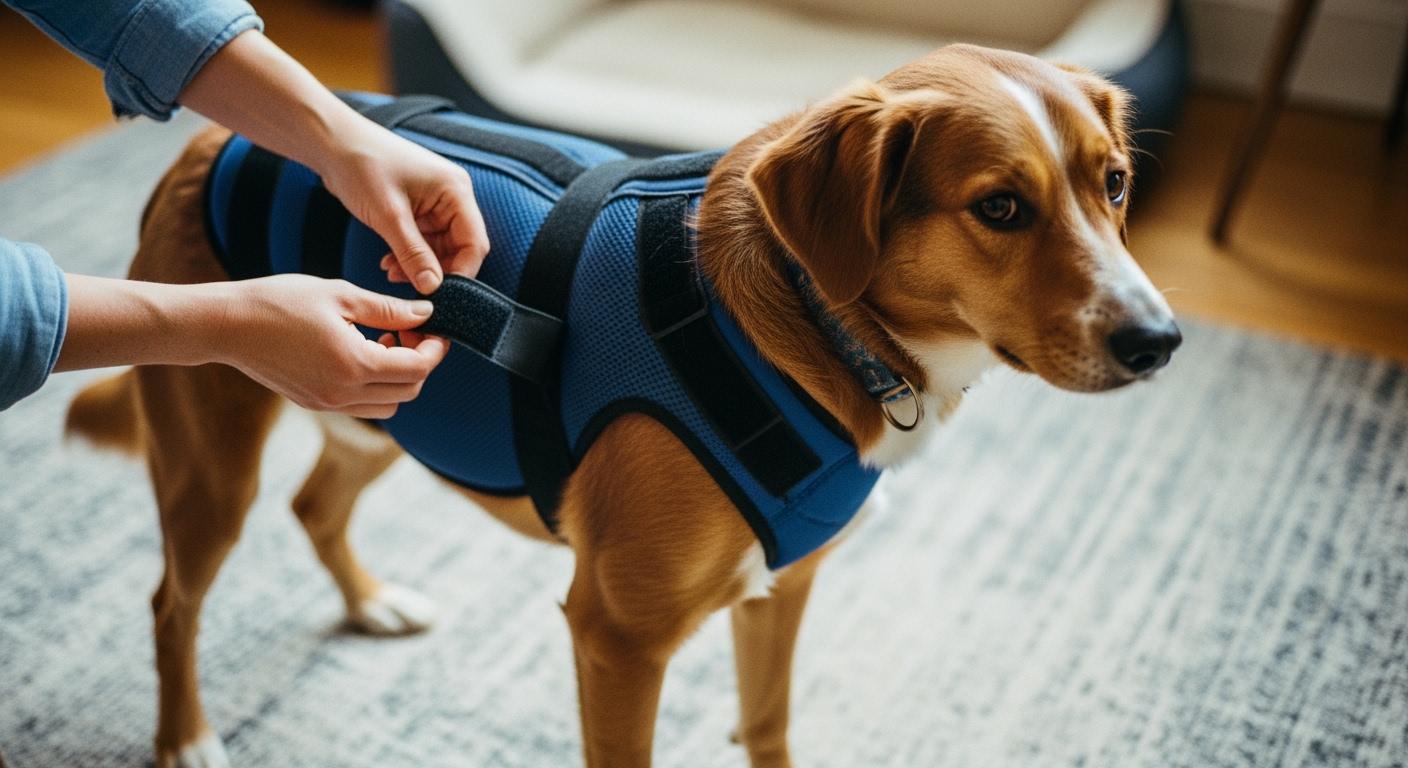
A dog back support brace is a structured support tool used to improve spinal stability, controlled movement, and daily comfort in dogs that need more trunk support than normal activity alone can provide. This guide is for owners, rehab teams, and buyers who want to understand what a back support brace does, when it helps, how it differs from lift-assist mobility tools, and how to choose, fit, and monitor it safely. If you are comparing condition-led support in the Solutions hub, article-level education in the GaitGuard blog, or product-level options in the products hub, this page should act as the top-level starting point.
Quick Answer: A dog back support brace is usually most helpful when a dog needs more spinal stability, safer controlled movement, or added trunk support during recovery or daily routines. It is not the same as a lift harness, and it is not always the best answer for every mobility problem.
- Best for: spinal support, posture control, controlled recovery, and safer daily movement
- Not always enough for: dogs that mainly need lifting assistance rather than trunk stabilization
- Most important factors: support level, fit, slipping control, and daily skin checks
Key Takeaways
- A dog back support brace is a broader spinal-support category, not just an IVDD-only product.
- The right option depends on whether the dog needs more trunk stability, safer movement control, or daily comfort support.
- Correct fit, support level, and daily-use tolerance matter as much as the brace type itself.
- A back support brace works best as part of a broader care plan that may include rehab work, activity control, weight management, and veterinary follow-up.
What Is a Dog Back Support Brace?
A dog back support brace is a support device designed to improve spinal stability, trunk control, and daily comfort in dogs that need more back support during walking, standing, or recovery. It usually wraps around the thoracic and lumbar area to provide controlled compression and structured support.
This page should treat dog back support brace as a broader support topic, not just as an IVDD device. Some dogs use a brace for IVDD-related recovery. Some use it for back weakness, posture support, or safer movement during daily routines. The key question is always the same: how much spinal control does the dog need, and can the brace provide it comfortably and consistently?
A good back support brace is usually judged by four things:
- how much spinal support it provides
- how well it stays aligned during movement
- how comfortable the dog is during wear
- how easily it fits into a safe daily routine
For narrower back-support content, direct readers to the dog back brace for IVDD guide, the GaitGuard blog, and the products hub.
What a Dog Back Support Brace Is Designed to Help With
Spinal support and stability
You use a dog back support brace to give your dog stronger spinal support and trunk stability during recovery or daily activity. The brace helps reduce excessive motion and gives the dog a steadier base for standing, walking, and turning.
More controlled movement during daily activity
A back support brace can help the dog move in a safer and more controlled way each day. In practical terms, the goal is better posture, steadier walking, and less risky twisting or collapse during ordinary routines.
| Support Goal | How a Back Brace May Help |
|---|---|
| Spinal stabilization | Helps reduce excessive movement through the back. |
| Body awareness | May improve movement control during daily routines. |
| Safer walking | Supports better posture and steadier movement. |
Comfort during short routines
You want your dog to feel more comfortable during short walks, standing transitions, and routine daily activity. A good brace fit can help reduce strain and make those routines feel easier, but comfort should be judged by movement quality and tolerance rather than by marketing claims.
Support as part of broader mobility care
You should treat a back support brace as one part of a broader mobility care plan. That plan may also include rehab exercises, weight management, activity control, and other support tools. For broader mobility planning, send readers to the Solutions hub and the GaitGuard blog.
Main Types of Back Support for Dogs
When you compare a dog back support brace, the most useful approach is to compare support level and daily-use purpose rather than chase product labels. Most options fit into three broad groups:
| Support Type | Main Role | Usually Best For |
|---|---|---|
| Soft back support | Gentle compression and lighter trunk support | Milder support needs and easier daily wear |
| Structured back brace | Higher-control spinal support | Recovery, instability, or dogs needing stronger movement control |
| Back support used with mobility tools | Combines spinal support with handling help | Dogs needing trunk support plus extra help during walking or transfers |
Soft back-support designs
Soft back-support designs are usually better for lighter support needs, daily comfort, and dogs that still move fairly well but need more trunk awareness or easier support during short routines.
More structured back brace designs
Structured back braces are more appropriate when the dog needs stronger spinal support and more control during recovery, daily walking, or higher-risk movement periods.
Back support used alongside lift-assist mobility tools
Some dogs need more than spinal stabilization alone. In those cases, a back support brace may work best alongside lift-assist tools or mobility handling systems that help the dog rise, walk, or change position more safely.
Dog Back Support Brace vs Other Support Tools
Back support brace vs lift-assist mobility tools
Lift-assist mobility tools help you guide, lift, or steady your dog during walking, standing, or transfers. A dog back support brace has a different job. It is mainly used to support the spine and trunk rather than to lift the dog’s body weight directly.
Tip: Use a back support brace for trunk stabilization. Use lift-assist tools when the dog mainly needs help rising, balancing, or moving from place to place.
Back support brace vs harness-based mobility support
A harness-based mobility system helps distribute handling force across the chest and shoulders. A back support brace is more focused on stabilizing the trunk and supporting the spine. Some dogs need one. Some need both.
When combined support routines make sense
Combined routines make sense when the dog needs spinal support and movement assistance at the same time. For example, a dog may wear a back brace for trunk stability while also using a handling harness for safer walks or transitions. This is where your internal linking should do real work by sending readers into the Solutions hub, the Blog hub, and the Products hub.
How to Choose the Right Dog Back Support Brace
Choosing the right dog back support brace helps you give your dog better stability, comfort, and daily function. The most important question is not “Which brace looks strongest?” but “Which support level matches this dog’s real spinal support need?”
Choose by support goal
Start by thinking about why your dog needs support. Some dogs need more structured recovery support. Others need help with back weakness, posture control, or safer daily movement. Always choose by support goal first.
Choose by comfort and adjustability
Comfort and adjustability make a big difference in whether the brace will actually be used consistently. Look for secure closures, enough adjustment points, and materials that reduce rubbing rather than trap heat and pressure.
Choose by daily activity needs
Think about your dog’s real routine. Some dogs only need support during walks or rehab sessions. Others need help during more of the day. The right brace should match the dog’s actual activity pattern instead of forcing an unrealistic routine.
Choose by ease of fit and monitoring
You need to be able to inspect the fit, monitor the skin, and adjust the brace as your dog’s condition changes. A support tool that is too hard to check or maintain will be harder to use safely over time.
| Decision Factor | What to Ask |
|---|---|
| Support goal | Does the dog need comfort, stabilization, or both? |
| Daily routine | Will the brace be used during walks, rehab, or broader daily support? |
| Fit quality | Can the brace stay aligned during movement without rubbing? |
| Monitoring | Can you check skin, comfort, and wear condition easily? |
How Fit and Positioning Affect Performance
Why accurate sizing matters
You must measure your dog before choosing a dog back support brace. Good sizing helps the brace stay aligned, support the right spinal area, and avoid slipping or bunching during movement. If the brace is too loose, support drops quickly. If it is too tight, discomfort and rubbing appear just as quickly.
How a back support brace should sit
The brace should sit flat over the support zone without pressing hard into the neck, hips, or abdomen. It should cover the trunk area that needs support while still allowing normal breathing and calmer daily movement. A brace that twists, slides, or gaps under use is not fitted well enough.
Common slipping or rubbing issues
| Issue | Common Cause | What to Do |
|---|---|---|
| Slipping | Loose fit or poor alignment | Remeasure and refine the fit |
| Bunching | Excess material or poor positioning | Reposition and adjust before the next session |
| Pressure marks | Over-tightening or uneven load distribution | Stop use and reassess the fit |
When to adjust or reassess fit
You need to reassess fit if you see repeated slipping, hair loss, redness, worsening movement, or visible discomfort. You should also recheck the brace whenever your dog’s weight, muscle condition, or recovery stage changes.
Common Use Cases for Dog Back Support Braces
IVDD-related support
IVDD is one of the most important use cases for a dog back support brace, but it should be treated as one subtopic within the broader spinal-support category. In these cases, the brace may help reduce risky movement and make daily handling safer when your veterinarian recommends it.
Back weakness and posture support
Some dogs need help because the back feels weak, unstable, or poorly controlled during walking. In these cases, a back support brace may help improve posture and make movement feel steadier.
Recovery-time support
After injury or surgery, some dogs benefit from a brace that reduces excessive trunk motion and helps protect healing tissues during controlled activity. The right brace should support recovery without creating new fit or skin problems.
General daily comfort support
Older dogs or dogs with chronic back sensitivity may benefit from daily comfort support when the brace is fitted well and used in a controlled routine. The goal here is usually safer daily function, not maximum restriction.
What to Consider Before Daily Use
Short supervised wear sessions
When you introduce a dog back support brace, start with short supervised sessions and increase wear time only if your dog stays comfortable. Early use is about fit and tolerance, not about forcing long hours too soon.
Skin and comfort monitoring
You need to monitor your dog’s skin and comfort every day. Look for rubbing, redness, heat, hair loss, or signs that the dog is moving worse in the brace. If you see these changes, stop and reassess the fit before the next session.
Movement observation
Observe your dog’s movement during walking, standing, and turning. The brace should improve stability and posture, not create stiffness, limping, or awkward motion. Treat every early walk as a movement-check rather than just “brace time.”
Cleaning and maintenance
Proper cleaning and maintenance help the brace stay effective and safe. Wipe away dirt, hair, and moisture after use, clean more deeply when needed, and inspect the closures and support structure regularly for wear or damage.
| Phase | Main Goal | Wear Rule |
|---|---|---|
| Early break-in | Confirm fit and skin tolerance | Use short supervised sessions only |
| Early daily use | Use during controlled activity | Increase only if comfort and movement stay stable |
| Stable routine | Repeatable support during selected daily use | Use during active periods, not automatically all day |
Tip: A simple daily log of wear time, activity, and skin condition helps you catch problems early.
Simple Daily Back Brace Log
| Date | Wear Time | Activity | Movement Quality | Skin Check | Next Step |
|---|---|---|---|---|---|
| Example | 45 min | short walk / rehab / rest | better / same / worse | clear / red / rubbing | hold / adjust / shorten use |
This simple log helps you track whether the brace is improving spinal stability and comfort, whether fit changes are needed, and whether your dog is tolerating daily use safely.
Related Guides and Next Steps
This page should work as the umbrella entry point for your back-support topic cluster, then guide readers into more specific internal content depending on whether they need condition planning, article-level comparison, or product-level review.
Dog back brace guide
Use a dog back brace guide when you need a deeper comparison of structured spinal support, brace fit, and higher-control recovery paths.
Dog back brace for IVDD guide
Use the dog back brace for IVDD guide when the support need is narrower and more IVDD-focused than this umbrella Pillar page.
Dog mobility support guide
Use a broader mobility support guide when the dog needs more than spinal stabilization alone and movement assistance becomes part of the decision.
How to fit a dog back brace
Use a dedicated fitting guide when you need more detailed instructions on measuring, alignment, skin checks, and daily monitoring.
You can continue from this Pillar page into these internal paths:
- Solutions hub for condition-first and support-first planning
- Blog hub for narrower comparison and troubleshooting articles
- Products hub for product-level support review
- dog back brace for IVDD guide for narrower IVDD support content
- canine rehab braces guide for broader rehab-support education
This internal structure makes the page more useful for both users and search engines because it clearly connects the Pillar page to supporting content and product paths.
Frequently Asked Questions About Dog Back Support Braces
- Can a dog back support brace help with pain?
It may help reduce strain and improve comfort during daily activity, but it should be treated as one part of a broader veterinary care plan rather than as a stand-alone fix. - Can a brace help a dog with IVDD?
Sometimes, yes. Many dogs with IVDD may benefit from structured back support, but the right plan depends on the case, recovery stage, and veterinary guidance. - Is a back support brace the same as a lift harness?
No. A back support brace mainly stabilizes the trunk and spine. A lift harness mainly helps you guide or lift the dog during movement. - How do I know if the fit is wrong?
Common warning signs include slipping, twisting, rubbing, pressure marks, worsening movement, or obvious discomfort while wearing the brace. - Should my dog wear the brace all day?
Usually not by default. Most dogs do better with a phased routine and selected active-use periods rather than automatic all-day wear. - When should I call the veterinarian?
Call your veterinarian if your dog shows worsening pain, skin injury, movement that looks worse instead of better, or clear brace intolerance.
Tip: Always follow veterinary guidance when using a dog back support brace. That gives your dog the safest and most useful support plan.
You help your dog most by choosing the right support level, fitting the brace carefully, and checking comfort and movement every day. A dog back support brace works best when it improves spinal stability and daily function without creating new fit, skin, or gait problems. Use this Pillar page as the starting point, then move into the Solutions hub, the Blog hub, and the Products hub depending on whether you need condition planning, article-level comparison, or product review. Data authenticity note: This guide is for educational purposes only. It is designed to help readers understand dog back support brace types, fit, spinal support, and daily use, not to replace veterinary diagnosis or individualized treatment advice.
