
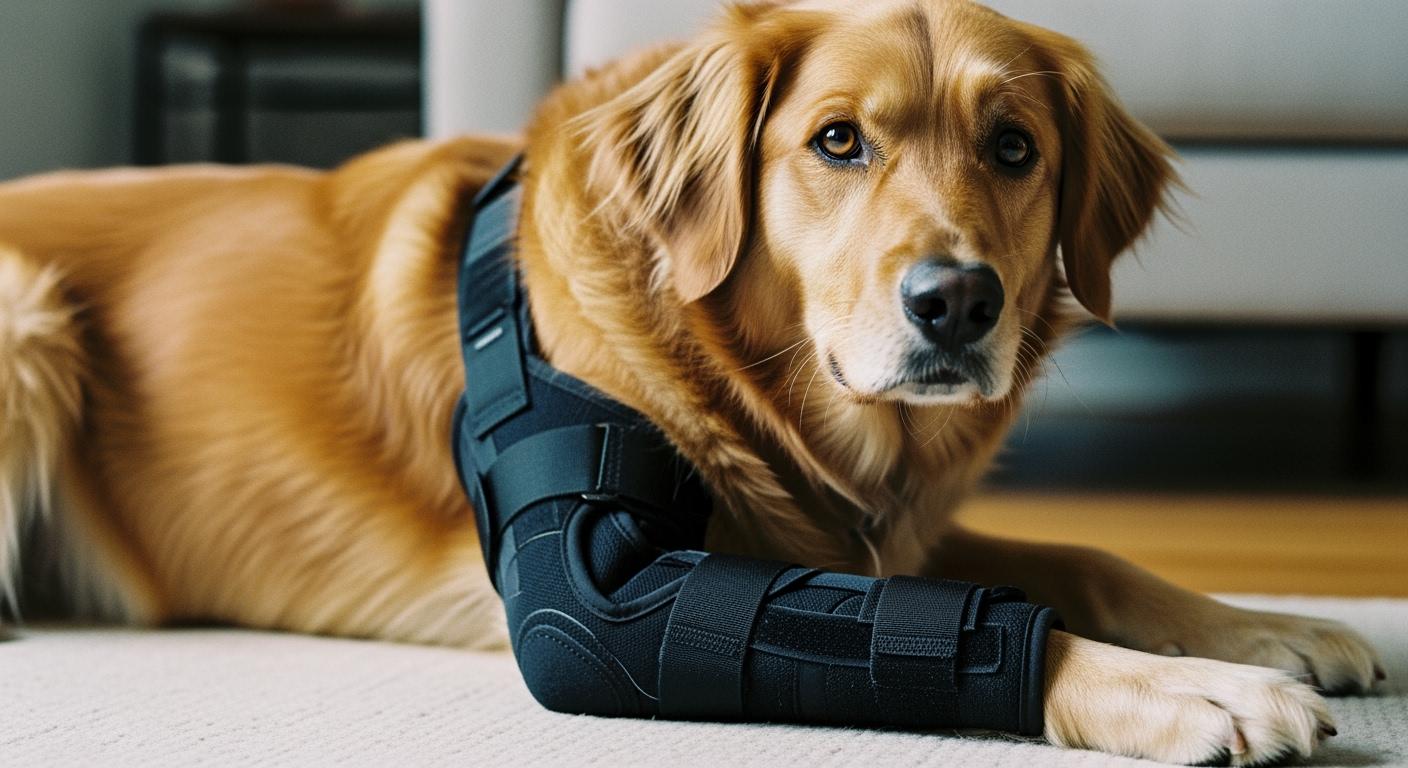
Elbow support for dogs is used to improve comfort, stability, and daily function around the elbow joint when a dog needs more help than normal movement alone can provide. This guide is for owners, rehab teams, and buyers who want to understand what elbow support includes, when it helps, how it differs from an elbow brace or sleeve, and how to choose, fit, and monitor support safely. If you are comparing condition-led support in the Solutions hub, deeper article-level education in the GaitGuard blog, or product-level options in the products hub, this page should work as the top-level starting point.
Quick Answer: Elbow support for dogs is usually most helpful when a dog needs extra joint comfort, front-leg stability, or soft-tissue protection during controlled daily activity. It is a broader category than an elbow brace alone, and the right option depends on support level, fit, and daily-use tolerance.
- Best for: elbow comfort, controlled front-leg support, daily-use joint protection
- Not always enough for: whole-leg instability or problems that are centered below the elbow
- Most important factors: support goal, fit, slipping control, and daily skin checks
Key Takeaways
- Elbow support for dogs is a broad support category that includes braces, sleeves, and other joint-area support tools.
- The right option depends on whether the dog needs more structure, more compression, or broader front-leg comfort.
- Correct fit, comfort, and daily-use tolerance matter as much as the product type.
- Elbow support works best as part of a broader care plan that may include rest, rehab, activity control, and veterinary follow-up.
What Is Elbow Support for Dogs?
Elbow support for dogs is a broad term for devices that help improve comfort, positioning, and joint-area stability around the elbow. It can include softer sleeves, more structured braces, and support tools used as part of broader front-leg care.
That broad definition matters because “elbow support” is not the same as one single product type. Some dogs need gentle compression and coverage. Some need more structured stability. Some need elbow support only as one piece of a larger front-leg support plan. This is why a Pillar page should define the category first before narrowing into brace choices.
When you compare elbow support designs, the most important features are usually:
- support level that matches the dog’s real joint-control need
- adjustable straps or closures that help maintain fit
- soft, breathable contact materials that reduce rubbing
- enough structure to stay in place during movement
- daily comfort that allows the dog to tolerate the support consistently
You can use elbow support for dogs in clinics, at home, or during rehabilitation, but only if the support stays aligned and the dog tolerates it well. That is why fit and daily observation matter as much as the support type itself.
Tip: A good fit should improve comfort and control without causing rubbing, slipping, or worse gait quality.
What Elbow Support Is Designed to Help With
Elbow joint comfort
Elbow support for dogs is often used to reduce pressure around the elbow joint and improve daily comfort during standing, walking, and controlled activity. In practical terms, the right support should make movement feel steadier and less stressful without creating new fit problems.
Front-leg stability during controlled movement
Stability matters when a dog needs to walk or stand with more confidence. Elbow support can help steady the front leg during slow walks, rehab sessions, or transitions from lying down to standing. This is especially useful when the goal is controlled movement rather than unrestricted activity.
Note: Always check the fit before each use. A good fit helps the support work well and keeps your dog safe.
Support during recovery routines
Recovery after injury or surgery often takes time, and elbow support can help during this phase by limiting unwanted movement and improving joint-area protection. The key is to match the support level to the recovery stage instead of treating every dog the same way.
Comfort as part of broader front-leg care
Elbow support also makes sense as part of a broader front-leg care plan that may include rest, controlled exercise, rehab work, traction management, and regular monitoring. This is why a Pillar page should connect support choices to the bigger care system, not just to one device.
Main Types of Elbow Support for Dogs
There are a few main types of elbow support for dogs, and each one solves a slightly different problem. The goal of this section is to explain the hierarchy clearly so readers do not confuse all front-leg support tools with the same thing.
| Support Type | Main Job | Usually Best For |
|---|---|---|
| Dog Elbow Brace | Gives more structured elbow support | Dogs needing more joint-area control and stability |
| Dog Elbow Sleeve | Gives compression, warmth, and softer support | Dogs needing lighter comfort-focused support |
| Broader Front-Leg Support | Supports more than just the elbow area | Dogs whose support needs extend beyond the elbow joint alone |
Dog elbow braces
You use a dog elbow brace when the elbow needs more structure and control than a softer sleeve can provide. Braces are usually the better choice when support goal is stability rather than simple compression or warmth.
Dog elbow sleeves
You use a dog elbow sleeve when the dog needs gentler compression, warmth, or daily comfort rather than stronger structural control. Sleeves are usually better for lighter support goals and easier daily wear.
Soft support vs more structured support
You should think first about support level. Soft support usually works better for comfort-focused daily use. More structured support works better when the elbow needs more control during walking or recovery. The right choice depends on function, not just on what looks stronger.
Tip: Always check if the support feels good for your dog. Watch for slipping or rubbing. The right support should fit well and not hurt the skin.
Support used alongside broader front-leg protection
Sometimes elbow support works best alongside broader front-leg support, especially when the dog’s needs are not limited to the elbow alone. That is why this Pillar page should also connect readers to the Solutions hub, the Blog hub, and the Products hub for deeper comparison.
Elbow Support for Dogs vs Other Front-Leg Support Tools
Elbow support vs elbow brace
You might ask whether elbow support and an elbow brace are different. Elbow support is the broader category. An elbow brace is one more structured type inside that category. A brace is usually chosen when the dog needs more control and stability than a softer support can provide.
Elbow support vs elbow sleeve
An elbow sleeve gives softer support than a brace. It usually focuses more on compression, warmth, and comfort than on stronger movement control. Sleeves are often easier for daily wear, but they do not solve the same problem a more structured brace does.
Here is a clearer comparison:
| Feature | Elbow Sleeve | Elbow Brace |
|---|---|---|
| Main role | Comfort, compression, warmth | More structured support and control |
| Best for | Lighter support needs | Higher-control support needs |
| Daily tolerance | Usually easier for longer wear | More fit-sensitive but more supportive |
| Main limitation | Less structural control | Can be bulkier or less forgiving if fit is poor |
Tip: Pick a sleeve for comfort and easy care. Pick a brace for more control and stability.
When broader front-leg support makes more sense
Sometimes dogs need more than elbow support alone. If the weakness, pain, or instability extends beyond the elbow joint, broader front-leg mobility support may make more sense. This is where your Pillar page should guide readers into a wider support decision instead of pretending every front-leg issue is solved at the elbow.
How to Choose the Right Elbow Support for Dogs
Choose by support goal
You should start by thinking about your main support goal. Some dogs need more structured stability. Others need lighter daily comfort. Some need support mainly during recovery, while others need ongoing help during controlled daily movement. Always choose by support goal first, not by product name first.
Choose by comfort and material
Comfort matters for daily wear. You want a material that feels good on the dog’s skin and does not cause rubbing. The table below shows how different materials can affect comfort and durability:
| Material Style | Comfort Impact | Support Impact |
|---|---|---|
| Softer fabric-based support | Usually more breathable and easier for daily wear | Better for lighter support goals |
| More structured support build | Can feel more controlling and more fit-sensitive | Better for higher-control support goals |
Fabric braces work well for dogs that need comfort and light support. Plastic braces give more structure and last longer, especially for active dogs or those with serious joint issues.
Choose by daily routine needs
You should think about the dog’s daily routine. Some dogs only need support during walks or rehab sessions. Others need help more often during waking hours. Pick a design that fits the real use pattern, because a support tool that is hard to apply, monitor, or clean will be harder to use consistently.
Tip: Watch how the dog acts with the support on. Make changes if you see signs of discomfort.
Choose by ease of fit and monitoring
A good fit helps the support work well. You should measure the dog’s leg before choosing a size and look for adjustable closures that let you refine the fit instead of over-tightening it. You should also choose a design that makes daily skin checks and rechecks realistic, especially if the dog’s weight, activity, or recovery status changes.
Note: Regular checks help prevent rubbing or slipping. This keeps the dog safe and comfortable.
You can use these steps to find the best elbow support for dogs in your clinic or practice.
How Fit and Positioning Affect Performance
Why accurate sizing matters
You need to measure your dog’s leg carefully before choosing elbow support. Accurate sizing helps the support stay in place, distribute pressure better, and work as intended during movement. If the size is wrong, the support may slip, bunch, or create discomfort.
Tip: Double-check your measurements before you order. This step prevents common fitting mistakes.
How elbow support should sit
You should place the elbow support so it covers the joint area without shifting the dog’s natural movement pattern too much. The support should sit centered over the elbow, stay snug without pinching, and remain stable during walking. If you see gaps, bulges, slipping, or twisting, the fit still needs work.
Here is a quick checklist for proper positioning:
The elbow joint sits in the center of the support.
The support does not pinch or bunch at the edges.
The straps hold the support in place without causing pressure marks.
Common slipping or bunching issues
You may notice the support slips or bunches during activity. This often happens if the size is wrong or the straps are too loose. Slipping can reduce the support’s effectiveness and cause skin irritation. Bunching may lead to pressure sores or limit movement. You can fix these problems by adjusting the straps or trying a different size.
| Issue | Common Cause | What to Do |
|---|---|---|
| Slipping | Loose fit or wrong size | Remeasure and refine the fit |
| Bunching | Poor alignment or excess material in the wrong place | Reposition and adjust before the next session |
| Pressure marks | Over-tightening or poor load distribution | Stop use and reassess the fit |
When to adjust or reassess fit
You should check the fit every day, especially after walks or longer wear. If you see redness, hair loss, swelling, rubbing, or worse gait quality, remove the support and reassess the fit before the next session. Dogs can change shape, activity level, and tolerance over time, so elbow support should not be treated as “set once and forget.”
Note: Regular fit checks keep your dog safe and help the support work well.
Common Use Cases for Elbow Support
Support during recovery
You might use elbow support when a dog is healing after injury, surgery, or a painful flare-up around the elbow. In recovery settings, the main goal is usually to make daily movement safer and more repeatable while protecting the joint area.
| Recovery Goal | How Elbow Support May Help |
|---|---|
| Post-surgical recovery | Helps protect the joint area during controlled movement. |
| Daily comfort during healing | May reduce joint stress during normal routines. |
| Rehab support | Helps make guided movement feel steadier. |
| Front-leg confidence | May support safer use of the limb during recovery phases. |
Support for stiffness or instability
Sometimes a dog feels stiff, hesitant, or less stable in the front leg. Elbow support can help by making the joint feel steadier during standing and controlled walking. It is especially useful when the dog needs help with joint-area comfort and stability but does not necessarily need whole-leg immobilization.
Tip: Always look for signs of pain or slipping when using support for weak joints.
Support for joint-area comfort
You want dogs to feel more comfortable even when long-term elbow problems are part of the picture. Elbow support can help reduce joint-area stress and make daily movement feel more manageable. The right support should improve comfort and function without making the dog over-rely on a poor fit or the wrong device type.
Braces help keep joints straight.
They help with long-term problems.
Sleeves give gentle pressure for comfort.
Coverage as part of front-leg care
You can use elbow support as part of a full front-leg care plan. Some dogs only need elbow-area support. Others do better when elbow support is combined with broader mobility planning, activity changes, or additional front-leg support tools. This is where internal linking to Solutions, Blog, and Products becomes especially useful.
Note: Check the fit often and watch your dog for the best front-leg care.
What to Consider Before Daily Use
Skin and comfort monitoring
You should check your dog’s skin every day before and after using elbow support. Look for redness, swelling, hair loss, dampness, or pressure marks. These signs often mean the fit needs work or the dog is not tolerating the support well enough. Keeping the area clean and dry helps prevent many avoidable problems.
Tip: Rotate the support or adjust the fit if you see any marks on the skin.
Supervised wear time
You should always supervise your dog when it wears elbow support, especially at the beginning. Start with short sessions and increase only if your dog shows stable movement, calm behavior, and good skin tolerance. Remove the support during longer rest or sleep unless your veterinarian has given a different plan.
Begin with short sessions.
Increase wear time only if your dog shows no signs of discomfort.
Remove support during unsupervised times.
Walking observation
Observe your dog during walks or activity and treat that as a walk-test, not just casual observation. Watch for steadier movement, better confidence, and no obvious slipping or gait worsening. The support should help movement feel safer, not more awkward.
Note: Record any changes in your dog’s gait to share with your veterinary team.
Cleaning and maintenance
You need to keep elbow support clean for your dog’s health and for the support to last longer. Use the following table to guide your cleaning routine:
| Care Task | Why It Matters |
|---|---|
| Clean regularly | Helps keep the support more comfortable and hygienic. |
| Dry fully before reuse | Reduces skin irritation and trapped moisture. |
| Inspect for wear | Helps catch fit or material problems early. |
| Recheck fit often | Keeps the support working as the dog’s needs change. |
A regular cleaning routine keeps the support safe and comfortable. Always inspect the support for signs of wear before each use.
Related Guides and Next Steps
This page should work as the Pillar entry point, then guide readers into more specific internal content depending on whether they need condition planning, article-level comparison, or product-level review.
Dog elbow brace guide
Use a dedicated dog elbow brace guide when you need a deeper comparison of structured elbow support, brace fit, and higher-control support paths.
Explore the dog elbow brace guide for easy steps and real examples.
Dog elbow sleeve guide
Use a dog elbow sleeve guide when you want to compare lighter support, compression, comfort, and easier daily wear.
Visit the dog elbow sleeve guide to learn the best ways to use and care for sleeves.
Dog front leg brace guide
Use a broader front-leg brace guide when the support need is not limited to the elbow joint alone and the whole front limb needs to be considered.
Review the dog front leg brace guide for tips on full-leg care and fit.
Dog leg sleeve guide
Use a dog leg sleeve guide when the main goal is coverage, comfort, or soft daily support rather than stronger elbow control.
You can continue from this Pillar page into these internal paths:
- Solutions hub for condition-first and support-first planning
- Blog hub for narrower comparison and troubleshooting articles
- Products hub for product-level support review
- brace fit, comfort, and safety guide for broader fitting education
This internal structure makes the page stronger for both users and search engines because it clearly connects the Pillar page to supporting content and product paths.
Check the dog leg sleeve guide for advice on using and cleaning sleeves.
You can use these guides and resources to learn more about elbow support for dogs. Internal links to fitting and safety guides help you keep up with the best ways to care for dogs.
Simple Daily Elbow Support Log
| Date | Wear Time | Activity | Joint Comfort | Skin Check | Next Step |
|---|---|---|---|---|---|
| Example | 45 min | short walk / rehab / rest | better / same / worse | clear / red / rubbing | hold / adjust / shorten use |
This simple log helps you track whether the support is improving comfort and stability, whether fit changes are needed, and whether your dog is tolerating daily use safely.
Frequently Asked Questions About Elbow Support for Dogs
You may have questions when you start using elbow support for dogs. Here are answers to the most common questions you might hear in veterinary clinics and rehab settings:
Can dogs use elbow support outdoors?
Yes, many dogs can use elbow support outdoors during controlled walks, but you should check for dirt, moisture, slipping, or rubbing after each session.Do dogs usually adapt to elbow support easily?
Many dogs adapt well if the support fits properly and wear time is introduced gradually. Start with short sessions and increase only if the dog stays comfortable.When should you consider elbow support for a dog?
You should consider elbow support when a dog shows elbow-area discomfort, instability, stiffness, or needs more controlled support during recovery or daily movement.What is the difference between elbow support, an elbow brace, and an elbow sleeve?
Elbow support is the broad category. An elbow brace is usually the more structured option inside that category. An elbow sleeve is usually the softer, lighter support option focused more on compression and comfort.
Tip: Always check with your veterinary team before making changes to your dog’s care plan. Regular monitoring and early support make a big difference in your dog’s quality of life.
You help your dog most by choosing the right support level, fitting the support carefully, and checking daily comfort and movement consistently. Elbow support for dogs works best when it improves joint-area comfort and front-leg function without creating new skin, fit, or gait problems.
- choose support by real support goal, not by product name alone
- fit the support carefully and recheck it after movement
- monitor skin, slipping, and walking quality every day
- use elbow support as part of a broader veterinary and rehab plan
Use this Pillar page as your starting point, then continue to the Solutions hub, the Blog hub, and the Products hub depending on whether you need condition planning, article-level comparison, or product review. Data authenticity note: This guide is for educational purposes only. It is designed to help readers understand elbow support for dogs, fit, comfort, and daily use, not to replace veterinary diagnosis or individualized treatment advice.
If your dog’s case is more complex, use veterinary guidance and the related internal guides to choose a better support path.
