
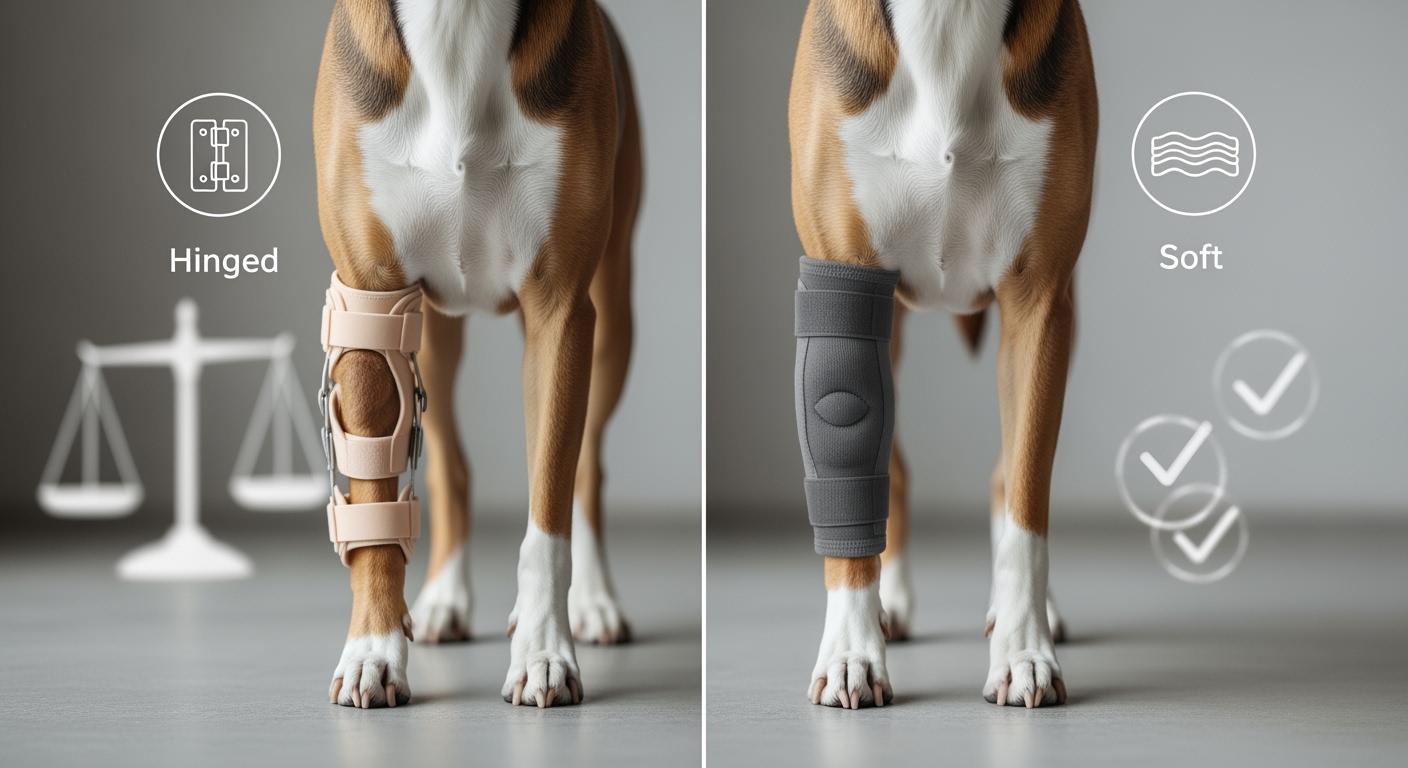
When comparing a dog knee brace ACL hinge vs soft, the main decision is how much control the knee actually needs and whether your dog can wear that level of support consistently. This article is for owners evaluating ACL/CCL support before buying, changing brace styles, or discussing options with a veterinarian. Read it to decide when a hinged design usually makes more sense, when a soft brace may be enough, and what fit, activity, and tolerance factors should guide the final choice before reviewing support pathways and use cases. In most cases, the better brace is not the one with more parts, but the one that matches instability level, daily routine, and your dog’s ability to wear it safely.
Key Takeaways
Choose hinged support when the knee needs more motion control, not just because the brace looks stronger.
Choose soft support when the goal is lighter compression, easier wear, and mild daily support.
Fit and tolerance matter as much as support level. A brace that slips, rubs, or gets refused will not help much in practice.
Use veterinary guidance to confirm whether the goal is recovery support, daily symptom management, or stronger stabilization.
Dog knee brace acl hinge vs soft
The short answer
For most dogs, a hinged knee brace is the better choice when instability is more obvious, motion needs to be guided, or recovery requires more control. A soft knee brace is usually the better choice when support needs are lighter, daily wear tolerance matters more, and the goal is mild compression rather than stronger mechanical stabilization. The right answer depends on severity, fit, activity level, and whether your dog can actually tolerate the brace for the intended routine.
The comparison is not about finding one universal winner. It is about matching brace design to the actual job: reduce excess motion, improve walking confidence, support daily comfort, or protect the knee during a recovery phase. Some dogs need more structure. Others do better with less bulk and better compliance.
In practical terms, a soft brace provides compression and lighter support, while a hinged brace adds side support and more guided knee motion. That extra structure often matters when the joint feels less stable, the dog is larger or more active, or the recovery plan calls for more control. If you are already comparing designs, this is the right point in the article to review dog knee brace product options with support level in mind, not just comfort claims.
Style | Typical use | Main benefit | Tradeoff |
|---|---|---|---|
soft | Mild strain, early support needs, light daily use | Comfortable compression, easier wear | Less mechanical control |
hinged | Greater instability, stronger control needs, some recovery plans | More structure and side-to-side stability | More bulk |
When people search dog knee brace acl hinge vs soft, they often want one simple winner. In real life, you need the right amount of help, not the most rigid option every time.
What changes the choice
Three factors usually decide the answer fastest: how unstable the knee is, whether the brace is for recovery or daily symptom management, and how well your dog can tolerate the design. Mild soreness or light support needs often point toward soft support. Clear instability, partial tear management, or higher control needs usually point toward a hinged design.
You should also think about these points:
How unstable the knee feels during walking, turning, and standing up
Whether the goal is recovery protection or lighter daily support
How active, heavy, or brace-sensitive the dog is in real life
Whether the veterinarian wants more control, easier wear, or staged support
Activity matters more than many owners think. A very active dog may need a design that controls motion better during walks and regular movement. A lower-energy dog may do well with lighter help. Size matters too. A large dog often puts more force on the joint. That can change what feels stable enough in daily use.
Comfort also affects the answer to dog knee brace acl hinge vs soft. A brace that gives more control on paper may still fail if your dog will not wear it long enough. Conservative care often tries to improve comfort and function through controlled activity, weight management, rehab work, and added joint support. In that setting, the right design is the one your dog can wear safely and consistently.
Note: If your dog has dog knee pain or ongoing knee pain, use your veterinarian’s guidance to decide how much support is right. More structure is not always better. Better matching is better.
Why no brace fits every dog
There is no single answer for dog knee brace acl hinge vs soft because every dog moves, rests, and accepts equipment differently. Fit changes results. Compliance changes results. Daily routine changes results. Even a well-made option can fall short if it shifts, rubs, or feels too bulky for regular use.
This is why no brace fits every dog with the same success. One dog may need more control and accept a hinged design well. Another may need only mild help and do better in a soft design that feels easier to wear. A third may need a different plan based on body shape, age, or how the limb bears weight during movement.
You should also remember one practical limit. External support can help with stability and comfort, but it does not fix the underlying joint problem by itself. Symptoms can return if the fit is poor or if your dog does not wear the device as directed. That is another reason the dog knee brace acl hinge vs soft choice should stay individualized.
In short, dog knee brace acl hinge vs soft means matching structure, comfort, and real-world use. The best dog knee brace acl hinge vs soft choice is the one that fits your dog’s needs today, supports the care plan your veterinarian recommends, and stays practical enough for daily life.
What this dog knee brace term means
ACL and CCL wording
You will often see both “ACL” and “CCL” in dog knee brace searches. In veterinary language, CCL is the more precise canine term, while ACL is the familiar owner-facing term that many people type into search. In practice, this article is speaking to the same knee-ligament support question either way. If you want broader educational background before comparing brace designs, review the knee and brace basics in our GaitGuard Guides.
In dogs, the CCL usually weakens over time instead of tearing suddenly.
This slow change leads to different treatment choices for dogs compared to people.
You may see “ACL” in guides to help you relate the injury to what you know about human knees.
Hinge vs soft design
You will find two main types of knee braces for your dog: hinged and soft. Each design has its own features and benefits. The table below shows how these two styles compare:
Feature | Hinged Braces | Soft Braces |
|---|---|---|
Controlled Motion | ✅ Allows controlled motion | ❌ No controlled motion |
Support | ✅ More support | ❌ Low support |
Stability | ✅ High (controlled) | ❌ Low stability |
Comfort | ✅ Balanced | ✅ Very comfortable |
Mobility | ✅ Natural movement | ✅ Full movement |
A hinged brace gives your dog more structure and helps control knee movement. A soft brace offers gentle compression and feels lighter. You should match the design to your dog’s needs and comfort.
Support vs recovery use
You may be choosing the brace for one of two jobs: ongoing support during daily activity, or more structured support during a recovery period. That distinction matters because recovery plans often need more control, while daily support plans often prioritize tolerance, routine wear, and symptom management. If you are still deciding which use case fits your dog, compare your situation against the scenarios in our Solutions overview.
Braces work well for dogs that cannot have surgery, such as older dogs or those with other health problems.
Custom braces give extra stability and help your dog move better during recovery or long-term care.
Cruciate braces help your dog regain function and enjoy an active life.
You should always talk with your veterinarian to decide if a brace is right for your dog’s acl or ccl injury.
Hinged dog knee brace basics
How a hinged brace works
A hinged knee brace is built to add more mechanical guidance around the stifle. The side supports and hinge help reduce unwanted motion while still allowing functional movement for walking. This type of design is usually considered when the knee needs more control than a soft sleeve can provide. It does not “fix” the ligament by itself, but it can make daily movement more stable and more predictable when the fit and support level are appropriate.
Function | Description |
|---|---|
Limits Motion | The hard hinge stops harmful movement after ligament injury. |
Stabilizes Joint | Hard bars help support walking and standing. |
Allows Controlled Movement | The hinge lets your dog move but protects the knee. |
When more knee stability helps
A hinged design usually makes more sense when the dog cannot keep the knee steady, when partial ligament injury has created more obvious instability, or when the recovery plan calls for more guided motion. It is also more relevant for larger dogs, more active dogs, and dogs whose daily routine places more load on the knee. In these cases, extra structure can matter more than maximum softness.
Hinged knee braces help with:
Partial ligament tears
Healing after surgery
Arthritis or long-term knee pain
Dogs who cannot have surgery
Limits of a hinged brace
A hinged knee brace gives strong support but does not work for every dog. Some dogs may think the hard parts are bulky or not comfy. This can be a problem if they wear it for a long time. You need to check the fit often. This helps stop rubbing or the brace moving out of place. Hard braces do not take the place of surgery or a full vet plan. They work best with rest, weight control, and rehab. The right brace depends on your dog’s needs. Your dog must be able to wear the hard brace. Always talk to your vet before picking a hard brace for your dog.
Soft dog knee brace basics
How a soft brace works
A soft knee brace works more like structured compression around the joint. It does not provide the same level of guided motion as a hinged design, but it can improve comfort, add light support, and feel easier to manage in daily routines. This style usually works best when the goal is mild support rather than stronger stabilization.
Soft braces often help in these ways:
they give light support to weak joints
they provide compression that may limit fluid buildup
they can improve circulation in the area
they offer proprioceptive feedback, which helps your dog sense limb position
You may also find that soft braces feel easier to put on than bandages. A well-fitted dog knee brace in a soft style can help you keep a routine without adding much bulk.
When lighter support helps
A soft design often makes sense when your dog needs mild help, not rigid control. You might choose soft braces for early soreness, mild arthritis, knee clicking, or light activity support. Soft braces can also help when your dog dislikes heavy gear.
Here is a simple guide:
Situation | Why soft braces may help |
|---|---|
Mild knee pain | gentle compression and warmth |
Mild dog knee pain | lighter daily support |
Sensitive dog | less bulk, easier wear |
Tip: If your dog tolerates soft braces well, you may get more consistent daily use. That matters because a brace only helps when your dog can wear it comfortably.
Limits of a soft brace
Soft braces have limits. They do not provide strong stabilization. Soft braces usually fit best when the goal is mild support, comfort, or prevention. Soft braces are not the best choice when the knee needs stronger control.
You should keep these limits in mind:
soft braces do not replace veterinary diagnosis
soft braces may not be enough for major instability
cheaper soft braces may give very little real support
soft braces work better for mild knee pain than for severe joint problems
If your dog has ongoing dog knee pain, frequent slipping, or a more serious injury pattern, ask your veterinarian if a more structured brace would make more sense. In many cases, soft braces help with comfort. They do not serve every knee problem equally.
Hinged vs soft knee brace
Support level
Support level is the core difference in this comparison. A hinged brace usually gives stronger control when the knee needs more guidance. A soft brace usually gives lighter support when the main goal is compression, comfort, and easier daily wear. If the knee is slipping more, the dog is guarding the leg heavily, or activity keeps exposing instability, a soft design may simply not be enough.
Hinged braces: controlled motion, strong support, recommended for instability
Soft braces: compression, mild support, limited stabilization
Comfort and tolerance
Comfort matters when choosing your dog’s knee brace. Soft braces feel very comfortable. They allow full movement. Hinged braces balance comfort and structure. Your dog may need time to adapt. This is true for either style. Fit, materials, and adjustability affect tolerance. Skin irritation and pressure sores can happen. This is common in the first weeks. You can manage most issues well. Use proper fit and gradual wear.
Factor | Soft Braces | Hinged Braces |
|---|---|---|
Stability | Low | High (controlled) |
Comfort | Very comfortable | Balanced |
Mobility | Full movement | Natural movement |
Movement and control
Soft braces let your dog move freely. They disrupt ordinary activity less. The fabric feels comfortable. But it may loosen over time. This can reduce control of unstable motion. Hinged braces guide movement. They also limit harmful motion. They help your dog walk better. They add more stability and control. Hinged designs keep functional movement. They also control abnormal knee motion.
Soft braces: flexible comfort, freer motion, limited control
Hinged braces: guided movement, better control, improved stability
Daily wear
Daily wear depends on brace fit and tolerance. Skin irritation and brace slippage affect many dogs. This often happens in the first weeks. You can reduce complications with regular checks. Gradual adaptation also helps. Soft braces are easier for daily routines. They are also less bulky. Hinged braces may need more adjustment. But they offer stronger support. This helps ongoing knee pain or instability. Always watch your dog’s comfort. Check for signs of irritation.
Tip: Choose a knee brace matching activity level. It should also match support needs. Consult your veterinarian for guidance.
Choose brace support by dog needs
Mild knee support
You may see your dog lift a hind leg. Your dog may stretch it out. Your dog may stop and sit. Whimpering or crying can happen too. These signs often mean mild knee support. A soft knee brace can help here. It gives gentle compression and warmth. This brace can make walking easier. It can make rest more comfortable. You want a custom-fit brace. It gives the best results. A custom-fit design matches your dog’s shape. It also keeps the brace in place.
Veterinarians often check for these signs first:
Early soreness or stiffness
Short times of limping
Dogs who still play and walk but show mild discomfort
A custom-fit brace works well here. It improves comfort and steadies the knee. It helps during daily activity.
Moderate knee support
Some dogs need more than mild help. You may see slight lameness or toe-touching. You may also see weight shifting. Mild arthritis and patellar subluxation matter too. Sprains or early ligament issues also matter. These signs point to moderate knee support. A custom-fit brace with adjustable straps can help. Good compression can help too. This brace gives stability. It also limits harmful knee motions. It supports healing after a partial tear.
Key features for moderate support include:
Compression and stability
Proper fit for your dog’s limb shape
Adjustable straps for a secure hold
Custom-fit brace options for better comfort
A custom-fit brace at this level helps movement. It can reduce pain. It also lowers the risk of further injury.
Higher support needs
Some dogs show clear signs. They need more support. You may see hopping on both rear legs. You may see limping after exercise. You may notice stiffness after lying down. Swelling around the knee is another sign. Clicking sounds are also a sign. Avoiding weight on the leg matters too. These patterns suggest a structured knee brace.
Veterinarians use several cues for higher support:
Evidence area | Supportive details |
|---|---|
Signs that a dog may need more support | Hopping, limping after exercise, stiffness after rest, paw lifting, knee noises |
Additional signs of knee trouble | Swelling, clicking, toe-tapping, avoiding weight-bearing |
When a more structured knee brace is evaluated | After partial ligament tear, during rehab, or when guided support is needed |
Other factors | Dog size, activity level, owner’s ability to manage fit and care |
A custom-fit brace with a hinge gives most control. This design guides knee movement. It also protects healing tissues. You want a custom-fit brace. It helps large dogs. It also helps dogs with severe instability. A custom-fit brace also helps unique limb shapes.
Short-term vs daily use
You must decide the use type. Your dog may need short-term use. Your dog may need daily use. Short-term use often follows surgery. It can also happen during recovery. A custom-fit brace can protect the knee. It helps while tissues heal. Daily use is common with ongoing arthritis. It is also common with long-term joint problems. A custom-fit brace helps manage symptoms. It also keeps your dog active.
Veterinarians use these factors to guide choice:
Clinical cue used to guide support level | What it suggests about brace support |
|---|---|
Partial cruciate ligament injury | Conservative bracing, not maximal stabilization |
Mild to moderate joint instability | Lower or mid-level support options |
Older dogs with arthritis | Supportive bracing for symptom management |
Recovery after surgery | Temporary protection during healing |
Non-surgical treatment plan | Brace as part of broader rehab approach |
A custom-fit brace works best in both cases. It matches your dog’s needs. It also keeps the knee stable. Always check with your veterinarian first. Then choose a custom-fit brace.
Fit matters in a dog knee brace
How to measure well
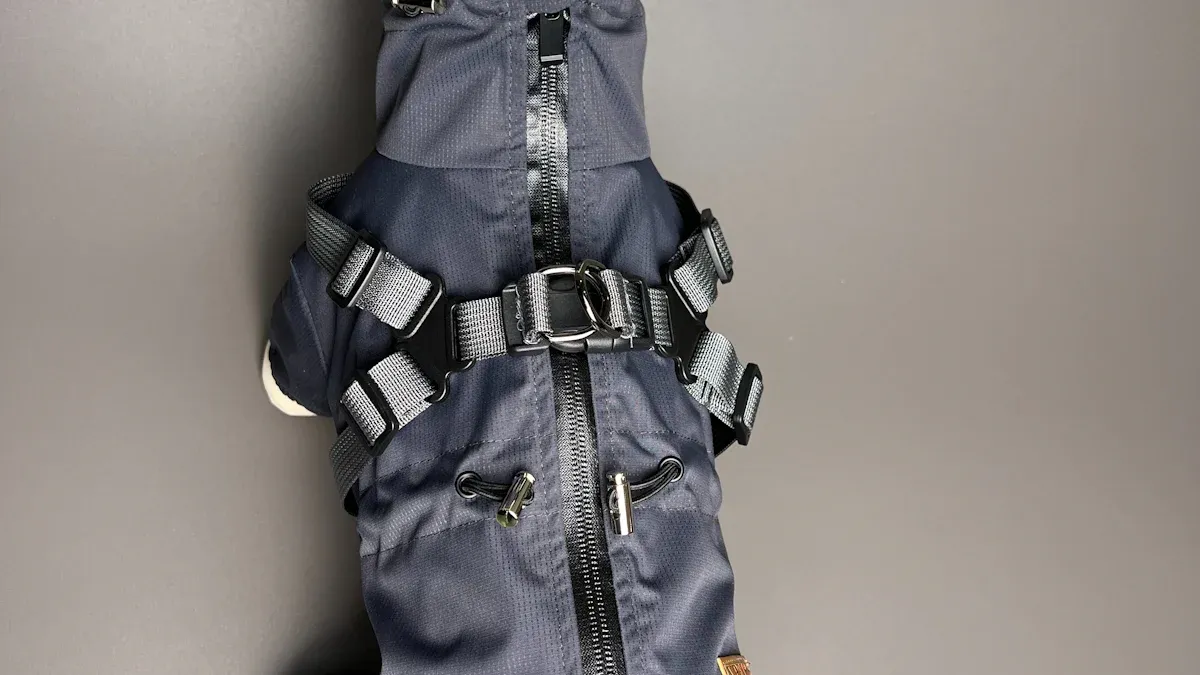
Good sizing starts with careful measurement. You should measure your dog while your dog stands in a natural position. Use a soft tape. Write each number down. Measure thigh width, lower leg width, and the length above and below the knee. This helps the brace line up with the joint and give useful support.
Measurement step | Why it matters |
|---|---|
Custom cast or 3D scan | Helps create even pressure and better alignment |
Hinge tension check | Helps match movement control to the needed support |
Padding thickness review | Improves comfort without making the fit too tight |
Moisture-resistant finish | Helps daily wear stay more comfortable |
Tip: Measure twice. Small errors can change how the support feels during walks.
Signs of a good fit
A well-fitted brace stays in place during normal movement. It feels secure, not tight. Your dog should walk with a more natural gait after a short adjustment period. The knee area should stay aligned with the design. You should also see steady contact, not gaps or bunching.
Good fit often looks like this:
the brace stays centered
the knee moves without twisting
your dog accepts short wear sessions
the support feels stable during daily use
Signs the brace is wrong
Poor fit creates problems fast. Watch the skin every day. Redness, swelling, rubbing, or pinching can signal trouble. Slipping or spinning can reduce support and create sores. A bad fit can also restrict blood flow or change gait. If your dog licks, chews, or refuses to walk, check the brace right away.
pressure sores or skin irritation
slipping, spinning, or rubbing
restricted movement
open wounds or infection risk if rubbing continues
Body shape and sizing
Body shape matters as much as size. Breed build varies a lot. A slim leg and a thick leg may need very different shaping, even with similar numbers. Leg length also matters because the knee must sit in the right place.
Body factor | Fit effect |
|---|---|
Breed build | General breed labels do not guarantee fit success |
Thigh shape | Thick or unusual upper legs may need custom shaping |
Leg length | Short or long limb proportions can affect alignment |
Overall structure | Fit affects comfort, stability, safety, and support |
Activity, comfort, and the dog
Active dogs
If your dog walks a lot, runs often, or turns fast, activity level matters. A more structured brace may help control extra motion during daily exercise. A soft option may feel easier, though it may give less support when the knee faces more stress. You should match the design to real movement, not just the label on the product page.
Senior dogs
Senior dogs often need comfort first. A lighter brace can feel easier to accept during slow walks, rest breaks, and indoor movement. Some older pets still need more knee support, especially if the joint feels less steady. You should watch energy, gait, and wear tolerance. A useful brace should help the knee feel supported without making the dog resist walking.
Tip: Start with short wear sessions. Check the skin after each session. Increase time slowly if your dog stays calm and comfortable.
Post-injury routines
Your daily routine changes brace choice. Some dogs need help during short rehab walks. Some need support during controlled home activity. In many cases, a hinged style fits a plan that needs more knee control. A soft style often fits lighter daily use. You should ask your vet how much support makes sense for your dog’s stage of recovery.
Routine need | What to think about |
|---|---|
Short leash walks | comfort, fit, knee motion |
Home recovery | simple wear, steady support |
Gradual return to activity | brace tolerance, knee stability |
Dogs sensitive to bulk
Some dogs dislike thick materials or rigid parts. That reaction matters. A bulky brace that your dog will not wear does not help much in real life. Sensitive dogs often do better with a lower-profile design, as long as the knee still gets enough support. You should balance control, comfort, and daily use. The best choice is the one your dog can wear safely and consistently.
Dog knee brace mistakes to avoid
Buying by severity alone
One of the most common buying mistakes is assuming the most rigid brace is automatically the safest choice. That approach ignores fit, compliance, body shape, activity pattern, and daily tolerance. A brace can look more supportive on paper and still fail in practice if it slides, rubs, or gets rejected after short wear sessions.
Evidence point | How it supports the query |
|---|---|
Many dogs get sore skin or spots early on. | This happens when the brace does not match the dog’s needs. |
Braces can slip or be refused by the dog. | This shows that picking by severity is not enough. |
Custom fit and follow-up are as important as severity. | Skipping these steps can lead to poor support. |
Anatomy, activity, and condition should guide your choice. | One brace does not work for every dog. |
The main reason braces fail is poor design, wrong fit, or not using them right. Success comes from picking the right kind and using it with your vet’s help.
Ignoring comfort issues
Comfort is just as important as support. If your dog will not wear the brace, it cannot help. Both hinged and soft braces can cause problems if they rub or pinch. You should check for red skin, swelling, or sores every day. Dogs may not want to walk or may chew at the brace if it feels bad. Always watch how your dog acts and moves. Change or stop using the brace if your dog seems uncomfortable.
Dogs need time to get used to a new brace.
Start with short times and make them longer slowly.
Watch for any signs of pain or sore spots.
Guessing on size
Do not guess size based on breed, age, or what “usually fits.” A loose brace reduces control, and a tight brace creates pressure problems. Measure while your dog is standing naturally, record the numbers, and compare them to the specific brace style you are evaluating. This matters for both hinged and soft designs because each style fails quickly when the fit is wrong.
Bad sizing can cause sores and make the brace fail.
Custom fit or careful measuring gives better results.
Always check your numbers twice.
Record this before ordering: thigh circumference; circumference above and below the knee; overall brace length needed; whether the dog tolerates straps or bulk well; and whether the goal is daily wear or recovery-only use.
Skipping vet guidance
Veterinary guidance matters because brace choice should follow diagnosis, not guesswork. A veterinarian can help confirm whether the issue is mild support, stronger stabilization, post-injury management, or a case that needs a different plan entirely. This step is especially important when the dog is toe-touching, slipping repeatedly, refusing weight-bearing, or showing swelling after activity. Sometimes your dog may need surgery or rehab instead.
Talking to your vet is the most important step for picking between custom and ready-made braces, getting a good fit, and making changes later.
Talk about brace choices with your vet, especially if you are not sure about surgery.
Share what you know and ask for advice.
Keep checking in to make sure the brace still helps.
Remember, no knee brace can promise healing. The best choice depends on your dog’s needs, comfort, and your vet’s advice.
Next steps after brace choice
Talk with your vet
After choosing a brace style, confirm the plan with your veterinarian before making daily use decisions. Ask whether the goal is lighter support, stronger control, recovery-only wear, or part-time support during activity. Also confirm what signs mean the current brace style is not enough.
Review the main dog knee brace page
Before buying, compare brace structure, fit requirements, and daily-use expectations instead of comparing marketing language only. Focus on whether the product matches your dog’s support level, not just whether it sounds more advanced.
Read the torn ACL guide
If your dog has a suspected or confirmed ACL/CCL issue, review your broader recovery plan alongside brace selection. Activity limits, weight control, rehab work, and skin checks usually matter as much as brace style.
Explore ACL and CCL support
For broader educational background on knee support, fit, and support categories, continue through the resources in our Guides section after you finish this comparison.
Tip: Use these resources to build a care plan that fits your dog’s needs. Internal links help you find answers quickly and stay informed about knee injury support.
Choosing between a hinged and soft dog knee brace comes down to one practical question: does your dog need more control, or more wearable daily support? Hinged designs usually fit clearer instability and stronger recovery-control needs. Soft designs usually fit lighter support goals, easier daily wear, and dogs that reject bulk. The best choice is the one that matches the knee’s actual instability level, your dog’s tolerance, and the daily routine you can manage consistently.
Quick decision rule: choose soft when support needs are mild and tolerance is the priority; choose hinged when instability is clearer and better motion control matters more.
FAQ
Is a hinged brace always better than a soft brace?
No. A hinged brace is not automatically better just because it offers more structure. It is usually better when the knee needs more guidance and stability. A soft brace is often better when the goal is lighter support, easier daily wear, and better tolerance.
When should you choose a soft knee brace?
A soft brace usually makes sense when the support goal is mild, the dog is sensitive to bulk, or the routine depends on easier daily wear. It is less appropriate when the knee needs stronger motion control or the dog is showing clearer instability.
How do you know if the brace fit is wrong?
Common signs of poor fit include slipping, twisting, bunching, red skin, pressure marks, shortened stride, or refusal to walk normally. If those signs continue after minor adjustment, remeasure and review the fit with your veterinarian before continuing routine use.
Can a brace replace veterinary care?
No. A brace can support function, comfort, and movement control, but it does not replace diagnosis, imaging when needed, or an overall treatment plan. It works best when used as part of veterinary management, not instead of it.
Data authenticity note: This article is for educational purposes only. It is designed to help owners compare brace structure, support level, and day-to-day use considerations for hinged and soft knee braces. It does not replace veterinary diagnosis, imaging, individualized brace fitting, or a full treatment plan for ACL/CCL injuries.
