
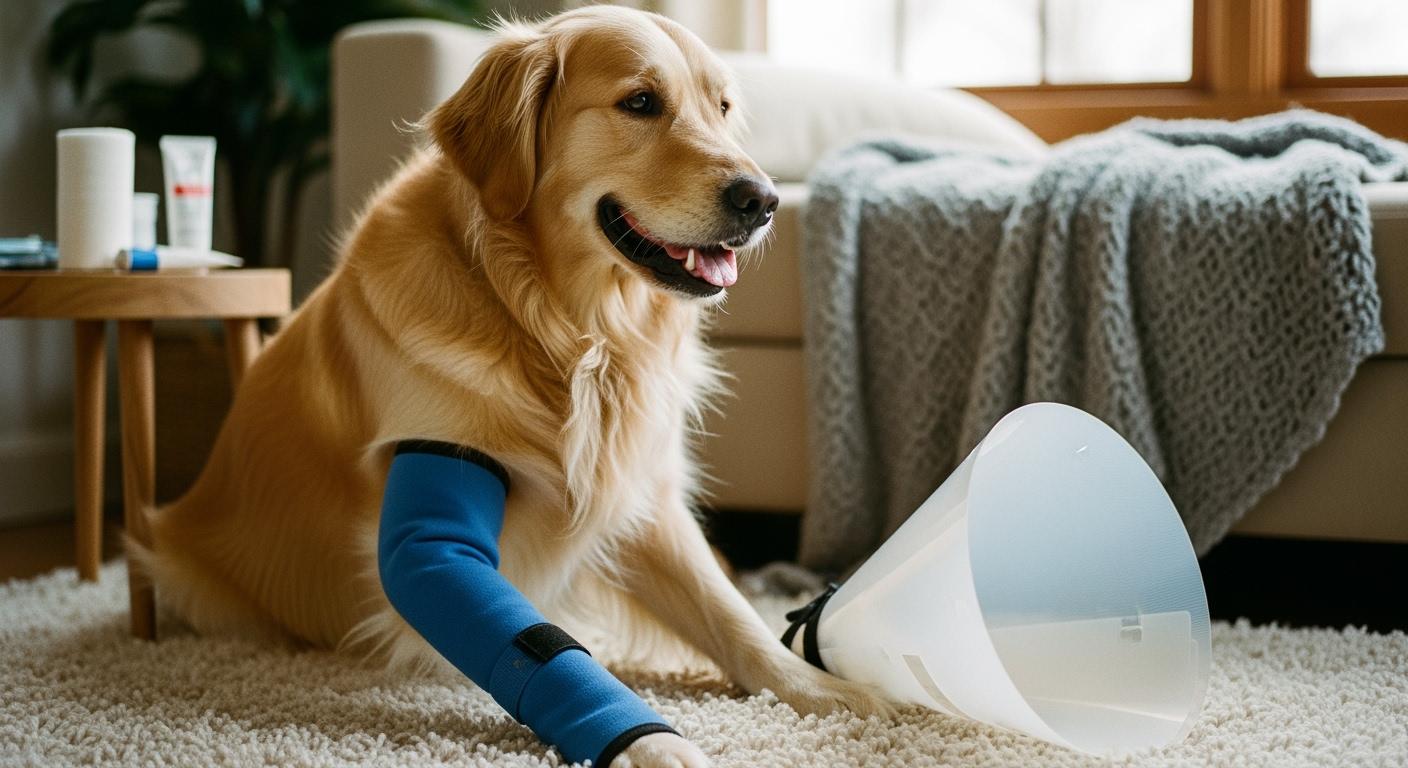
When comparing dog recovery sleeve back leg vs cone, the main decision is whether your dog needs targeted hind-leg protection or broader licking prevention that reaches beyond the limb. This article is for owners, clinics, and rehab-minded buyers who need to compare which option is more practical based on wound location, bandage security, behavior, and daily recovery routine. Read it to decide when a back-leg recovery sleeve is usually the better fit, when a cone is the safer choice, and when to review condition-based recovery pathways before choosing a product direction.
Decision point | Cone | Recovery Sleeve |
|---|---|---|
Coverage scope | Broad licking prevention | Targeted hind-leg coverage |
Best fit | Hard-to-cover wounds or persistent licking | Back-leg wounds, stitches, or bandage protection |
Mobility impact | Usually higher | Usually lower |
Eating and resting | May need more supervision | Usually easier to manage |
Main limitation | Can reduce comfort and navigation | Only protects the covered limb area |
Typical use case | Broader access prevention | Localized recovery support |
Key Takeaways
Choose a back-leg recovery sleeve when the wound is on the hind leg and targeted coverage is enough.
Choose a cone when the dog can still reach the wound or when broader protection is needed.
Wound location, licking persistence, and fit tolerance should drive the decision.
Daily monitoring matters because both options can fail if alignment, comfort, or protection breaks down.
Dog Recovery Sleeve Back Leg vs Cone Overview
What Is a Back Leg Recovery Sleeve?
A back-leg recovery sleeve is a wearable recovery covering designed to protect a hind-leg wound, dressing, or surgical site while preserving more normal daily movement than a cone. It is usually the better fit when the protection need is localized to the back leg and the dog does not keep bypassing the sleeve to reach the area anyway. If you want broader educational background before comparing products, review the foundational material in our GaitGuard Guides.
Evaluation point | Why it matters |
|---|---|
Coverage area | Designed mainly for localized hind-leg protection |
Fit stability | Must stay aligned to keep the wound or bandage protected |
Material tolerance | Breathable, wearable fabric helps repeated daily use |
Cleaning practicality | Useful in recovery routines that require repeated cleaning and reapplication |
Main limitation | Does not protect areas outside the covered hind leg |
What Is a Cone for Dogs?
A cone, also called an Elizabethan collar or e-collar, is a broader recovery barrier that prevents the dog from reaching wounds, dressings, or healing areas with the mouth. It is usually the safer option when the wound lies outside sleeve coverage, when the dog is persistent about licking, or when localized protection is no longer enough.
Typical Uses for Each Protection
The better choice depends on what needs protection and how determined the dog is to reach it. Use the table below as a decision shortcut rather than a comfort-only comparison.
Back-leg sleeve situations | Cone Situations |
|---|---|
Hind-leg wounds, stitches, or bandages | Head, neck, tail, torso, or multiple-body-area wounds |
Dogs that tolerate wearable limb coverage well | Dogs that keep licking, chewing, or bypassing local protection |
Cases where movement continuity matters | Cases where broader protection matters more than comfort tradeoffs |
In practical use, a sleeve is usually the better fit for targeted hind-leg protection, while a cone is usually the better fit for broader access prevention. If the case direction is still unclear, review the broader recovery use cases in our Solutions overview.
Comparing Protection and Comfort for Recovery
Wound and Bandage Coverage
Wound location is the first filter. A back-leg recovery sleeve is usually more relevant when protection is needed on the hind leg and the bandage or wound needs localized coverage that stays in place during daily movement.
A cone becomes more relevant when the dog can still reach the wound despite local coverage, or when the wound sits in a broader or harder-to-cover area such as the tail, belly, neck, or multiple body regions.
Here is a table that shows the pros and cons of each option for wound and bandage coverage:
Type | Pros | Cons |
|---|---|---|
Recovery sleeve | Targeted hind-leg protection, lower movement disruption, easier bandage support | Limited to the covered area and depends on fit stability |
Cone | Broader protection, stronger licking prevention, useful outside limb-only cases | Higher comfort tradeoff and more effect on daily routine |
The correct option is the one that still protects the wound reliably under real daily conditions, not the one that simply sounds more comfortable.
Comfort and Mobility for Dogs
Comfort matters because recovery devices only work when the dog can tolerate them. Sleeves usually interfere less with walking, resting, eating, and day-to-day movement when the wound is on the hind leg and the dog accepts local coverage.
Cones often provide stronger prevention, but that protection comes with a bigger effect on navigation, feeding routines, and stress tolerance in some dogs.
Owner surveys show that recovery suits and sleeves give warmth and comfort without adding weight. Dogs can move better with sleeves. Inflatable collars and soft E-collars also protect wounds and let dogs move more easily.
For this article, the practical comparison should stay focused on sleeve vs cone rather than expanding into multiple recovery-device categories.
When you reach the stage of comparing actual recovery options, review Products by coverage pattern, fit stability, and daily-use practicality.
Stress Reduction and Daily Living
Stress and compliance matter because a recovery device that the dog keeps fighting may stop being useful, even if the protection concept is correct.
Sleeves are often easier to tolerate in hind-leg cases because they preserve more normal vision and movement. Cones are often less comfortable, but they can still be the safer choice when licking behavior is persistent.
Decision rule: if localized hind-leg coverage works and the dog tolerates it, a sleeve is often more practical; if the dog keeps reaching the wound, broader prevention usually matters more than comfort.
Between the two, the better option is the one that still protects the wound reliably without breaking down under the dog’s actual behavior during recovery.
When to Choose a Back Leg Recovery Sleeve
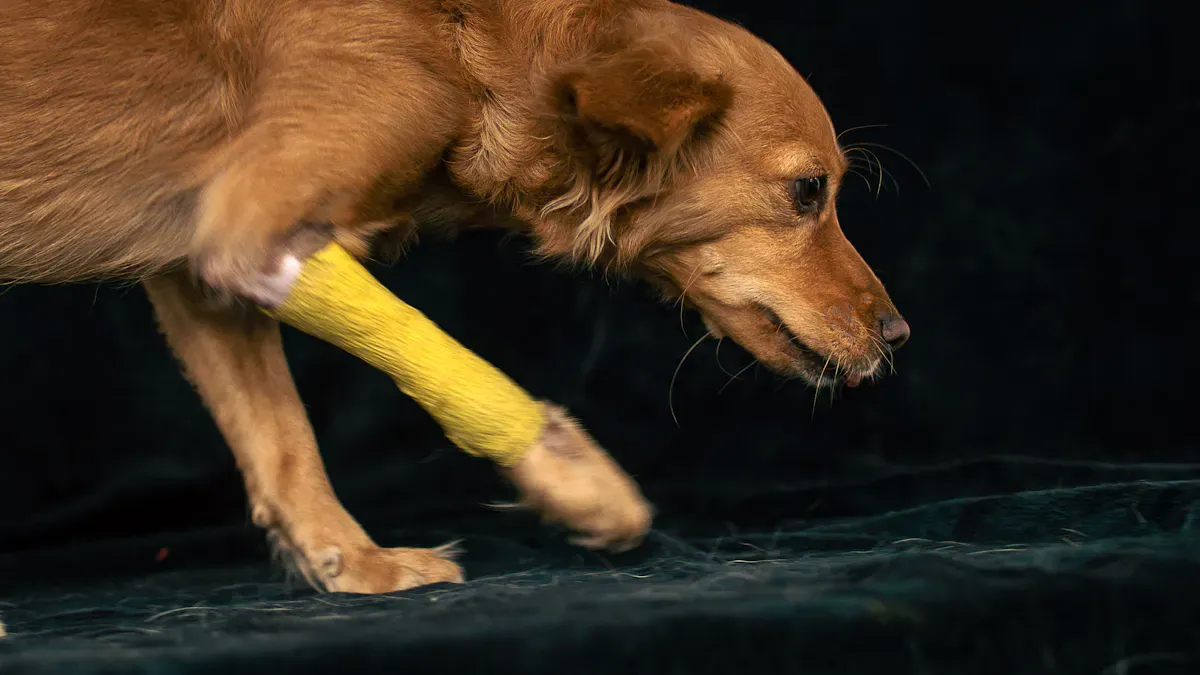
Targeted Hind Leg Protection
A back-leg recovery sleeve is usually the better fit when the wound, stitches, or dressing are on the hind leg and the recovery goal is localized protection with lower daily disruption. This is especially relevant in orthopedic recovery routines where bandage security and controlled movement both matter.
Type of Injury/Surgery | Benefits of Recovery Sleeve |
|---|---|
Orthopedic Recovery | Keeps bandages safe after surgeries like TPLO, patella luxation, and cruciate repair. |
Pick a sleeve if you need to protect the hind leg. The sleeve fits tightly and stays in place. Your dog can move around more easily while healing.
Anti-Lick and Bandage Support
Dogs try to lick or chew wounds and bandages. You need strong protection to stop this. A recovery sleeve helps keep bandages secure and stops licking. The sleeve covers the wound so your dog cannot reach it. You get reliable protection for limb injuries.
Here is a comparison of recovery sleeves and cones for anti-lick and bandage support:
Pros/Cons | Recovery Sleeves | Cones |
|---|---|---|
Protection scope | Focused hind-leg protection | Broad oral-access prevention |
Mobility tradeoff | Usually lower | Usually higher |
Bandage support | More practical for limb dressings | Less targeted for bandage stability |
Main limitation | Only protects the covered hind leg | Can disrupt routine movement and feeding more |
Sleeves give better comfort and let your dog move more. You can put the sleeve on and take it off easily. The sleeve is right for wounds on the back leg.
Protection check: if the dog can still reach the wound or starts chewing the sleeve itself, the current setup should be reassessed immediately.
Day-to-Day Comfort
Day-to-day comfort becomes important when the device must stay in routine use for repeated recovery periods. In hind-leg cases, sleeves are often chosen because they preserve more normal walking, sleeping, and feeding behavior.
Usually lower impact on walking and rest
Often easier to tolerate in daily routines
Better fit for localized hind-leg recovery
Still requires monitoring for slip, chewing, and skin irritation
That does not make sleeves universally better. It only means they are often more practical when targeted hind-leg protection is enough and the dog does not keep defeating the coverage.
When a Cone Is Needed for Dogs
Preventing Licking and Chewing
A cone is usually chosen when the dog is persistent about licking or chewing and localized hind-leg protection no longer controls access reliably. In these cases, broader prevention matters more than comfort tradeoffs.
The key issue is not whether the cone looks less comfortable, but whether it blocks access more reliably than a sleeve in the actual recovery situation.
Broad Area Protection
The cone of shame gives broad coverage. It protects more than just one spot. If your dog has wounds on the head, neck, or tail, the cone works better than a sleeve. Some dogs have multiple injuries or skin problems. The cone of shame keeps your dog from reaching any of these areas. You may need this tool if your dog has a habit of chewing or scratching different parts of the body. The cone also helps when your dog has chronic skin conditions. In these cases, the cone of shame may stay on for a longer time.
Here is a table that shows when you should use a cone for your dog:
Scenario | Recommendation |
|---|---|
Post-operative wounds outside the limb | Use a cone when local sleeve coverage cannot protect the site |
Persistent licking behavior | Use a cone when the dog keeps defeating localized protection |
Multiple wound areas | Use a cone when one local covering cannot manage all risk areas |
Longer recovery periods | Review tolerance and reassess whether broader prevention is still needed |
Vet Recommendations
Veterinary decision-making usually follows a simple sequence when comparing sleeve vs cone:
Confirm wound location and whether it is limb-only or broader.
Assess whether the dog keeps trying to lick, chew, or bypass protection.
Compare tolerance, fit, and impact on daily recovery routines.
Choose the lowest-disruption option that still protects the wound reliably.
Reassess quickly if protection fails.
Workflow tip: wound location first, behavior second, device choice third.
The correct protection method is the one that continues to work under the dog’s real recovery behavior, not the one that only sounds more comfortable in theory.
Deciding Based on Wound Location and Behavior
Assessing Licking Habits
Licking behavior should be judged in practice, not assumed. Some dogs tolerate sleeves well and leave the wound alone. Others will immediately target the area again unless broader prevention is used.
If the dog ignores the protected area, sleeve-based recovery may be enough.
If the dog keeps trying to reach the wound, broader prevention is usually safer.
If stress rises sharply, reassess both fit and protection category.
If your dog keeps trying to reach the wound, a cone may give stronger protection. If your dog stays calm and does not bother the injury, a sleeve can provide comfort and support. Always check for signs of stress or frustration. A calm dog heals faster and feels better during recovery.
Behavior check: the first few hours of wear often tell you whether the current protection category is realistic.
Matching Protection to Wound Placement
You should match the type of protection to the location of your dog’s wound. A back-leg recovery sleeve works best for injuries on the hind leg. It covers the area and keeps bandages in place. Your dog can walk, rest, and eat with less trouble.
A cone works well for wounds on the head, neck, tail, or multiple spots. It blocks your dog from reaching areas that a sleeve cannot cover. If your dog has more than one wound, or if the wound is in a hard-to-reach place, a cone may be the safer choice.
Use this simple guide:
Wound Location | Best Protection |
|---|---|
Back leg | Recovery sleeve, when local coverage is enough |
Head or neck | Cone |
Tail or multiple spots | Cone |
Back leg but dog still reaches the wound | Usually cone or combined reassessment |
Matching protection to wound placement usually prevents unnecessary device changes later in recovery.
Choosing the right tool helps your dog stay comfortable and safe. You support a smooth recovery by matching protection to your dog’s needs.
Fit, Sizing, and Maintenance Tips
Measuring for Dog Recovery Suits and Sleeves
Fit quality determines whether either protection method will remain usable. A sleeve should stay aligned without slipping, bunching, or exposing the protected area. A cone should block access without creating excessive feeding, resting, or navigation problems. Early fit review is part of safe recovery, not an optional step.
Choosing the Right Cone Size
Choose a cone size that extends past the dog’s nose while still allowing supervised eating and drinking. The goal is not to maximize size, but to block access reliably without creating avoidable daily-use problems.
Try the cone on your dog before you buy. Make sure your dog can wear it without stress. If your dog refuses to wear the cone, ask your vet about using a suit instead.
Cleaning and Care
Keep your dog’s suit and cone clean for good health. Wash the suit in the washing machine with mild soap. Dry it fully before your dog wears it again. Check the suit for damage after each wash. Replace the suit if you see holes or loose seams. Clean the cone with warm water and soap. Dry it well to stop bacteria from growing. Dogs should wear clean gear to avoid infection. Inspect both the suit and cone daily. Good care helps your dog heal faster and stay comfortable.
Tip: Rotate between two suits if your dog needs to wear one all the time. This keeps one suit clean and ready while the other is in use.
Record for 5 days during recovery: wound location, number of licking attempts, whether the sleeve or cone stayed aligned, skin response after use, eating and resting tolerance, and whether the current protection still feels sufficient.
Common Mistakes and Real-Life Advice
Avoiding Improper Fit
You want your pet to heal with the right support. Many owners make mistakes when fitting a recovery sleeve or cone. The most common mistake is choosing the wrong size. If you do not measure your pet’s leg or neck correctly, the protection may slip off or feel too tight. Some owners pick a soft collar, but flexible collars can let your pet reach the wound. You also need to give your pet time to adjust. Some pets try to remove the collar or sleeve at first. You can see the most common mistakes in the table below:
Mistake Type | Description |
|---|---|
Improper Sizing | Owners may fail to accurately measure their pet, leading to a poor fit. |
Material of Collar | Softer collars may allow pets to reach their wounds due to flexibility. |
Pet’s Acceptance | Pets may need time to adjust and may try to remove the protection. |
For more tips on measuring and fit, check the back-leg recovery sleeve article or the dog anti-lick category page.
Recognizing Discomfort in Dogs
Discomfort matters because a device that the dog keeps fighting may stop being clinically useful. Watch for pawing, whining, avoidance, refusal to move normally, or repeated efforts to remove the protection.
Signs of discomfort:
Restlessness or repeated pawing at the device
Refusal to walk, eat, or rest normally
Repeated attempts to remove the sleeve or cone
Skin marks, pressure points, or irritation after wear
If these signs continue, reassess fit first and protection category second.
When to Consult Your Vet
You should always ask your vet if you have questions about your pet’s recovery. Your vet knows what is best for your pet’s surgery or injury. If you see redness, swelling, or your pet keeps removing the protection, call your vet. You should also ask for help if your pet seems very stressed or cannot eat or drink. Your vet can suggest the best pet-friendly recovery option for your pet’s needs.
Tip: Your vet can help you choose between a sleeve and a cone for your pet. They can also show you how to check the fit and ease of use.
You want your pet to heal safely and with ease. Good fit, comfort, and regular checks help your pet recover faster. For more information, visit the related sleeve product pages and the dog anti-lick category page.
The key difference between a back-leg recovery sleeve and a cone is protection scope. A sleeve is usually the better fit for localized hind-leg wounds when daily movement and comfort need to stay as normal as possible. A cone is usually the safer fit when wound location or licking behavior exceeds what a sleeve can control reliably.
For follow-up after this comparison, continue only to the most relevant internal paths: use Guides for educational background, Solutions for condition-based direction, and Products when the case is ready for device evaluation.
Data authenticity note: This article is for educational purposes only. It is designed to help readers compare when a back-leg recovery sleeve is more appropriate than a cone, and when cone-based prevention is the safer choice. It does not replace veterinary diagnosis, wound evaluation, individualized fitting, or a full recovery plan.
Remember, choosing carefully helps your dog heal well and feel happy.
FAQ
How do I decide between a back-leg recovery sleeve and a cone?
Start with wound location, then assess whether the dog can still reach the area despite local protection. If the wound is on the hind leg and targeted coverage works, a sleeve is often enough. If not, a cone is usually safer.
Can my dog wear a sleeve after surgery?
Sometimes, yes. A recovery sleeve is usually enough when the wound is on the hind leg and the dog cannot bypass the sleeve to reach it anyway.
Will a cone stop my dog from licking all wounds?
A cone is usually necessary when the wound is outside limb coverage, when there are multiple wounds, or when the dog keeps licking despite sleeve use.
How do I make sure the sleeve or cone fits well?
A correct fit stays aligned, avoids pressure marks, and still protects the wound during the daily recovery routine. If the sleeve slips or the cone fails to block access, the setup needs review.
What if my dog seems stressed wearing protection?
Sometimes, yes. A sleeve and cone can be combined when localized hind-leg coverage is still useful but broader licking prevention is also needed.
