When comparing a ccl dog brace custom vs off the shelf, the main decision is not whether both options can provide support, but which fit pathway matches your dog’s instability level, anatomy, and rehabilitation plan. This article is for owners, clinics, and rehab-minded buyers who need to compare when custom bracing usually makes more sense, when an off-the-shelf brace may be enough, and what fit, wear, and monitoring factors should guide the final choice. Read it to understand how support goals change with brace type and when to review condition-based support pathways before moving into product selection.
Key Takeaways
Choose custom bracing when fit precision, stronger support, or unusual limb shape make standard sizing less reliable.
Choose off-the-shelf bracing when support is needed quickly and the case still fits standardized sizing and simpler support demands.
Fit quality, wear tolerance, and activity control affect outcomes more than brace category labels alone.
Veterinary guidance should confirm that the brace path matches the CCL case and recovery objective.
CCL Dog Brace Custom vs Off the Shelf: What’s the Difference?
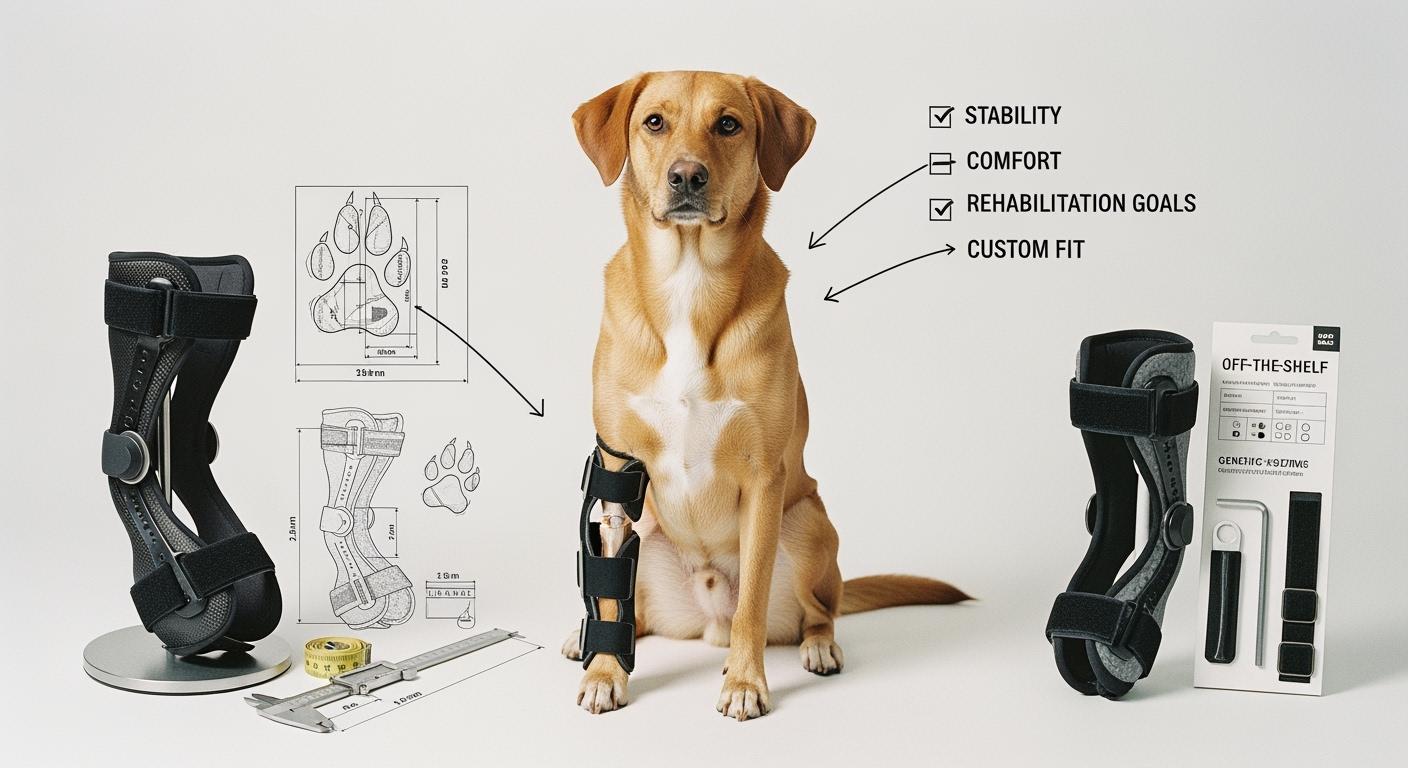
The practical difference is simple: custom braces prioritize fit precision and higher control, while off-the-shelf braces prioritize faster access and simpler setup. The better option depends on what the case actually needs, not on which category sounds more advanced.
Custom Dog Braces for CCL Tears
Custom braces are built around the individual dog’s measurements or mold, which makes them more relevant when fit precision, higher support demands, or unusual limb shape make standard sizing less reliable. In practical use, custom bracing is usually considered when the case needs stronger alignment, lower slip risk, and a brace that can stay clinically useful through a more demanding rehab routine.
Custom-brace rule: use the higher-fit pathway when alignment, repeatability, and long-term wear matter more than speed of access.
Off-the-Shelf Dog Braces for CCL Tears
Off-the-shelf braces are usually chosen when support is needed quickly and the case still fits standardized sizing without major fit complications. They are more practical for short-term evaluation, faster early support, or cases where immediate access matters more than maximum fit precision. Their usefulness depends heavily on whether the standardized fit stays aligned and wearable during daily activity.
Off-the-shelf rule: a brace that is fast to access still fails if the fit shifts, rubs, or does not control the joint well enough in real use.
Pros and Cons of Each Brace Type
Use the table below as a decision tool. The goal is not to rank brace categories universally, but to match the fit pathway to the case demands.
Decision factor | Custom Brace | Off-the-Shelf Brace |
|---|---|---|
Fit precision | Higher when measurements are handled correctly | Depends on how well standard sizing matches the dog |
Support demand | Usually better for more demanding or longer-term support cases | Usually better for simpler or early-stage support needs |
Access speed | Slower due to fitting and production steps | Usually faster to obtain and begin using |
Routine complexity | Higher setup involvement | Lower setup involvement |
Main risk | Longer lead time if support is needed immediately | Fit mismatch, slipping, or reduced control |
Custom braces are usually more relevant when support demands are higher, fit precision matters more, or the dog’s anatomy makes standard sizing unreliable. Off-the-shelf braces are usually more relevant when support is needed quickly and the case still fits a simpler, standardized setup.
The better option is the one that matches the dog’s anatomy, support objective, and daily routine realistically. Faster access is useful, but only if the brace still performs well in use.
Choose between custom and off-the-shelf based on instability level, fit complexity, access timing, and how demanding the recovery routine will be. If you want broader educational background before comparing products, continue through our GaitGuard Guides.
If you want to know more about dog knee braces or CCL support, check out the main dog knee brace category or CCL support pages. You can also find more information about ccl and knee injuries.
Fit, Comfort, and Daily Wear for Dogs with CCL Tear
Measuring for the Right Dog Brace
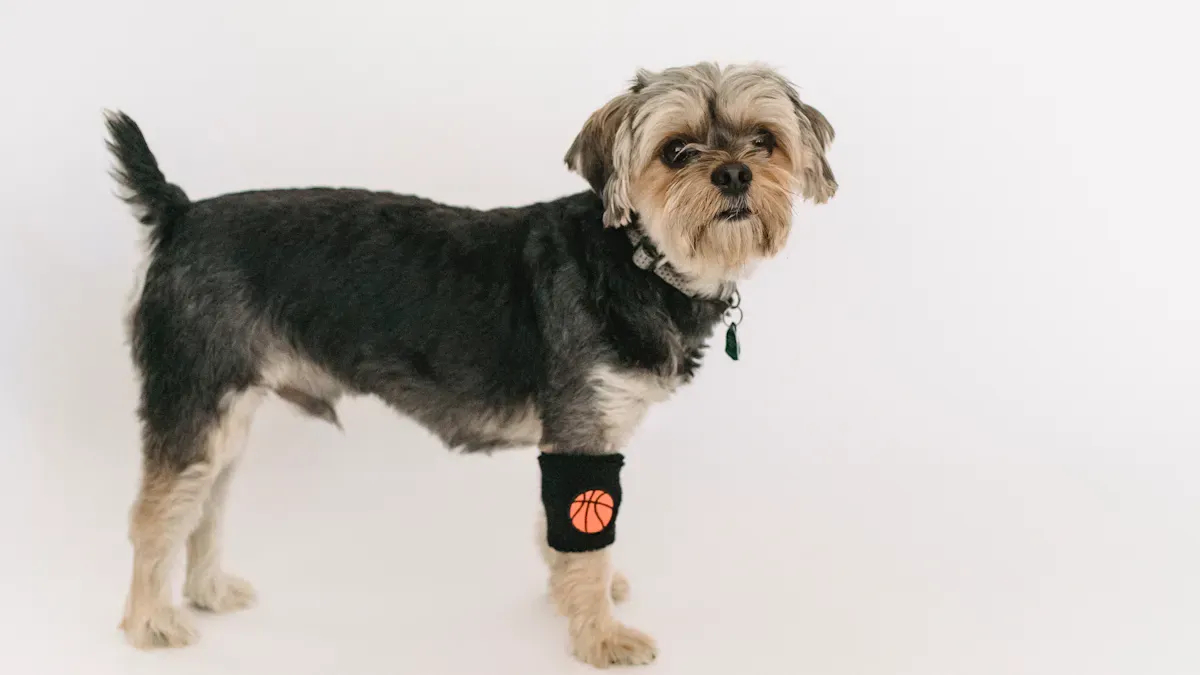
Measurement quality matters more in this comparison than many buyers expect. A custom brace depends on accurate anatomy capture, while an off-the-shelf brace depends on whether the dog’s actual dimensions still fit standardized sizing without losing alignment. In both cases, incorrect measurement can make the brace fail even if the support concept was correct.
Record before choosing brace type: thigh circumference, circumference above and below the knee, brace-zone length, current weight-bearing quality, skin sensitivity history, and whether the case needs immediate support or can wait for a custom process.
Adjustability and Comfort Features
Comfort matters because a brace that the dog cannot tolerate will not stay clinically useful for long. The main issue is not softness alone. It is whether the brace can stay aligned, avoid skin problems, and remain wearable enough for the intended routine.
Feature | Description |
|---|---|
Fit stability | Keeps support aligned and reduces slip risk |
Material tolerance | Reduces skin irritation during repeated wear |
Adjustment range | Helps refine fit as swelling or routine changes |
Daily monitoring | Confirms whether the brace remains usable over time |
Common Fit Mistakes to Avoid
The most common fit mistakes are choosing by size label alone, assuming a standard brace will match any anatomy, and continuing wear even after slipping or rubbing appears. A brace that stays on but changes gait negatively should still be treated as a fit failure.
Stability, Activity, and Recovery Goals for CCL
Matching Brace Type to Injury Severity
Brace type should follow case severity and support objective. Custom bracing is usually more relevant when instability is higher, long-term support is expected, or anatomy makes standardized sizing less reliable. Off-the-shelf support is usually more relevant when needs are simpler, faster access matters, or the brace is being used as an early support step rather than a precision-fit solution.
Considering Dog Size and Activity Level
Size and activity level refine the brace decision because they affect how much stress the brace must handle in daily use. Larger or more active dogs often expose fit weaknesses faster, which makes precision and stability more important than speed of access alone.
Role of Rehabilitation and Activity Control
A brace works best when it is part of a wider rehabilitation system that includes activity control, weight management, and repeated monitoring. The support device should make the plan easier to execute, not be presented as the whole plan by itself.
Rehab rule: choose the fit pathway that the dog and caregiver can actually maintain within the planned recovery routine.
Cost, Access, and Timing: Choosing a CCL Dog Brace
Price Comparison: Custom vs Off-the-Shelf
Cost should be evaluated together with fit precision, lead time, and expected wear demands. A lower-cost brace that fails in fit or alignment is not necessarily the lower-cost decision in practice.
Decision factor | Why it matters |
|---|---|
Speed of access | Off-the-shelf options usually start faster when support is needed immediately. |
Fit precision | Custom options usually provide more control in complex or demanding cases. |
Routine duration | Longer routines increase the value of stable fit and lower slip risk. |
Professional involvement | Higher-fit pathways usually require more setup and follow-up. |
You may find that over-the-counter options fit your budget better, especially if you need support right away. Custom braces cost more but can help with long-term rehab and comfort.
Lead Time and Immediate Support
Lead time matters when the dog needs support quickly. Off-the-shelf braces are more relevant when immediate access is part of the decision. Custom braces are more relevant when the case can tolerate the longer setup period in exchange for higher fit precision.
Timing rule: use faster access only when the brace still fits the case well enough to be clinically useful.
Insurance and Return Policies
Return flexibility and professional involvement are operational factors, not just shopping details. Standardized braces often allow more flexibility if the first fit fails. Custom braces often require more commitment because the fit path is more individualized from the start.
Dog Braces for CCL Tears: Comparison Table
Use this summary table to compare how the two brace paths differ operationally:
Brace path | Best-fit use case | Main tradeoff |
|---|---|---|
Custom brace | Higher support demand, harder fit cases, longer-term rehab use | Slower access and higher setup complexity |
Off-the-shelf brace | Faster-start support, simpler cases, early evaluation-stage use | Higher risk of fit mismatch or reduced control |
The right path depends on whether the case values speed or precision more—and whether the dog’s anatomy allows a standard brace to remain aligned during daily use.
Fit rule: if the brace category is correct but the fit pathway is wrong, the support plan still breaks down.
Dog braces for ccl tears give your pet extra support. You can use this table to talk with your vet and pick the best brace for your dog’s recovery.
Mistakes to Avoid When Selecting a CCL Dog Brace
The most common selection mistakes are choosing by convenience alone, assuming all standardized braces fit the same way, and continuing use after the brace has already shown signs of slipping, rubbing, or poor control.
1. Guessing fit pathway
Do not assume the faster or cheaper option is the correct one if the anatomy or support demand clearly requires higher precision.
2. Ignoring activity demand
A brace that works for a calm dog may fail quickly in a larger or more active dog.
3. Treating veterinary input as optional
Brace choice should follow diagnosis and rehab objective, not trial-and-error alone.
4. Missing early skin and alignment problems
Fit drift, redness, and slipping are early indicators that the brace path may be failing.
5. Assuming the plan stays correct automaticall
As the dog heals or changes, the brace strategy may also need reassessment.
Common error: a brace that is still wearable is not automatically a brace that is still helping.
Avoiding these mistakes helps your dog heal faster and stay comfortable during recovery.
When to Consult Your Vet for CCL Tear Support
Veterinary review is most important when the brace plan is unclear, the fit is failing, or the dog’s function is not improving in a meaningful way.
The dog cannot bear weight well on the affected leg
Swelling, pain, or instability seem to be increasing
The brace keeps slipping or creating skin problems
The dog refuses normal movement with the brace on
The case direction between custom and off-the-shelf remains unclear
Review rule: consult the vet when function, fit, or tolerance worsen—not only when the brace fully stops working.
You should also talk to your vet before you start any new rehab exercises. Your vet knows your dog’s health history and can guide you on safe activity levels. If your dog’s progress slows or you see new problems, ask your vet for advice. Early help can prevent bigger issues and support a smooth recovery.
Your vet is your partner in your dog’s healing journey. Regular check-ins make sure the brace works well and rehab stays on track.
Next Steps: Learn More About CCL and Dog Knee Bracing
After you decide between custom and off-the-shelf, keep the next step simple. Use Guides for educational background, Solutions for condition-based support direction, and Products when you are ready to compare actual brace options.
Workflow tip: choose the fit pathway first, then compare products within that pathway.
The key difference between custom and off-the-shelf CCL bracing is fit pathway, not just product category. Custom braces are usually the better fit when precision, stronger support, and longer-term alignment matter more. Off-the-shelf braces are usually the better fit when support is needed quickly and the case still matches standardized sizing.
Data authenticity note: This article is for educational purposes only. It is designed to help readers compare when a custom CCL brace is more appropriate than an off-the-shelf brace, and when an off-the-shelf brace is a more practical first step. It does not replace veterinary diagnosis, imaging, individualized brace fitting, or a full rehabilitation plan.
FAQ
How do you choose between custom and over-the-counter braces for a CCL tear?
Start with fit demand, support demand, and timing. If the case needs more precision or longer-term support, custom is often more relevant. If support is needed quickly and standard sizing still fits well, off-the-shelf may be enough.
Can a modern dog knee brace help prevent reinjury after cranial cruciate ligament surgery?
Sometimes, yes. A brace can support movement and reduce overload risk, but it works best when paired with activity control and a broader rehab plan rather than used alone.
Why is rehabilitation for joint injuries important when using a brace?
Rehabilitation matters because the brace supports the plan, but does not replace the plan. Controlled activity, weight management, and repeated reassessment still determine whether function improves over time.