
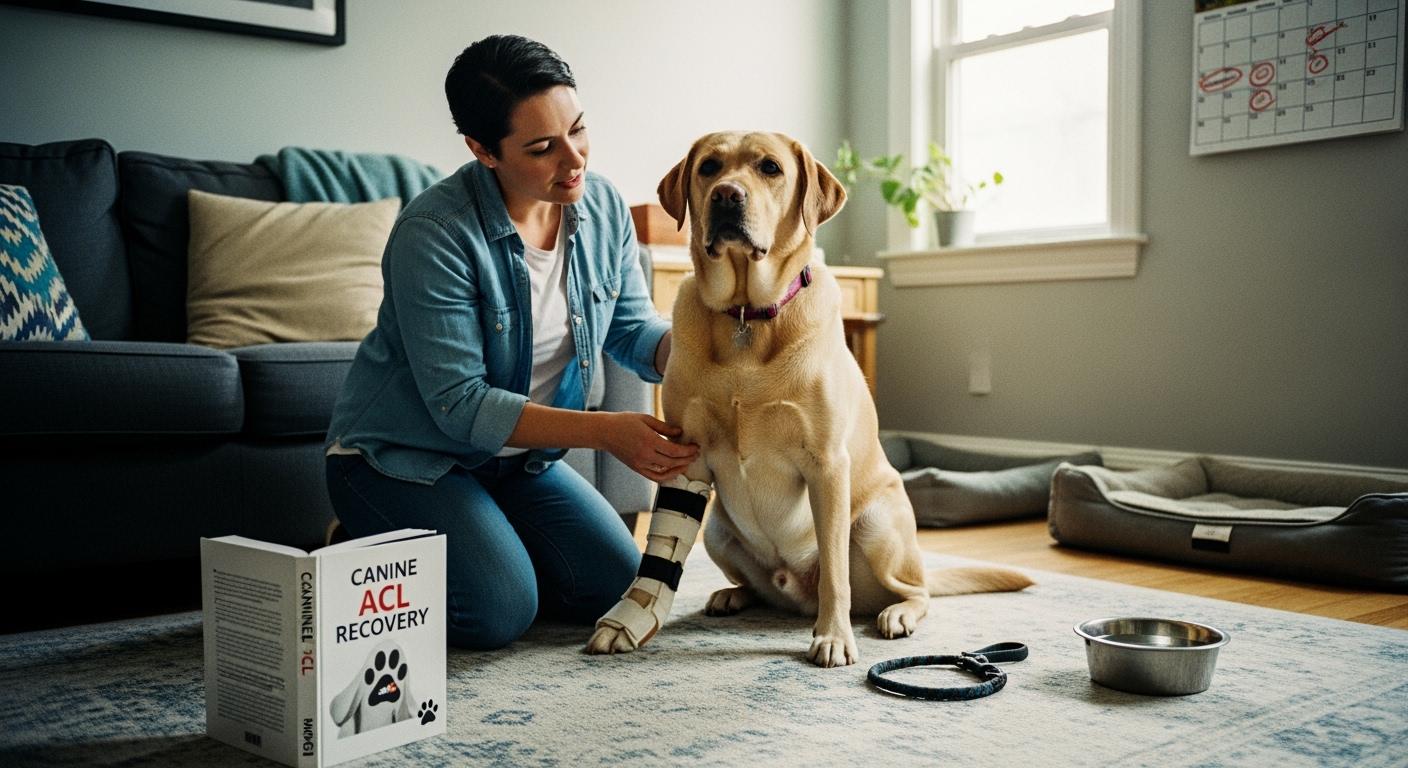
When choosing a dog ACL injury brace for large dogs, the main decision is not just finding “more support,” but matching brace structure, fit stability, and daily-use demands to the weight and movement pattern of a larger dog. This article is for owners, clinics, and rehab-minded buyers who need to compare what large-breed cases usually require, how brace selection changes with size and activity, and what fit and monitoring factors should guide the final choice. Read it to understand how support level, structure, and wear routine should be evaluated before reviewing condition-based support pathways.
Selection focus | Why it matters for large dogs |
|---|---|
Support demand | Large dogs place more load on the unstable knee, so brace structure matters more. |
Fit stability | A loose or shifting brace becomes less useful much faster in heavier dogs. |
Daily-use routine | The brace must stay wearable during walks, standing, stairs, and rehab work. |
The better brace for a large dog is the one that stays aligned under load, supports the current rehab objective, and can be used consistently without creating new gait or skin problems.
Key Takeaways
Large dogs usually need more structure, better alignment, and stronger fit stability than smaller dogs.
Brace choice should follow instability level, body weight, and daily activity demands.
Fit, wear tolerance, and monitoring determine whether the brace is actually helping.
Veterinary guidance should confirm that the support path matches the injury and rehab objective.
What Does “Dog ACL Injury Brace for Large Dogs” Mean?
Targeted Knee and Stifle Support
A dog ACL injury brace for large dogs is an external support device designed to improve knee stability and reduce uncontrolled motion in larger-breed dogs dealing with ACL or CCL-related problems. In practical use, the brace helps support safer walking, standing, and rehabilitation when the case still fits a bracing pathway. If you want broader educational background before comparing products, review the foundational material in our GaitGuard Guides.
The brace is not replacing the ligament directly. Its role is to improve external support around the stifle, reduce excessive motion, and make daily movement more manageable while the broader rehab or treatment plan is being followed.
Support rule: in large dogs, fit stability matters as much as support level because heavier loading exposes brace weakness faster.
Why Large Dogs Need Special Attention
Large dogs need special attention because body weight, joint loading, and daily movement demands make brace performance more critical. A support routine that works for a smaller dog may fail much faster in a large-breed case if alignment, structure, or wear tolerance are not strong enough.
In large breeds, support level, fit retention, comfort, and daily-use practicality all matter together. The brace should match how the dog actually moves through standing, stairs, short walks, and rehab work—not just how the brace looks in sizing charts or feature lists.
Key Differences in Brace Selection for Large Dogs
Support Level and Structure
Support level is the first practical filter in large-dog brace selection. Heavier dogs usually need a brace that can stay stable under more load, especially if walking confidence, standing, or stairs are already affected. The correct choice depends on how much instability needs to be controlled, not just on the label “large breed.”
Brace selection should be based on instability level, activity pattern, body size, and whether the caregiver can actually follow the daily routine the brace requires. A technically supportive brace still fails if the use plan is not realistic to maintain.
The table below shows how braces and features are different for large and small dogs:
Large-dog brace factor | Why it matters |
|---|---|
Structure strength | Large dogs place more mechanical load on the brace during daily movement. |
Fit stability | A shifting brace loses usefulness faster in heavier dogs. |
Hinge control | Some large-dog cases benefit from more guided motion and reduced hyperextension risk. |
Bilateral support | Some large dogs need more balanced support when loading and compensation are major issues. |
In large dogs, brace structure matters because the device must stay effective under higher load. More supportive options are only useful when they also fit well and remain tolerable during real daily use.
To make a custom brace, your vet will make a mold of your dog’s leg. This helps the brace fit right and hold the joint in place. A good fit makes your dog feel better and helps healing.
Selection rule: in large dogs, choose the brace path by load demand, not by product name alone.
Fit Stability and Comfort
Fit stability and comfort matter because a brace that slips, twists, or causes rubbing will underperform quickly in a large dog. Heavier loading makes alignment problems show up faster, so daily fit checks are not optional.
The useful question is not which material sounds premium, but whether the brace can stay aligned, remain wearable, and avoid skin problems during repeated use.
Stable support structure that does not shift under load
Enough padding to reduce rubbing without losing control
Fastening systems that hold position during walking and standing
Materials the dog can tolerate through repeated daily wear
Design elements like padding, hinges, and secure fastening systems also play a big role. Padding prevents rubbing and sores. Hinges let your dog bend the knee naturally. Good fasteners keep the brace in place, even when your dog runs or climbs.
Check fit often for slipping, rotation, redness, or reduced stride quality. A brace that stays wearable but no longer improves function should still be treated as a fit failure.
Note: Choosing the right materials and design features can make a big difference in your dog’s comfort and willingness to wear the brace.
A well-chosen brace supports your large dog’s knee, fits securely, and keeps your canine friend comfortable during daily activities. This careful approach helps your dog heal and stay active.
Choosing the Right Dog Knee Braces
Not all knee braces are equally suitable for large dogs. Large-breed cases need support that matches body weight, instability level, and routine loading demands. When you move from evaluation to product review, compare Products by support level, fit structure, and large-dog wear practicality.
Types of Knee Braces for CCL Injury
You will find several types of dog knee braces designed for CCL injuries in large dogs. Each type offers unique support and features. Here are the main options:
Single-knee support: more relevant when one knee is the clear focus and the dog can still load the opposite side well.
Bilateral support: more relevant when both knees or broader lower-body balance need attention.
Hinged support: more relevant when guided motion and stronger control matter during recovery.
You can compare the main types and their uses in the table below:
Brace category | Best-fit use case | Main advantage |
|---|---|---|
Single-knee brace | One primary injured knee with manageable compensation | More targeted support |
Bilateral brace setup | Cases needing broader balance or support on both sides | More balanced loading support |
Hinged brace | Cases needing stronger motion guidance | More structured control |
You can find more details and product options on the dog knee braces product page.
Matching Brace Features to Your Dog’s Needs
Brace features should be chosen by support demand, body size, and daily-use reality. In large dogs, structure, alignment, and repeatability matter more than long feature lists.
Choose stronger structure when body weight and instability are both high.
Choose more precise fit when slipping risk is high.
Choose guided motion only when the case benefits from more control.
Choose the setup the dog and caregiver can maintain consistently.
Decision factor | Why it matters |
|---|---|
Body size | Large dogs usually expose fit and support weaknesses faster. |
Activity level | Higher activity often demands more control and better retention. |
Routine length | Longer use periods increase the value of comfort and stable fit. |
Rehab objective | The brace should match whether the goal is early support, conservative management, or structured rehab. |
You want a brace that stays in place, feels comfortable, and gives enough support for your dog’s daily life. Large dogs need strong materials and secure fasteners. You should check the fit often and adjust as needed. If your dog has special needs, such as hip or multi-joint support, a full-body system may help.
Selection rule: choose features by load demand and fit retention, not by marketing language or model count.
Dog knee braces play a key role in helping your canine friend recover from a CCL injury. The right brace supports healing, improves comfort, and helps your dog stay active. Take time to review your options and choose the best support for your large dog.
Measuring and Fitting a Knee Brace
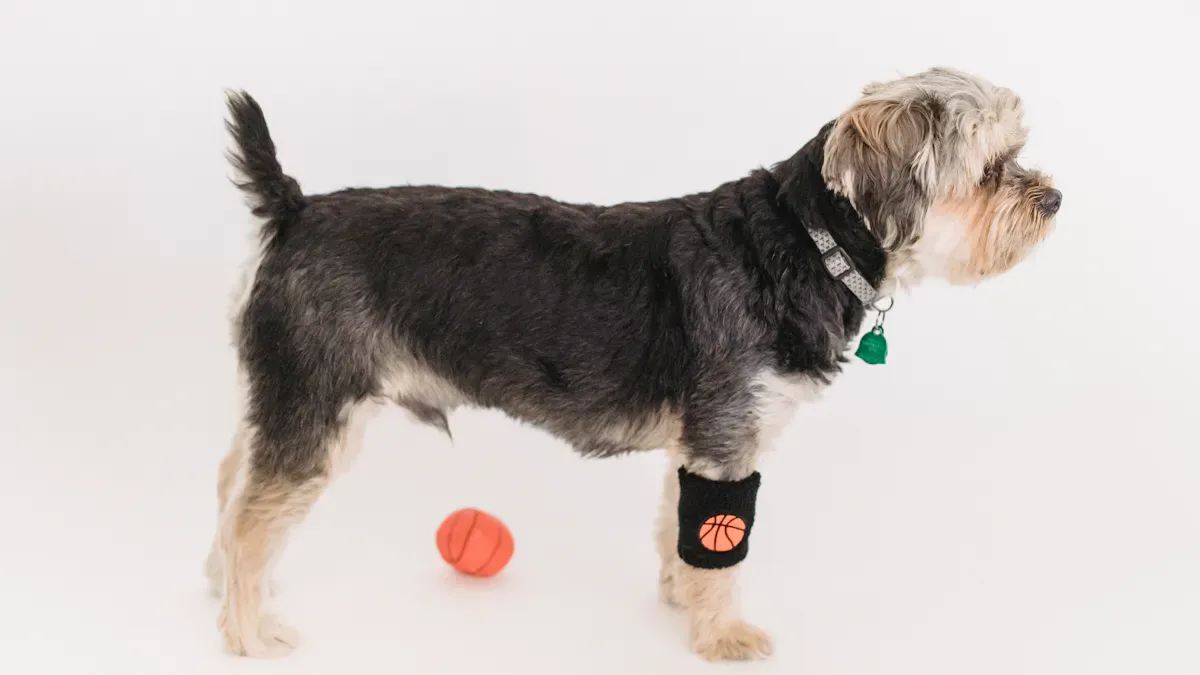
Step-by-Step Measuring Guide
Measurement quality matters because a large-dog brace can fail quickly if the fit drifts under load. Accurate numbers are important not just for size selection, but for keeping the support zone aligned through repeated use.
Record before ordering: thigh circumference, knee circumference, lower-leg circumference, support-zone length, weight-bearing quality, skin sensitivity history, and whether the brace must perform in stairs, short walks, or broader rehab routines.
Keep the dog standing naturally on a flat surface.
Measure above the knee, at the knee, and below the knee.
Measure the support-zone length the brace needs to cover.
Repeat each number to confirm accuracy.
Use the measurements only with the product’s actual sizing guide.
Measurement rule: in large dogs, small fit errors create larger support problems during daily use.
Common Fit Issues for Large Dogs
Large dogs expose fit problems quickly. Common issues include slipping, rotation, rubbing, pressure marks, and reduced stride quality when the brace does not hold position under load.
Brace slipping during walks
Rotation out of the intended knee position
Redness or rubbing under the support zone
Shortened stride or altered gait while wearing the brace
A brace that stays wearable but no longer supports the joint correctly should still be treated as a fit failure.
Daily-Use Plan for Dog Knee Pain Recovery
Wear Time and Activity Guidelines
Wear time should follow the dog’s rehab stage, tolerance, and veterinary plan rather than a one-size-fits-all schedule. Large dogs often need more careful progression because their loading demand is higher from the start.
Recovery phase | Brace-use principle |
|---|---|
Early phase | Short, supervised wear with immediate fit and gait checks |
Mid phase | Increase only if support stays aligned and function remains stable |
Longer-term use | Maintain only while the brace is still functionally useful and well tolerated |
Start with short supervised use, then increase only if the brace remains aligned, the skin stays healthy, and the dog’s gait does not worsen. Daily support should be judged by functional improvement, not by total hours worn.
Keeping your dog at a healthy weight helps the knee. Less weight means less pain and faster healing.
Cleaning and Maintenance Tips
Cleaning and maintenance matter because dirt, moisture, and worn fasteners reduce both comfort and brace performance. Wipe the brace regularly, inspect straps and hinges, and check the dog’s skin after wear.
Maintenance is part of support quality. A clean, intact brace is more likely to stay aligned and tolerable during repeated daily use.
Monitoring Progress and When to Seek Veterinary Advice
A brace supports recovery, but it does not replace diagnosis, case management, or surgical planning when those are needed. Monitoring should focus on whether function is improving, whether fit remains stable, and whether the current brace is still clinically useful.
Signs of Improvement or Discomfort
You can track your dog’s progress by looking for clear signs. Some signs show improvement, while others warn of discomfort. Use the table below to guide your daily checks:
Monitoring signal | Why it matters |
|---|---|
Weight-bearing quality | Shows whether the dog is trusting the supported leg more or less |
Swelling response | Can indicate worsening load response or fit problems |
Stride quality | Reveals whether the brace is helping or distorting gait |
Skin condition | Confirms whether the brace remains tolerable during wear |
Brace retention | Shows whether the brace stays aligned under daily load |
Brace value should be judged by repeatable functional changes, not by whether the device is still being worn.
When to Adjust or Replace the Brace
You should adjust or replace the brace if you notice any of these signs:
Lameness or limping on the injured leg.
Pain when you touch the stifle joint.
Clicking noise when your dog bends the knee.
Abnormal sitting posture, such as the leg sticking out.
Muscle loss in the affected leg.
Thickening around the knee joint.
Loss of normal knee movement.
If these signs appear, reassess the brace quickly with your veterinarian. If the case direction is still unclear, compare it first against the broader scenarios in our Solutions overview.
Stay alert to your dog’s needs. The right brace and regular support help your large dog recover from a torn injury and stay active.
Common Mistakes with Dog ACL Injury Braces
Overuse, Underuse, and Poor Fit
The most common brace mistakes are poor fit oversight, letting wear time progress too quickly, and assuming that a brace still helps just because the dog still wears it.
Veterinary reports show these common problems:
Fit drift that goes uncorrected
Wear schedules that exceed the dog’s tolerance
Skin irritation that is noticed too late
Mechanical wear that reduces brace stability
You should always get a professional fitting for your dog. Ask your vet to check the brace often. Adjust the brace if you see redness or swelling. Owner education and regular supervision help you avoid these mistakes. A well-fitted brace gives the right support and reduces pain during daily activities.
Common error: a brace that is still wearable is not automatically a brace that is still helping
Ignoring Signs of Dog Knee Pain
Ignoring worsening pain or function loss can delay the right next step. A brace should not hide progression that needs a different treatment decision.
If you ignore pain, you risk:
Worsening instability can continue despite brace use
The opposite leg may take too much load
Delayed reassessment can complicate recovery planning
Quality of life can decline if support stops being effective
You should always check for pain and adjust the brace as needed. Regular support and quick action help your dog heal and stay active.
The key issue in large-dog ACL bracing is not just finding “more support,” but choosing a brace that can stay aligned, remain tolerable, and perform under higher daily loading. Large dogs usually need stronger fit stability, clearer monitoring, and more realistic daily-use planning than smaller dogs.
For follow-up after this comparison, continue only to the most relevant internal paths: use Guides for educational background, Solutions for condition-based direction, and Productswhen the case is ready for brace evaluation.
Data authenticity note: This article is for educational purposes only. It is designed to help readers compare how brace selection changes for large dogs with ACL or CCL-related knee injuries. It does not replace veterinary diagnosis, imaging, individualized brace fitting, or a full rehabilitation plan.
FAQ
How do you know if your large dog needs an ACL brace?
Large dogs usually need more stable support under heavier daily loading. If the brace shifts easily, changes gait, or cannot hold position, it is probably not enough for the case.
Can your dog wear an ACL brace all day?
Usually not all day. Wear time should follow the dog’s rehab stage, tolerance, and veterinary plan rather than a fixed generic schedule.
What is the best way to keep a knee brace from slipping on a large dog?
Check alignment, strap tension, and skin response daily. If the brace slips, twists, or shortens stride, reassess the fit instead of just tightening it harder.
