
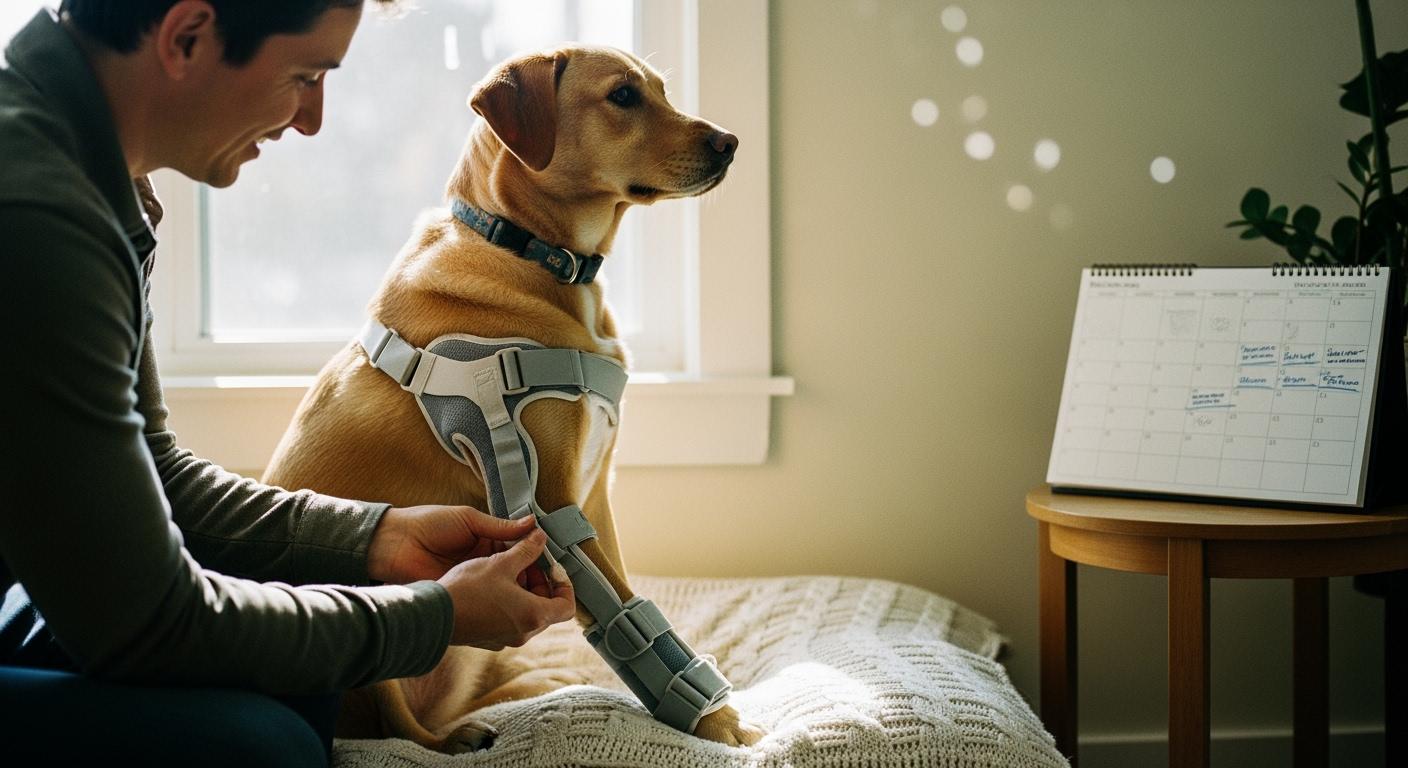
Front dog leg brace fit and wear schedule should be judged by one practical question: can the brace support the front leg without causing rubbing, slipping, or reduced natural movement. A good front-leg brace routine depends on accurate measurement, correct alignment, short break-in sessions, and daily comfort checks. If you want a broader fit-and-coverage reference before building the wear plan, start with this dog leg sleeve guide.
Tip: During the first week, check skin, strap position, and gait after every wear session. Early rubbing problems are easier to fix than long-term brace refusal.
Key Takeaways
- A front dog leg brace should fit securely without limiting normal front-leg movement or creating pressure points.
- Break-in should start with short supervised sessions, then increase only if skin and gait stay stable.
- Daily checks for rubbing, slipping, and reduced wear tolerance matter just as much as the brace itself.
Ensuring Proper Fit for Front Dog Leg Braces
Importance of Accurate Measurements and Proper Positioning
You need accurate measurements to get the right front dog leg brace. A good fit starts by measuring the correct support zone on the front limb while your dog is standing naturally. Use a soft tape measure, record every number clearly, and compare those numbers to the exact brace chart instead of estimating by breed or weight.
| Measurement Point | Why It Matters |
|---|---|
| Upper front-leg circumference | Helps anchor the brace without excessive slide-down. |
| Target joint circumference | Helps center support over the elbow, carpal area, or other brace target zone. |
| Lower front-leg circumference | Helps stabilize the lower section without twisting. |
| Support length across the brace zone | Helps make sure the brace covers enough area without restricting movement too much. |
Proper positioning matters as much as the measurements. If the brace sits too high, too low, or off-center, your dog may lose support, develop rubbing, or change gait to avoid pressure. For condition-first planning before product comparison, use the Solutions by Condition page.
How to Check Alignment, Strap Tightness, and Support Level
You must check alignment and strap tension every time you put on a front dog leg brace. Follow these steps for a safer fit:
- Place the brace so the main support section sits directly over the intended front-leg support zone.
- Fasten the lower anchor first so the brace has a stable base.
- Adjust the middle support area until it feels secure without bunching the skin.
- Fasten the upper strap last so the brace stays aligned without pinching.
- Walk your dog a few steps and recheck for twisting, sliding, or pressure marks.
Strap adjustment is key for comfort and security. The brace should feel snug enough to stay in place, but not so tight that it causes swelling, heat, or reduced movement. Always judge fit after movement, not only while your dog is standing still.
For product comparison after fit logic is clear, review the dog braces collection.
Signs of Poor Fit: Rubbing, Slipping, or Restricted Movement
You must watch for signs that the front dog leg brace does not fit well. Common problems include:
- redness, rubbing, or pressure marks
- brace slipping, twisting, or sliding down after walking
- shorter stride or more awkward front-leg movement
- licking at the brace area or resisting wear
A front-leg brace should never make the dog move worse just because it is being worn. If you notice discomfort, remove the brace, inspect the skin, and reassess alignment before the next session. For a broader support overview, compare this page with the products hub.
Tip: Always check your dog’s skin under the brace at least once a day, especially during the first week of use.
A well-fitted dog knee brace helps your dog move with less pain and more confidence. Careful measurement, proper positioning, and regular checks will help you avoid most problems. If you need more information about knee support for dogs, explore our dog knee support collection.
How to Build a Safe Wear Schedule for Dog Leg Braces
Taking things slow helps your dog accept the brace and makes it easier to catch fit problems before they become daily tolerance problems. A safe wear schedule should build around short supervised sessions, skin recovery time, and repeatable comfort checks.
Building a Safe Break-In Schedule
When you first use a front dog leg brace, start with short supervised sessions instead of long wear blocks. The goal of the break-in phase is to confirm fit, skin tolerance, and movement quality before increasing time.
| Phase | Brace Goal | What to Check |
|---|---|---|
| Days 1–3 | Short supervised sessions only | Skin response, slipping, twisting, reduced stride |
| Days 4–7 | Longer active-period wear if tolerated | Whether the dog still moves comfortably after walking |
| Week 2+ | Use during controlled activity windows | Daily comfort, repeatable fit, ongoing skin stability |
Increase wear time only if the brace stays aligned and the dog still moves normally. Remove the brace during rest or overnight unless your veterinarian gives a different plan. For broader front-leg support options, compare the dog braces collection with the products hub.
Monitoring Comfort and Adjusting for Daily Use
Recognizing Signs of Rubbing, Redness, or Discomfort
You want your dog to feel safe and supported every day, so daily monitoring matters just as much as the initial fit. Watch for early signs that the brace is becoming less wearable instead of assuming “more time in brace” always means better progress.
- shorter stride or altered front-leg swing
- redness, swelling, or heat where the brace contacts the limb
- licking, chewing, or pawing at the brace area
- reduced willingness to walk, stand, or turn normally
If you notice these signs, remove the brace, check the skin, and reassess the fit before the next session. Early correction helps prevent brace refusal and longer-term rubbing problems.
Tips for Adjusting Straps and Positioning for Better Comfort
You can improve comfort by making small fit changes before problems become obvious:
- keep the brace snug enough to stay aligned but not tight enough to create pressure marks
- recheck strap tension after movement, not just after application
- add padding only where rubbing is clearly occurring, not everywhere at once
- schedule skin-recovery breaks instead of forcing continuous wear
Small adjustments usually work better than a full reset every time, as long as the support zone remains aligned.
Common Mistakes to Avoid During Daily Wear
Many daily-wear problems come from a few repeat mistakes. Avoid these common errors:
- making the brace too tight just to stop slipping
- leaving the brace on overnight without a veterinary reason
- using the brace as a substitute for activity control
- skipping daily skin checks because the dog “seems fine”
- increasing wear time even when gait quality is getting worse
Introduce the brace slowly, keep the routine repeatable, and adjust the schedule as soon as you see tolerance drop.
You play a key role in your dog’s brace success. Front dog leg brace fit and wear schedule works best when you treat it as a daily management system instead of a one-time fitting task. Correct alignment, short break-in sessions, skin recovery time, and ongoing gait checks all work together to keep the brace wearable and useful.
- Check the skin and support zone every day.
- Watch whether movement stays natural during and after wear.
- Keep the schedule gradual and adjust early if tolerance drops.
For next steps, continue to the dog leg sleeve guide, the Solutions by Condition page, the dog braces collection, or the products hub depending on whether you still need fit guidance, condition planning, or product comparison. Data authenticity note: This article is for educational purposes only. It is designed to help readers improve front dog leg brace fit and wear routine decisions, not to replace veterinary diagnosis or individualized treatment advice.
FAQ
How tight should a front dog leg brace fit?
The brace should feel secure enough to stay aligned but not tight enough to pinch or leave lasting pressure marks. Always recheck fit after movement, not just at the moment you put it on.
How long can my dog wear the brace each day?
Start with short supervised sessions and increase wear time only if skin, fit, and gait remain stable. Most dogs do better with gradual active-period use than with long continuous wear too early.
What if my dog tries to chew or remove the brace?
Use short positive sessions, praise, and distractions such as toys or calm walks. If chewing continues, treat it as a fit or comfort warning sign instead of only a behavior problem.
Can my dog go outside with the brace on?
Yes, your dog can go outside with the brace during controlled activity. Check for moisture, dirt, and strap shift after the walk, because outside conditions can change fit faster than indoor wear.
