
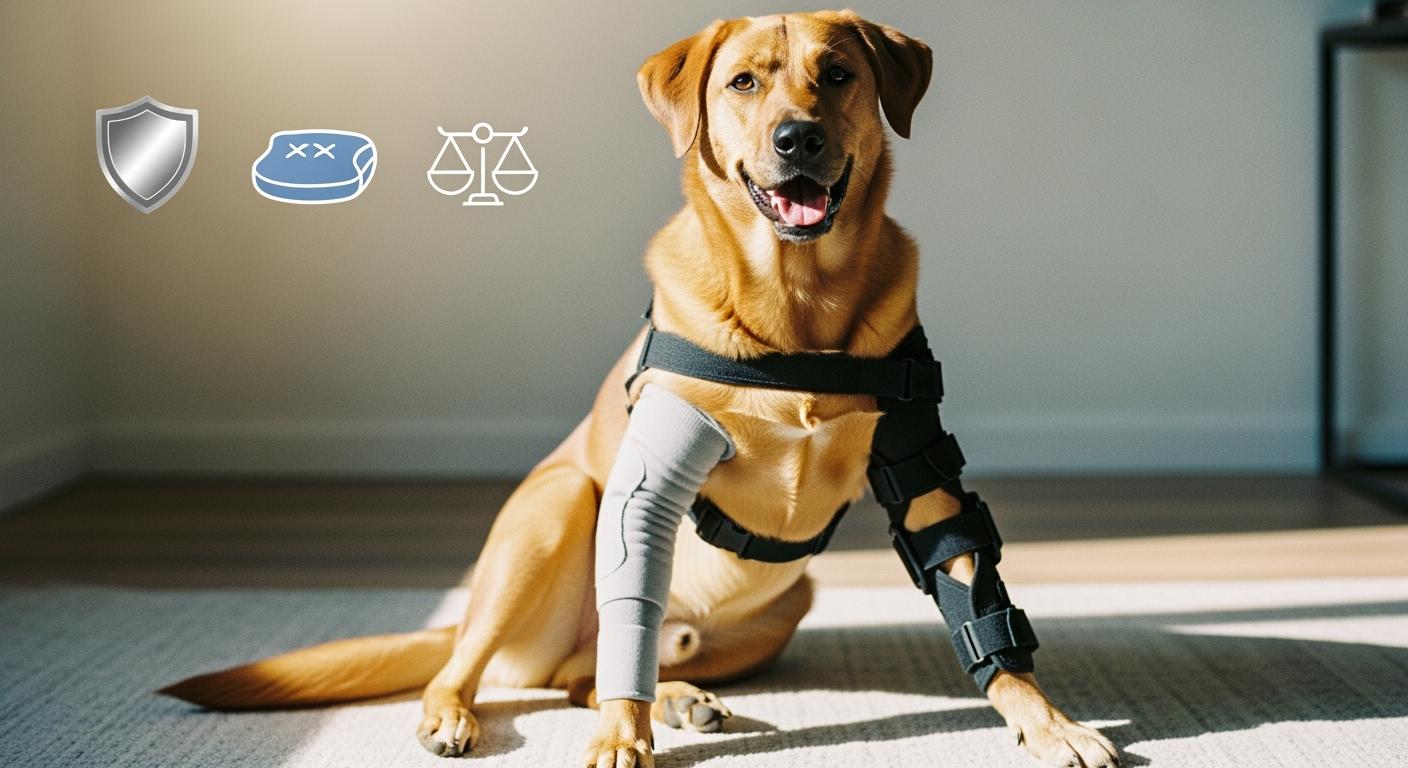
Dog elbow sleeve vs elbow brace should be judged by one practical question: does your dog need skin protection or actual joint support. An elbow sleeve usually makes more sense for anti-lick coverage, wound protection, and pressure-area comfort, while an elbow brace is usually the better choice when the elbow joint needs more structured support and stability. If you want a broader fit-and-coverage framework before comparing the two directly, start with this dog sleeve protection guide.
Key Takeaways
- An elbow sleeve is usually better for skin protection, anti-lick coverage, and soft daily comfort.
- An elbow brace is usually better for joint support, stability, and movement control.
- The right choice depends on support goal, fit, wear tolerance, and how the dog moves during daily use.
Dog Elbow Sleeve: Comfort and Protection
What Is a Dog Elbow Sleeve?
A dog elbow sleeve is mainly a protective coverage tool. It wraps the elbow area to shield skin, cover healing tissue, reduce direct contact with rough surfaces, and make anti-lick management easier. Most sleeves use softer fabric and lighter structure, which makes them more suitable for dogs who need comfort and coverage more than firm joint control.
Tip: A sleeve should be judged by coverage, softness, and staying power during movement, not by how much structure it adds around the joint.
Benefits for Dogs: Anti-Lick, Wound, and Pressure Sore Protection
AA dog elbow sleeve is most useful when the main problem is on the skin side rather than inside the joint. It can help reduce licking, cover healing areas, limit friction on pressure-prone elbows, and create a softer barrier during daily rest and movement. That makes it a better option for wound coverage, anti-lick control, and pressure-area management than for true structural elbow support.
Here is a better way to compare sleeve features:
| Sleeve Feature | Why It Matters |
|---|---|
| Soft, breathable fabric | Improves comfort and makes longer daily wear easier to tolerate. |
| Adjustable closure | Helps keep the sleeve in place without over-tightening. |
| Protective coverage | Helps shield wounds, callus-prone areas, and healing skin. |
For product-side comparison after this section, review the dog anti-lick collection.
When to Choose a Sleeve for Support
Choose a dog elbow sleeve when the goal is skin protection, anti-lick coverage, or softer daily elbow contact rather than stronger joint stabilization. A sleeve is usually the better fit for healing skin, minor sores, callus-prone elbows, or dogs who mainly need protective coverage and daily comfort. It is less appropriate when the elbow needs firmer structural control.
Dog Elbow Brace: Joint Support and Stability

What Is a Dog Elbow Brace?
A dog elbow brace is a more structured support tool designed to help stabilize the elbow joint during movement. You usually consider it when the main need is joint control, pain reduction during activity, or more support for dogs with arthritis, elbow weakness, or chronic instability. A brace should not just wrap the area. It should provide more purposeful support than a soft sleeve can offer.
Use a brace when the problem is joint function, not just surface protection.
Benefits for Dogs: Arthritis, Dysplasia, and Pain Relief
Dogs with arthritis often have pain and stiff joints. A dog elbow brace helps lower pain and swelling by keeping the joint stable. The brace gives gentle compression, which lowers swelling and helps blood flow. Braces also cuDogs with elbow arthritis or elbow instability may benefit from a brace because it can add more structured support during standing and walking. The main value is not that the brace “fixes” the elbow. The value is that it may reduce excessive motion, improve confidence, and make controlled movement easier to tolerate. That makes a brace more relevant for dogs whose elbow needs help with stability, not only coverage.
- It can improve joint support during daily movement.
- It may reduce strain for dogs with weaker or more painful elbows.
- It can make walking and standing feel more stable in selected cases.
For broader condition-first planning, compare this section with the Dog Brace Solutions by Condition page.
When to Choose a Brace for Support
Choose a dog elbow brace when your dog needs more than skin protection. A brace is usually the better option when the elbow joint itself needs support for stability, controlled movement, or better daily function. That often applies more to arthritis-related discomfort, chronic weakness, or joint instability than to simple wound protection.
Dog Elbow Sleeve vs Elbow Brace: Key Differences
Protection vs. Stability
WWhen you compare dog elbow sleeve vs elbow brace, the first decision is whether the main problem is on the skin or in the joint. A sleeve is better when the goal is protection, coverage, anti-lick control, or softer elbow contact. A brace is better when the goal is stability, controlled movement, or stronger support around the elbow joint itself.
- Choose a sleeve for coverage, anti-lick control, wound protection, and softer daily contact.
- Choose a brace for structured joint support, movement control, and stability-focused use.
For anti-lick and protection-focused product comparison, use the dog anti-lick collection. For broader brace fit logic, compare this page with the canine rehabilitation brace fit and safety guide.
Comfort and Daily Use
Comfort matters because the best support is the one your dog can actually tolerate. A sleeve usually feels softer, lighter, and easier for daily wear. A brace usually feels firmer and more structured, which can be helpful for joint support but may also require more careful fitting and skin checks.
If your dog mainly needs gentle coverage and low-bulk daily protection, a sleeve is usually easier to tolerate. If your dog needs stronger support for walking or standing, a brace may be worth the extra structure as long as the fit stays comfortable.
Fit and Activity Level
Fit plays a big role in how well a dog elbow sleeve vs elbow brace works. A sleeve should fit snugly but not too tiFit changes how well both options work. A sleeve should stay in place, cover the elbow consistently, and avoid bunching or sliding during daily movement. A brace should align with the elbow correctly, feel secure without pinching, and stay stable enough to provide useful support instead of shifting under load.
- A sleeve works best for dogs who need lighter support and better surface protection.
- A brace works better for dogs who need stronger support and more joint control.
Always judge fit under movement, not just during first application. A support device that looks correct at rest can still fail once the dog starts walking.
Choosing the Right Support for Your Dog
Assessing Your Dog’s Needs
You should assess the dog’s needs by starting with the main problem instead of the product type. Watch how your dog moves, whether the elbow area has skin damage or licking, and whether the dog seems limited more by surface discomfort or by joint weakness.
- Choose a sleeve when the main issue is wound coverage, anti-lick protection, or softer elbow contact.
- Choose a brace when the main issue is elbow pain during movement, weaker support, or reduced joint stability.
If the dog is limping, avoiding activity, swelling, or showing ongoing joint pain, a brace discussion is usually more relevant than a sleeve-only discussion. If the dog is mainly bothering the skin or elbow surface, a sleeve may be the better first comparison.
Consulting Your Vet
Always talk to your vet before choosing elbow support. Your vet can help determine whether the dog mainly needs skin protection, joint support, or a different mobility plan entirely. That matters because sleeves and braces solve different problems.
Your vet is especially important when the dog shows limping, swelling, reduced elbow use, or ongoing pain during movement.
Ask about support goal, size, fit, wear schedule, and what changes would mean the plan needs to escalate. That makes the sleeve-vs-brace decision more practical and safer for long-term use.
Common Mistakes to Avoid
Common elbow-support mistakes usually come from choosing by product appearance instead of support goal.
- Do not choose a sleeve when the dog really needs joint support.
- Do not choose a brace when the real problem is only skin protection or anti-lick coverage.
- Do not skip measurement and fit checks.
- Do not ignore rubbing, slipping, or reduced wear tolerance.
- Do not use either product as a substitute for diagnosis.
Better decisions usually come from matching the support tool to the problem first, then checking whether the dog can actually tolerate it in daily use.
Pros and Cons for Dogs
Elbow Sleeve: Pros and Cons
You want your dog to feel protected without adding unnecessary bulk. An elbow sleeve usually works best when you need soft coverage, anti-lick protection, and more comfortable contact over the elbow area.
Pros:
- better for skin protection and wound coverage
- usually softer and easier for daily wear
- helpful for anti-lick control and pressure-area comfort
Cons:
- less suitable when the joint itself needs more control
- does not provide strong elbow stability
- may slide if fit is not correct
Note: Check the fit often and keep the sleeve clean. This stops skin irritation and keeps your dog comfortable.
Elbow Brace: Pros and Cons
An elbow brace is the stronger option when the dog needs more structured support for pain, weakness, or instability around the elbow joint.
Pros:
- better for stability and movement control
- more relevant for arthritis-related or weakness-related support
- can improve confidence during walking in selected cases
Cons:
- firmer and usually less low-bulk than a sleeve
- needs more careful fit management
- less ideal when the main need is only skin coverage
| Support Type | Best For | Main Strength | Main Tradeoff |
|---|---|---|---|
| Elbow Sleeve | Skin protection, anti-lick coverage, wound support | Comfort and surface protection | Limited joint stability |
| Elbow Brace | Joint support, arthritis-related use, stability needs | More structured elbow support | More fit-sensitive and less soft than a sleeve |
Tip: Ask your veterinarian before picking a brace or sleeve. This helps you choose the right support for your dog.
Next Steps and Resources
Explore More Dog Elbow Support Options
There are several ways to compare elbow support more usefully inside your own site structure. Start by matching the problem to the support type, then compare fit, comfort, and daily-use tolerance before moving into product selection.
Tip: Match the support tool to the support goal first. That usually leads to better product decisions than comparing features in isolation.
Internal Links to Related Content
You can learn more about elbow support by moving through the topic in this order: fit and coverage first, condition logic second, then product comparison. Start with the dog sleeve protection guide, compare brace fit logic in the canine rehabilitation brace fit and safety guide, review condition planning on the Solutions by Condition page, then compare products through the dog anti-lick collection and the dog braces collection.
Choosing dog elbow sleeve vs elbow brace becomes easier when you treat it as a support-goal decision instead of a product preference decision. A sleeve is usually better for protection, anti-lick coverage, and softer daily contact. A brace is usually better for structured support, stability, and joint-focused movement control.
For next steps, continue to the dog sleeve protection guide, the canine rehabilitation brace fit and safety guide, the Solutions by Condition page, the dog anti-lick collection, or the dog braces collection depending on whether you still need education, condition planning, or product comparison. Data authenticity note: This article is for educational purposes only. It is designed to help readers compare elbow sleeves and elbow braces for dogs, not to replace veterinary diagnosis or individualized treatment advice.
FAQ
How do I know if my pet needs an elbow sleeve or brace?
Watch whether the main problem is skin-related or joint-related. Dogs with wounds, licking, or pressure-area irritation often need sleeves, while dogs with joint pain or elbow weakness often need braces.
Can my pet wear an elbow sleeve or brace all day?
Many dogs can wear a sleeve or brace during the day, but skin checks and breaks still matter. Remove the support for cleaning, rest periods, or sooner if you see rubbing or discomfort.
Will an elbow sleeve stop my pet from licking wounds?
Yes. An elbow sleeve can help stop licking by covering the area and protecting healing skin, especially when the main goal is wound coverage rather than joint stabilization.
Are elbow braces safe for older dogs with arthritis?
Yes. Elbow braces may help some older dogs with arthritis by providing more structured support during movement, but correct sizing, fit checks, and veterinary guidance still matter.
How do I measure my pet for the right fit?
Use a soft tape measure, follow the size chart for the exact product type, and check the fit during movement. A sleeve or brace should feel secure without pinching, bunching, or sliding out of place.
