
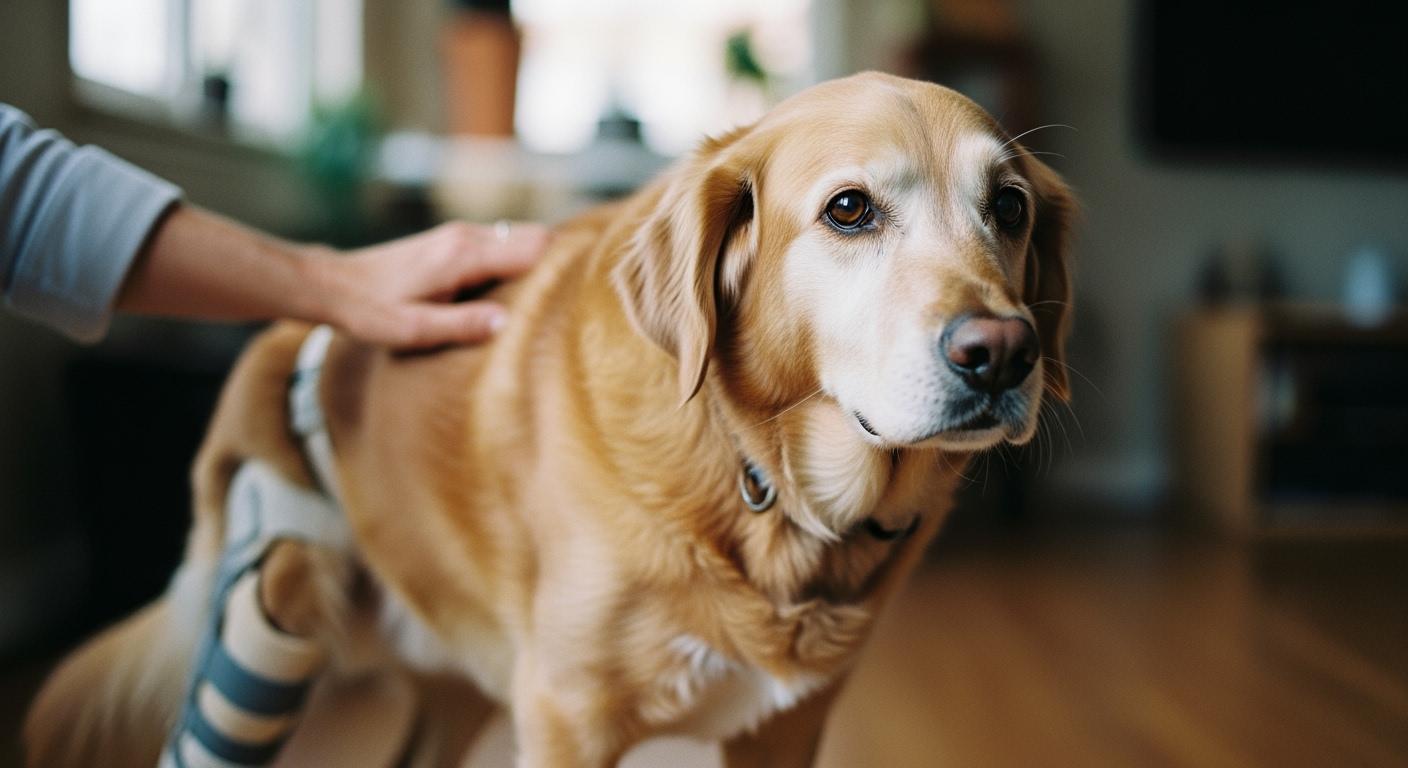
A dog rear leg brace for senior dogs should be judged by one practical question: does it help the dog move more steadily without adding new rubbing, slipping, or daily-use stress. Senior dogs often need support because weak back legs, arthritis-related discomfort, and declining balance make standing, walking, and routine movement harder. If you want a broader overview of mobility tools for aging dogs before focusing on rear leg bracing, start with this senior dog mobility support guide.
- weak back legs and reduced push-off strength
- arthritis-related hind-leg discomfort and stiffness
- wobbling, slipping, or hesitation during daily walking
- support after mild hind-leg injury or during conservative management
- extra joint support to reduce overload during everyday movement
You should always ask your vet before picking a brace. A brace can support comfort, balance, and daily movement, but it does not replace diagnosis, treatment planning, or broader mobility management. This article should help readers compare support goals, fit logic, and realistic use cases for older dogs.
Key Takeaways
- A rear leg brace for senior dogs should improve stability and confidence without making daily movement feel more awkward.
- Fit, comfort, and realistic wear tolerance matter just as much as support level.
- Short supervised use, gradual adjustment, and daily skin checks usually work better than forcing long wear too early.
Dog Rear Leg Brace for Senior Dogs: Use Cases
When to Consider Rear Leg Support
Older dogs often need rear leg support when daily movement becomes less steady and more effortful. You might see difficulty rising after rest, shaky walking, slipping on smooth floors, weaker push-off, paw dragging, or hesitation with stairs and car entry. If those signs are becoming part of normal daily life, a dog rear leg brace for senior dogs may help by adding more controlled support. For a broader explanation of weak back legs before choosing a brace, compare this article with dog hind leg weakness causes, help steps, and confidence building.
Common Mobility Challenges in Seniors
Older dogs often face more than one mobility problem at the same time. Arthritis, muscle loss, balance decline, slower reflexes, and chronic hind-leg weakness can all make walking harder and increase fall risk. That is why senior support needs to be judged by daily function instead of by one diagnosis alone. For broader condition-first planning, use the Dog Brace Solutions by Condition page together with this article.
Support Goals: Stability and Movement
Dog rear leg braces for senior dogs should be selected around clear support goals: steadier walking, less rear-end collapse, improved confidence during standing and turning, and safer daily movement with less joint overload. A good brace can help the dog feel more secure, but the goal is not to force movement. The goal is to make movement safer and more manageable. For product-level comparison after this section, review the dog knee brace category.
Key Benefits and How It Supports Weak Legs
Support for Weak Legs
Older dogs often struggle because weak rear legs make every transition harder, including standing up, starting a walk, turning on smooth floors, and shifting weight safely. A dog rear leg brace for senior dogs can help by adding more structured support around the hind-leg joint area and reducing the feeling of instability during those moments. For broader senior mobility options beyond bracing alone, compare this section with senior dog mobility support harnesses.
Improves Balance and Gait
Older dogs often lose balance because rear-leg strength, joint stability, and confidence decline together. A rear leg brace may help the dog walk more steadily by reducing unstable motion in the hind limb and making each step feel more predictable. Rear leg braces are most useful when the support need is actually in the back leg rather than higher in the hip or spine. That distinction matters because not every senior mobility problem should be solved with the same tool.
Supports Injury Recovery
Older dogs also recover more slowly from mild injury, arthritis flare-ups, and hind-leg strain, so extra support can be useful during conservative management or rehab. A rear leg brace may help by reducing joint stress during controlled movement and making short daily activity easier to tolerate. If the support goal is closer to ACL or CCL recovery rather than general senior weakness, compare this article with the Solutions by Condition page before choosing a product.
Tip: Always ask your vet before adding a new support device. The right brace depends on the actual reason your dog is losing rear-leg strength or confidence.
Features That Matter for Senior Dogs
Fit and Comfort Essentials
You want your dog to feel safe and comfortable each day, so fit matters as much as support level. A senior dog brace should feel secure without pinching, bunching, or creating pressure points that make the dog resist wearing it. Soft padding, breathable materials, and adjustable straps usually matter more for senior dogs because their skin tolerance and daily comfort are often lower than in younger dogs.
Checklist for fit and comfort:
- snug support around the hind-leg area without squeezing
- soft padding where the brace contacts sensitive skin
- breathable materials for repeated daily wear
- easy strap adjustment for small fit corrections
Important Design Features
Dog rear leg braces for senior dogs need to balance support with movement. The brace should stabilize the hind-leg joint area enough to improve confidence, but it should not feel so bulky or restrictive that the dog moves worse because of it. Adjustable support, stable structure, and daily-use comfort all matter.
| Feature | Why It Matters for Senior Dogs |
|---|---|
| Stable support structure | Helps reduce unwanted rear-leg motion during walking. |
| Adjustable straps | Allow small corrections as the dog moves and body shape changes slightly. |
| Breathable padding | Improves comfort during repeated daily wear. |
| Low-bulk daily-use design | Makes it easier for older dogs to tolerate the brace. |
For broader senior movement planning beyond the brace itself, compare this article with the senior dog mobility support guide.
Professional Guidance and Customization
You should always talk to a vet before picking a brace because senior dogs often have mixed mobility problems, not just one simple joint issue. More individualized fit may help when standard sizing keeps slipping, rubbing, or failing to support the dog’s actual movement pattern. Professional review matters because the right support for an older dog depends on diagnosis, body shape, and daily mobility goals.
Tip: Professional fitting and periodic rechecks usually improve both brace performance and daily tolerance for senior dogs.
Limitations and Safe Use
Wear Schedule and Monitoring
You need to use a dog rear leg brace for senior dogs with a gradual routine. Start with short, supervised wear periods during active parts of the day and increase only if the dog tolerates the brace well. Remove the brace during rest if active support is no longer needed, and check the skin, contact points, and gait after each session. If you see red spots, sores, licking, biting, or less willingness to move, stop and reassess the fit before extending wear time.
Risks and Common Misunderstandings
Some people expect a brace to solve every senior mobility problem, but a dog rear leg brace for senior dogs is only one part of the support plan. A brace can help with weak joints, balance, and daily comfort, but it does not reverse arthritis, replace surgery decisions, or solve every form of hind-leg weakness by itself. Some dogs also need harnesses, traction support, ramps, or broader mobility aids when the brace alone is not enough.
Note: Braces help support movement, but they are not a cure. Set practical goals and judge success by safer, steadier daily movement rather than instant recovery.
When to Consult a Veterinarian
Always talk to your vet before you use a brace, and contact them again if your dog shows more pain, swelling, skin problems, worsening gait, or repeated slipping in the brace. Senior dogs with long-term arthritis, bilateral weakness, or more complex mobility decline may need a broader plan than bracing alone. For condition-first comparison before choosing the next support step, continue to the Solutions by Condition page.
A dog rear leg brace for senior dogs works best when it helps the dog move more steadily, feel more secure, and tolerate daily activity with less strain on weak back legs. The right brace should support comfort and stability without creating new pressure, rubbing, or bulk that makes movement harder.
| Support Role | What It Should Improve |
|---|---|
| Daily stability | Helps the dog stand and walk with more confidence. |
| Joint support | Reduces extra strain on weak or painful hind-leg joints. |
| Comfort | Makes daily movement easier to tolerate without obvious rubbing. |
| Safer activity | Supports short walks, standing transitions, and controlled daily routines. |
For next steps, continue to the senior dog mobility support guide, the hind leg weakness guide, the Solutions by Condition page, the dog knee brace category, the Hind Leg Knee Brace, or the Dog Hind Leg Knee Pads depending on whether you still need education, condition planning, or product comparison. Data authenticity note: This article is for educational purposes only. It is designed to help readers evaluate rear leg bracing for senior dogs, not to replace veterinary diagnosis or individualized treatment advice.
FAQ
How do you choose the right size for a dog rear leg brace?
Measure your dog’s leg carefully with a soft tape measure and compare the numbers to the brace sizing chart. If you are unsure, ask your clinic or vet before choosing a size.
Can you use a rear leg brace for arthritis or CCL injuries?
Yes, a rear leg brace may help with arthritis-related weakness or some CCL-related support needs, but the exact brace type depends on the diagnosis and your veterinarian’s plan.
How long should your dog wear the brace each day?
Start with short supervised sessions and increase wear time gradually only if your dog tolerates the brace well. Always check the skin and comfort after use.
Do you need a veterinarian to fit the brace?
You do not always need a vet to physically fit the brace, but veterinary guidance is strongly recommended so the support type, size, and use routine match your dog’s actual condition.
Where can you find more information about dog leg braces?
Use the senior mobility guide, hind leg weakness article, Solutions by Condition page, and product category pages together. That combination usually gives a better decision path than reading only one page in isolation.
