
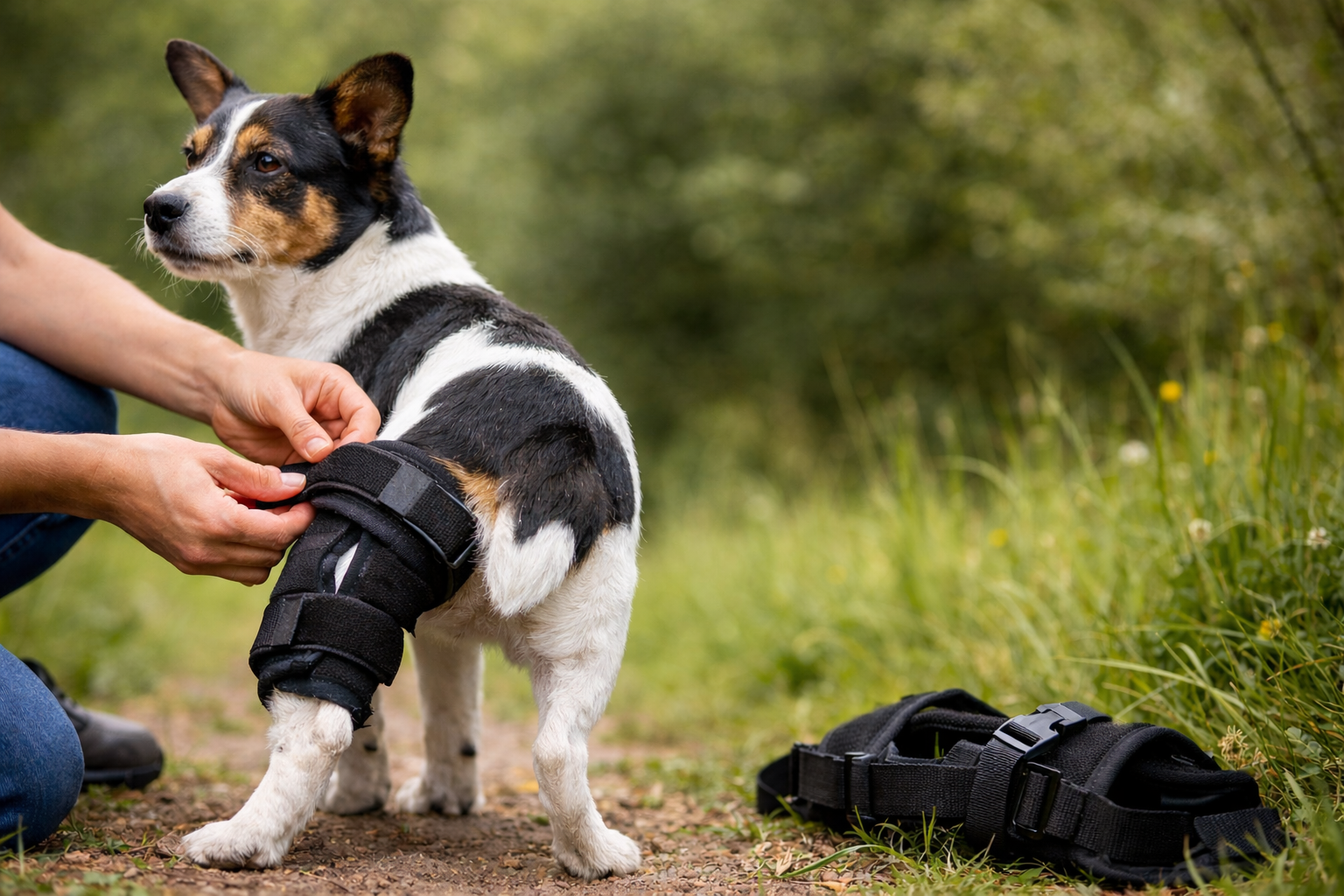
Dog knee brace patellar luxation fit and slippage should be judged by one practical question: does the brace stay aligned with the knee during real movement without rubbing, twisting, or sliding out of place. A good brace fit should support the knee, improve stability, and stay comfortable during walking, sitting, and standing transitions instead of only looking secure while the dog is still. If you want a broader overview of when bracing helps and when veterinary review matters, start with this luxating patella knee brace guide.
Key Takeaways
- A patellar luxation knee brace should stay aligned with the knee during movement, not just while the dog is standing still.
- Slippage usually points to a problem with measurement, strap adjustment, leg shape match, or brace design.
- Daily checks should focus on brace drift, skin marks, gait quality, and whether the dog still moves comfortably.
Dog Knee Brace Patellar Luxation Fit and Slippage
Why Fit and Hold Matter for Dogs
When you evaluate dog knee brace patellar luxation fit and slippage, the main goal is to keep the brace working in the right position through daily movement. If the brace fits correctly, it can help support the knee and reduce unstable motion around the patella. If it slips, twists, or drifts, support becomes inconsistent and the dog may feel less stable rather than more supported.
Several things affect how well a brace holds in place:
- The brace design and how it controls knee motion
- The accuracy of the measurements used for sizing
- The dog’s leg shape, coat thickness, and activity level
- The severity of the patellar luxation and overall treatment plan
Brace construction matters too. Adjustable straps, stable materials, and a shape that matches the knee area usually do more to reduce slipping than simply tightening the brace harder. For a broader fit-and-comfort framework, compare this section with the canine rehabilitation brace fit and safety guide.
Key Signs of Perfect Brace Fit
You can tell if a brace fits well by checking whether it stays aligned and comfortable during movement, not only by how it looks when first applied.
- The brace stays close to the leg without pinching or leaving large gaps.
- The straps feel secure without creating swelling, redness, or obvious pressure.
- The dog walks, sits, and stands without trying to shake off or bite the brace.
- The brace does not twist, slide down, or lose alignment with the knee.
If the brace moves, rubs, or makes the dog limp more, the fit is not working well enough yet. Always recheck the brace after the dog walks or changes position.
Checklist for evaluating fit and slippage:
- Confirm that the brace contacts the leg evenly without obvious gaps
- Check whether the brace stays aligned during walking
- Look for rubbing, heat, swelling, or discomfort after movement
- Make sure the support still lines up with the knee after the dog sits and stands
If you want a broader condition-first path before comparing products, review the patella luxation support solution page and then compare current options in the Luxating Patella Knee Brace product page.
Evaluating Dog Leg Braces for Medial Patellar Luxation
Measuring for a Secure Fit
You want to make sure dog leg braces fit well for medial patellar luxation. Accurate measurement is the first step. You want to make sure the brace fits well before the dog starts relying on it for daily support. Accurate measurement is the first step, and small mistakes can make a patellar luxation brace slide, gap, or press unevenly.
- Measure the thigh circumference above the knee where the upper support zone will anchor.
- Measure the knee area directly over the patella to help place the support correctly.
- Measure the lower leg just below the knee to check how the brace will hold its lower position.
- Measure the leg length needed for the brace design instead of guessing from breed size alone.
- For double-leg or wider support designs, check inner-leg spacing to reduce rubbing between the legs.
You should always double-check the numbers before choosing a size. If you need a more detailed step-by-step process for measuring, recording, and rechecking fit after movement, use this dog brace sizing guide.
Aligning the Brace with the Knee Joint
Proper alignment is critical because the brace only helps if it supports the knee where the patella actually needs control. The hinge or support center should line up with the knee joint closely enough to stabilize movement without creating rubbing above or below the target area.
Movement is what reveals whether alignment is correct. Dogs bend and extend the rear leg constantly, so the brace has to move with the joint without rotating or drifting. If you notice twisting or shifting during walking, recheck placement before assuming the brace only needs tighter straps. For condition-based planning beyond the brace itself, compare this section with the patella luxation support solution page.
Adjusting for Different Dog Body Shapes
Dog body shape affects brace stability more than many buyers expect. Some dogs have thinner thighs, flatter legs, heavier coats, or stronger rear-leg push-off, and those differences change how easily a brace stays aligned. That is why one size or one strap pattern does not work equally well for every dog with patellar luxation.
You should adjust the brace to the dog’s actual leg shape instead of relying on breed generalizations alone. Adjustable designs usually help more than rigid one-position designs because they give you room to fine-tune hold, coverage, and comfort. If the dog has repeated fit failure with standard sizing, a more specialized fit may be necessary.
For product-level review after you confirm the support type, continue to the Luxating Patella Knee Brace page.
Tip: If the dog keeps skipping, limping, or twisting out of the brace after careful adjustment, ask a veterinary professional whether the fit or the overall support plan needs to change.
Preventing Slippage in Dogs
Common Causes of Brace Slippage
Brace slippage usually happens for a small number of repeatable reasons: loose straps, poor alignment, incorrect sizing, body-shape mismatch, or changes in swelling and leg shape through the day. Some owners assume the first adjustment is enough, but patellar luxation braces often need rechecking after the dog has moved for a while. Slippage is not just a comfort issue. It is a sign that support is no longer being delivered where it should be.
Tip: Look for red marks, heat, rubbing, or drift after movement. Those are usually the first signs that the fit needs to be corrected before wear time increases.
Design Features That Improve Hold
You can reduce slippage by choosing a brace with design features that match the dog’s actual support need. Adjustable layouts usually help because they let you refine the fit after movement, while targeted support zones help keep the brace working around the knee instead of sliding away from it. Durable materials matter too, but stability comes from how the design holds the leg, not from stiffness alone.
- Adjustable design for daily rechecking and small fit corrections
- Targeted knee support that stays centered on the patellar area
- Stable straps that reduce shifting during walking
- Durable materials that keep their hold over repeated use
- A build that feels supportive without becoming too bulky for the dog
For a product-level example after you finish the fit review, compare this article with the Luxating Patella Knee Brace page.
Regular Fit Checks and Adjustments
Prevention works best if you check the fit a lot. Swelling can change, so you need to check the brace again. In the firSlippage prevention works best when you check the fit regularly instead of waiting for a visible problem. Swelling, coat compression, movement, and strap stretch can all change how the brace sits. During the early period of use, more frequent checks are usually better than assuming the brace will stay correct all day.
| When to Check | What to Check | Why It Matters |
|---|---|---|
| Before activity | Brace position, strap tension, and knee alignment | Sets the brace correctly before loading starts |
| After short movement | Drift, twisting, or skin pressure | Shows whether the brace stays stable under motion |
| After longer wear | Heat, redness, hair flattening, or swelling | Helps catch comfort problems before they become skin injury |
Many owners forget how important routine rechecks are. For a stronger next step after this section, compare this article with the dog brace sizing guide and the patella luxation support solution page.
Troubleshooting and Limitations
Addressing Poor Fit or Persistent Slippage
If a dog knee brace for patellar luxation keeps moving or causes discomfort, start by checking the measurements and placement again instead of assuming the design is always the problem. A brace that is too loose may slip, while a brace that is too tight may create rubbing and still fail to hold correctly. The brace should line up with the knee and stay centered after the dog walks, turns, and sits down.
Watch how the dog moves once the brace is on. If the dog is active, swelling changes through the day, or the dog keeps shifting the leg awkwardly, the brace may start slipping even if it looked correct at first. If careful remeasurement and repositioning still do not solve the problem, the dog may need a different brace style or a more individualized fit approach.
You also need to keep realistic expectations. Braces can help support medial patellar luxation, but they do not replace surgery or solve every severe case. They work best as part of a broader support plan rather than as a stand-alone fix.
When to Seek Professional Guidance
If you keep having trouble with fit or slippage and cannot correct it through measurement, placement, or small adjustments, ask a veterinarian for help. A veterinarian or rehab professional can tell you whether the brace is appropriate for the dog’s actual knee problem and whether the support plan should change.
You should seek professional guidance when the dog shows pain, worsening gait, skin injury, repeated slipping, or less confidence while walking in the brace. Those signs often mean the dog needs a different brace setup, a different treatment path, or more than bracing alone.
Braces cannot replace surgery in severe medial patellar luxation cases where structural correction is needed. If the dog is not improving or is getting worse even with the brace, professional reassessment is the right next step. For broader guidance after this section, compare this article with the luxating patella knee brace guide.
You improve dog knee brace patellar luxation fit and slippage when you treat the brace as something that needs daily checking, not one-time fitting. A brace should stay aligned, feel tolerable, and support steadier movement without turning into a rubbing or slipping problem.
- Build wear time gradually instead of assuming longer wear is always better.
- Remove the brace for rest periods when active support is no longer needed.
- Check the skin and brace position every day, especially after movement.
- Keep the brace clean and inspect straps, padding, and contact points regularly.
- Watch for pain, gait change, or repeated slipping and escalate early if they appear.
For next steps, continue to the dog brace sizing guide, the patella luxation support solution page, or the Luxating Patella Knee Brace product page depending on whether you need fit guidance, condition planning, or product comparison. Data authenticity note: This article is for educational purposes only. It is designed to help readers evaluate patellar luxation knee brace fit and slippage, not to replace veterinary diagnosis or individualized treatment advice.
FAQ
How do you know if a dog knee brace fits correctly?
The brace should stay aligned without twisting, sliding, or creating swelling or redness. A correct fit should also let the dog move more steadily, not more awkwardly.
What causes a dog knee brace to slip during use?
Loose straps, poor alignment, incorrect sizing, swelling changes, or leg-shape mismatch can all cause slippage. That is why a brace needs rechecking after movement, not only during first fitting.
How often should you check the fit of a dog knee brace?
Check the fit more often during the early wear period, especially after walking or play. Frequent checks help you catch drift, rubbing, and skin changes before they become bigger problems.
Can all dogs use the same type of knee brace for patellar luxation?
No. Different dogs need different brace shapes, sizing, and support levels. Adjustable or more individualized braces are often better for unusual leg shapes or repeated slipping problems.
When should you ask a veterinarian about brace fit or slippage?
Contact a veterinarian if you see pain, worsening limping, skin injury, or repeated slipping that does not improve after careful adjustment. Those signs usually mean the support plan needs professional review.
