
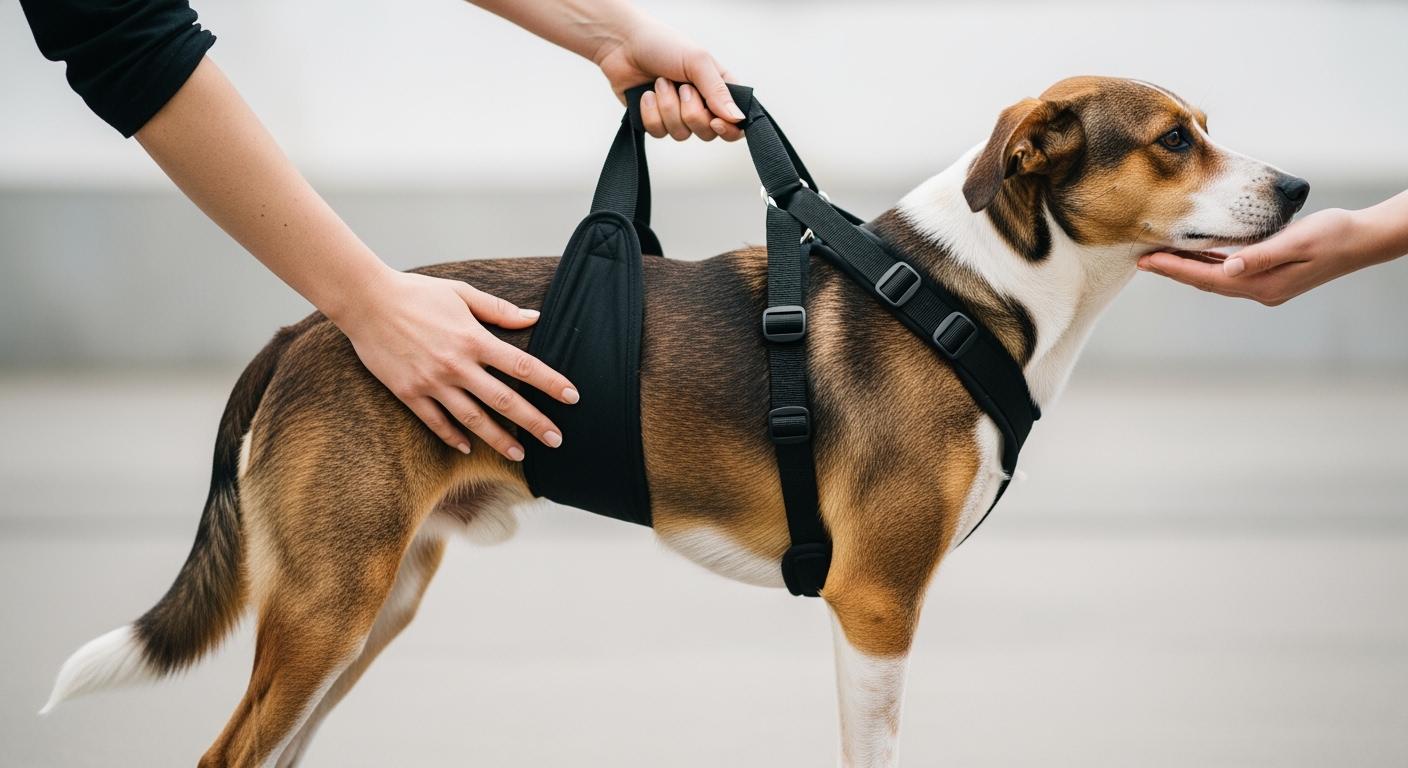
A dog support sling and a lift harness do not solve the same mobility problem in the same way. A sling is usually better for quick support during short transfers, potty breaks, or brief stair help, while a lift harness is usually better for steadier control during walking, longer assisted movement, and repeated daily use. If you want a broader overview of support types, fit, and daily handling before comparing the two, start with this dog support sling guide.
Key Takeaways
- A support sling is usually better for short, simple assistance where the dog still has some independent movement.
- A lift harness is usually better when the dog needs steadier control for stairs, transfers, or longer supported walks.
- Fit, comfort, and task type matter more than product appearance when choosing between the two.
Why Dogs Need Mobility Support
Common Mobility Challenges in Dogs
You might see your dog move slower or have trouble doing things. Many dogs have problems moving as they get older or after an injury. These problems can be:
Arthritis and joint pain that make it hard to walk or stand
Muscle atrophy, which makes dogs weaker and less steady
Neurological conditions that change how dogs move
Post-surgical recovery, when dogs need more help
General weakness and frailty, mostly in older dogs
Dogs with spinal malformations, hip dysplasia, or degenerative disc disease can lose leg strength. Bulldogs, retrievers, and boxers often have these issues. Bad arthritis can make every step hurt for your dog. You might notice your dog does not want to play, walk, or go up stairs. These signs show your dog may need a mobility aid.
Dog Hind Leg Weakness and Support
Dog hind leg weakness is a main reason for using mobility support. Many dogs with weak back legs find it hard Hind leg weakness is one of the most common reasons buyers compare a support sling with a lift harness. Dogs with weak back legs often struggle to stand after resting, hesitate on stairs, lose balance during walking, or tire quickly during short outdoor trips. In these cases, the goal is not only to lift the dog, but to choose the kind of support that matches the dog’s daily movement pattern.
When weakness affects routine walking, stairs, or bathroom breaks, compare your options against this dog lift harness solution for hind leg weakness. It gives a clearer framework for deciding whether the dog mainly needs quick rear support, steadier full-body guidance, or a broader mobility-support plan.
When you look at a dog support sling vs lift harness, you should pick the one that fits your dog’s weakness and daily needs. This helps you give the right support for healing and care.
Dog Support Sling Overview
Design and Function
A dog support sling is usually the simpler option. You place it under the belly, hips, or rear support zone and use the handles to help the dog stand, rebalance, or move a short distance. It works best when the dog still has some strength and mainly needs brief help rather than all-day support. For many dogs with mild to moderate weakness, arthritis, or early recovery needs, a sling is useful because it is fast to position and easy to remove between short tasks.
Best Uses for Daily Mobility
You usually choose a support sling when the dog needs short, repeatable help with standing up, potty breaks, or a few stairs rather than longer guided movement. A sling is often practical for home care because it is quicker to apply than a full harness and easier to use when support is only needed for a few minutes at a time.
Pick a sling that supports the weakest part of your dog.
Make sure the handles are long enough for you to use comfortably.
Fit the sling properly to avoid slipping or discomfort.
Introduce the sling slowly so your dog gets used to it.
Use the sling often but give your dog breaks to rest.
Best Practice | Description |
|---|---|
Proper Fitting | Fit the sling to support your dog’s weight and weakness. |
Gradual Introduction | Let your dog adjust to the sling over several short sessions. |
Frequent Use with Breaks | Use the sling daily but allow rest to prevent fatigue. |
Monitor for Comfort | Check for signs of chafing or irritation during use. |
Pros and Cons
A sling is usually less useful once the dog needs steadier guidance, better stair control, or more secure body coverage during longer activity. That is often the point where a lift harness becomes the better daily tool.
Lift Harness Overview
Structure and Features
A lift harness is usually the better option when the dog needs more structured support than a sling can provide. It wraps around more of the body, often covering the chest and rear support areas together, so you can guide the dog with better balance and more consistent control. If you want to compare the main styles currently available, review the dog lift harness collection before choosing between rear-support and fuller-body layouts.
Mobility Support for Dogs
You use a lift harness when the dog needs steadier support for walking, standing, stair use, or daily transfers and can no longer be helped safely with a simple under-body lift. For a full-body example built around front-and-rear assistance, review this lift harness for front and hind legs, which is designed for more controlled assistance across both ends of the body.
Check your dog’s ability before each lift.
Pick a harness that fits your dog’s health and mobility needs.
Keep your dog comfortable during every transfer.
Inspect the harness and straps often.
Train yourself and other caregivers on safe lifting.
Pros and Cons
You will see both benefits and drawbacks when you use a lift harness for your dog. The table below shows the most common points from professional and consumer reviews:
Advantages | Disadvantages |
|---|---|
Comfort while not under load | Discomfort under load |
Ease of donning | Difficulty in adjustment |
Features like reflective tape | Insufficient Velcro in some models |
Attached whistles | Stiffness of materials in some models |
A lift harness gives your dog support for weakness in both the front and back legs. You can use it for daily mobility, short walks, or helping your dog up stairs. You may find it easy to put on your dog, but you should always check for proper fit and comfort. This lifting aid harness helps you control your dog’s movement and reduces the risk of falls. You should watch for any signs of discomfort, especially when your dog is under load.
Dog Support Sling vs Lift Harness: Key Differences
Support Coverage and Handling Control
A support sling gives concentrated help under one area, usually the belly, hips, or rear support zone. That makes it useful for short, task-based assistance, but it also means the handler has less control over the dog’s overall body alignment during longer movement.
A lift harness covers more of the dog’s body and usually gives better handling control because the support is spread across more than one area. That is why a harness is usually easier to use for stairs, uneven ground, or longer supported walks. If you still need to compare everyday mobility needs more broadly, review this dog mobility support solution page alongside this article.
Tip: For clinics and rehab centers, a lift harness gives you better handling for dogs with balance problems. A dog support sling works well for dogs that need quick help but can still move on their own.
Fit Complexity and Daily Wear
A support sling is simpler to put on and take off, so it usually wins when the support task is brief and repeated. A lift harness takes longer to fit correctly, but it usually gives better stability once it is on because the support does not depend on one narrow lifting area.
For daily wear, the bigger question is not just which device is easier to don. It is which one stays comfortable and predictable through the dog’s real routine. If the dog needs repeated walks, stairs, or supported transitions across the day, a harness usually becomes the more stable choice.
Note: Match the device to the routine. For quick help a few times a day, a sling can be enough. For repeated guided movement, a harness is usually the better daily-use tool.
Stairs, Transfers, and Short Walks
Stairs, transfers, and short walks are where the difference becomes easier to feel. A support sling works best for quick lifts, simple standing help, or very short movement where the handler only needs to support one weak area for a moment.
A lift harness usually performs better on stairs and short walks because it gives more control over the dog’s whole body instead of just lifting from underneath. If stair safety is a regular concern, compare this article with the dog stairs after surgery safety guide so you can judge when a sling is enough and when a harness gives a safer level of control.
Use a dog support sling for:
Helping your dog stand up
Moving your dog a short distance
Quick support on a few stairs
Use a lift harness for:
Guiding your dog up and down stairs
Supporting your dog during transfers between rooms
Short walks for dogs with more severe weakness
Clinics and rehab teams often choose a lift harness for dogs that need steady support on stairs or during transfers. A dog support sling is a good choice for dogs that need help only sometimes.
You should always check your dog’s comfort and safety. Watch for signs of pain or stress, especially if your dog has arthritis. If you see your dog struggle on stairs or during transfers, you may need to switch to a harness for better support.
Comfort and Handling Considerations
Dog Comfort and Safety
You want the dog to feel supported without pressure, rubbing, or instability. That means checking body coverage, strap position, and whether the device still lets the dog move naturally. A sling that slides or a harness that twists can both create discomfort, even if the product looked correct on paper.
You should always supervise the dog during use, especially on stairs or when fatigue shows up quickly. If the dog seems stressed, tries to escape, or moves more awkwardly after the aid is fitted, stop and reassess. For a more detailed review of rubbing, strap placement, and comfort checks, use this fit and safety guide as a companion resource.
Here are some important comfort and safety tips:
Check the weight limit of the sling or harness.
Use proper lifting technique to protect your back.
Make sure the device does not cause chafing.
Supervise your dog at all times, especially on stairs.
Consult your veterinarian for guidance.
Caregiver Handling and Control
You need good control when you help your dog with stairs or transfers. A well-designed support sling or lift harness can make this easier. Devices with even weight distribution reduce strain on your body. Multiple adjustment points help you get a snug fit, which gives you better control when guiding your dog.
The table below shows how certain features help you and your dog:
Feature | Benefit |
|---|---|
Weight Distribution | Reduces strain on you when lifting your dog, especially on stairs. |
Multiple Adjustment Points | Lets you adjust the fit for better control and comfort. |
Hip Lift Design | Lifts from under the sternum and pelvis, avoiding pressure on sore spots. |
You should always use both hands when guiding your dog up or down stairs. Move slowly and watch your dog’s reaction. If your dog struggles, pause and adjust the device. Training yourself and other caregivers on safe handling will help prevent injuries for both you and your dog. Good handling and control keep your dog safe and make daily mobility tasks less stressful.
Choosing the Right Mobility Support
Factors for Selection (Dog Size, Condition, Owner Needs)
When you choose between a dog support sling and a lift harness, you need to look at your dog’s size, strength, aWhen choosing between a dog support sling and a lift harness, start with the dog’s real daily task. Some dogs only need help getting up or taking a few supported steps. Others need steadier guidance on stairs, during transfers, or through repeated short walks.
Ask these questions first:
- Does the dog need short lifting help or longer guided movement?
- Is the weakness mainly in the rear, or does the dog need more body-wide balance support?
- Will the device be used occasionally, or many times through the day?
- Can the handler use the device safely and consistently without over-lifting?
You also need to consider caregiver effort. A sling can be faster for quick use, but a harness usually gives better control once the support task becomes more complex or more frequent.
Adjustable wheelchairs now lead the market because they fit many dog sizes and conditions. Their design lets you change the height, width, and length, so they work for small and large dogs with different mobility needs. While slings and harnesses help with stairs and short walks, wheelchairs offer more support for dogs with severe weakness or paralysis.
When to Consult a Vet or Specialist
You should talk to your veterinarian if your dog cannot use stairs, falls often, or shows new signs of pain. A vet can help you decide if a dog support sling, lift harness, or even a wheelchair is best. If your dog’s condition changes or you see sores from the device, stop using it and ask for advice. Always follow your vet’s guidance for safe and effective mobility support.
Tip: If you feel unsure about which device to use, or if your dog’s needs change, a specialist can help you find the safest way to support your dog on stairs and during daily routines.
Common Mistakes When Comparing Mobility Aids
Misunderstanding Device Purposes
You may see many options when you compare a dog support sling vs lift harness. Some buyers think these tools do the same job. In reality, each device serves a different purpose. A support sling helps you give your dog a quick lift for short moves or to help with stairs. A lift harness gives you more control and works better for longer support, like guiding your dog up stairs or during short walks. If you use the wrong device, you may not give your dog the right help. You should always match the tool to your dog’s needs and daily routine.
Tip: Ask yourself if your dog needs help only for stairs or for every step. This question helps you pick the right device.
Overlooking Dog Condition or Fit
You need to check your dog’s size, shape, and health before you choose a mobility aid. Many buyers skip this step and pick a device based only on price or appearance. This mistake can lead to problems for both you and your dog.
Proper fitting keeps your dog comfortable and makes the device work well.
Ill-fitting equipment can cause discomfort, skin irritation, or limit movement.
Small dogs need lightweight and adjustable harnesses for safe support.
Poor fit can add strain and may stop your dog from using the aid.
Consulting with a professional helps you find the right size and adjustment.
If you overlook fit, your dog may not want to use the device. You may also see more problems when you help your dog with stairs or transfers. Always measure your dog and check the fit before daily use. This step protects your dog’s comfort and safety.
Note: You should review fit often, especially if your dog’s condition changes over time.
When to Seek Broader Mobility Guidance
Signs Your Dog Needs More Than a Sling or Harness
You might see your dog having trouble moving every day. Sometimes, a dog support sling or lift harness is not enough help. You should watch for signs that your dog needs more than just basic support. Here are some things to look for:
Your dog cannot go up or down stairs, even with help.
Your dog falls a lot or cannot get up alone.
Your dog looks like it hurts or gets stressed when you move it.
Your dog needs help for every step, not just stairs or short walks.
You see sores or red spots from the device.
If you notice these signs, think beyond a simple sling-or-harness comparison. Some dogs need broader mobility support, wheelchair evaluation, or condition-specific planning. For a better next step, review the dog support sling guide for daily use logic and the mobility support solution page for wider recovery and stability options.
Note: Always talk to your veterinarian if your dog’s condition changes or if you are not sure which device is best.
Internal Links to Pillar, Solution, and Product Pages
You can find more choices if the dog needs more than basic support. Move from this comparison into the support sling types and fit guide, then compare broader recovery tools in the mobility support solution page, and finally review current dog lift harness options if the dog needs steadier product-based support.
Resource Type | Link Description |
|---|---|
Pillar/Guide Page | Dog support sling types, fit, and daily mobility use |
Solution Page | Mobility support, recovery handling, body-part support |
Product Category | Dog braces, wheelchairs, harnesses |
Tip: Clinics and rehab teams should use these resources when a dog needs more than just basic help for stairs or daily movement.
You help your dog most when you use the right tools and ask for expert advice. Broader mobility guidance gives you more choices and keeps your dog safe.
A dog support sling is usually the better choice for quick, simple assistance. A lift harness is usually the better choice for steadier control during stairs, transfers, and longer supported movement. The right decision depends on how often the dog needs help, how much control the handler needs, and whether the support task is brief or repeated through the day.
- Choose a sling when the dog mainly needs short lifts or brief rear support.
- Choose a harness when the dog needs more stable guidance and broader body support.
- Reassess the choice if the dog’s routine, strength, or comfort changes.
For next steps, continue to the dog support sling guide, the hind-leg weakness solution page, or the dog lift harness category depending on where the dog is in the decision process. Data authenticity note: This article is for educational purposes only. It is designed to help readers compare support slings and lift harnesses for daily mobility use, not to replace veterinary diagnosis or individualized mobility planning.
FAQ
What is the main difference between a dog support sling and a lift harness?
A support sling is usually better for quick lifting help and short tasks. A lift harness is usually better when the dog needs more control, more body coverage, and steadier support during stairs or short walks.
Which device works better for stairs?
A lift harness usually works better on stairs because it gives more control over the dog’s body and makes step-by-step guidance easier. A sling can help on a few stairs, but it usually offers less stability.
How do I choose the right size for my dog?
Measure the dog carefully and compare the numbers to the size chart before buying. Then check the fit during real use, because comfort and stability matter more than the size label alone.
Can I use both a dog support sling and a lift harness?
Yes. Some dogs use a sling for short transfers or standing help and a harness for stairs, walking, or longer supported movement. The better choice depends on the task, not just the product type.
Tip: Always ask your veterinarian before you choose a device for your dog.
When should I seek more advanced mobility support?
Look for broader mobility support if the dog still falls, shows pain, develops sores, or cannot move safely even with assistance. Those signs usually mean the dog needs a more advanced support plan.
