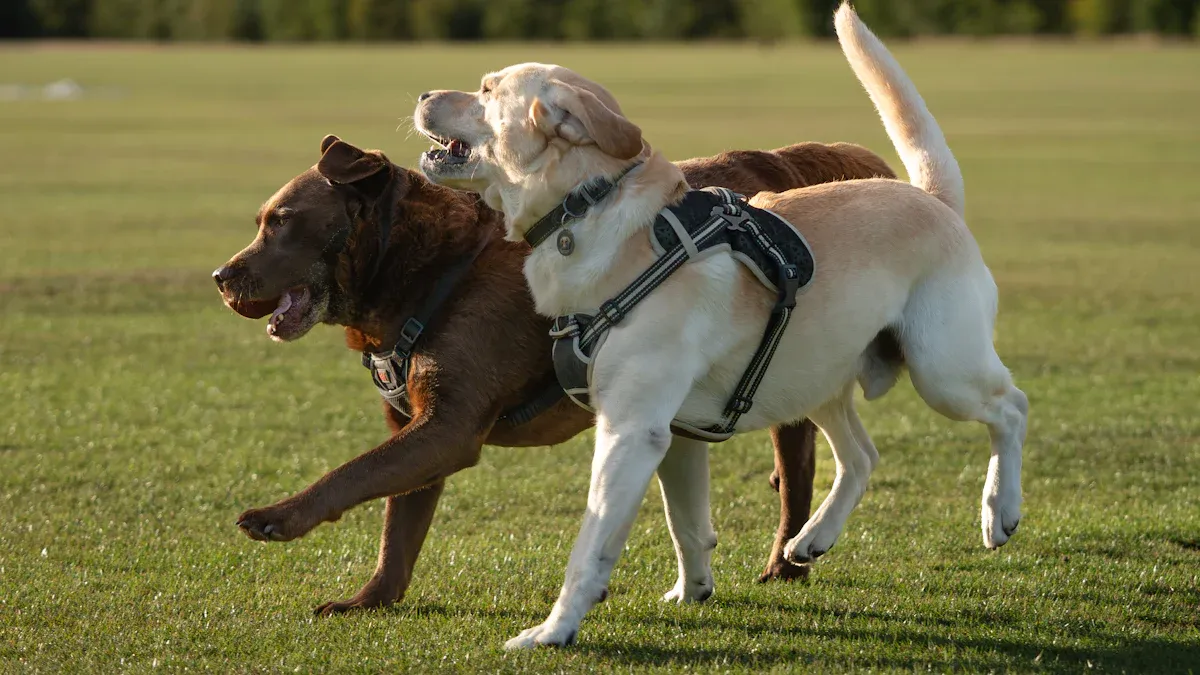
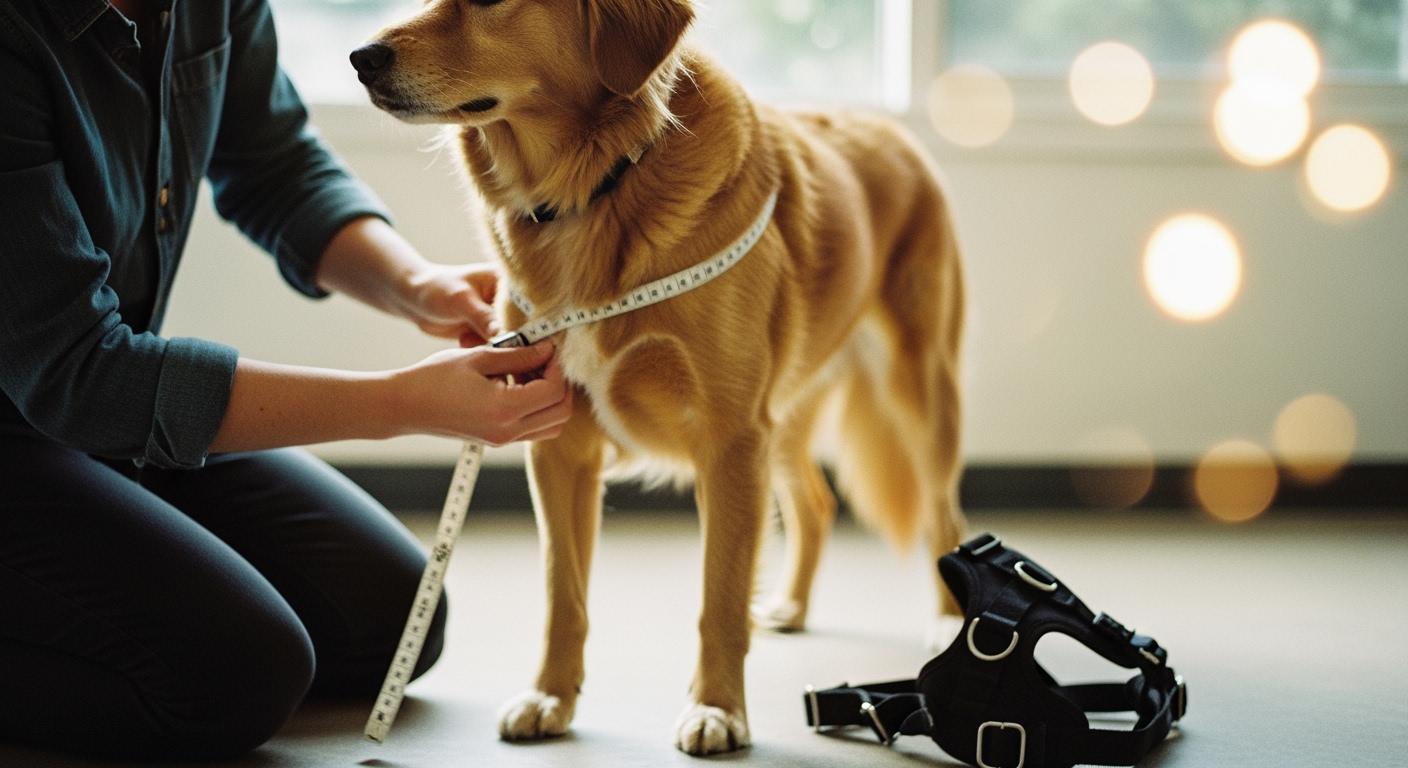
To measure a dog for a harness, start with the chest girth at the widest part of the rib cage just behind the front legs. Then measure the base of the neck, and take any additional body-length measurement required by the product’s size chart. The dog should stand naturally on a level, non-slip surface while the tape stays flat and snug without compressing the coat.
Measurements are only the starting point. After selecting a size, check how the harness sits around the neck, chest, shoulders, armpits, and sternum while the dog stands, walks, turns, and stops. A correct fit should remain centered, allow natural movement, and avoid rubbing, twisting, or large gaps.
Quick Answer: What Measurements Do You Need?
| Measurement | Where to Measure | When It Is Used |
|---|---|---|
| Chest girth | Around the widest part of the rib cage, usually just behind the front legs | The main size measurement for most dog harnesses |
| Neck circumference | Around the base of the neck where the harness neckline will sit | Used when the harness has a fixed or partly adjustable neck opening |
| Body or back length | Only at the points specified by the product instructions | Used for some full-body, lift, mobility, or specialty support harnesses |
| Weight | Use a recent, reliable weight | A secondary reference only unless the chart specifically uses weight |
Do not choose a harness from breed or weight alone when the manufacturer provides direct body measurements. Dogs of the same breed or weight can have different chest depth, neck width, coat volume, and body proportions.
How to Prepare Your Dog for Measuring
Use a soft measuring tape, a pen or phone for recording the numbers, and a helper if the dog moves frequently. If you do not have a flexible tape, wrap a non-stretch string around the measurement point and compare the string against a ruler.
- Place the dog in a natural standing position rather than sitting, crouching, or lying down.
- Use a level, non-slip surface so the dog is less likely to lean or shift weight.
- Keep the head in a neutral position rather than pulled upward or turned sharply.
- Smooth long or thick fur without pressing it flat against the body.
- Take each important measurement twice and record the larger consistent result if the readings differ slightly.
A sitting dog can shorten or widen some body areas and make the harness appear to fit differently once the dog stands. Measure while standing unless the product instructions state otherwise.
Step 1: Measure the Dog’s Chest Girth
Chest girth is the most important measurement for many dog harnesses. It is sometimes called chest circumference, rib-cage circumference, or simply girth.
- Find the widest or deepest part of the rib cage, usually a short distance behind the front legs.
- Wrap the tape around the entire chest and bring both ends together above the dog’s back.
- Keep the tape level and flat rather than angled toward the shoulders or abdomen.
- Pull it snug enough to follow the body contour, but do not compress the ribs or thick coat.
- Record the number and repeat the measurement once.
Where exactly is dog girth measured? Measure around the rib cage at its fullest point, not directly in the armpits and not around the narrow waist farther back.
For a long-haired dog, slide the tape through the coat until it follows the body shape without pulling the hair tight. Do not add an arbitrary amount for fur. The adjustment range of the finished harness should provide the necessary clearance.
Step 2: Measure the Neck for a Harness
Measure the neck only at the point required by the harness design. Most harness neck openings sit lower than a collar, near the base of the neck where it meets the shoulders and upper chest.
- Find the base of the neck rather than the narrow area directly behind the ears.
- Wrap the tape around the expected neckline of the harness.
- Keep the tape flat and snug without pressing into the throat.
- Record the number and compare it with the exact neck range in the product chart.
Do not assume a collar size is automatically the correct harness neck size. A collar and harness may sit at different points and use different adjustment systems.
Step 3: Take Any Extra Measurement Required by the Design
Some harnesses use only chest girth. Others require an additional neck, back, bridge, abdomen, or torso measurement. Follow the product chart rather than using one universal body-length method.
| Harness Type | Possible Extra Measurement | Why It Matters |
|---|---|---|
| Walking harness | Neck opening or lower-neck circumference | Helps keep the front panel away from the throat and shoulders |
| Rear lift harness | Abdominal circumference or rear support position | Helps place the lifting panel under the correct body area |
| Full-body lift harness | Back length, torso length, or front-to-rear support spacing | Helps align both support sections with the dog’s body |
| Specialty mobility harness | Product-specific bridge or body length | Helps prevent the harness from sitting too far forward or backward |
Never substitute “base of neck to base of tail” unless that is the exact measurement named in the product instructions. Two brands may use the term “body length” for different measurement points.
For a broader comparison of rear, front, and full-body support designs, review our dog lift harness fit and support guide.
How to Use a Dog Harness Size Chart
After recording the measurements, compare them with the size chart for the exact harness model. Do not reuse a size from another brand or assume that every medium harness has the same dimensions.
- Match chest girth first when the chart identifies it as the primary measurement.
- Confirm that the neck and any extra measurement also fall within the stated range.
- Check the adjustment range, not only the size label.
- Confirm that the harness shape matches the dog’s chest depth and body proportions.
- Perform an on-dog fit check before relying on the selected size.
What If the Dog Falls Between Two Sizes?
Do not automatically choose the larger size. Compare the dog’s measurements with the adjustment range and the design of the harness:
- Choose the option that keeps the chest and neck within the usable adjustment range.
- A larger size may create excessive strap length, shifting, or poor panel placement.
- A smaller size may place the dog near the maximum adjustment and reduce clearance.
- For a growing dog, coat change, or recent weight change, remeasure instead of guessing.
- Ask the brand for guidance when one measurement falls in a different size from the others.
Important: “Size up” is not a universal rule. The correct choice depends on panel coverage, strap range, chest depth, and where the harness must sit.
How Snug Should a Dog Harness Be?
A dog harness should be secure enough to stay centered without sliding, but not so tight that it compresses the chest, crowds the armpits, or restricts shoulder movement. The commonly used two-finger check is a starting point, not a complete fit test.
| Fit Area | Acceptable Sign | Warning Sign |
|---|---|---|
| Straps | Lie flat against the body without deep indentation | Twist, sag, dig in, or leave large gaps |
| Neck and throat | Harness sits away from the airway and does not ride upward | Pressure at the throat, coughing, or neckline movement |
| Armpits | Enough clearance for the front legs to move freely | Strap or panel repeatedly contacts the skin behind the elbows |
| Shoulders | Dog can extend and turn without the harness blocking movement | Shortened stride, hesitation, or visible restriction |
| Chest and sternum | Front section stays centered | Panel rotates, pulls sideways, or sits off-center |
You should usually be able to slide two fingers under a strap without forcing them, but coat thickness and strap width affect how this feels. The better test is whether the harness remains stable during movement without pressure marks or escape-sized gaps.
For a deeper look at armpit clearance and rubbing checks, see our dog harness chafing prevention guide.
Step-by-Step Harness Fit Check
- Center the harness: Confirm that the chest panel, back section, and straps are symmetrical.
- Check the neckline: Make sure the harness does not pull into the throat when the leash or handle is used lightly.
- Check armpit clearance: The harness should not sit directly in the elbow crease or repeatedly rub behind the front legs.
- Check the straps: They should lie flat without twisting, deep pressure, or loose loops.
- Watch movement: Let the dog walk, turn, stop, sit, and stand again.
- Apply a light-use test: Use the leash or support handle gently and check whether the harness shifts.
- Inspect after removal: Look for redness, fur breakage, damp areas, or pressure marks.
A harness can match the chart and still fit poorly because of chest shape, shoulder angle, coat, strap placement, or product design. That is why the final fit check matters as much as the original measurements.
If the harness includes a lifting handle, the handle position and load test also need to be checked. See our dog harness with lift handle guide for the additional fit and handling checks.
Common Measuring and Sizing Mistakes
- Measuring while the dog is sitting: This can change chest shape and body length.
- Placing the girth tape in the armpits: The measurement should usually be around the fullest part of the rib cage.
- Pulling the tape too tight: Compressing the coat or chest can produce an undersized result.
- Leaving the tape too loose: Extra slack can lead to an oversized harness that rotates or allows escape.
- Using breed or weight only: Body proportions can vary significantly within the same breed and weight range.
- Using another brand’s size: Size labels and measurement points are not standardized.
- Assuming adjustability fixes the wrong size: Straps can fine-tune fit but cannot correct poor panel placement.
- Skipping the movement test: A harness that looks fine while standing may shift or rub during walking.
When Should You Remeasure?
Remeasure when the dog gains or loses weight, grows, changes coat thickness, develops swelling, begins or completes a recovery period, or starts using a different harness style. Also recheck the harness after the first few uses because straps can settle and coat can compress.
For senior dogs or dogs using lift and mobility support, body shape and weight distribution may change over time. Our senior dog mobility support harness guide explains how support needs can affect harness selection and fit.
When to Ask the Brand or a Veterinary Professional
Ask the brand for sizing guidance when the chart is unclear, the dog falls between sizes, one measurement points to a different size, or the harness uses specialty support panels. Provide the dog’s actual measurements, weight, intended use, and photographs if requested.
Ask a veterinary professional when the dog shows pain, a new gait change, skin injury, weakness, breathing difficulty, or instability that cannot be explained by normal strap adjustment. A harness may assist handling or mobility, but fitting guidance does not replace diagnosis or an individualized rehabilitation plan.
For pet brands and distributors building a harness range, consistent measurement points and size grading should be defined before samples or packaging are approved. Learn more about GaitGuard’s OEM/ODM pet orthotics and support-product development.
FAQ
How do you measure a dog’s chest for a harness?
Wrap a soft tape around the widest part of the rib cage, usually just behind the front legs. Keep the dog standing, the tape level, and the fit snug without compressing the coat or chest.
How tight should a dog harness be?
It should stay centered without sliding or twisting, while still allowing normal breathing and shoulder movement. Two fingers should generally fit under the straps, but movement, pressure marks, and escape-sized gaps must also be checked.
Should a dog be standing or sitting when measured?
Measure the dog while standing naturally on a level surface. Sitting, crouching, or leaning can change the chest and body measurements.
Should I size up if my dog is between harness sizes?
Not automatically. Compare every required measurement with the adjustment range and choose the size that provides correct panel placement and usable strap adjustment. Contact the brand when different measurements point to different sizes.
Can I choose a harness size from my dog’s weight?
Weight can be a secondary reference, but chest girth and other direct measurements are usually more reliable. Use weight alone only when the exact product chart instructs you to do so.
How often should harness fit be checked?
Check it before regular use and whenever the dog’s weight, coat, growth, activity, or recovery stage changes. Inspect the skin and coat after use if the harness is new or worn for extended periods.
Educational note: This guide explains general harness measurement and fit checks. Always follow the sizing instructions for the exact product and seek professional guidance when pain, injury, weakness, or gait changes are present.