
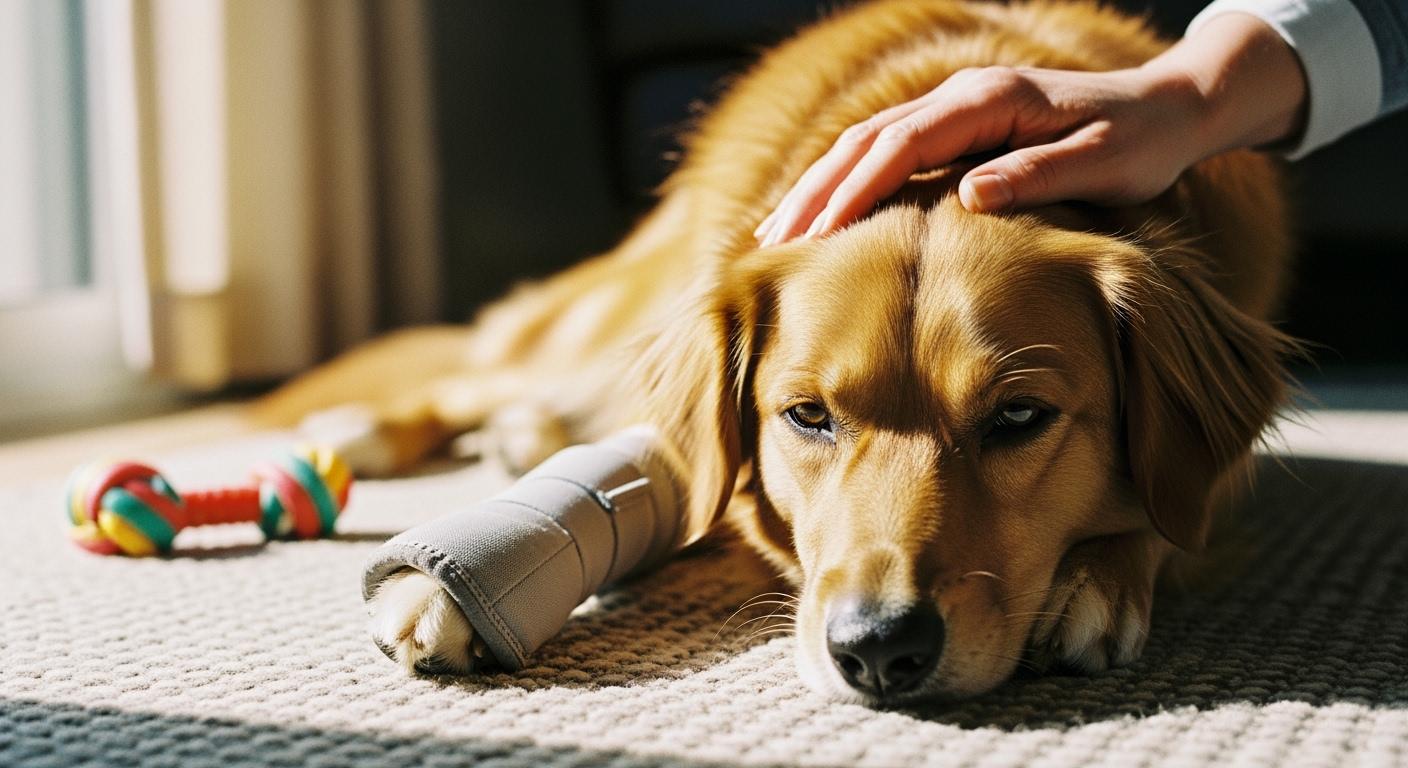
A dog works a leg sleeve hard. In a single day, the fabric may be walked on, slept on, dragged across flooring, and pulled against by a dog trying to reach the covered area. Many sleeves can block licking when first applied. The more important question is whether the sleeve keeps the intended area covered during routine movement and extended wear.
Fit does not fail only because the sleeve was measured incorrectly. A sleeve can also lose position as the dog sits, stands, climbs, turns, and bends the hind leg. If the fabric cannot move with the limb, it may migrate, twist, or gather. Even a small shift can expose part of the protected area or move an edge onto sensitive skin.
The difference between a sleeve that stays reasonably stable and one that needs frequent readjustment often comes down to several design decisions. Strap width matters. Cuff construction matters. The way the fabric moves against itself, the coat, and the skin also matters. These are not only comfort details. They affect whether a leg sleeve maintains useful coverage or gives the appearance of protection while the covered area gradually becomes accessible.
Where a Leg Sleeve Stops Protecting
Edge Migration: the Half-Inch Fit-Check Threshold
A sleeve may cover the intended area when first applied, but the dog then lies down, gets up, and walks across the room. Each transition can create small shear forces between the fabric, coat, and skin. The sleeve’s upper edge may be supported by a torso strap or harness, while the lower edge near the paw may have less positional support. Over time, this can allow the lower section to drift upward.
This is not always a sizing error. It may also reflect how the sleeve grips a tapered limb. A dog’s leg is not a cylinder: the thigh, hock, and lower leg have different circumferences and contours. A sleeve that feels secure higher on the leg may have less stable contact lower down, especially during repeated joint movement.
For a repeatable fit check, allow the dog about 20 minutes of normal supervised movement, then note the sleeve edge against a visible landmark such as the hock or the top of the paw pad. Recheck the same reference after another 10 minutes of controlled activity. If the edge moves more than half an inch during this observation period, treat it as a practical sign that coverage stability may be inadequate for extended wear. The half-inch reference is a comparative fit threshold, not a universal clinical limit; wound location, sleeve design, limb shape, and product instructions still determine whether the remaining coverage is acceptable.
Bunching Behind the Joint
Fabric that gathers behind the knee or hock can create more than a cosmetic problem. When the dog flexes the joint, a persistent fold may concentrate pressure and friction along a narrow line instead of distributing contact across the fabric panel. This can increase the risk of redness, warmth, rubbing, or discomfort in the folded area.
Fabric thickness adds up when several layers fold over one another. For illustration, a 2 mm fabric panel folded into three layers can create an uncompressed ridge of roughly 6 mm. The actual thickness under load will vary with material softness, stretch, and compression, but the example shows why a seemingly thin panel can form a noticeable pressure line when it bunches behind a joint. If that ridge remains against the skin through repeated flexion, it may become a localized pressure point and may encourage the dog to lick or chew at the area.
Sleeves with stretch zones positioned near the joint may reduce bunching by allowing the material to extend with movement rather than gathering across the flexion line. Results still depend on panel shape, material recovery, limb contour, and how the sleeve is secured.
After applying the sleeve, gently move the dog’s leg through its normal comfortable range and feel along the back of the joint. A persistent ridge, tight fold, or section that does not flatten as the leg changes position suggests that the sleeve should be adjusted or reconsidered.
How Material Choices Shift Skin Tolerance and Daily Wear Time
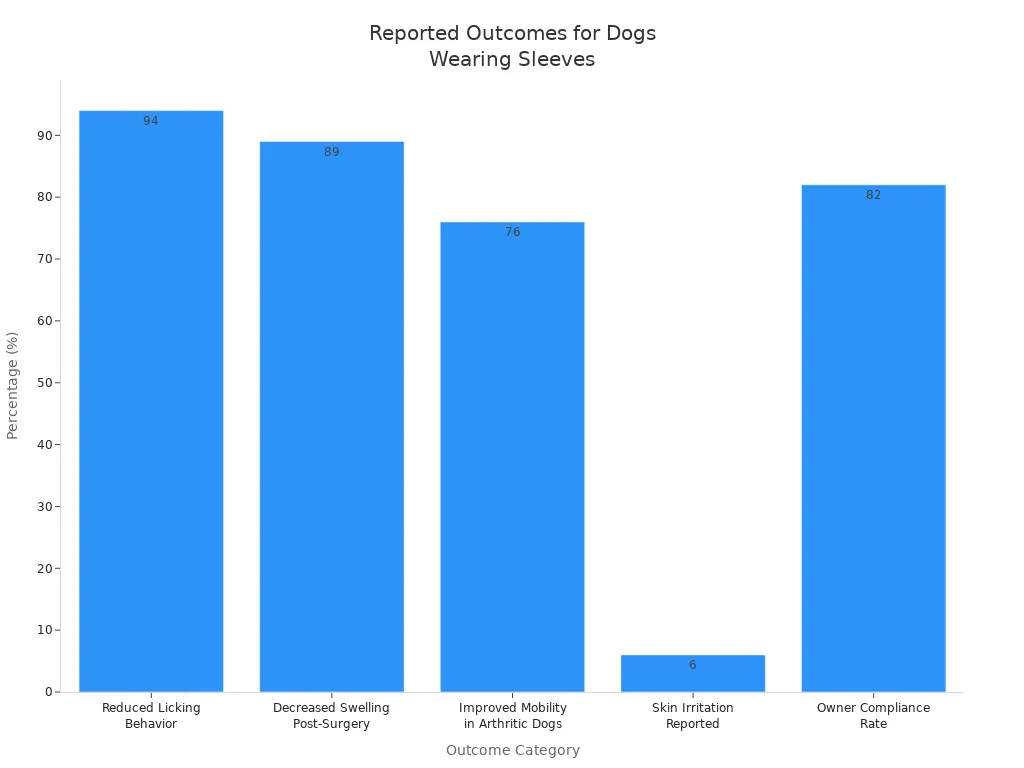
Moisture: the Variable Most Sleeves Ignore
A dog’s leg under fabric can become warm and humid. Body heat, ambient temperature, coat density, activity level, and the sleeve construction all affect the amount of moisture that collects between the skin and the lining.
Warm, damp skin may become less tolerant of repeated rubbing. A sleeve that felt comfortable when first applied may therefore become less comfortable later, even if the straps have not changed position. This is why fit should be checked during wear rather than only at the time of application.
The observable test is specific to fabric choice. As a repeatable early-wear check, inspect the sleeve after about 20 minutes: lift the edge and feel the skin and liner with a dry finger. Dampness, tackiness, excess warmth, odor, or visible redness are reasons to remove or adjust the sleeve and reassess airflow, wear time, and fit. The 20-minute interval is a practical comparison point rather than proof of one specific material failure, because activity, environment, coat type, wound condition, and sleeve construction can all contribute.
Mesh panels, knitted structures, and layered constructions may help moisture move away from the skin, especially when the lining and outer shell do not remain saturated against each other. Actual performance varies with material, garment thickness, panel placement, and how closely the sleeve fits.
Seam Placement and the Pressure Map
A seam that feels unobtrusive while the dog is standing may create localized pressure when the dog lies with that seam against a hard surface. Raised stitching or overlapping fabric can concentrate contact along a narrower line, particularly when the seam crosses a bony area.
| Seam Position | Likely Performance Under Load |
|---|---|
| Flat against the outer leg panel | May have less direct ground contact when the dog lies on the opposite side, although position changes can still bring it under load |
| Running vertically along the inner leg | May contact the opposite leg or flooring and can create friction during side-lying or repeated movement |
| Crossing the bony prominence of the hock or knee | Can concentrate pressure over a firm anatomical landmark and may increase localized rubbing risk |
| Offset to follow the muscle belly rather than the joint line | May move the seam away from the most prominent bone, but performance still depends on panel shape and fit |
This is also why sleeve construction depth matters. A sleeve cut from two panels with a single vertical seam has fewer seam lines than a multi-panel assembly, but it may fit a tapered leg less closely. Fewer seams can reduce the number of raised contact lines, while a less contoured fit may allow more movement. Some designs use a two-seam layout to route seams away from bony landmarks while maintaining closer contouring.
When a Sleeve Is Not the Right Barrier
Wound Location and Coverage Geometry
A sleeve wraps around a limb, but wounds may sit near transition zones rather than in the center of a relatively straight section. A wound over the hock sits at a flexion point that changes shape with every step. A wound high on the inner thigh sits near the junction between the sleeve edge and torso, where gaps may appear when the dog sits or turns.
A sleeve designed for back-leg recovery may be shaped primarily for coverage between the thigh and lower leg. If the affected area sits near the paw, lower ankle, or directly under an edge, the sleeve may not maintain suitable coverage. An edge that repeatedly moves across sensitive or healing tissue can reduce the sleeve’s protective value and may increase irritation risk.
High-flexion zones such as the hock and stifle challenge sleeve stability because the fabric must repeatedly stretch, recover, and change shape. Coverage is generally easier to maintain when the affected area is not directly beside a sleeve edge, but suitability still depends on the product design, limb shape, movement, and the specific location being protected.
When Build and Breed Work Against the Design
Short-coated dogs may show visible redness or indentations sooner because there is less coat between the fabric and skin. The same lack of coat can also make inspection easier. Dogs with dense or long coats may conceal early skin changes, so visual checks should be combined with careful hand-checking around the sleeve edges.
Dogs with narrow hindquarters or a strong taper from thigh to lower leg may be harder to fit with a sleeve patterned for a more cylindrical limb. A larger difference between upper- and lower-leg circumference can make it more difficult for one sleeve shape to maintain even contact along the full length of the leg.
Fit checks should account for coat density, limb shape, and any known conformational differences. On dense-coated dogs, feel under the sleeve edges for unusual warmth, dampness, swelling, firm folds, or skin texture changes that may not be visible. Dogs with unusual limb contours may require closer monitoring because a standard size and panel shape may not distribute pressure evenly.
Coverage Versus Airflow: the Tradeoff
Full-leg coverage can reduce licking access across a broader area, but it also covers more skin and may retain more heat and moisture. The practical balance depends on the affected area, the dog’s ability to reach around the sleeve, the material, the environment, and how well the sleeve maintains position.
A shorter sleeve covering only the affected zone may allow more airflow and be easier to inspect. The tradeoff is that skin above and below the sleeve remains accessible, and the sleeve edges sit closer to the area being protected. In some situations, a bandage or another barrier may handle coverage differently.
| Coverage Strategy | Potential Performance Difference | Main Limitation |
|---|---|---|
| Full-leg (ankle to torso) | Provides broader barrier coverage and may reduce access across more of the leg | Covers more skin and may increase heat or moisture retention; requires regular fit and skin checks |
| Mid-leg (above and below wound) | Balances targeted coverage with a smaller covered area and may be easier to ventilate | Skin above and below remains accessible if the dog can reach past the sleeve edges |
| Local wrap (wound zone only) | Covers the smallest area and may be easier to apply, remove, and inspect | Edges sit closer to the affected area, so movement or migration can reduce coverage more quickly |
No single coverage strategy is suitable for every dog or wound location. Full-leg coverage may provide a broader barrier when the dog tolerates it and the sleeve remains stable. A dog with an affected area near the hock or on a strongly tapered leg may be better served by a more targeted form of anti-lick coverage if it maintains position more reliably and allows the skin to be monitored.
FAQ
How long before the sleeve’s fit needs to be rechecked?
Check the sleeve about 20 minutes after the first application, after the dog has had time to sit, stand, and walk normally. If you are comparing edge movement, note the sleeve position and recheck it after another 10 minutes of controlled activity. During continuous wear, a general inspection every 4 to 6 hours and full removal for a skin inspection at least every 12 hours provide a practical monitoring routine, unless the product instructions, wound condition, or veterinary guidance require more frequent checks. Remove or adjust the sleeve sooner if it shifts, bunches, becomes damp, exposes the intended coverage zone, or causes redness, swelling, unusual warmth, odor, or visible discomfort.
What is the difference between a sleeve that is too tight and one that fits correctly?
A correctly fitted sleeve should maintain contact without visibly constricting the limb or creating persistent pressure points. Follow the product’s fit instructions rather than relying on one universal finger-width rule. Deep or lasting indentations, swelling, skin color or temperature changes, repeated licking, altered movement, or discomfort can indicate excessive pressure and are reasons to remove the sleeve and reassess the fit.
Can the same sleeve design work for a front leg?
Front and hind legs differ in taper, joint position, and movement pattern. A sleeve designed around the shape of a hind leg may not place its cuffs, stretch zones, or seams correctly on a front leg. Use a design intended for the correct limb rather than assuming that changing the size label will provide the same fit.
Why does the sleeve stay wet inside even when the dog has not been in water?
Moisture can collect because of body heat, activity, ambient humidity, coat density, limited airflow, an absorbent liner, or a close fit. Remove the sleeve, allow the skin and product to dry as appropriate, and check for redness, odor, or irritation before reapplication. If dampness returns quickly, reassess the material, fit, wear schedule, and care instructions rather than assuming that washing alone will solve the problem.
