
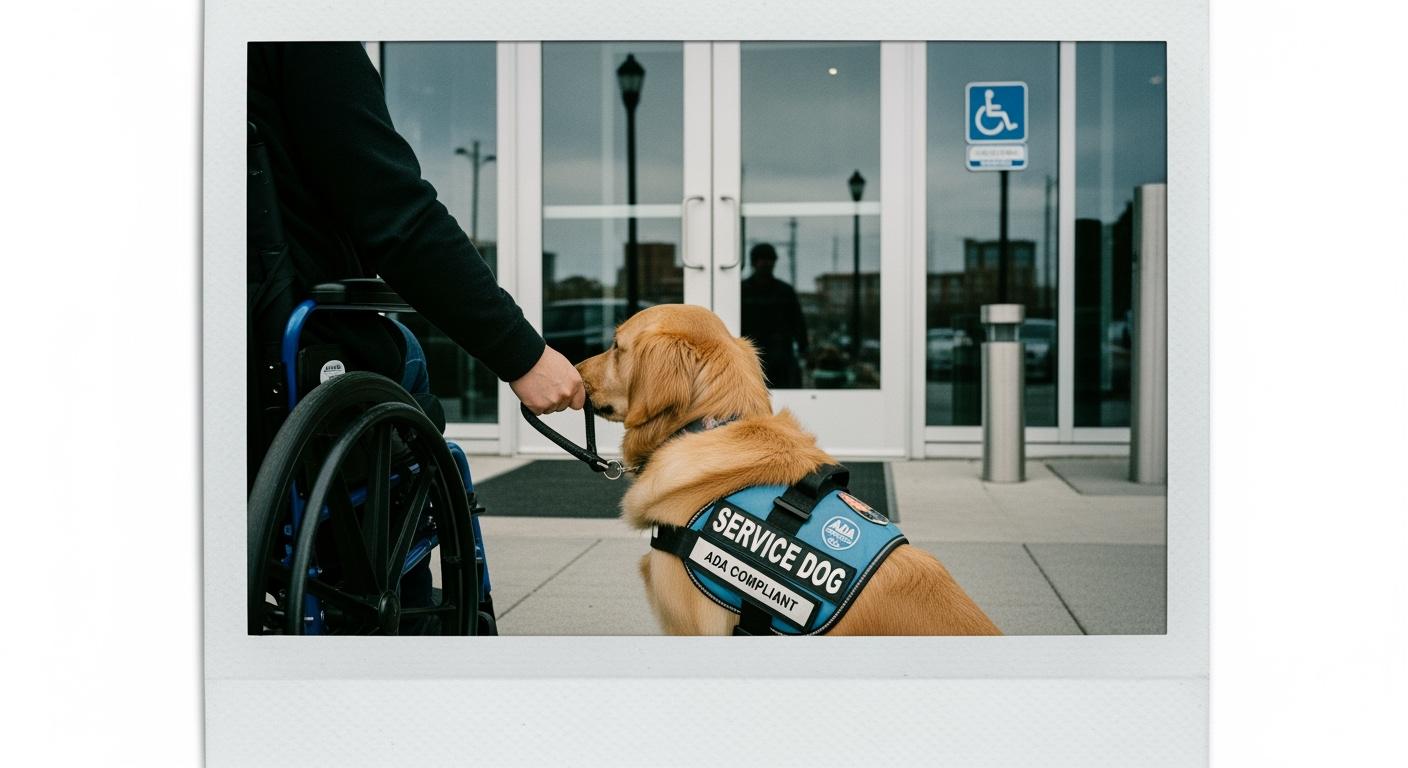
The Americans with Disabilities Act (ADA) protects the rights of people with disabilities who use service dogs. In 2025, updated ADA guidance emphasizes that you must keep your service dog under control. You can use a harness, leash, or tether. If your disability or the dog’s job makes this hard, you do not have to use them.
The ADA 2025 guidance makes clear that you do not need a harness for identification, but you must use safe equipment to keep your service dog under control.
You should always use the best ways to keep you and your service dog safe and comfortable.
Key Takeaways
Service dogs need to be controlled all the time. Use a harness, leash, or tether unless your disability stops you.
A service dog is trained to help with certain tasks for a disability. Emotional support dogs are not service animals.
Harnesses help you control your service dog better. They also keep your dog safer and protect its neck and spine.
Service dogs can go with their handlers in most public places. This is true even if there are ‘no pets’ rules.
Pick a harness that fits your dog well and uses safe materials. This helps your service dog stay comfy and healthy.
Check your service dog’s harness often for damage or wear. Get a new one if you see any problems to keep your dog safe.
Training your service dog to wear a harness can help it feel more confident. It can also help your dog do better in public.
Clean your service dog’s harness often to stop skin problems. This keeps the harness in good shape for daily use.
ADA 2025 Service Dog Safety Harness Rules
ADA Service Dog Definition
It is important to know what a service dog is under the americans with disabilities act. The ADA 2025 service dog safety harness rules give a clear meaning. A service dog is a dog trained to help a person with a disability. The dog must do tasks that are connected to the person’s disability. For example, a service dog can warn you if your blood sugar is low. It can help you during a seizure. It can also help if you have an anxiety attack. Dogs that only give comfort or emotional support are not service animals. The dog must do special things to help with your disability.
Service dogs are trained to help people with disabilities.
The work or task must be linked to the disability.
Dogs that only give comfort or support are not service animals.
The handler must have a disability as the ADA says.
2025 Guidance Updates
The ADA 2025 service dog safety harness rules have new updates. You must keep your service dog under control at all times. The rules say to use a harness, leash, or tether. If you cannot use these tools because of your disability or your dog’s job, you can use other safe ways to control your dog. The ADA does not say you need a harness for identification. You do not need a harness to show your dog is a service animal. The main goal is to keep your dog safe and under control.
Note: The ADA 2025 service dog safety harness rules care about safety and control, not how your dog looks.
Handler Control Requirements
You must keep your service dog under control in public places. The ADA 2025 service dog safety harness rules explain what this means. Your dog should not be aggressive, bark excessively, or behave in a disruptive way. You are always responsible for your dog’s actions. Your dog must be housebroken. If you cannot use a harness, leash, or tether because of your disability, you must use another safe way to control your dog.
Here is a table that shows the main control rules:
Requirement | Description |
|---|---|
Control | Service dogs must be under your control at all times. |
Leash/Tether | Use a harness, leash, or tether unless your disability prevents it. |
Behavior | Dogs must not be wild, mean, or bark too much. |
Housebroken | Service dogs must be housebroken. |
You must always use safe and kind ways to control your service dog. These ADA 2025 service dog harness rules help keep your dog and others safe.
This article is for learning only. It is not legal advice. For legal help, check official ADA resources or talk to a professional.
Public Access Rights
You have special rights if you use a service dog. The ADA 2025 rules let you go almost anywhere the public can go. Businesses and groups must let you and your service dog enter public places. They cannot say no to you because of a “no pets” rule. Your service dog is not just a pet. It is a helper that works with you every day.
Here is a table that lists your main public access rights under the ADA 2025 rules:
Right | Description |
|---|---|
Access to Public Areas | You and your service dog can go into any public place, like stores, hotels, and parks. |
No Exclusion from ‘No Pets’ Policies | Businesses must let your service dog in, even if pets are not allowed. |
Transportation Rights | You can ride public transportation with your service dog. You do not have to pay extra for your dog. |
You must always keep your service dog under control. The ADA 2025 service dog safety harness rules help you do this. When you follow these rules, you keep your rights and help keep everyone safe. Using a harness, leash, or tether shows you care about safety and control. This makes businesses and people feel better around your service dog.
As a handler, you need to know your service dog must act well in public. If your dog is not calm or is not housebroken, a business can ask you to leave. Most of the time, if you follow the ADA service dog harness rules, you will not have problems using your rights.
General Education Disclaimer
This information is only for learning.
Do not use it as legal advice.
It may not cover every situation.
If you have questions about the ADA 2025 service dog safety harness rules, check official ADA resources or ask a legal expert. Always use the best ways to keep your service dog safe and under control.
Why Use a Service Dog Safety Harness
Stable, Humane Control
You want your service dog to be safe and feel good at work. A safety harness lets you control your dog without hurting it. The harness spreads pressure over the dog’s body. This keeps the neck and spine safe, which is important for some dogs. You can guide your dog gently and not pull on its neck. Many experts say harnesses help with strong dogs during walks and training. You can keep your dog close and calm in busy places.
Here is a table that shows why experts like harnesses for service dogs:
Benefit Type | Description |
|---|---|
Enhanced Safety | Harnesses help spread pressure away from the neck, so there is less chance of injury. |
Better Control | Gives you more control on walks and during training, which helps with strong dogs. |
Comfort | Spreads pressure over the body, keeping the neck and spine safe, which is good for special needs dogs. |
Injury Prevention | Some studies suggest that harnesses can significantly reduce neck strain compared with collars. |
Health Needs Support | Good for dogs with weak windpipes or joint pain, so they stay safe and comfortable. |
Tip: Pick a harness that fits well and does not choke or rub your service dog. This helps you keep control and keeps your dog healthy.
Identification Benefits
A safety harness can help people know your dog is a service animal. Sometimes people ask questions or get confused in public. When your dog wears a harness or vest, people see it is working. This can help you avoid problems, like being told to leave a store. A harness can show you have a disability, even if people cannot see it. Staff and others may understand you better.
Here is a table that explains how harnesses help with identification:
Benefit | Explanation |
|---|---|
Minimizes Unwanted Situations | Identifying gear helps stop problems with businesses that do not know your dog is a service animal, so you are less likely to be asked to leave. |
Distinguishes and Verifies Your Dog | A vest or harness tells others the dog is a service animal, which helps avoid confusion and makes sure the dog is seen as working. |
Alerts Others of an “Invisible” Disability | Service dog gear can show others that the handler has a disability that cannot be seen, so people are more understanding. |
Note: The ADA 2025 service dog safety harness rules do not make you use a harness for identification, but many handlers think it helps in public.
Reducing Risks
A good safety harness helps protect your service dog from getting hurt. A harness lowers the chance of muscle strain, joint stress, and body problems. If the harness fits right, your dog can move easily and stay comfy. You do not put too much pressure on the shoulders, chest, or back. This keeps your service dog healthy and ready to help you.
The table below lists common risks that harnesses help reduce:
Safety Concern | Description |
|---|---|
Muscle Strain | A tight harness can cause muscle strain or injuries in the dog’s shoulders, chest, or back. |
Alignment Problems | A harness that does not fit right can mess up body alignment, causing muscle or posture problems. |
Shoulder Strain | Bad fit can limit shoulder movement, making your dog uncomfortable and less able to move. |
Back Health | Pressure on the back can cause sore muscles or back bone problems. |
Joint Stress | Wrong fit can hurt joints, which may cause pain or arthritis. |
Always check your service dog’s harness to make sure it fits and feels good. This helps your dog stay pain-free and active.
A safety harness helps your service dog do its job and stay healthy. You get better control, clear identification, and less risk of injury. These benefits help you follow ADA 2025 service dog harness rules and keep your dog safe.
Joint and Spine Protection
You want your service dog to stay healthy and strong while working. A good safety harness helps protect your dog’s joints and spine every day. When you use a harness, you help your service dog avoid injuries that can come from pulling or sudden movements.
A harness spreads pressure across your dog’s chest and shoulders. This design keeps the neck safe and lowers the risk of strain. If you use a collar, all the force goes to the neck, which can hurt your dog’s spine or joints. With a harness, you give your service dog better support and comfort, especially during long shifts or busy days.
Here are some ways a safety harness helps protect your service dog’s joints and spine:
The harness distributes pressure evenly over the chest and shoulders. This keeps the neck and back safe from sudden pulls.
You reduce the chance of joint pain because the harness does not press on one spot. Your service dog can move more freely and with less stress.
A harness makes walking easier for dogs with joint problems. It helps them stay active and comfortable while working.
The design of a harness gives you better control. You can guide your service dog without causing pain or injury.
Tip: Always check that the harness fits your service dog well. A proper fit means less rubbing and more support for the joints and spine.
Many handlers choose a harness for their service dog because it offers safe control and mobility support. You help your dog avoid long-term problems by using a harness that fits well and supports the body. This is important for service dogs who work many hours and need to stay healthy.
If your service dog helps with mobility tasks, a harness is even more important. The harness lets your dog help you without hurting itself. You both stay safe and comfortable, which is the goal of ADA 2025 service dog safety harness rules.
A harness is not just a tool for control. It is a way to care for your service dog’s health. You show respect for your dog’s hard work by choosing gear that protects its joints and spine. This keeps your service dog ready to help you every day.
ADA 2025-Ready Service Dog Safety Harness Features

Secure Attachment Points
When you pick a service dog safety harness for 2025, strong attachment points are very important. These points help keep your service dog safe in public. A harness with strong spots to clip a leash lets you guide your dog without hurting its neck. The harness moves pulling force to the chest and ribs, which are stronger than the neck. This helps stop injuries and keeps your dog from slipping out when it is busy.
Secure harnesses spread force away from the neck to stop injuries.
A harness that fits well gives you more control than a collar, so your dog stays safe.
Many harnesses have a handle built in for emergencies, so you can guide your dog fast if you need to.
GaitGuard harnesses use tough stitching and strong metal parts to help you control your dog safely. These features help you follow ADA service dog harness rules for 2025.
Tip: Always check that the places you clip the leash are strong and not worn out. This keeps your service dog safe every day.
Padded, Non-Choking Straps
Comfort is just as important as control for your service dog. Straps with padding that do not choke help stop pressure injuries and make long days easier. These straps spread pressure over the chest and shoulders, so your dog does not feel pain. This helps your dog stay focused and balanced, which is important for safe control.
Benefit | Description |
|---|---|
Reduces choking and pressure injuries | Good for strong pullers or dogs learning, stopping neck strain. |
Encourages balance | Helps dogs face you, making walks safer and keeping control. |
Improves safety | Stops lunging or jerking that could hurt you or your dog. |
Supports training consistency | Works well with training, making lessons better. |
GaitGuard harnesses have soft padding and straps you can adjust. This helps your dog feel good and helps you follow ADA 2025 harness rules.
Note: Always make sure the straps fit snug but not too tight. A good fit stops rubbing and keeps your dog comfy.
Handle Options
Handle choices are important for you and your service dog. The right handle helps you stay steady and lets your dog do its job safely. Different jobs need different handles. For example, guide dogs need strong handles for support. Mobility dogs need handles that help with balance.
Pick a harness that fits your needs and your dog’s job.
Handles made for balance and safe contact help you move safely in public.
Strong parts and tough stitching make sure the handle stays safe every day.
A good harness with the right handle helps you follow ADA service dog harness rules. GaitGuard has harnesses with many handle choices, so you can pick what works best for you and your dog.
Remember: The right handle gives you better control and helps your service dog work safely. Always check the handle is strong before you use it.
Adjustable Fit
You want your service dog to feel comfortable and safe while working. An adjustable fit is one of the most important features in an ADA 2025 service dog safety harness. When you can adjust the harness, you make sure it fits your dog’s body shape and size. This helps you follow ADA-compliant service dog harness rules and keeps your dog happy.
A harness with adjustable straps gives you these benefits:
You can spread weight evenly across your dog’s body. This lowers the chance of strain or injury.
You avoid putting pressure on sensitive spots, so your dog feels less discomfort.
Your dog’s shoulders can move freely. This helps your dog walk in a natural way and keeps joints healthy.
If you use a harness that fits well, your service dog can work longer and stay focused. You also lower the risk of long-term joint problems. GaitGuard harnesses offer easy-to-adjust straps, so you can find the best fit for any breed or size. This makes it easier for you to meet ADA 2025 service dog harness rules and support your dog’s well-being.
Tip: Check the fit often, especially if your dog grows or changes weight. A good fit means better control and more comfort.
Reflective Trim
Safety matters when you and your service dog work in public places. Reflective trim is a key feature in an ADA-compliant service dog harness. This trim helps drivers, cyclists, and other people see you and your dog in low-light conditions.
Here are some ways reflective trim keeps you and your service dog safe:
Reflective trim makes your dog visible during night walks or early morning training.
It helps others spot your dog near roads or in busy parking lots.
You and your dog stay safer when crossing streets or working in dim areas.
Many service dog harness rules in 2025 highlight the need for visibility. GaitGuard harnesses use bright, reflective materials to help you meet these safety needs. You can feel confident that your service dog stands out, even when the light is low.
Note: Always check that the reflective trim is clean and not worn out. Clean trim shines brighter and keeps you safer.
Safe Materials
You want your service dog to stay healthy and comfortable every day. The materials in your ADA 2025 service dog safety harness matter a lot. Safe materials prevent skin problems and last through daily use.
Look for these qualities in a harness:
Non-toxic fabrics that do not cause allergies or skin irritation.
Strong, durable webbing that holds up to pulling and weather.
Soft padding that protects your dog’s skin and fur.
GaitGuard uses high-quality, pet-safe materials in every harness. This means you get a harness that supports safe control and mobility support, while your dog stays comfortable. Choosing safe materials helps you follow ADA-compliant service dog harness rules and keeps your service dog ready for work.
Remember: A harness made from safe materials lasts longer and protects your service dog’s health.
Mobility & Joint Support for Working Service Dogs
Service Dog Work Demands
You count on your service dog for many jobs each day. Service dogs help with moving, keeping balance, and doing daily things. These jobs can be hard on your dog, especially if you need help walking or standing. Here are some common jobs service dogs do:
• Wheelchair pulling – your dog helps move your wheelchair over different ground.
• Button pushing – your dog presses elevator or door buttons for you.
• Flipping light switches – your dog turns lights on or off when you need it.
• Counterbalancing – your dog helps you stay steady while you walk.
• Bracing – large dogs help you stand up or sit down.
• Item retrieval – your dog picks up things you drop or brings items you need.
• Door operation – your dog opens and closes doors for you.
Joint and Back Strain
Service dogs get tired from working every day. Jobs like pulling, bracing, and balancing can stress your dog’s joints and back. Over time, this can make your dog hurt or get injured if you do not use the right gear. You want your dog to stay healthy and work without pain for a long time. A good ADA-compliant service dog harness spreads force over your dog’s chest and shoulders. This design lowers the chance of joint pain and back problems. When you use a harness that fits right, your dog moves easily and does not get extra stress on its body. You also help stop long-term problems, so your dog can keep helping you every day. > Tip: Look for signs your service dog is hurting, like limping or being stiff. Check your dog often and use the right harness to help stop joint and back pain.
Harness and Support Gear Pairing
Using a harness with the right support gear helps your service dog stay healthy and comfy. You want gear that fits well, feels nice, and lasts a long time. The table below shows how harness features help your dog: | Feature | Benefit | |—————-|————————————————————————-| | Adjustability | Makes sure the harness fits snug, stops rubbing, and lets your dog move freely.| | Comfort | Soft and airy materials stop chafing and spread pressure evenly.| | Durability | Strong fabrics and tough stitching help the harness last longer. | When you pick gear with these features, you help your service dog stay safe and move well. Brands like GaitGuard have harnesses and rehab gear that focus on comfort and joint care. This helps you follow ADA 2025 service dog harness rules and keeps your dog ready to work. > Remember: The right harness and support gear means your dog stays healthy, feels less pain, and can help you for more years.
Longevity Benefits
When you pick an ADA 2025 service dog safety harness, you help your dog stay healthy for a long time. A good ADA-compliant harness does more than help you control your dog each day. It keeps your dog safe, comfy, and happy for many years.
A harness that fits right keeps your dog safe, even when things get busy or scary. Your dog is less likely to slip out or get stuck. This means fewer accidents and less worry for both of you. If the harness fits well, it will not pinch or rub your dog’s skin. Your dog will not get hurt from straps that are too tight or in the wrong place. Over time, this comfort helps your dog stay healthy and want to work.
ADA-compliant harnesses use strong materials that last through rain, sun, and rough ground. The tough parts and strong stitching mean you do not need to buy a new harness often. This makes sure your dog can work for a long time. You can trust the harness every day, so your dog can focus on helping you.
A comfy harness is not just for today—it helps your dog stay healthy in the future.
The right harness also helps your dog feel sure of itself and learn new skills. When your dog wears a harness that fits, it gets used to the gear. This makes training easier and helps your dog know what to do. Over time, your dog learns that the harness means it is time to work. This helps your dog feel more sure and do its job better.
Here are some important long-term benefits of using an ADA 2025 service dog safety harness:
Stops your dog from slipping out when things get stressful, so your dog stays safe.
Lowers the chance of your dog getting hurt from a bad fit or design.
Makes your dog more comfortable, which helps it stay healthy for a long time.
Strong materials help the harness last longer and support your dog’s work every day.
Helps your dog feel sure and learn its job well.
Benefit | How It Helps Your Service Dog |
|---|---|
Secure Fit | Stops escapes and accidents |
Proper Comfort | Lowers risk of sores and injuries |
Durable Construction | Withstands daily wear and weather |
Training Support | Builds confidence and job understanding |
When you follow the 2025 service dog harness rules and pick ADA-compliant gear, you help your dog have a long, healthy working life. Safe control and support are not just for now—they help your dog in the future too.
Implementation for Organizations and Handlers
Choosing Harness Types and Sizes
Selecting the right service dog harness matters for both safety and daily performance. You want a harness that matches your service dog’s tasks, fits well, and supports safe control and mobility support. Use the table below to guide your choice:
Criteria | Explanation |
|---|---|
Tasks performed by the dog | Pick a harness that matches the work your service dog does, such as guiding, bracing, or retrieving. |
Size and breed of the dog | Make sure the harness fits your dog’s size and breed for comfort and safety. |
Specific needs of the handler | Choose a harness that is easy for you to use and gives you good control. |
Adjustability | Look for adjustable straps so the harness fits as your dog grows or changes shape. |
Comfort | Select a harness your dog can wear for long periods without discomfort. |
Durability | Choose strong materials that last through daily use. |
Visibility | Pick a harness with reflective trim or bright colors for easy recognition in public. |
Practical functionality | Make sure the harness helps your dog do its job well. |
Tip: Always check the manufacturer’s sizing chart before you buy. Measure your dog’s chest and neck for the best fit.
Mini-Checklist for Harness Selection:
What tasks does your service dog perform?
What is your dog’s breed and size?
Do you need special features, like handles or reflective trim?
Is the harness adjustable and comfortable?
Will the harness last with daily use?
Fitting and Adjustment
Proper fitting keeps your service dog comfortable and safe. Follow these steps to adjust the harness:
Start with the neck. Adjust the neck strap so you can fit two fingers between the harness and your dog’s neck.
Check the chest. The chest strap should sit just behind the armpits. Use the two-finger rule here too.
Assess the belly strap. If your harness has one, it should be snug but not tight. Again, two fingers should fit between the strap and your dog’s belly.
Observe your dog’s movement. Let your dog walk around. The harness should not block natural movement or cause discomfort.
Look for pressure points. Check where the harness touches your dog’s body. There should be no rubbing or sore spots.
Consider your dog’s build. Some breeds, like Greyhounds, may need special harness shapes.
Note: Recheck the fit often, especially if your dog gains or loses weight.
Quick Fit Checklist:
Can you fit two fingers under each strap?
Does the harness sit behind the armpits?
Is your dog moving naturally?
Are there any signs of rubbing or discomfort?
Training for Harness Use
You want your service dog to feel confident in its harness. Start by letting your dog wear the harness for short periods. Give treats and praise to build positive associations. Practice walking and working with the harness in quiet places before going into busy areas.
Show staff and handlers how to put on and remove the harness gently.
Teach your dog to wait calmly while you adjust the straps.
Use the harness during training sessions so your dog learns to work with it.
Watch for signs of stress or discomfort and adjust as needed.
Tip: Regular training helps your service dog stay focused and comfortable, supporting ADA 2025 service dog safety harness compliance.
Mini-Checklist for Training:
Introduce the harness slowly.
Reward calm behavior.
Practice in different settings.
Review harness fit and comfort often.
Cleaning and Replacement
Keeping your ADA 2025 service dog safety harness clean and in good shape helps protect both your service dog and the people around you. Clean gear supports hygiene, comfort, and safe control. You want your harness to last, but you also want it to stay safe and reliable.
You should clean your ADA-compliant service dog harness after every few uses. If your harness gets dirty, wet, or muddy, clean it right away. Regular cleaning keeps the harness strong and helps prevent skin problems for your dog. It also stops dirt and germs from building up.
Here are some simple cleaning tips for your service dog harness:
Remove loose dirt with a soft brush or cloth.
Wash the harness with mild soap and warm water. Avoid harsh chemicals that can damage the material or irritate your dog’s skin.
Rinse well to remove all soap.
Let the harness air dry completely before using it again.
Check for any signs of wear, such as frayed straps or broken buckles, during each cleaning.
Tip: Increase cleaning frequency if your harness is exposed to mud, moisture, or heavy use. Clean gear helps maintain hygiene and the harness’s integrity.
You should also know when to replace your service dog harness. Even the best harness will wear out over time. Using a worn-out harness can put your dog at risk and may not meet ADA 2025 service dog harness rules.
Look for these signs that it is time to replace your harness:
Sign of Wear | What It Means for Safety and Control |
|---|---|
Frayed or torn straps | The harness may break and lose safe control. |
Broken buckles or clips | The harness cannot secure your dog properly. |
Stretched or loose fit | The harness may slip off or cause discomfort. |
Faded reflective trim | The harness is less visible in low light. |
Unremovable odors | The harness may hold bacteria and cause irritation. |
If you notice any of these problems, get a new ADA-compliant service dog harness right away. This keeps your service dog safe and ready for work.
Regular cleaning and timely replacement help you follow service dog harness rules 2025. You support your dog’s comfort, reduce strain, and maintain safe control and mobility support. Clean, well-maintained gear shows your commitment to your service dog’s health and your organization’s standards.
A clean and reliable harness is a key part of ADA 2025 service dog harness compliance. Make cleaning and inspection part of your routine for the best results.
Professional Recommendations: Humane Gear for 2025
Guidance for Vets and Trainers
Vets and trainers help you pick the best gear for your service dog. You want gear that keeps your dog safe and helps it move well. Experts say comfort and emotional safety are very important. When you choose an ADA 2025 service dog safety harness, look for features that fit your dog and your daily needs.
Think about your dog’s personality. Some dogs feel better with certain harnesses or support gear. Trainers say to use rewards like treats and clickers to teach good behavior. These tools help your dog learn without being scared or hurt. If you need more help, ask a professional trainer. They can show you safe and kind ways to train your dog.
Tip: Talk to your vet or trainer before buying new gear. They can help you pick an ADA-compliant service dog harness that fits your dog and works for you.
Humane, Non-Aversive Gear
You want your service dog to always feel safe and happy. Humane, non-aversive gear helps you do this. Pick harnesses and support gear that do not hurt or scare your dog. Look for soft padding, straps you can adjust, and gentle materials. These things help protect your dog’s joints and back.
Here are some good tips for picking humane gear:
Use harnesses that spread pressure on the chest and shoulders.
Pick gear with soft padding to stop rubbing or sores.
Choose harnesses you can adjust for a good fit.
Get gear made from safe, strong materials.
A table below shows what to look for in humane, ADA-compliant service dog harnesses:
Feature | Why It Matters |
|---|---|
Padded straps | Stops pain and injury |
Adjustable fit | Gives good support and control |
Non-choking design | Keeps neck and airway safe |
Durable materials | Lasts through daily use and weather |
When you use humane gear, your service dog stays healthy and focused. This helps you follow the ADA 2025 service dog safety harness rules and keeps your dog ready to help you.
Avoiding Punitive Tools
Do not use harsh tools with your service dog. Things like shock collars, prong collars, or choke chains can hurt your dog and cause problems. These tools do not help with safe control or movement. They can make your dog scared or upset.
Trainers and vets say to use rewards like treats, praise, or play when your dog listens. This helps your dog trust you and want to do good things again. Always think about your dog’s comfort and safety when you train.
Note: Humane, ADA-compliant service dog harnesses let you stay in control without hurting your dog. Pick gear that keeps your dog safe and helps it do its job.
Safe Control and Protection
You want your service dog to be safe and do its job well. An ADA 2025 service dog safety harness helps you control your dog without hurting it. This kind of harness lets your dog work and keeps it healthy. You help your dog by picking a harness that follows ADA rules.
Safe control means you can lead your dog in busy places. You can cross streets or get help with moving around. A harness with strong clips and a good fit keeps your dog close. It stops your dog from running away fast. If the harness fits right, it will not slip or twist. This lowers the chance of accidents.
Protection is more than just holding your dog. A good harness supports your dog’s body. It spreads pressure over the chest and shoulders. This helps keep the neck, spine, and joints safe. Your dog can move easily and feel good, even on long days. The harness also helps stop injuries from pulling or quick moves.
Here are some main ways an ADA-compliant service dog harness helps with safe control and protection:
Even Pressure Distribution: The harness puts force on the chest, not the neck. This keeps your dog from choking or hurting its neck.
Secure Handles: Handles help you guide or balance with your dog. You and your dog can work together as a team.
Adjustable Fit: You can change the straps to fit your dog’s body. This stops rubbing and keeps your dog comfy.
Reflective Trim: Your dog is easier to see when it is dark. This keeps you both safer in the morning or at night.
Durable Materials: Strong fabric and buckles last a long time. You do not have to worry about the harness breaking.
Tip: Always look at your harness for damage. Get a new one if you see broken parts or worn straps. A safe harness helps you follow service dog harness rules 2025.
The table below shows how these features help with safe control and protection:
Feature | Benefit for Safe Control and Protection |
|---|---|
Strong attachment | Stops escapes and keeps your dog near you |
Padded straps | Stops sore spots and makes your dog feel better |
Adjustable design | Makes sure the harness fits any dog well |
Reflective elements | Helps people see your dog in busy places |
Quality materials | Lasts through daily use and keeps your dog safe |
When you use an ADA 2025 service dog safety harness, you show you care about your dog. You help your dog stay healthy, calm, and ready to help you every day.
Enforcement and Non-Compliance
ADA Enforcement Overview
It is important to know how the ADA checks service dog harness rules in 2025. The Department of Justice, or DOJ, makes sure people follow ADA compliance. If you own a business or run a group, you must obey the ADA 2025 service dog safety harness rules. The DOJ looks into complaints from the public. If someone says there is a problem, you might get inspected or reviewed.
You might get a warning first. If you do not fix the issue, the DOJ can step in. This could mean fines, lawsuits, or being told to change your rules. The main goal is to make sure people with disabilities have fair access and safe control with an ADA-compliant service dog harness.
Tip: Teach your workers about ADA service dog harness rules 2025. Good training helps stop mistakes and keeps your business safe.
Permitted Inquiries
You may wonder what you can ask when someone comes in with a service dog. The ADA only lets you ask certain things. You cannot ask for proof or special papers. You also cannot make the dog wear a harness just for identification.
You can only ask two questions:
Is the dog a service animal needed because of a disability?
What work or task has the dog been trained to do?
You must allow any safe way to control the dog, like a leash, harness, or tether. If the handler cannot use these because of their disability or the dog’s job, you must let them use another safe way. You cannot ask about the person’s disability or ask for medical papers.
Note: Respect people’s privacy. Focus on safe control and public safety, not on papers or how the dog looks.
Non-Compliance Consequences
If you do not follow ADA 2025 service dog harness rules, you could face serious consequences. The DOJ can give out penalties. People can file complaints or even sue you. Not following the rules can seriously damage your business or organization.
Here is a table that shows what can happen if you do not follow the rules:
Type of Penalty | Description |
|---|---|
Fines | You might have to pay significant fines if you break the rules, especially if violations happen more than once. |
Lawsuits | People can sue for money, including for stress or lost pay. |
Injunctive Relief | Courts can make you change your rules or train your workers. |
Reputational Damage | Bad news can hurt your business name and make people trust you less. |
Legal Costs | You might have to pay a lot for lawyers to fight complaints. |
Loss of Government Contracts | You could lose government contracts or grants if you break ADA rules. |
You keep your business and your clients safe when you follow ADA-compliant service dog harness rules. Safe control and mobility support help everyone feel welcome and safe. Check your rules often and train your staff to keep up with service dog harness rules 2025.
🛡️ Following ADA 2025 service dog safety harness rules is not just the law—it helps everyone feel safe and builds trust.
To follow ADA 2025 service dog safety harness rules, you must keep your dog safe and comfortable. Pick a harness that is ADA-compliant and helps your dog feel good. The harness should also protect your dog’s joints and stop pain. Check your harness and rules to make sure you are following the law.
Pick harnesses that fit right and keep your dog’s joints and spine safe.
Teach your staff about the 2025 service dog harness rules.
Ask ADA experts or look at ADA guides if you need help.
Be ready and careful. Good control and support help your group and your service dogs do well.
FAQ
What is the ADA 2025 service dog safety harness rule?
You need to keep your service dog under control at all times. You can use a harness, leash, or tether for this. The ADA 2025 rule does not say you must use a harness to show your dog is a service animal. You should pick safe gear to help control your dog and keep everyone safe in public.
Do I need a special harness to meet ADA-compliant service dog harness rules?
No, you do not need a certain brand or style of harness. Pick a harness that fits your dog well and keeps it comfortable. The harness should help you control your dog and support its movement.
How does a harness help with safe control and mobility support?
A harness spreads pressure over your dog’s chest and shoulders. This helps you guide your dog safely and gently. It also lowers the chance of hurting your dog’s joints or spine when working.
Can I use a collar instead of a harness for my service dog?
You can use a collar if it keeps your dog under control. Many people like harnesses more because they give better support and comfort. Harnesses also help stop injuries.
What features should I look for in an ADA 2025 service dog safety harness?
Look for strong places to clip a leash, padded straps, and straps you can adjust. Reflective trim and safe materials are also important. These things help you follow the rules and keep your dog safe.
How often should I check or replace my service dog’s harness?
Check your harness every week to see if it is worn out. Replace it if you see straps that are frayed, buckles that are broken, or trim that is faded. A good harness helps you follow ADA rules and keeps your dog safe.
Are businesses allowed to ask for proof of ADA-compliant service dog harnesses?
No, businesses cannot ask for proof or special papers. They can only ask if your dog is a service animal and what jobs it does. The main thing is safe control and public safety.
Why do experts recommend humane, non-aversive harnesses?
Humane harnesses keep your dog’s joints and spine safe. They help you control your dog without hurting or scaring it. This keeps your service dog healthy, safe, and happy while working.
