
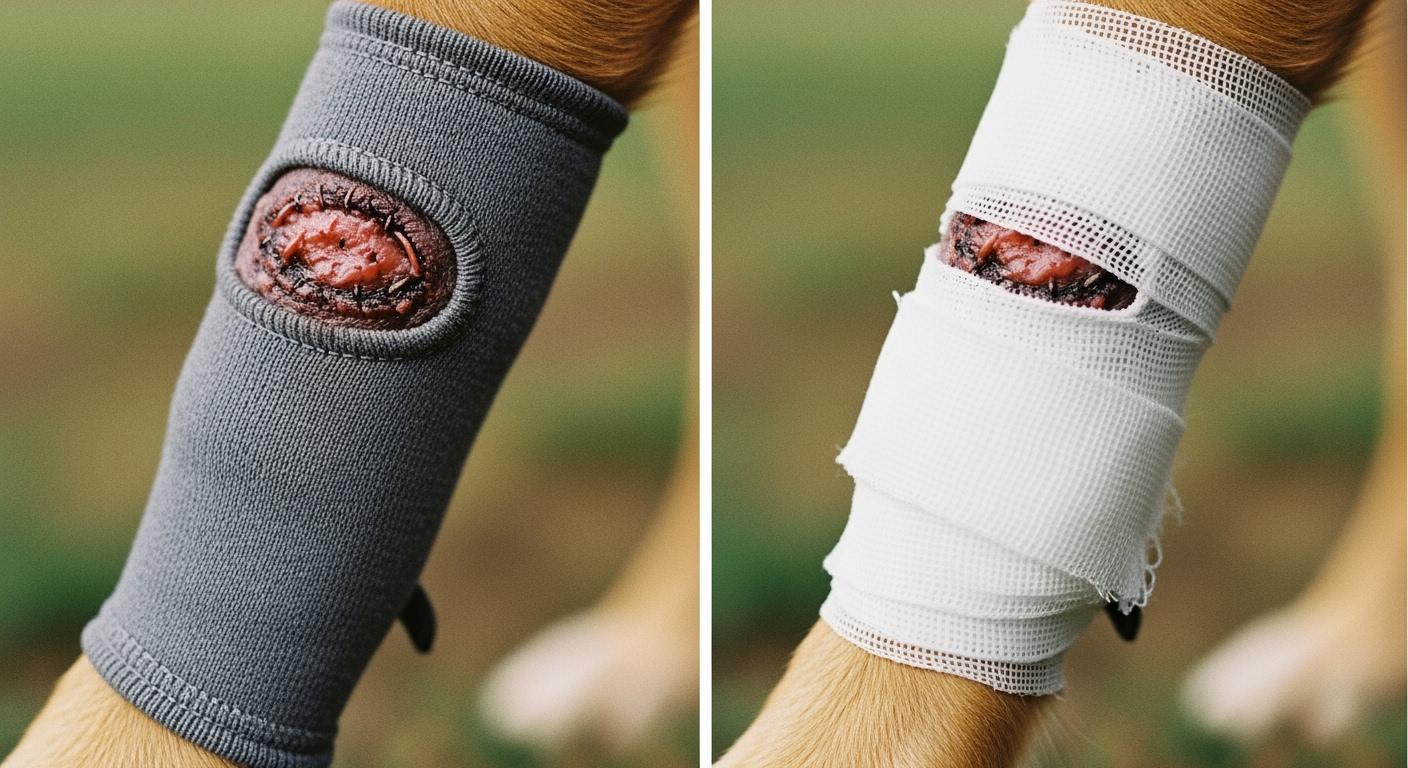
When you look at a Dog leg wound protection sleeve and a bandage, you see that the best one depends on your dog’s wound, how active your dog is, and what makes your dog comfortable. B2B buyers usually think about:
How well it stays in place and stops licking
How comfortable it is and if the dog can move easily
How simple it is to check the wound and take care of it every day
How good the material is, like if it lets air in, can be washed, or uses smart materials
If you can change the fit, like with Velcro straps to keep it tight
Both choices can help your dog heal if you pick the right one. Always think about how active your dog is, where the wound is, and ask a vet for advice on what to use.
Key Takeaways
Pick a dog leg wound protection sleeve for full coverage. It helps stop your dog from licking the wound. The sleeve gives more support for active dogs.
Use a bandage for small wounds or short-term care. Make sure the bandage fits well so it does not slip. This helps keep the wound clean.
Check your dog’s wound every day, no matter what you use. Watch for signs of infection and keep the area clean.
Think about how active your dog is before choosing. A sleeve works best for active dogs. A bandage is okay for calm pets.
Ask your veterinarian if the wound does not get better. Also ask if you see signs of infection. A professional can help you care for your dog.
What Is a Dog Leg Wound Protection Sleeve?
Recovery Sleeve Design and Function
You use a dog leg wound protection sleeve to cover and protect your dog’s injured leg. This sleeve helps your dog move around while keeping the wound safe from dirt, scratches, and licking. The sleeve is a soft, form-fitting cover that wraps around your dog’s leg. You can use it for wounds, hot spots, surgical sites, or irritated skin. The sleeve gives targeted protection and helps your dog heal during recovery.
Here is a quick look at what a dog leg wound protection sleeve does:
Definition | Primary Function |
|---|---|
A dog leg wound protection sleeve, specifically the Lick Sleeve, is designed to protect a dog’s injured leg or surgical site. | It allows for mobility while protecting against mud, grime, scratches, licks, bites, and abrasions. |
You can find sleeves in different sizes and shapes. Some sleeves cover only the lower leg, while others protect the whole limb. The sleeve should fit snugly but not too tight. A good fit keeps the sleeve in place and helps your dog feel comfortable during daily activities. You can learn more about sleeve fit and targeted recovery coverage on our guide page.
Dog Lick Sleeve Features
A dog lick sleeve gives extra protection against licking and biting. You use this sleeve when your dog tries to lick or chew the wound. The dog lick sleeve covers the wound area and stops your dog from reaching it. This sleeve is soft and flexible, so your dog can walk, sit, or lie down without trouble.
You should look for these features in a dog lick sleeve:
Breathable fabric that keeps your dog’s leg cool and dry
Flexible material for a snug fit and easy movement
Durable design for daily use and washing
Easy to put on and take off for wound checks
The sleeve’s material matters. Many sleeves use fabric that feels comfortable and stays cool. This helps with breathability and fit. You want a sleeve that lets air reach the wound but still gives strong protection. The sleeve should be easy to clean, so you can keep your dog’s leg safe every day. For more details on recovery sleeve support and daily healing, visit our solution page or browse our product selection.
What Is a Bandage for Dog Leg Wounds?
Bandage Types and Uses
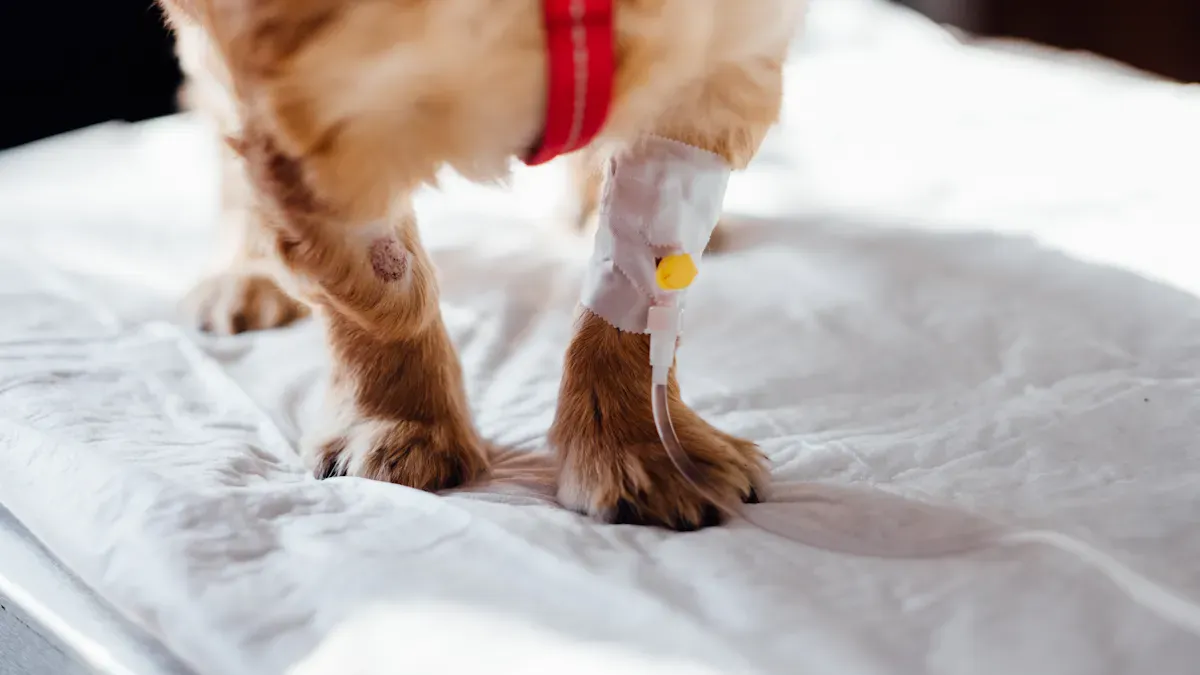
A bandage helps protect a dog’s leg wound while it heals. The bandage keeps dirt and dust away from the wound. It also holds medicine on the wound so it works better. You can use bandages for cuts, surgery wounds, or other injuries. Bandages help keep the wound clean and safe.
There are different kinds of bandages for dog leg wounds. Gauze bandages wrap around the leg and hold pads in place. Adhesive bandages stick to the skin and cover small wounds. Elastic bandages give support and gentle pressure. Sometimes, you use splints with bandages to keep the leg still. You can put bandages on many parts of the dog’s body, like the head, neck, chest, tail, or lower legs. Bandages can also hold hurt areas by tying them to another part. For example, you might tie a broken toe to the next toe.
Tip: Check the bandage every day to make sure it is clean and dry. You can read more about wound protection and healing on our solution page.
Coverage and Stability
Bandages cover and protect wounds on a dog’s leg. You wrap the bandage tight enough so it stays on, but not too tight. If it is too tight, it can stop blood from moving. The bandage should cover the whole wound to keep germs out. You need to watch the bandage to make sure it does not slip or get loose when your dog moves.
Bandages give some protection from licking, but some dogs can still reach the wound. You may need extra ways to stop licking for active dogs. Bandages can move or come off, especially if your dog is very active. You must check the bandage often and put it back on if needed.
Here is a quick chart about bandage coverage and stability:
Feature | Bandage Performance |
|---|---|
Wound coverage | Good for small to medium wounds |
Protection | Shields from dirt and debris |
Anti-lick | Limited, may need extra support |
Stability | Can loosen with movement |
You can find more about dog leg wound protection and healing on our solution page or look at our products.
Dog Lick Sleeve vs Bandage: Key Differences
Coverage and Anti-Lick Performance
You want your dog’s wound to stay safe. A sleeve covers the whole leg with soft, stretchy fabric. This keeps dirt and dust away from the wound. The sleeve also stops your dog from licking or biting the wound. This helps your dog heal faster. Many people say a sleeve works well to stop licking. It is better than a cone for some dogs. The sleeve fits tightly, so your dog cannot take it off easily.
A bandage only covers the wound, not the whole leg. Some dogs can chew or pull off the bandage. If your dog moves a lot, you might need extra help. Bandages can slip or get loose when your dog walks or runs. This means the wound is not always protected. You have to check the bandage often to make sure it stays on.
Here is a quick comparison:
Feature | Sleeve | Bandage |
|---|---|---|
Coverage | Full leg or targeted area | Wound area only |
Anti-lick performance | High, especially for lick sleeve vs cone | Moderate, may need extra tools |
Stability | Secure fit, less likely to slip | Can loosen with activity |
Protection | Blocks dirt, licking, and biting | Shields from dirt, less anti-lick |
You can read more about how sleeves fit and protect on our guide page. For more choices, see our dog leg wound protection sleeves and bandage alternatives in the product catalog.
Comfort and Mobility During Recovery
Your dog should feel good while healing. A sleeve is made from soft, airy fabric. This lets your dog walk and move easily. The stretchy material moves with your dog. Sleeves do not use sticky stuff, so they do not pull fur or hurt the skin. Many sleeves have grips that stop them from slipping. This keeps your dog comfy. You can use a sleeve every day and for short walks.
A bandage might use sticky tape that pulls fur or hurts the skin. Some dogs feel bad if the bandage is too tight or too loose. Bandages can make it hard to move, especially if they cover joints. Your dog might limp or try to take the bandage off.
Here are some comfort and movement points:
Sleeves let your dog move and do not make the leg hot.
Bandages can hurt if not put on right.
Sleeves stay on without sticky tape, so fur does not get pulled.
Many people say their dog wears the sleeve for weeks with no problem.
A sleeve can stop licking or biting better than a bandage or cone.
You can learn more about sleeve comfort and support on our solution page or look at our recovery sleeve products.
Wound Checks and Daily Maintenance
You need to look at your dog’s wound every day. A sleeve makes this simple. You can take the sleeve off fast to check the wound. You can clean the area and put the sleeve back on. The sleeve can be washed, so it stays clean each day.
Bandages need to be checked a lot. You should look at the bandage every day or two. Make sure it is clean, dry, and not too tight. If the bandage gets wet or dirty, change it right away. Always use new, clean bandages. Bandages can hide problems like infection. Watch for red skin, swelling, or a bad smell. If your dog seems tired or will not eat, the wound might be infected.
Here is a summary for daily care:
Take off the sleeve to check and clean the wound.
Wash the sleeve to keep it clean.
Change bandages often to stop infection.
Look for signs of problems under both sleeves and bandages.
Ask your vet if you see anything wrong.
You can find more tips for wound care and healing on our solution page and see our products for sleeves and bandages.
Note: Both sleeves and bandages need regular checks and cleaning. Always listen to your vet for the best care.
Choosing the Right Dog Leg Wound Protection
Wound Type and Location
You need to look at the type and location of your dog’s wound before you choose a sleeve or a bandage. A sleeve works well for wounds on the leg that need full coverage and targeted limb protection. It gives steady protection and keeps the area clean during daily recovery routines. If your dog has a wound on a joint or a spot that moves a lot, a sleeve can stay in place better than a bandage. For small cuts or wounds in hard-to-cover spots, a bandage may work for short-term recovery. Always check the fit of the sleeve or bandage to make sure it does not slip or cause discomfort. You can find more about recovery covering and targeted limb protection on our guide page.
Dog Behavior and Activity
Your dog’s behavior and activity level matter when you pick the right protection. If your dog is very active, a sleeve can give better stability and stop licking or biting. Dogs that move a lot can loosen a bandage, which puts the wound at risk. You want to avoid these risks:
Licking can make an infected wound worse.
New bacteria can get in, slowing healing.
Deeper infections or abscesses can form.
A sleeve with a good fit helps keep the wound safe during play or walks. For calm dogs or those resting, a bandage may be enough for daily recovery. Always watch your dog to see if the protection stays in place.
When to Consult a Veterinarian
You should know when to ask for professional help. Some wounds need more than home care. You should consult your veterinarian if:
You feel unsure about how to apply a sleeve or bandage.
Your dog’s condition does not improve with daily recovery.
The wound shows redness, swelling, or discharge.
Your dog has pain, fever, or stops eating.
The injury is severe, like a fracture or deep cut.
Common mistakes include using harsh cleaning agents like hydrogen peroxide or rubbing alcohol, letting your dog lick the wound, or waiting too long to get help. You should avoid soaps not made for pets and never let your dog bite or chew at the wound. If you see any signs of infection or if the wound does not heal, seek veterinary advice right away. For more support, visit our solution page or browse our recovery sleeve and bandage products.
When you look at sleeves and bandages for dog leg wounds, you see they help in different ways. Each one has special benefits for healing and keeping your dog safe. Check the table below to see the main features:
Feature/Benefit | Sleeves | Bandages |
|---|---|---|
Material | Flexible, breathable | Super stretch, non-adhesive |
Comfort | Ergonomic design | Slip-free, comfortable |
Protection | Full leg or targeted coverage | Wound-specific, water resistant |
Pick a sleeve if your dog just had surgery or needs strong protection from licking. Use a bandage if your dog plays outside a lot or needs short-term care. Always think about what your dog needs and talk to your vet for the best choice. For more help, check our guide and solution pages or look at our products.
Look at the materials and how they close
Make sure the size fits and it lasts long
Check if you get help after buying
Both sleeves and bandages can help your dog heal if you use them the right way.
FAQ
How do you choose the right sleeve or bandage for your dog’s leg wound?
You should look at the wound location, your dog’s activity, and how well the protection will fit. A sleeve gives steady coverage for daily recovery. A bandage may work for small wounds. Always check with your vet for the best fit.
Can a sleeve stop a dog from licking a wound better than a bandage?
A sleeve covers more of your dog’s leg and helps stop licking. This protection works well for daily recovery. Bandages may not stay in place if your dog moves a lot. You may need extra support for active dogs.
How often should you check your dog’s wound under a sleeve or bandage?
You need to check the wound every day. Remove the sleeve or bandage to look for redness or swelling. Clean the area and make sure the fit is still good. Daily checks help you spot problems early and keep recovery on track.
What makes a good fit for a dog leg wound protection sleeve?
A good fit means the sleeve stays in place but does not squeeze your dog’s leg. The sleeve should cover the wound and allow for easy movement. You want your dog to feel comfortable during daily recovery and protection.
Can you use a sleeve for outdoor activity during recovery?
You can use a sleeve for short outdoor walks. The sleeve gives protection from dirt and helps keep the wound safe. Make sure the fit is secure before you go outside. Always check the sleeve after activity to keep recovery on track.
