
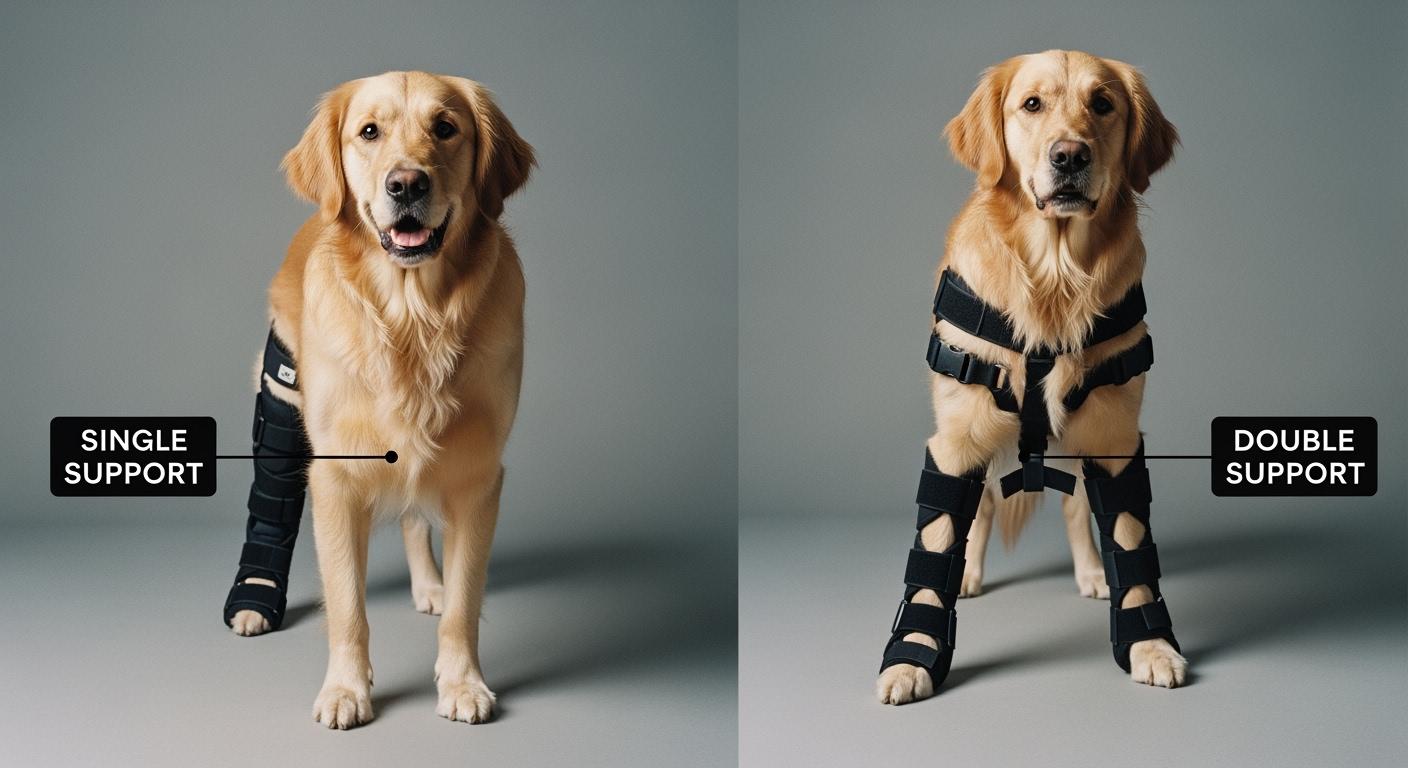
When evaluating a brace for dog torn ACL, it’s essential to choose the right design for your dog’s specific needs. A brace for dog torn ACL single vs double support can significantly impact recovery and mobility. Single knee braces are effective for dogs with one injured leg and are particularly beneficial post-surgery. In contrast, double knee braces are ideal for dogs experiencing issues in both knees, providing additional support for those at risk of future injuries. The table below summarizes the preferences of dog owners:
Brace Type | Preferred Conditions |
|---|---|
Single Knee Brace | One knee injury, small or medium dogs, after meniscus surgery |
Double Knee Brace | Two knee problems, keeping a healthy knee safe, risky or unstable cases |
Before making a decision, consider factors such as stability, balance support, and daily comfort to ensure the best fit for your dog’s recovery journey.
Key Takeaways
Pick a single knee brace if your dog hurt one leg. This is good after surgery. It keeps the knee steady and helps your dog heal.
Use a double knee brace if both knees have problems. It is also good if your dog might hurt the other leg. This brace gives even support and keeps your dog steady.
Always talk to a veterinarian before you pick a brace. The vet can check your dog and tell you what is best.
Watch your dog as it gets better. Check for pain or if your dog feels bad. Change the brace or ask the vet for help if you need to.
Think about your dog’s size, breed, and how active it is. These things help you know what kind of brace your dog needs.
What Does “Brace for Dog Torn ACL Single vs Double Support” Mean?
Buyer Intent and Search Context
When you look up brace for dog torn acl single vs double support, you want to see how two types of knee braces are different. You might work at a vet clinic, help at a pet rehab place, or help owners pick the right brace. Your main goal is to find out which brace is best for your dog’s injury and daily life. Many people want simple answers about how stable, comfy, and useful each brace is. You want to know if one brace is enough or if two braces help your dog balance better. This search often takes you to our dog knee brace selection guide or ACL injury solution page for more help.
Tip: Always talk to a licensed veterinarian before picking a brace. Only a professional should diagnose and make a treatment plan.
Typical Use Cases
You might need a brace for dog torn acl single vs double support in different cases. If your dog hurt one leg, a single knee brace usually works well. This brace helps the hurt leg and is good after surgery. If your dog has problems in both knees or might hurt the other leg, double support braces give more stability. Clinics often use double braces for big dogs or dogs with weak back legs. Sellers also look at these choices to fit different dog sizes and how active they are. You can learn more about these products on our dog knee brace category page.
Single support: One hurt knee, after surgery, mild weakness
Double support: Both knees have problems, high chance of second injury, big or active dogs
Picking the right brace helps your dog heal and feel comfortable every day.
Why Dogs Need Knee Braces After ACL Injury
Stability and Recovery Goals
You want your dog to walk without pain after an ACL injury. A brace for dog torn acl single vs double support helps your dog stay steady. Dogs often have knee pain when their ligament is hurt. Braces stop the knee from moving in the wrong way and help it heal. Braces make the joint more stable, lower swelling, and help your dog put weight on the leg again.
Evidence Type | Description |
|---|---|
Joint Stability | Braces make the knee more stable by stopping bad movement. This is very important for healing after an ACL injury. |
Pain Reduction | Doctors see that braces lower swelling and help dogs stand better. This means less pain for your dog. |
Preventive Strategy | Braces are used to keep the other knee safe. Many dogs hurt their other CCL later on. |
You should use a brace along with helping your dog stay at a healthy weight and doing safe exercise. This plan gives your dog the best chance to get better. You can read more tips on our dog knee brace selection page.
“The best outcomes occur when bracing is combined with weight management, controlled exercise, and muscle strengthening.”
Risks Without Support
If you do not use a brace, your dog may have more pain and heal slower. Dogs with a torn ACL often limp and do not want to use the hurt leg. Without a brace, your dog could hurt the other knee too. Many dogs end up with problems in both knees. Your dog might lose muscle and have trouble doing normal things.
“A cranial cruciate ligament (CCL) rupture is a surgical problem. Period. Especially if the ligament injury is associated with a meniscal tear, which 50-75% of them are. Meniscal tears are terribly painful and leg braces can’t help those one bit. Conservative management (which would include dog knee braces) of a torn ACL in dogs is a bad idea, especially for large dogs. Using a brace and expecting the knee joint to heal and return to normal function is just wishful thinking. The fastest and most effective way to help these dogs get back on their feet is surgery.”
You should always talk to a vet to find out what is best for your dog. Braces can help with pain and healing, but they do not take the place of a vet’s care. Clinics and buyers use a brace for dog torn acl single vs double support as part of a bigger rehab plan. You can learn more about ACL injury help on our special solution page.
Single Knee Brace: Features and Uses
How Single Knee Braces Work
A single knee brace helps one hurt leg after a torn ACL. This brace lets your dog walk better and feel less pain. It wraps around the knee and keeps it steady. The brace acts like the torn ligament, so your dog can move safely. Your dog can put weight on the leg again. This helps keep the muscles strong. Clinics often use single knee braces for dogs doing rehab exercises.
Here is a table that lists the main features of a single knee brace for dogs with torn ACLs:
Key Feature | Description |
|---|---|
Joint Stability | Gives outside support to the joint, acting like the damaged ligament. |
Stress Reduction | Takes pressure off the hurt ligament, helping it heal. |
Support for Rehabilitation | Helps with rehab exercises, so healing is better. |
Increased Movement Confidence | Makes dogs feel safer when they move during recovery. |
Compression for Comfort | Squeezes gently, so the dog feels more comfortable. |
Maintains Activity Level | Lets dogs stay active, keeps muscles strong, and helps them get better. |
You can read more about picking a brace and ACL support on our dog knee brace guide page.
When to Choose a Single Knee Brace
Pick a single knee brace if your dog has one bad knee. This brace works well after surgery or if your dog has a weak leg. You will see the brace help take stress off the knee and make moving easier. Clinics and rehab places use single knee braces for small or medium dogs who need extra help.
You will notice different materials. Fabric braces can stretch and may not work as well later. Plastic braces are made to fit your dog and give better support. Fabric braces sometimes need extra straps, which can make walking harder for your dog.
Pick a single knee brace for:
One knee hurt
After surgery
Mild weakness in one leg
Note: Always ask a licensed veterinarian before picking a brace for dog torn acl single vs double support. Only a vet should diagnose and make a plan.
You can look at more products on our dog knee brace page or learn about ACL tear help on our support planning page.
Double Knee Brace: Features and Uses
How Double Knee Braces Work
A double knee brace supports both of your dog’s hind legs at the same time. This design helps dogs who have problems in both knees or who need extra protection for the healthy leg. When your dog wears a double knee brace, both knees get steady support. This helps your dog walk with better balance and reduces the chance of putting too much weight on one side. You may notice your dog moves more confidently and stands straighter.
Here is a table that shows the main features of a double knee brace for dogs with ACL injuries:
Feature | Description |
|---|---|
Bracing on Both Hind Legs | Supports both knees for balanced movement. |
Bilateral Knee Disease | Useful for dogs with injuries in both knees. |
Protecting Healthy Side | Shields the uninjured knee from extra stress. |
High-Risk Dogs | Good for breeds likely to have ACL injuries or dogs with past injuries. |
Targeted Tool | Used when your dog needs support on both sides or for prevention. |
You can find more details about knee brace options on our dog knee brace selection guide.
When to Choose a Double Knee Brace
You should consider a double knee brace if your dog has injuries in both knees or if your dog is at high risk for a second injury. Some dogs, especially large breeds or those with a history of ACL problems, need extra support to stay active and safe. If your dog starts to limp on the other leg or shows weakness in both knees, a double knee brace can help keep your dog stable.
Choose this brace if:
Your dog has pain or weakness in both knees.
Your dog is a breed known for ACL injuries.
Your dog has already hurt one knee and you want to protect the other.
Always talk to your veterinarian before choosing a brace for dog torn acl single vs double support. Only a professional can decide what is best for your dog’s health. For more information about ACL injury solutions, visit our ACL injury support planning page or explore our dog knee brace category for product options.
Comparing Single vs Double Support Braces
Stability and Movement Control
You want your dog to walk safely after an ACL injury. A single knee brace helps one hurt leg stay steady. This support lets your dog move with less pain. Your dog can feel more sure when doing daily things. A double knee brace supports both back legs at once. This is good for dogs with weak knees or who might hurt the other leg. Both legs stay lined up, so your dog moves better. Big dogs or dogs with weak back legs often use double braces at clinics. You can read more about movement control in our dog knee brace guide.
Balance and Symmetry
Balance is important when your dog heals from a torn ACL. A single knee brace lets your dog use the healthy leg like normal. Your dog can move the good leg without any limits. Double knee braces help dogs who put too much weight on the healthy leg. This brace keeps both knees steady and stops uneven walking. Your dog’s steps look more even with double support. Double braces are best for dogs with two bad knees or who lean too much on one side. You can learn more about balance and symmetry on our ACL injury help page.
Fit and Daily Wear
How a brace fits and feels every day matters for your dog’s comfort. Single knee braces are easier to put on and fit just one side. This means the healthy leg is not bothered. Most dogs can wear a single brace every day. Double knee braces cover both legs and are harder to fit right. You may need to fix the brace to keep your dog comfy, especially for big dogs. Double support is best for dogs who need more help or have weak legs. The table below shows how fit and daily wear are different:
Type of Brace | Fit Complexity | Tolerance for Daily Wear |
|---|---|---|
Single Knee Brace | Supports one side, simpler fit | Suitable for daily wear without affecting healthy limb |
Double Knee Brace | Offers extra coverage, more complex fit | Better for larger dogs with instability, may require adjustment for comfort |
Single knee braces help one hurt leg and do not bother the good leg.
Double knee braces are good if both knees are weak or if the healthy leg is used too much.
Think about your dog’s size, how active they are, and if they might get hurt again when picking a brace. Clinics and rehab places use single or double braces to fit each dog’s needs. You can see more products on our dog knee brace page.
Tip: Always talk to a licensed vet before picking a brace. Only a vet can check your dog’s injury and say what is best.
Decision Factors for Buyers
Injury Assessment and Risk
You need to start with a clear injury assessment. Look at which knee is injured and check if your dog shows signs of weakness in both legs. Dogs with a torn ACL often limp or avoid putting weight on the affected leg. Some dogs may have pain in both knees, especially larger breeds or those with past injuries. You should watch your dog walk and stand. Notice if your dog shifts weight to one side or struggles to balance. This helps you decide if a single or double support brace fits best.
Consider these factors when you assess injury and risk:
Type of Injury: Is the ACL tear in one knee or both?
Bilateral Risk: Does your dog have a history of knee problems or show weakness in both legs?
Dog Size and Breed: Large dogs and certain breeds face higher risks for ACL injuries.
Activity Level: Active dogs may need more support to prevent further injury.
Tip: Keep a daily log of your dog’s walking and standing. Share this with your veterinarian to help guide brace selection.
You can find more guidance on injury assessment in our dog knee brace selection Pillar page.
Custom vs Off-the-Shelf Braces
You have two main options: custom braces and off-the-shelf braces. Custom braces fit your dog’s leg shape and size. These braces offer precise support and can improve comfort for daily wear. Off-the-shelf braces are ready-made and fit most dogs. They work well for mild injuries or short-term use.
Here is a table to help you compare:
Brace Type | Fit Quality | Handling Ease | Wear Consistency | Suitability |
|---|---|---|---|---|
Custom | Tailored fit | Moderate | High | Complex injuries, long-term use |
Off-the-Shelf | Standard sizes | Easy | Moderate | Mild injuries, short-term use |
You should think about how easy the brace is to put on and take off. Custom braces may need more handling but offer better fit. Off-the-shelf braces are simpler but may not fit every dog perfectly. Clinics and rehab centers often choose custom braces for dogs with unique needs. You can explore more brace options on our dog knee brace product category page.
Vet Recommendations
You must always consult a licensed veterinarian before choosing a brace for dog torn acl single vs double support. Only a vet can diagnose the injury and recommend the right support. Your vet will check your dog’s injury, size, and activity level. They may suggest a single brace for one knee or a double brace for both knees. Vets also help you build a rehabilitation plan that includes bracing, exercise, and weight management.
Note: Braces support recovery, but they do not replace veterinary treatment. Always follow your vet’s advice for the best outcome.
You can find more information about ACL injury solutions and vet recommendations on our ACL injury Solution page.
Common Comparison Mistakes
Overlooking Bilateral Risk
Many people only look at the hurt knee when picking a brace for dog torn acl single vs double support. You might think a single knee brace is fine if your dog limps on one leg. But dogs with a torn ACL often put more weight on the good leg. This can make the other leg get hurt too. Big dogs and active dogs have a bigger chance of hurting both knees later.
Common mistake:
Not noticing weakness or pain in the “healthy” leg.
Forgetting to think about your dog’s breed or how active they are when picking single or double support.
Tip: Watch your dog walk and stand. If you see your dog shift weight or show pain in both legs, talk to your vet. You can also check our dog knee brace selection guide to learn more about bilateral risk.
Misjudging Brace Function
Some people think a brace will fix every problem after an ACL injury. Some buyers believe all braces give the same support. But each brace is made for a different reason. A single knee brace helps one leg and is best for just one injury. A double knee brace helps dogs who need balance and support on both sides.
Common misunderstanding:
Thinking a single brace will stop the other leg from getting hurt in high-risk dogs.
Believing a double brace is always better, even if only one knee is bad.
Remember, a brace for dog torn acl single vs double support should fit your dog’s needs. Only a vet can tell you the right choice. For more about brace use, visit our ACL injury solution page or see our dog knee brace product category.
If you avoid these mistakes, your dog can get the right support and heal better.
When to Seek Further Guidance
Signs More Support Is Needed
You should watch your dog closely during recovery. Some signs show your dog may need more help or a different brace for dog torn acl single vs double support. If you see these signs, take action:
Your dog limps more or avoids using the leg.
Swelling or redness appears around the knee.
Your dog struggles to stand, walk, or climb stairs.
The brace slips, causes discomfort, or does not fit well.
Your dog shows pain when you touch the knee or tries to remove the brace.
If your dog has had surgery, you may notice new problems during post-operative support. Dogs sometimes need extra help if they heal slowly or develop issues in the other knee. You should not ignore changes in your dog’s movement or behavior.
Tip: Keep a daily log of your dog’s activity and comfort. Share this with your veterinary team to track progress.
Consulting a Professional
You must contact a licensed veterinarian if you see any warning signs. Only a professional can check your dog’s injury and decide if you need to change the brace for dog torn acl single vs double support. Your vet may suggest new x-rays, a different brace, or a full rehab plan. Clinics and rehab centers often work with vets to adjust bracing and exercise routines.
You can also ask your vet about custom or off-the-shelf brace options. Sometimes, your dog needs a new fit or more support as they recover. For more guidance, visit our dog knee brace selection Pillar page or explore our ACL injury Solution page. Always follow your vet’s advice for the best outcome.
Remember: Early action helps prevent further injury and supports a smoother recovery.
You need to match the brace for dog torn acl single vs double support to your dog’s injury and daily needs. Use a single brace for one injured knee. Choose double support for dogs with weakness in both knees or high risk of a second injury. Always check injury type, size, and activity level. The right brace for dog torn acl single vs double support depends on your dog’s condition. Ask your veterinarian for advice before you buy. For more details, visit our knee brace selection guide or ACL injury solution page.
FAQ
What is the main difference between a single and double support brace for dog torn ACL?
A single support brace helps one injured knee. A double support brace helps both knees at the same time. You can read more about choosing the right brace on our dog knee brace selection guide.
When should you choose a double support brace?
You should pick a double support brace if your dog has problems in both knees or faces a high risk of hurting the other leg. Learn more about support planning on our ACL injury solution page.
Can a brace for dog torn ACL single vs double support replace surgery?
No. Only a veterinarian can decide if your dog needs surgery. Braces support recovery but do not replace medical treatment. Always ask your vet before making a decision.
How do you know if your dog needs single or double support?
Watch how your dog walks and stands. If both knees seem weak or painful, double support may help. For one injured knee, single support is often enough. Ask your vet for advice or visit our product category page.
Are custom braces better than off-the-shelf options?
Custom braces fit your dog’s leg shape. Off-the-shelf braces fit most dogs and work for mild injuries. Your vet can help you choose the best option. See more details on our dog knee brace product page.
