
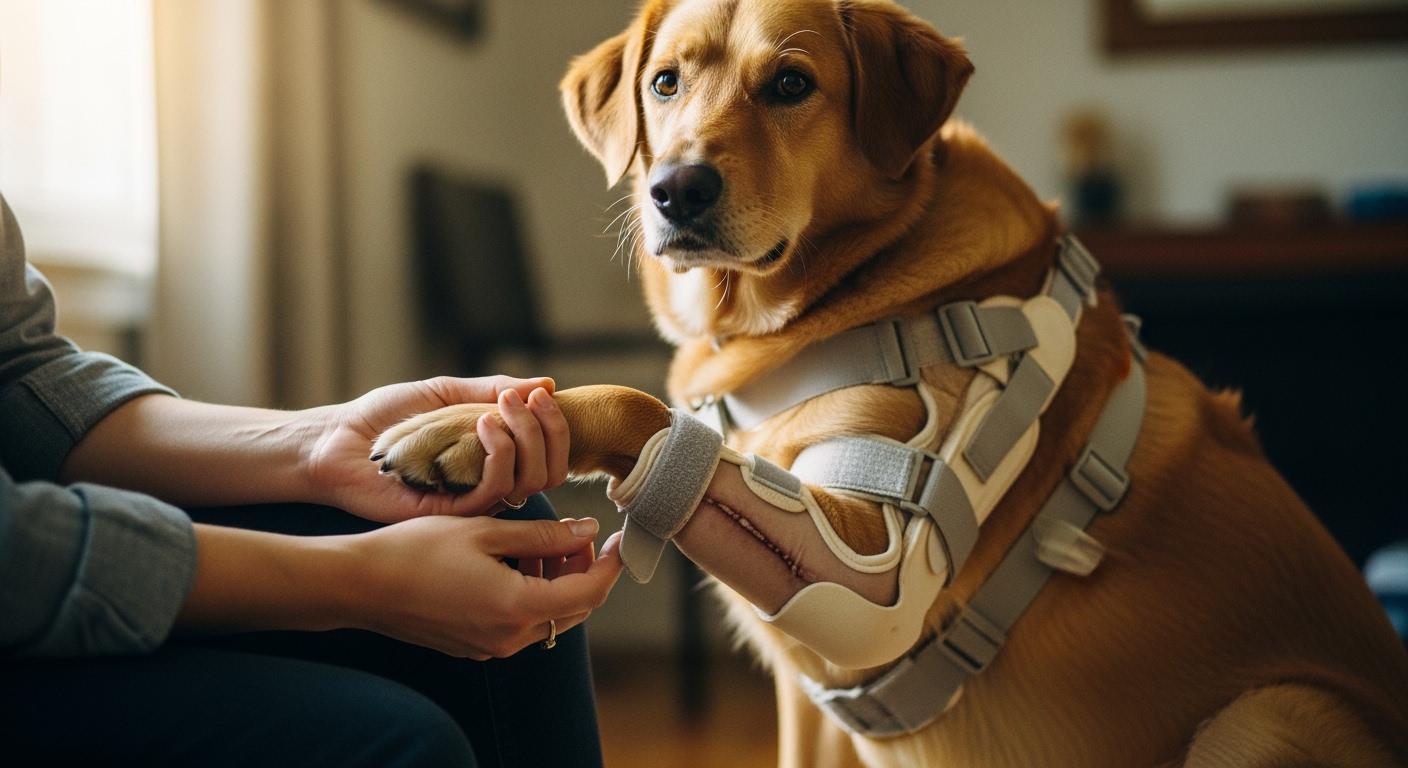
A brace for dog with torn ACL after surgery support should be evaluated by one practical standard: does it help protect the knee during controlled recovery without creating new rubbing, slipping, or movement problems. After surgery, the brace is usually part of a larger plan that includes activity restriction, short supervised walks, skin monitoring, and gradual return to function. If you want a broader overview of ACL brace fit, daily use, and recovery expectations before comparing post-op support options, start with this dog knee brace for ACL injury guide.
| Post-Op Support Need | Why It Matters |
|---|---|
| Joint stability | Helps reduce unwanted movement while the dog returns to controlled activity. |
| Comfort during walking | Makes short rehab walks and daily handling easier to tolerate. |
| Skin-safe wear routine | Supports daily use without turning the brace into a rubbing or pressure problem. |
| Fit and monitoring | Post-surgical support works better when the brace stays aligned and is checked often. |
| Integration with rehab | The brace should support the recovery plan, not replace veterinary guidance. |
Key Takeaways
- A post-op brace should support knee stability during controlled activity, not replace the full recovery plan.
- Short supervised walks, careful fit checks, and daily skin monitoring matter just as much as the brace itself.
- The best after-surgery support plan is gradual, measurable, and easy to adjust when comfort or gait changes.
Evaluating Brace for Dog with Torn ACL After Surgery Support
Post-Surgery Support Goals
When you evaluate a brace for dog with torn ACL after surgery support, focus on the goals that directly affect recovery quality: controlled joint support, safe movement during rehab, daily comfort, and tolerance over repeated use. Post-op bracing is most useful when it helps the dog move more safely through a limited activity plan rather than simply adding compression around the leg.
| Support Goal | What It Means After Surgery |
|---|---|
| Knee stability | Helps control movement during short walks and rehab exercises. |
| Comfort and tolerance | Reduces the chance that the dog resists the brace or develops rubbing. |
| Controlled mobility | Supports walking, standing, and transitions without overloading the knee. |
| Monitoring and adjustment | Makes it easier to spot slipping, skin changes, or gait problems early. |
The right brace should help you control movement and comfort without competing with the rest of the recovery plan. For a broader condition-based path before comparing brace details, use this dog cruciate ligament recovery solution page as a companion resource.
Stabilization and Movement Limitation
You need to keep movement controlled after ACL surgery, especially during the early return to walking and rehab work. A good post-op brace should support the knee enough to reduce unstable movement without making the dog walk in a stiff or unnatural way. The value of the brace is not just “more support,” but more predictable support during controlled activity.
Key Benefits of Dog Knee Braces | Description |
|---|---|
Improving joint stability | Braces hold the joint steady from the outside and help the hurt ligament. |
Reducing stress on injured ligaments | Braces stop bad moves so the leg can heal. |
Supporting rehabilitation exercises | Braces let your dog move safely during rehab. |
Increasing movement confidence | Dogs feel safer and want to walk more. |
Providing compression for comfort | Braces give a gentle squeeze that helps pain and comfort. |
Choose a brace that matches the dog’s size, activity level, and recovery stage. The brace should stay aligned during walking and rehab without rubbing or slipping, and the fit should be rechecked often because the leg can change shape during healing.
Pain Management and Comfort
Pain control and comfort are still central after surgery, especially when the dog starts using the leg more during daily rehab. A brace can help by supporting the knee during active periods, reducing the feeling of instability, and making short walks easier to tolerate. That support is most useful when the brace fits well and is paired with rest, controlled exercise, and veterinary follow-up.
| Post-Op Priority | How a Brace Can Help |
|---|---|
| Comfort during walking | Supports the knee during short, controlled activity. |
| Weight use | May help the dog use the recovering leg more evenly. |
| Movement confidence | Can reduce hesitation during rehab and routine handling. |
| Recovery consistency | Works best when paired with daily checks and a gradual activity plan. |
A brace should never be treated as the whole answer for post-op pain or recovery. Watch for pain, skin irritation, swelling, or movement changes every day, and use those signs to decide whether the current support plan is still working.
Tip: A brace should support the recovery plan, not replace it. Adjust brace use only after checking fit, skin, gait, and veterinary guidance together.
If you still need a stronger next step after this section, compare this page with the dog knee brace for CCL tear fit and traction guide and then review the dog knee brace category when you are ready to compare brace options.
Key Factors When Choosing an ACL Brace for Dogs
Picking the right dog ACL brace after surgery means judging more than size or appearance. You need to know whether the brace fits the leg well, stays stable during controlled activity, and supports the dog’s actual recovery routine. For a broader fit-and-comfort reference before choosing, compare this article with the canine rehabilitation brace fit and safety guide.
Fit and Wear Tolerance
Fit is the most important part of post-op brace use. A brace that slips, pinches, or creates pressure will not be ready for longer daily wear, even if it looks supportive at first. The best fit should feel secure without rubbing, stay aligned during short walking sessions, and be easy enough to recheck every day during the early recovery period.
Tip: Recheck fit after each short activity session in the first week. Small early adjustments usually prevent bigger skin and slipping problems later.
Movement Control and Daily Handling
A post-op ACL brace should limit harmful movement without making the dog walk unnaturally. The brace should stay in place during rehab walks, stand-to-sit transitions, and other supervised activity, while still being practical enough for daily handling. That balance matters more than simply choosing the stiffest-looking design.
Material and Durability
Material and build quality matter because post-op braces go through repeated use, cleaning, and daily adjustment. A good brace should hold support without breaking down quickly, and it should stay comfortable enough for repeated rehab use. Soft contact areas, stable structure, and adjustable fastening usually matter more than marketing language about materials alone.
| Brace Quality Factor | Why It Matters After Surgery |
|---|---|
| Soft contact areas | Helps reduce rubbing during repeated wear. |
| Stable support structure | Keeps the brace aligned during controlled movement. |
| Adjustable fasteners | Makes daily fit checks and small corrections easier. |
| Washable daily-use design | Supports hygiene during longer rehab periods. |
Quick Checklist for Buyers
- Confirm the post-op recovery goal before choosing the brace.
- Check that the brace fits securely and stays aligned during short movement.
- Choose a design that is easy to recheck, clean, and adjust each day.
- Use skin checks and gait checks as part of the buying decision, not only product features.
- Get veterinary input when movement quality or comfort does not improve.
You can compare broader brace choices in the dog knee brace recovery support guide, then move to the ACL recovery solution page or the dog knee brace category depending on whether you still need education or product comparison.
Practical Use of Dog Knee Brace in Rehab
Integration with Physical Therapy
You want the brace to support physical therapy, not compete with it. Rest, controlled walking, gentle rehab work, and scheduled follow-ups are still the foundation of recovery. The brace is most useful when it helps the dog move more safely during those planned sessions. For a related rehab-focused comparison, review dog knee brace for torn ACL safer rehab and joint protection.
- Start with rest and controlled movement instead of long activity blocks.
- Use the brace during supervised rehab and short walks, not as an all-day substitute for management.
- Pair the brace with weight control and veterinary follow-up.
- Adjust the plan when fit, skin, or gait quality changes.
Short Walks and Supervised Activity
You need to control movement closely during rehab. Short, supervised walks usually work better than longer sessions because they support joint use without overloading the recovering knee. Many dogs do best with slow, leash-controlled walks in short blocks, then more time off the leg between sessions. The brace should help the dog move through these controlled periods without slipping or changing gait too much.
Tip: Keep walks short, slow, and predictable. If the dog shows fatigue, hesitation, or more limping, end the session instead of trying to “finish the walk.”
Monitoring for Fit and Skin Issues
You must check the fit of the brace every day, especially in the first weeks after surgery. Look for redness, sores, swelling, hair loss, or edge pressure after each session. A brace that supports the knee but damages the skin is not ready for longer wear. Clean the brace regularly and recheck the fit after activity instead of assuming the first adjustment will hold all day.
| Daily Check | Why It Matters |
|---|---|
| Skin check after removal | Catches rubbing and early pressure problems. |
| Brace position after movement | Shows whether the fit stays stable during rehab use. |
| Cleaning routine | Supports hygiene and wear tolerance during recovery. |
| Gait observation | Shows whether the brace is helping movement or making it worse. |
Common Mistakes and Limitations
Many post-op brace problems come from the same small mistakes: starting long wear too early, ignoring mild rubbing, letting the brace stay wet or dirty, and treating the brace as a replacement for controlled recovery. A post-surgery brace works best when it is checked often and used during the right activity windows instead of being left on by default.
If you need more detail on selection and daily use before choosing a post-op option, compare this page with the dog knee brace selection guide, the ACL recovery solution page, and the dog knee brace category.
Limitations and When to Seek Guidance
Recognizing Brace Limitations
You need to understand what a post-op brace can and cannot do. A brace can improve stability, comfort, and walking control during recovery, but it does not reverse joint damage, replace surgical follow-up, or solve every rehab problem by itself. It works best as one tool inside a larger recovery plan.
Here are some important limitations to keep in mind:
- Braces can support recovery, but they do not replace veterinary treatment.
- They do not solve poor fit, uncontrolled activity, or inadequate rehab planning.
- Some dogs will still need a different brace style or a different support path.
- Daily skin and gait checks remain necessary even with a high-quality brace.
Custom braces can improve limb use and comfort, but you must check the fit often. Always monitor your dog for any changes and adjust the brace as needed.
Note: Braces should complement veterinary care, not replace it. Post-surgical support still depends on diagnosis, rehab timing, and controlled activity planning.
Consulting Vets and Rehab Professionals
You should ask for more help when the brace creates skin problems, the dog limps more, or movement quality clearly gets worse instead of better. Those signs usually mean the fit, support level, or rehab plan needs to change.
- Skin irritation, swelling, or soreness after brace use
- Increased limping or reluctance to bear weight
- Shorter stride, awkward gait, or reduced confidence during rehab walking
A rehab evaluation can clarify whether the brace is doing the right job, whether the dog needs a different schedule, or whether the overall recovery plan needs to be adjusted.
Tip: Bring a short record of wear time, skin checks, and walking response to follow-up visits. That makes it easier to adjust the brace plan based on real daily use.
A brace for dog with torn ACL after surgery support works best when it helps the dog move more safely during controlled rehab, short walks, and daily handling without creating new skin or fit problems. The most effective post-op brace plan is gradual, measurable, and easy to adjust when the dog’s gait, comfort, or wear tolerance changes.
- Use the brace during supervised activity, not as an all-day default.
- Check skin, fit, and gait every day during the early wear period.
- Increase activity only when the dog stays comfortable and stable.
- Use veterinary follow-up to decide when the support plan should change.
For next steps, continue to the dog knee brace for ACL injury guide, the ACL recovery solution page, or the dog knee brace category depending on whether you need education, condition planning, or product comparison. Data authenticity note: This article is for educational purposes only. It is designed to help readers evaluate post-surgical ACL brace support, not to replace veterinary diagnosis or individualized rehabilitation planning.
Evidence Type | Description |
|---|---|
Complications | Most problems happen in the first weeks, so check fit often. |
Fitting | Custom braces use casts or scans to fit well. |
Rehabilitation | Rehab plans with braces help dogs heal faster. |
FAQ
How long should my dog wear a brace after ACL surgery?
Most dogs wear the brace during controlled activity and short walks rather than all day. The exact timeline depends on your veterinarian’s plan, the dog’s comfort, and how well the brace is tolerated during recovery.
Can my dog sleep with the brace on?
Yes. In most cases the brace should come off at night unless your veterinarian gives a specific reason to leave it on. Overnight removal helps reduce skin risk and lets the dog rest more comfortably.
How do I clean the dog knee brace?
Clean the brace with mild soap and water, then let it air dry completely before the next session. Regular cleaning helps protect the skin during repeated post-op use.
What signs show the brace does not fit well?
Watch for redness, swelling, sores, slipping, or a clear increase in limping after the brace is fitted. Those are common signs that the fit or wear plan needs to be adjusted.
Does a brace replace surgery or vet care?
No. A brace works best as part of your veterinarian’s post-surgical plan. It can support recovery, but it does not replace diagnosis, surgery follow-up, or rehabilitation decisions.
