
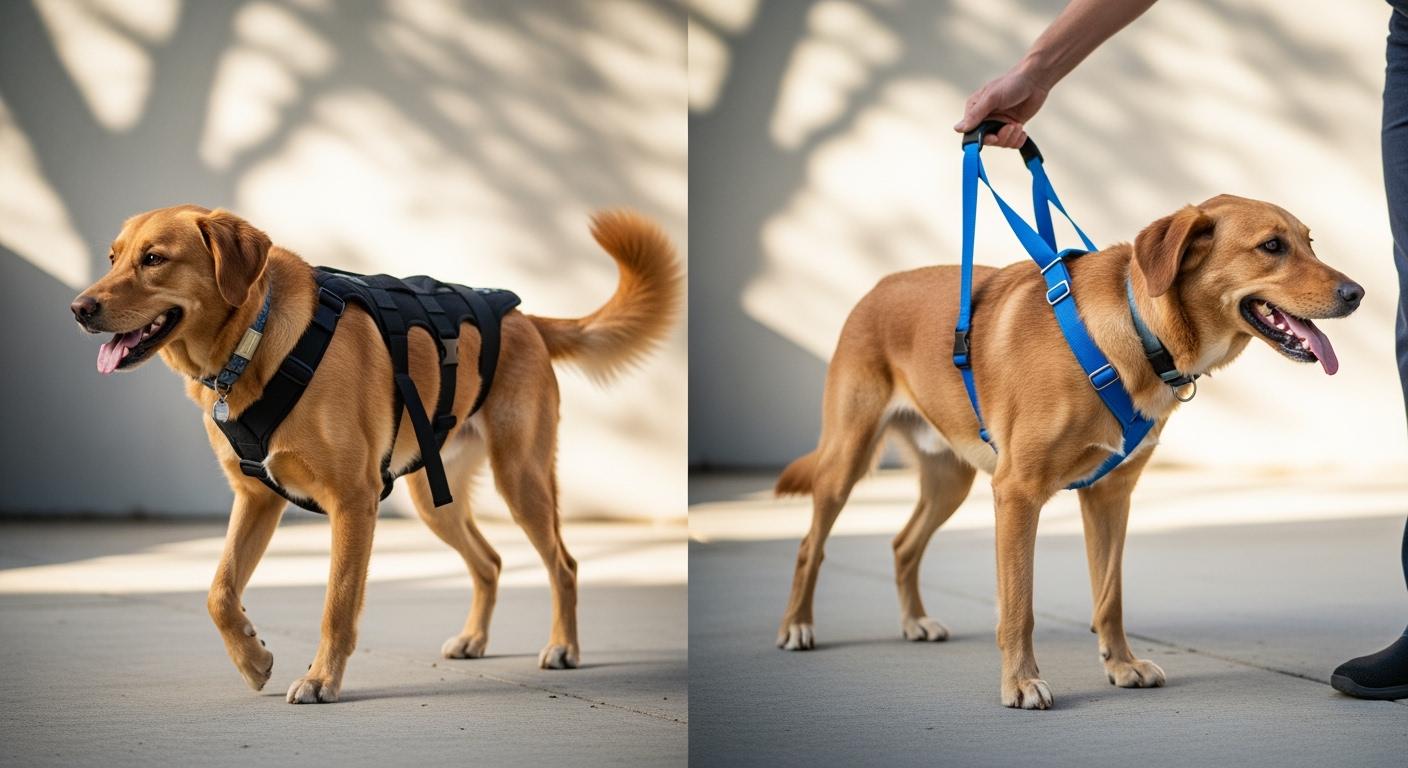
A dog back support brace and a lift harness solve different problems, even when both are used for IVDD or mobility support. A back brace is mainly used to stabilize the spine and limit harmful motion, while a lift harness is used to assist walking, stairs, bathroom trips, and other daily movement tasks. This guide will help you compare the two based on function, fit, and daily-use goals so you can choose the type of support that matches your dog’s real needs rather than guessing from symptoms alone.
Key Takeaways
A back support brace is mainly for spinal stabilization, especially when limiting motion matters more than adding walking assistance.
A lift harness is mainly for movement assistance, especially when the dog still needs help with stairs, walking, standing, or bathroom breaks.
The right choice depends on whether your dog’s main need is spinal control, daily mobility help, or a combination of both under veterinary guidance.
Dog Back Support Brace vs Lift Harness: Quick Comparison
Key Differences
A dog back support brace and a lift harness can both be useful for dogs with IVDD, but they are not interchangeable. A brace is intended to reduce excess spinal motion and add support around the back, while a lift harness is intended to help the handler support movement when the dog is weak, wobbly, or tiring easily. Some dogs may use one more than the other depending on whether the main problem is pain control and stabilization or day-to-day movement assistance.
Here are the main ways they work:
A back brace holds your dog’s spine still and stops extra movement.
A lift harness helps your dog walk, go up stairs, and keep balance.
You use a back brace to support the spine and help with pain.
You use a lift harness to help your dog move and do daily things.
If you are comparing function rather than shopping immediately, review a back-support resource first and then compare it with a lift-harness guide for walking and assisted movement needs.
Best Uses
Choose between a back support brace and a lift harness by starting with the dog’s main limitation. If the priority is reducing harmful spinal motion, a brace is usually the better starting point. If the priority is helping the dog stand, walk, or manage stairs and bathroom trips, a lift harness is usually more practical for daily use.
Type | Features & Materials | Best Uses | Pros | Cons |
|---|---|---|---|---|
Back Support Brace | Structured back coverage, adjustable support panels, motion-limiting fit | IVDD support, back pain, spinal stabilization, controlled recovery | Helps stabilize the back and reduce excess motion | Does not replace movement assistance when the dog is weak or tiring |
Lift Harness | Support panels, handles, adjustable straps, assisted-lift design | Walking support, stairs, bathroom breaks, post-surgery mobility help | Helps handlers assist movement more safely and consistently | Does not stabilize the spine the way a back brace does |
In many cases, the brace-versus-harness decision becomes clearer once you ask one question: does the dog need more spinal control, or more movement assistance? That distinction is more useful than comparing the two as if they do the same job.
Tip: Always talk to your vet before picking a device for IVDD or to help your dog move.
If you want to learn more about IVDD and back support, visit our IVDD brace solution page. For help with mobility, see our IVDD lift harness guide.
Dog Back Support Brace Explained
How It Supports IVDD
A wiggleless back brace gives your dog a specialized support system when dealing with IVDD. This device holds the back steady and limits movement. When your dog wears a canine back brace, you help prevent sudden twists or jumps that could make intervertebral disc disease worse. The brace keeps the spine in a safe position, which reduces pain and swelling. You also make it easier to handle your dog during recovery, lowering the risk of injury for both you and your pet.
Many owners use a wiggleless back brace for IVDD because it:
Minimizes further damage by stopping sudden movements.
Reduces inflammation and pain by stabilizing the spine.
Makes it safer to lift or move your dog during rehabilitation.
A back support brace is usually most relevant when spinal stability is part of the treatment plan and daily handling needs to be more controlled. It can be a useful option when the goal is to reduce risky motion during recovery rather than simply help the dog move from place to place.
Pros and Cons
A wiggleless back brace offers strong back support for dogs with IVDD or intervertebral disc disease. You get targeted support that helps your dog heal and stay comfortable. However, you need to watch for some risks if your dog wears the brace for a long time.
Pros:
Provides steady back support and limits harmful motion.
Helps reduce pain and swelling during IVDD recovery.
Supports safe handling and daily care.
Cons:
Poor fit may cause circulation problems or give less support.
Wearing the brace too long can lead to skin irritation from trapped moisture.
Your dog might feel better and try to move too much, risking further injury.
You should always check the fit and comfort of the wiggleless back brace. Talk to your vet before starting or changing any back support routine. For more on IVDD and back support, visit our IVDD back support guide.
Lift Harness for Dog Mobility
Assisted Walking and Daily Use
A lift harness is a helpful tool for your dog’s daily movement. You can use it to help your dog walk or go up stairs. It also helps when you take your dog outside for bathroom breaks. If your dog walks unsteadily or has weak back legs, a lift harness lets you help them move gently. This way, you do not put extra pressure on their neck or back.
Lift harnesses work well in many situations:
They help dogs after surgery feel safe and move better.
You can use them for dogs with nerve problems or older dogs who are weak.
They make it easier to help your dog walk on rough or slippery floors.
You can use them to help your dog get in and out of the car.
Lift harnesses are most useful when the dog still needs to move through daily tasks but can no longer do them comfortably without help. They are often a better fit than a brace when the priority is assisted walking, stairs, bathroom support, or safe transfers in and out of the car.
Pros and Cons
Lift harnesses are designed for practical daily assistance. Their value comes from how well they let the handler support movement without overloading the dog’s neck, back, or one small body area.
Advantage | Why it matters |
|---|---|
Walking assistance | Helps the dog stay active during short supported movement. |
Stairs and bathroom support | Makes routine tasks safer and easier to repeat. |
Handler control | Improves balance support during weak or unstable movement. |
Limitation | Does not provide the same spinal stabilization as a back brace. |
Lift harnesses have many good points:
You can control your dog better during walks.
Your dog feels safe and comfortable.
The harness stops slipping and lowers strain on the neck and back.
There are some downsides too. It can take time to put on and adjust the harness. You may need more strength to help bigger dogs. Some harnesses may feel hot in warm weather.
If you want more tips about picking a harness, check out our IVDD lift harness guide.
Choosing Support for IVDD and Mobility
Assessing Your Dog’s Needs
Before choosing between a back brace and a lift harness, identify the dog’s main limitation first. Some dogs mainly need spinal stability and motion control. Others mainly need help with standing, walking, or short daily tasks. The better the problem is defined at the start, the easier it is to choose the right support category and avoid buying the wrong device for the right condition.
Here are some things to think about:
Size and fit are important. Measure your dog so it is safe and comfy.
Think about breed and weight. Big dogs need strong aids. Small dogs need light ones.
Look at how your dog moves. Does your dog need help with back legs, front legs, or both?
Think about your dog’s personality. Some dogs like new aids fast. Others need more time.
Owner ability matters. Make sure you can use the device and follow the steps.
Sticking to rehab helps your dog get used to the aid. You need to be patient and keep trying.
Note: When the diagnosis is already clear, the next decision should focus on function: does the dog need stabilization, movement assistance, or both as part of a broader recovery plan?
Factor | Description |
|---|---|
Size and Fit | Measure your dog so it is safe and comfy. |
Breed and Weight | Pick strong aids for big dogs and light ones for small dogs. |
Mobility Needs | Choose aids for back legs, front legs, or both, as needed. |
Temperament | Think about how your dog reacts to new things and adjust if needed. |
Owner Ability | Make sure you can use the aid and follow the steps. |
Commitment to Rehab | Be ready to help your dog get used to the new aid. |
Stabilization vs. Movement Assistance
The most useful way to compare a back support brace with a lift harness is to separate stabilization from movement assistance. A brace is usually the better match when limiting motion is the priority. A lift harness is usually the better match when the dog still needs help moving through daily life. Some dogs may need both at different times, but they should not be treated as interchangeable tools.
Stabilization tools, like a back brace, stop too much movement and help with pain. These keep the spine steady and stop sudden twists.
Movement assistance tools, like lift harnesses, help your dog walk, go up stairs, and go outside. These tools help your dog do more things alone and feel better.
If the dog can still move but struggles with stairs, balance, or bathroom trips, a lift harness is often the more practical daily tool. If the dog’s recovery depends on reducing harmful spinal motion, a back brace usually plays the more important role. Good dm management means your dog feels good and happy.
Tip: Your dog’s comfort and safety matter most. Pick the device that helps your dog feel safe and happy.
Find a soft, bendy sling that holds your dog’s middle. This keeps the spine safe.
Make sure the harness lets your dog go to the bathroom easily.
Handles that adjust make it easier for you to help your dog.
Fit, Comfort, and Safety
Always check if the back brace or lift harness fits well and feels good. Safety is very important. If the device does not fit, it can hurt your dog or stop them from moving.
The harness should fit close but not tight. You should fit two fingers between the device and your dog.
Do not let the device press on the spine or joints.
Make sure your dog can pee and poop without trouble while wearing the device.
Watch your dog for signs of pain or being upset. Change the device if needed. If your dog seems hurt or itchy, take off the device and call your vet.
Alert: Never use a device that hurts your dog or stops them from moving normally.
Picking the right support for IVDD and moving depends on your dog’s health, daily life, and how you can help. Focus on your dog’s main problem and what they need most. For more help, visit our dog back brace educational page or check out our mobility support guides.
When Each Option Makes More Sense in Practice
Back Brace First
A back brace is usually the better starting point when spinal stabilization is the main concern, especially during controlled recovery or when motion restriction matters more than daily assisted walking.
Lift Harness First
A lift harness is usually the better starting point when the dog still needs to move through stairs, short walks, bathroom breaks, or standing transitions but cannot do so safely without assistance.
Using Both at Different Stages
Some dogs may use a brace and a lift harness at different stages of recovery. In that case, the brace supports stabilization, while the harness supports handling and movement tasks. The two tools solve different problems and should be evaluated that way.
Expert Tips and Common Mistakes
Proper Fit and Adjustment
Fit and adjustment affect both comfort and performance. A brace or harness that looks acceptable at rest may still fail during stairs, turning, or supported walking if the fit shifts under load. That is why support devices should be checked in the exact situations where they will be used.
Tip: Quality and durability matter. Pick a device that feels sturdy and safe for both you and your dog.
Avoiding Overuse
Overuse and poor monitoring are common mistakes with both braces and harnesses. Skin marks, pressure points, rubbing, or a change in gait usually mean the fit, wear time, or support plan needs to be reviewed rather than pushed longer.
Red flag | Why it matters | What to do |
|---|---|---|
Open skin sores, strap rubs, or pressure points | Support is no longer safe as-is | Pause use, treat skin, refit before restarting |
Check your dog’s skin every day. Remove the device after 6–8 hours and let your dog rest. Limit walks to bathroom breaks, and never let your dog jump or climb stairs without help. If your dog yelps or seems in pain, stop using the device and reassess. For large dogs, ask for help when lifting to avoid twisting the spine.
Note: Review your dog’s progress every week and schedule regular vet checkups.
When to Consult a Vet
You should always talk to your veterinarian before starting or changing any support device. A physical rehabilitation or sports medicine vet can give you advice that fits your dog’s needs. Make sure your dog is healthy enough for a brace or harness. Ask your vet to check your dog’s fit and comfort, especially if you see any new problems. If your dog shows pain, swelling, or sores, stop using the device and call your vet right away.
Alert: No device replaces professional veterinary care. Use braces and harnesses as part of a full treatment plan.
For more guidance, visit our dog back brace educational page or explore our mobility support guides.
Expanding Dog Mobility Support
Combining Devices
Sometimes, using both a back brace and a lift harness helps your dog more. If your dog has IVDD and trouble walking, you can use both devices. The back brace keeps the spine steady and stops bad movement. The lift harness lets you help your dog walk, go up stairs, and take bathroom breaks. You use the brace for spine support and the harness for moving help. This works well for dogs who need both stability and help with walking.
Tip: Always ask your vet before using both devices. Make sure each device fits right and does not hurt your dog.
You can read more about using both devices and picking the best support by checking our mobility support guides.
More Mobility Solutions
Dogs with IVDD or trouble moving can use different tools to help them. You should pick tools that fit your dog’s needs and daily life. Here is a table with some good choices:
Mobility Solution | Description | Key Features |
|---|---|---|
Wheelchairs | Helps dogs who cannot use their back legs or have paralysis. | Adjustable height, supports the middle, stirrups for back legs. |
Keeps the spine steady and supports the back. | Soft, flexible material, lets your dog move, adjustable fit. | |
Lifting Harnesses | Helps dogs walk and stay balanced. | Supports the middle, handles adjust, lets your dog go to the bathroom easily. |
Wheelchairs are good for dogs who cannot use their back legs. Back braces are best for dogs who need their spine steady. Lifting harnesses help dogs who need support for walking or balance. Each tool has its own benefits. Pick the one that helps your dog the most.
Note: Visit our dog lift harness category page and dog back brace educational page to learn more about mobility tools.
The best choice between a dog back support brace and a lift harness depends on what problem you are actually trying to solve. Use this quick review template after starting either device:
Main goal: spinal stabilization, movement assistance, or both.
Daily task: walking, stairs, bathroom support, or controlled recovery.
Response: steadier movement, less pain behavior, rubbing, fatigue, or easier handling.
Review the notes every few days and adjust the support plan only when you can identify what changed. Data authenticity note: This article is for educational purposes only. It is designed to help readers compare support categories and daily-use priorities, not to replace a veterinary diagnosis or an individualized treatment plan.
FAQ
When should you choose a dog back support brace over a lift harness?
You should pick a back support brace if your dog needs spinal stability for IVDD or back pain. This device helps limit movement and supports healing. For more details, visit our dog back brace educational page.
Can you use a back brace and a lift harness together?
Yes, you can use both if your dog needs spine support and help with walking. Always check with your vet before combining devices. Learn more in our mobility support guides.
How do you know if the device fits your dog correctly?
Check that you can fit two fingers between the device and your dog’s body. The device should not rub or cause pain. Adjust straps as needed. For fitting tips, see our IVDD brace solution page.
Is a lift harness comfortable for daily use?
Most lift harnesses use soft, padded materials. They help your dog stay comfortable during walks and bathroom breaks. Choose a harness with breathable mesh for extra comfort. For options, visit our dog lift harness category page.
Do you need a vet’s advice before using these devices?
Yes, always talk to your vet before starting any support device. Your vet can help you choose the safest and most effective option for your dog’s needs.
